The best MTB trails around Siemiatycze
4.8
(10)
69
riders
19
rides
Mountain biking around Siemiatycze offers diverse landscapes in Poland's Podlasie region. The area features varied terrain, including extensive forests, rolling hills, and the scenic Bug River valley. These physical features provide a mix of challenging ascents and flowing trails suitable for mountain biking.
Best mountain bike trails around Siemiatycze
- The most popular mountain bike trail is Beach in Siemiatycze – Mahomet River loop from Siemiatycze, a 11.9 miles (19.2 km) trail that takes 1 hour 32 minutes to complete.…
Last updated: July 2, 2026
11
riders
19.4km
01:33
160m
160m
Moderate mountain bike ride. Great for any fitness level. Advanced riding skills necessary.
5.0
(1)
5
riders
27.8km
01:59
140m
150m
Easy mountain bike ride. Great for any fitness level. Suitable for all skill levels.

Sign up for free
5.0
(1)
4
riders
15.5km
01:19
160m
160m
Easy mountain bike ride. Great for any fitness level. Suitable for all skill levels.
6
riders
49.8km
03:07
200m
200m
Moderate mountain bike ride. Good fitness required. Suitable for all skill levels.
5.0
(1)
3
riders
17.2km
01:21
110m
110m
Moderate mountain bike ride. Great for any fitness level. Advanced riding skills necessary.
5.0
(1)
6
riders
Easy mountain bike ride. Great for any fitness level. Suitable for all skill levels.
Get access to more routes and recommendations from other explorers.
Sign up for free
Already have an account?
Our route recommendations are based on thousands of hikes, rides, and runs completed by other people on komoot.
Start today with a free account
Your next adventure awaits.
Login or Signup
Popular around Siemiatycze
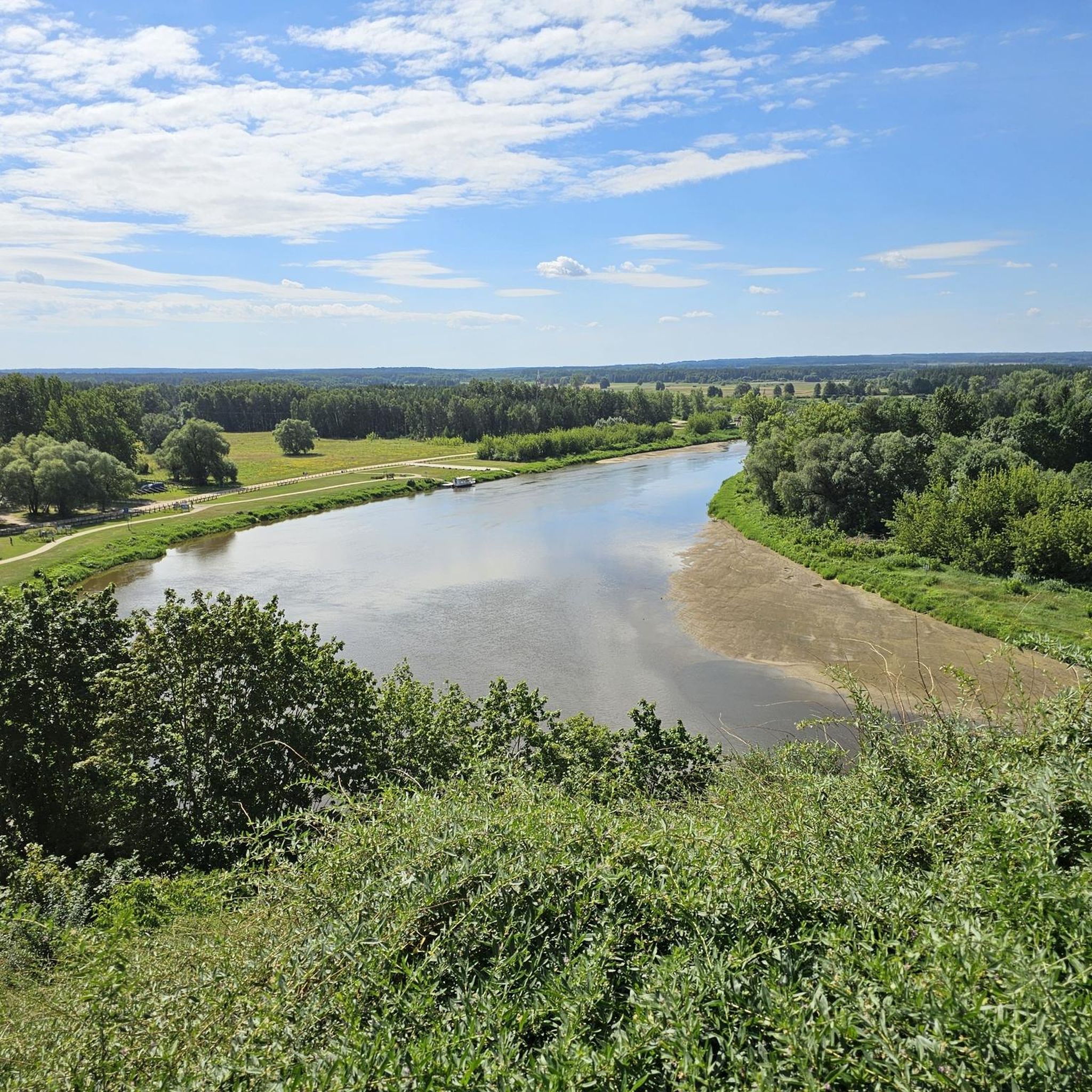
MTB Trails around gmina gmina Drohiczyn
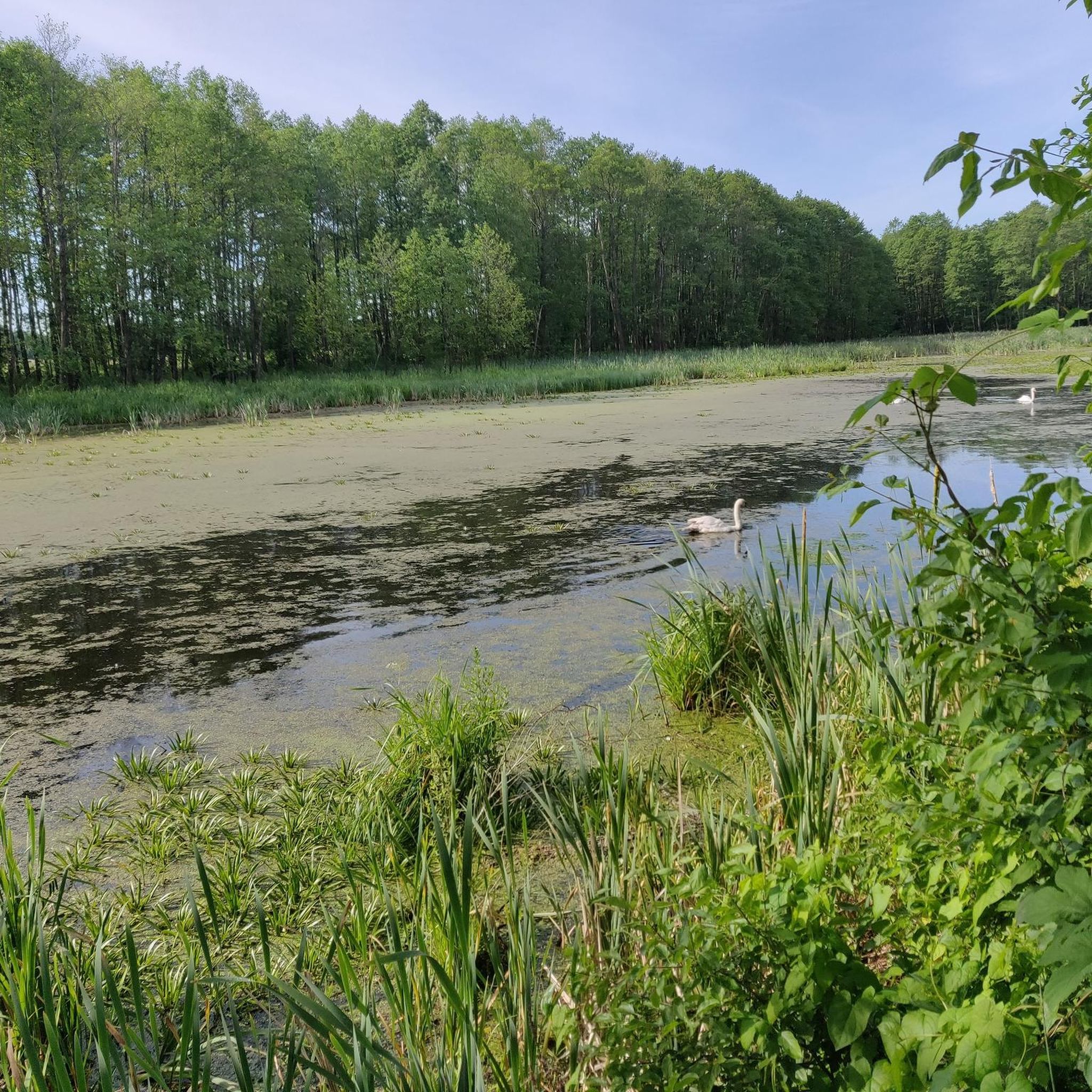
MTB Trails around gmina Siemiatycze
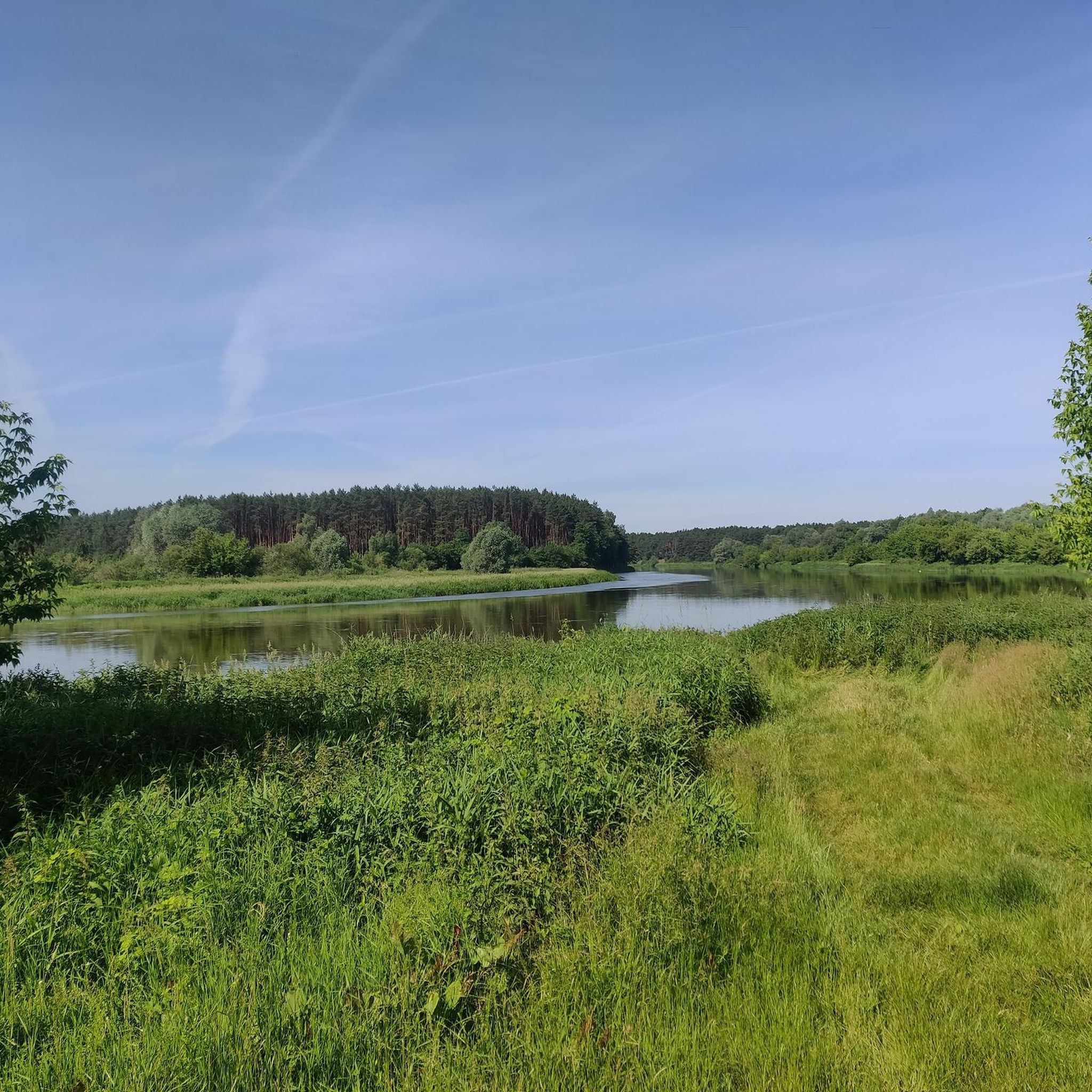
MTB Trails around Siemiatycze
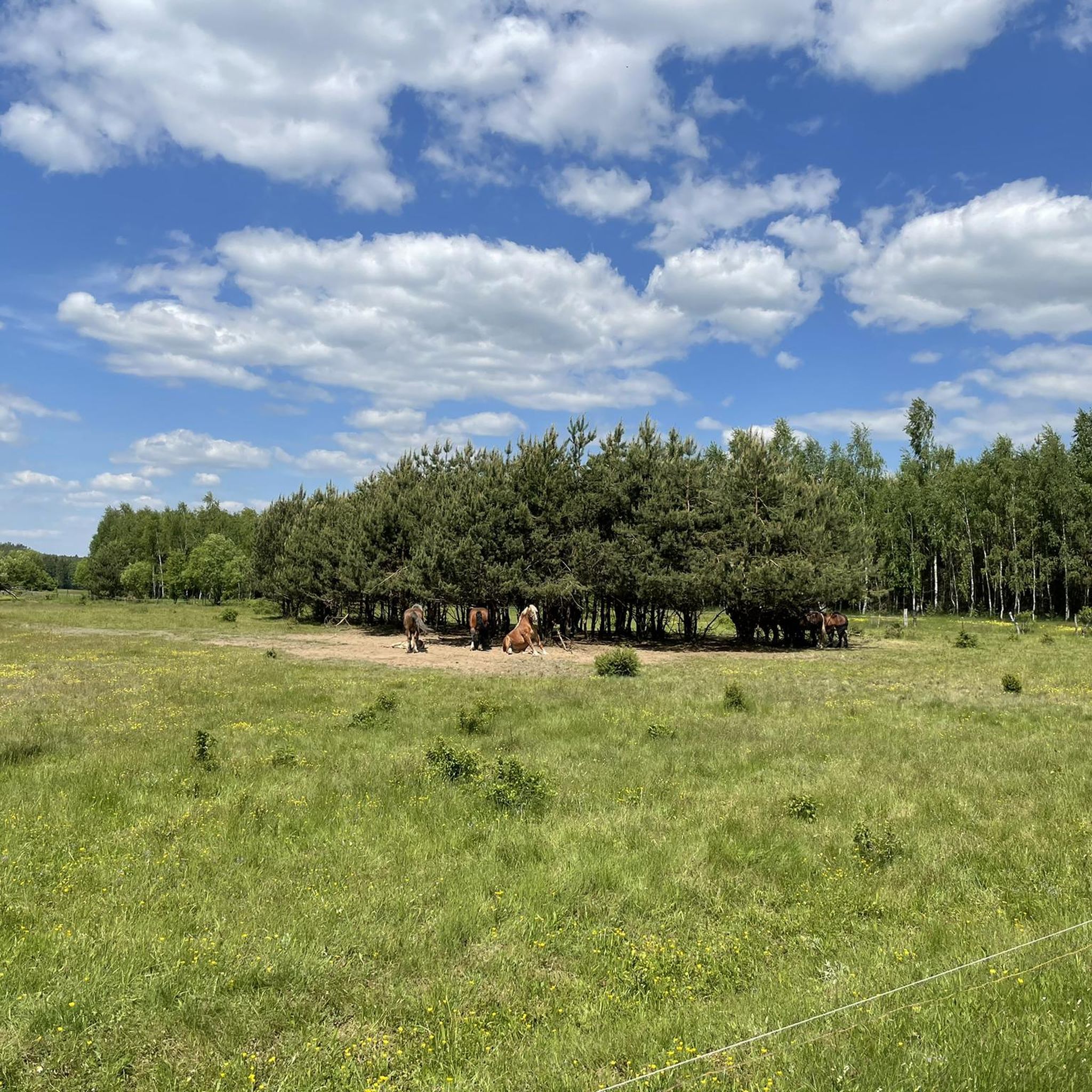
MTB Trails around gmina gmina Nurzec-Stacja
MTB Trails around gmina gmina Mielnik
Cycling around Siemiatycze
Road Cycling Routes around Siemiatycze
Hiking around Siemiatycze
Running Trails around Siemiatycze

Gravel biking around Siemiatycze
Tips from the Community

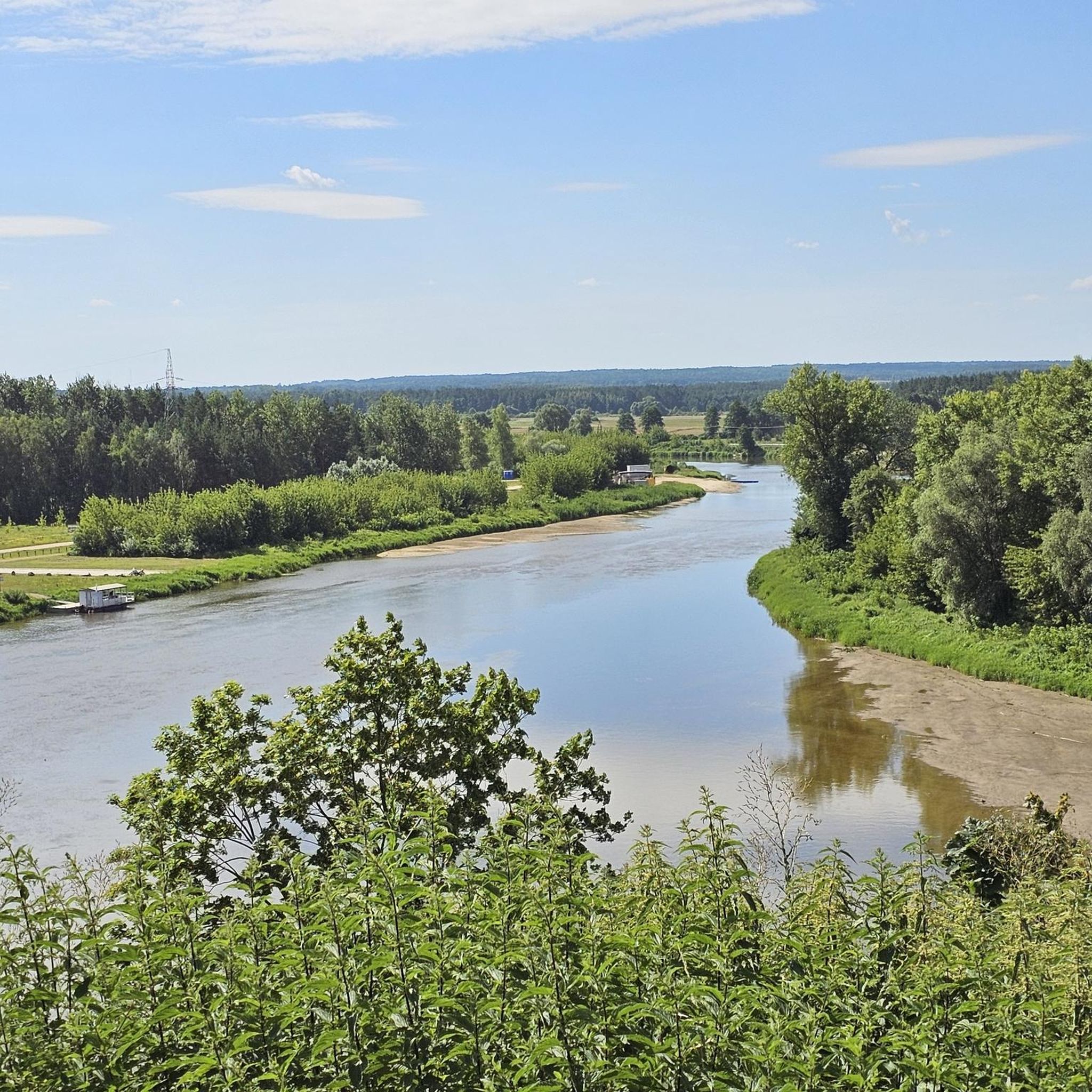
The ferry crossing on the Bug River connects its northern bank below Drohiczyn with the southern bank near the village of Bużyska, Korczew commune
1
0
Fronołów – a stop on the Siedlce–Czeremcha railway line located in the village of Mierzwice-Kolonia, in the Masovian Voivodeship, Poland. The name Fronołów is supposedly derived from the surname of the Russian engineer Fronołów, who was supposed to have designed a steel railway bridge at this location. However, this information is false. The bridge was designed by Lavr Proskurjakov. The name Fronołów likely comes from a corruption of the name of the nearby village of Franopol.
1
0
Franciscan Church in Drohiczyn, dedicated to the Assumption of the Blessed Virgin Mary – according to the monastery tradition recorded in 1797 by Father Karol Gaudenty Żero (1743–1802) in his work entitled "Fenix de pulveribus resuscitatus svaviter suam candit modulenam," the Franciscan convent in Drohiczyn was founded by Mikołaj Nassuta, mentioned in 1430 as the starost of Drohiczyn. The monks are said to have settled on a square known as "Narożnik" (Corner). The first endowments for the monks were confirmed in 1407 by Duke Witold Kiejstutowicz, who also provided offerings from the castle. During the reign of Janusz I the Elder, Duke of Mazovia, a wooden monastery and church dedicated to the Assumption of the Blessed Virgin Mary were built in 1409. In 1451, the guardian was Father Jan of Ruda, and in 1470, Father Szymon of Kraków. In the years 1460–1470, funds for the monastery were donated by, among others, the Drohicz court assessor Maciej Miłkowski (d. ca. 1478) and his wife Katarzyna. The Franciscan monastery was burned down by dissenters in 1583, and around 1595, the wooden church burned down. In 1595–1596, it was rebuilt thanks to the efforts of Father Mateusz Studziński, guardian, but in 1601, both buildings were destroyed by fire again. Another wooden Franciscan church was built in 1615 through the efforts of the guardian, Father Bartłomiej Klucziata vel Klimczata, and consecrated on October 4, 1618, by the titular bishop of Argivensis and suffragan of Lutsk, Father Stanisław Udrzycki (d. 1621). During this period, a new monastery building was constructed. In 1657, during the Swedish Deluge, following Misericordiae Sunday, the monastery was destroyed again, and several monks were murdered by Cossack, Transylvanian, and Swedish troops commanded by Magnus Gabriel de La Gardie.
1
0
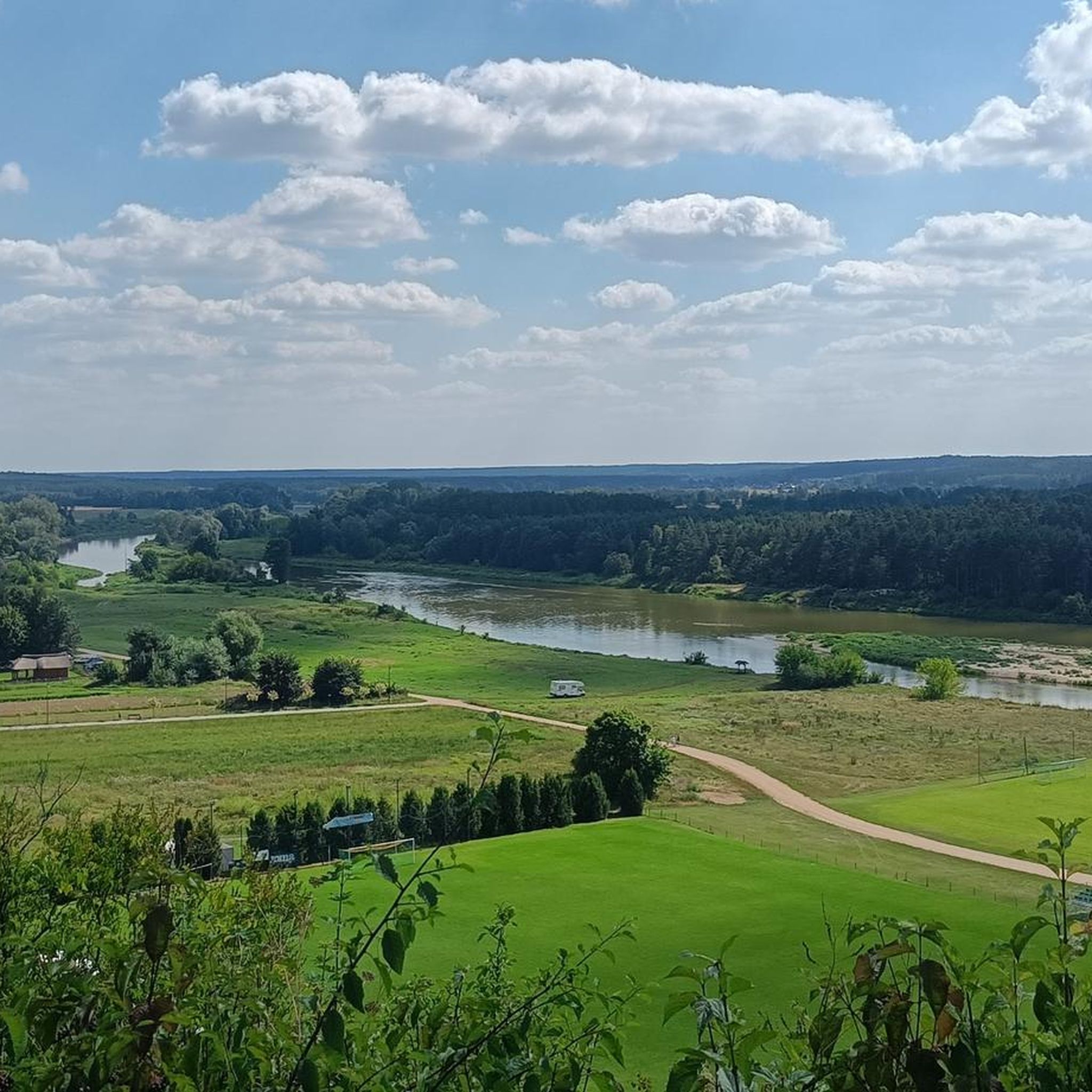
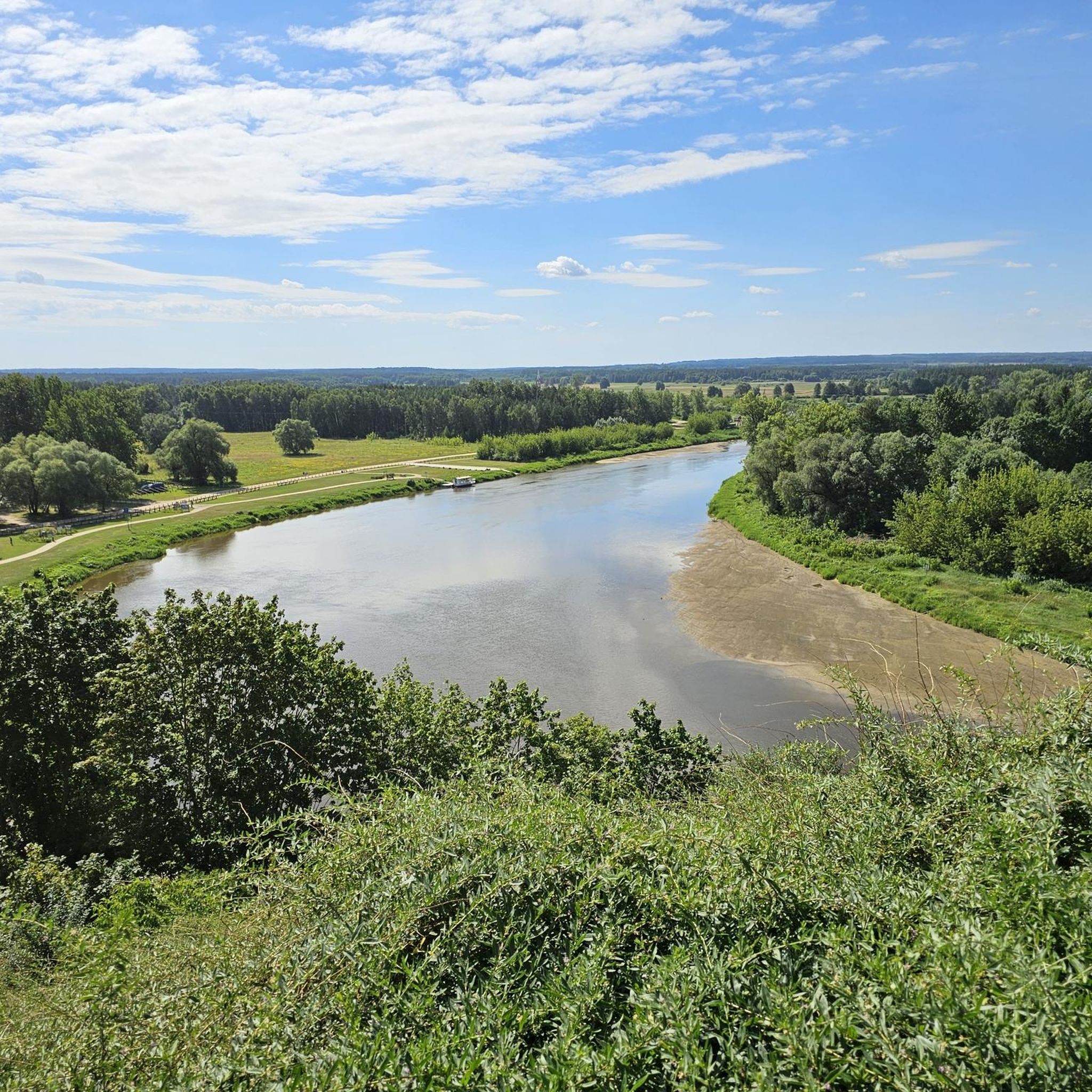
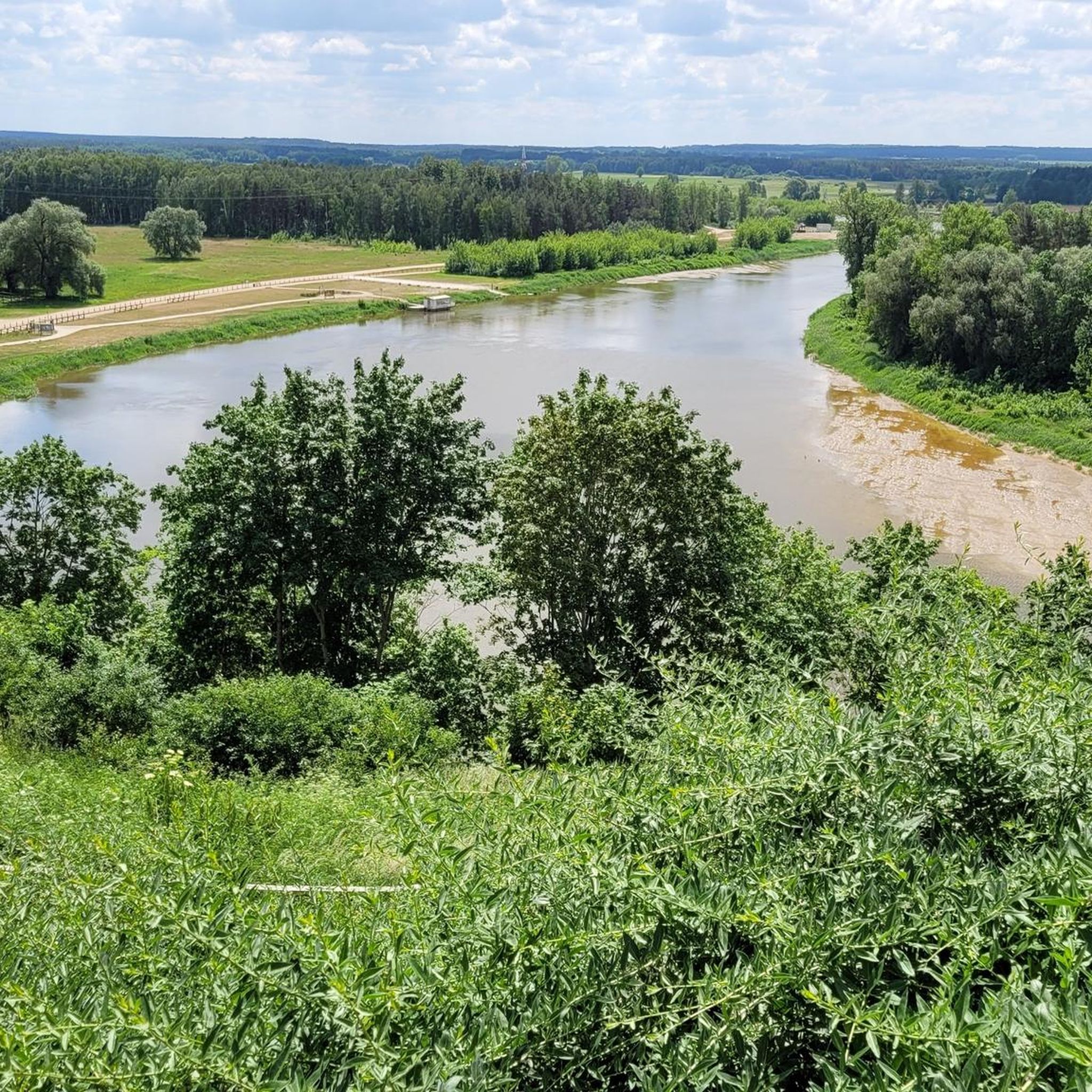
The most picturesque part of the Bug valley, including the castle hill in Drohiczyn, which is part of the steep escarpment of the Drohiczyn Upland.
1
0
One of Drohiczyn's tourist attractions is the "May Island," which covers several hectares. Several years ago, the island was developed with nature trails, nature observation platforms, and nature listening tubes. Access to the island is via a footbridge.
1
0
A viewing point overlooking the Bug River and the monastery. A ferry crossing the river is located next to the tower.
1
0
Benedictine Church in Drohiczyn, dedicated to All Saints – a church belonging to the Benedictine Sisters. In 1621, Wojciech Niemira brought Benedictine Sisters from Toruń to the church dedicated to All Saints, which had existed since 1560. The building was built between 1734 and 1738, funded by Wiktoryn Kuczyński. The Benedictines taught girls from the nobility. Despite restrictions, the Benedictines of Drohiczyn continued their educational activities until the order was dissolved in 1865. By the end of the 19th century, the monastery and church had fallen into serious disrepair. It was then that Krystyn Ostrowski, the owner of the neighboring village of Korczew, began efforts to rebuild the Benedictine church and convent. In 1919, the Committee for the Reconstruction of the Church and Monastery of the Benedictine Sisters was established. Thanks to its efforts, the vaults were renovated, windows were installed, and floors were laid during the interwar period. During the interwar period, the prefect of the Drohicze high school, Father Kazimierz Dobrzycki, took charge of the reconstruction. During this time, the church served as a school church. The building features a Rococo façade.
1
0

the view during dinner is fabulous
1
0
Frequently Asked Questions
How many mountain bike trails are there in Siemiatycze?
There are 15 mountain bike trails around Siemiatycze listed on komoot, offering a variety of experiences for different skill levels.
Are there mountain bike trails suitable for beginners or families in Siemiatycze?
Yes, Siemiatycze offers several easy mountain bike trails perfect for beginners and families. For example, the Fronołów – Ferry loop from Fronołów is an easy 27.8 km route that follows the scenic Bug River, offering gentle terrain and picturesque views suitable for a relaxed ride.
What kind of terrain can I expect on mountain bike trails around Siemiatycze?
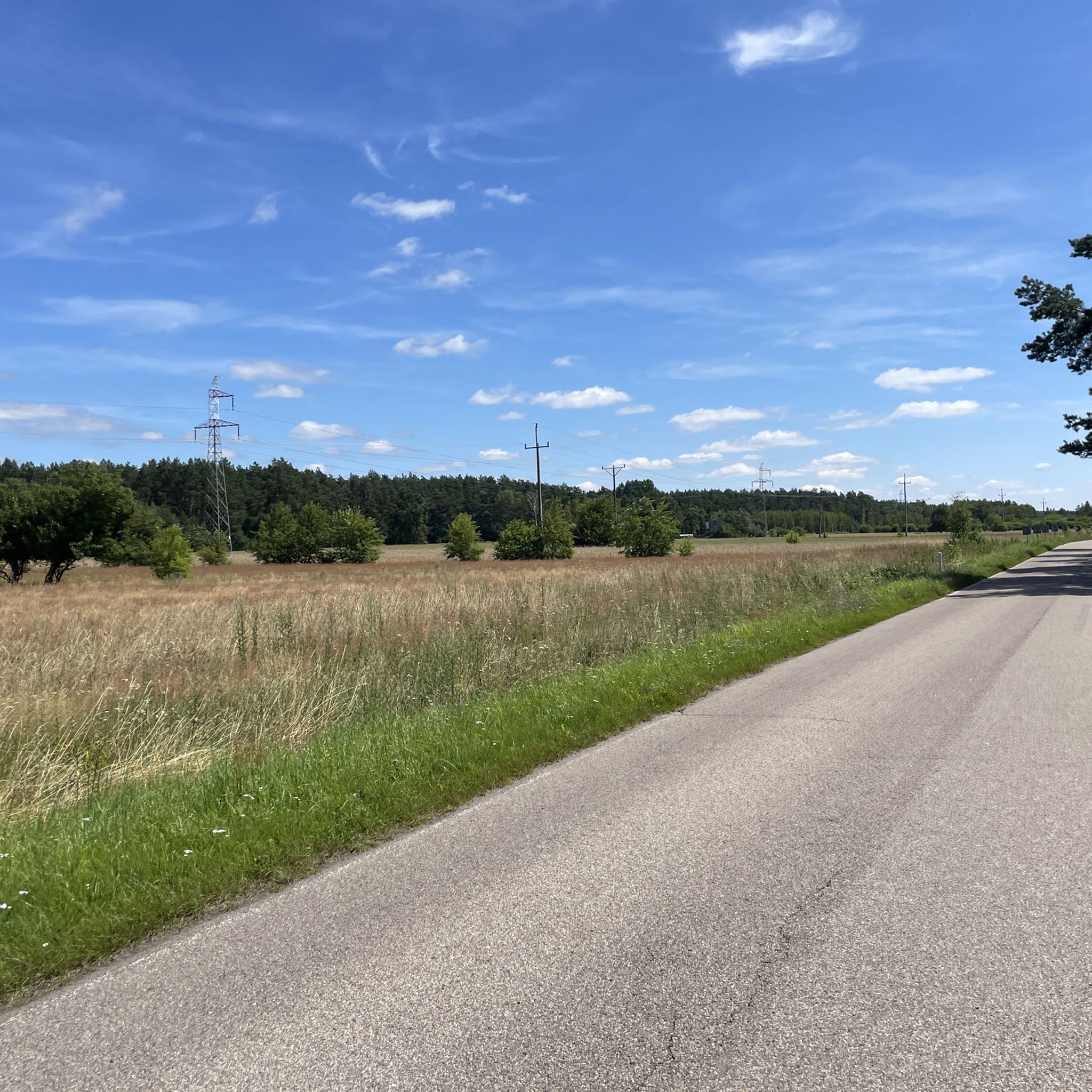
The terrain around Siemiatycze is diverse, featuring extensive forests, rolling hills, and the scenic Bug River valley. You'll find a mix of dirt roads, forest paths, and some routes with gentle ascents and descents, providing varied challenges for mountain bikers.
Are there any challenging mountain bike routes for experienced riders?
While many routes are easy to moderate, the region's varied terrain, including some sections of the Green Velo trail and routes connecting to Białowieża, can offer more challenging experiences with significant elevation changes. The 8 moderate trails listed on komoot provide a good step up for those seeking more demanding rides.
What natural attractions can I see while mountain biking in Siemiatycze?
Many trails offer access to the region's natural beauty. You can explore the scenic Bug River valley, ride through lush forests, and pass by the three water reservoirs around Siemiatycze. The Beach in Siemiatycze – Mahomet River loop from Siemiatycze, for instance, explores local river and reservoir areas.
Are there any historical or cultural landmarks accessible by mountain bike?
Absolutely. The area is rich in history and culture. You can cycle to Holy Mount Grabarka (Święta Góra Grabarka), Poland's most important Orthodox pilgrimage site. Additionally, routes like the Corner on Krótka – Kino Górnik Sign loop from Mielnik lead through the historic town of Mielnik, where you can find the Viewpoint of the chalk mine and Castle Hill.
What is the best time of year for mountain biking in Siemiatycze?
The best time for mountain biking in Siemiatycze is typically from spring through autumn, when the weather is mild and the trails are dry. The lush landscapes are particularly beautiful during these seasons, offering pleasant riding conditions.
Are there circular mountain bike routes available?
Yes, many of the mountain bike trails around Siemiatycze are designed as loops, allowing you to start and end your ride at the same point. Examples include the popular Beach in Siemiatycze – Mahomet River loop from Siemiatycze and the Flock of Sheep on Góra Rowska – Mielnik Chalk Quarry loop from Mielnik.
What do other mountain bikers enjoy most about Siemiatycze?
The mountain bike trails in Siemiatycze are highly rated by the komoot community, with an average score of 4.7 stars. Riders often praise the diverse landscapes, the serene surroundings of the Bug River valley, and the variety of trails suitable for different skill levels.
Are mountain bike trails in Siemiatycze dog-friendly?
Many natural areas and trails in Siemiatycze are generally dog-friendly, especially those through forests and along the Bug River. However, it's always recommended to keep your dog on a leash, especially in nature reserves or near wildlife, and to check local regulations for specific areas.
Are there any specific viewpoints or scenic spots along the trails?
Yes, the region offers several scenic spots. The Bug River valley itself provides picturesque vistas, and you can find viewpoints such as the Viewpoint of the chalk mine near Mielnik and the Observation Tower by the Ferry in Drohiczyn, which offer great panoramic views.
Is parking available near the mountain bike trails?
Parking is generally available in and around Siemiatycze, especially near popular recreational areas like the city beach and the water reservoirs, which often serve as starting points for trails. For specific routes, it's advisable to check the tour details on komoot for suggested parking locations.
Most popular routes around Siemiatycze
Most popular attractions around Siemiatycze

Get inspired with the komoot mobile app


Didn’t find what you were looking for?
Check out more MTB trails throughout Siemiatycze below and find the perfect route in your destination.
Explore more
Browse the best MTB trails in other regions.
