The best cycling routes around Kapellen-Drusweiler
4.5
(5220)
26,461
riders
802
rides
Touring cycling around Kapellen-Drusweiler offers routes through varied landscapes, including the Kaiserbach Valley, the Bienwald forest, and vineyard regions near the German Wine Gate. The area features rolling hills, river valleys, and historic villages. This region is characterized by a mix of agricultural lands, dense woodlands, and open vistas, providing diverse terrain for touring cyclists.
Best touring cycling routes around Kapellen-Drusweiler
- The most popular touring cycling route is View of Landeck Castle – Kaiserbach Valley loop from Kapellen-Drusweiler, a…
Last updated: June 25, 2026
4.8
(262)
976
riders
Hard bike ride. Very good fitness required. Mostly paved surfaces. Suitable for all skill levels.
4.6
(277)
1,096
riders
60.7km
03:55
610m
610m
Hard bike ride. Very good fitness required. Mostly paved surfaces. Suitable for all skill levels.

Sign up for free
4.6
(73)
241
riders
Moderate bike ride. Good fitness required. Mostly paved surfaces. Suitable for all skill levels.
4.7
(48)
193
riders
29.3km
01:50
240m
240m
Moderate bike ride. Good fitness required. Mostly paved surfaces. Suitable for all skill levels.
4.7
(41)
138
riders
38.0km
02:22
290m
290m
Moderate bike ride. Good fitness required. Mostly paved surfaces. Suitable for all skill levels.
Get access to more routes and recommendations from other explorers.
Sign up for free
Already have an account?
Our route recommendations are based on thousands of hikes, rides, and runs completed by other people on komoot.
Start today with a free account
Your next adventure awaits.
Login or Signup
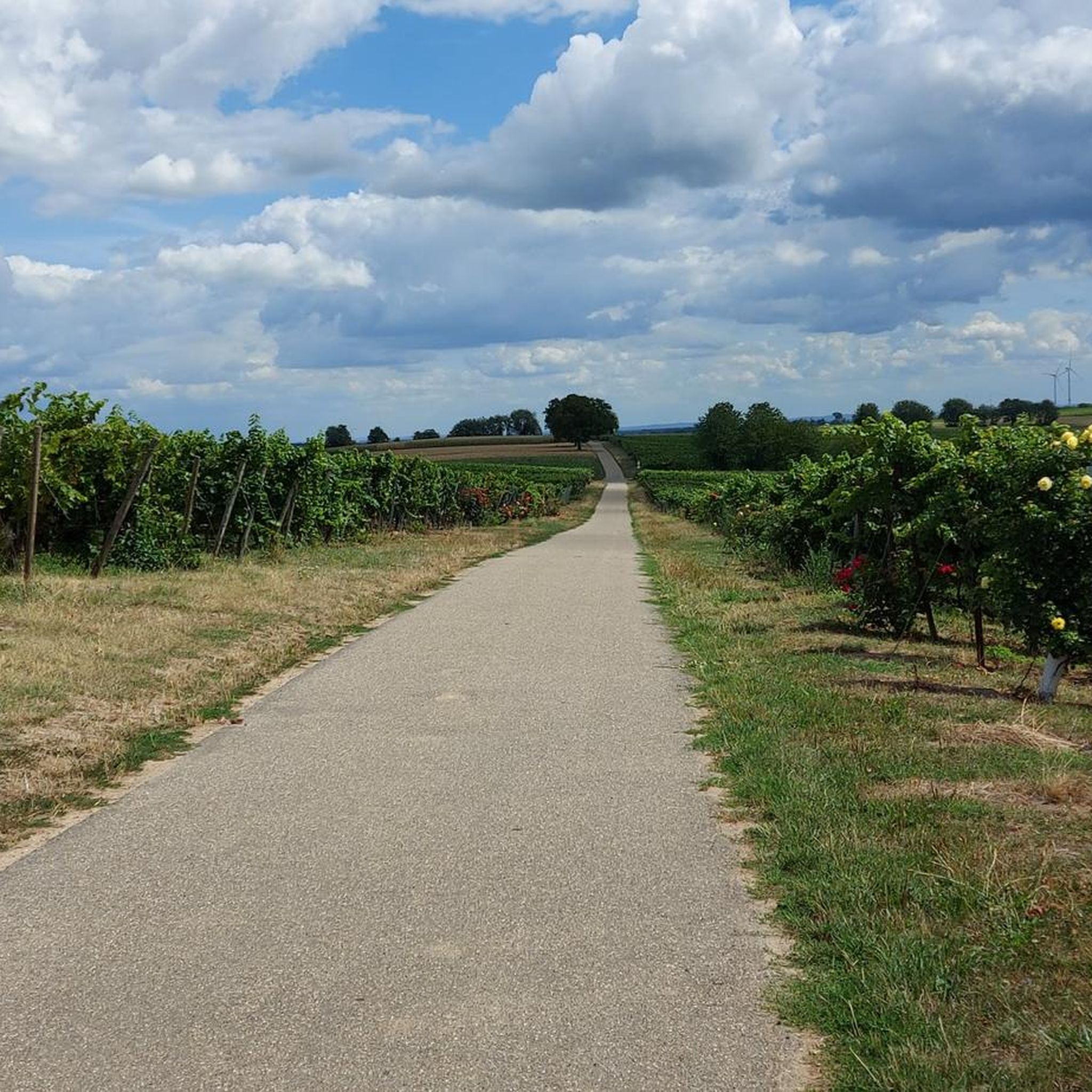
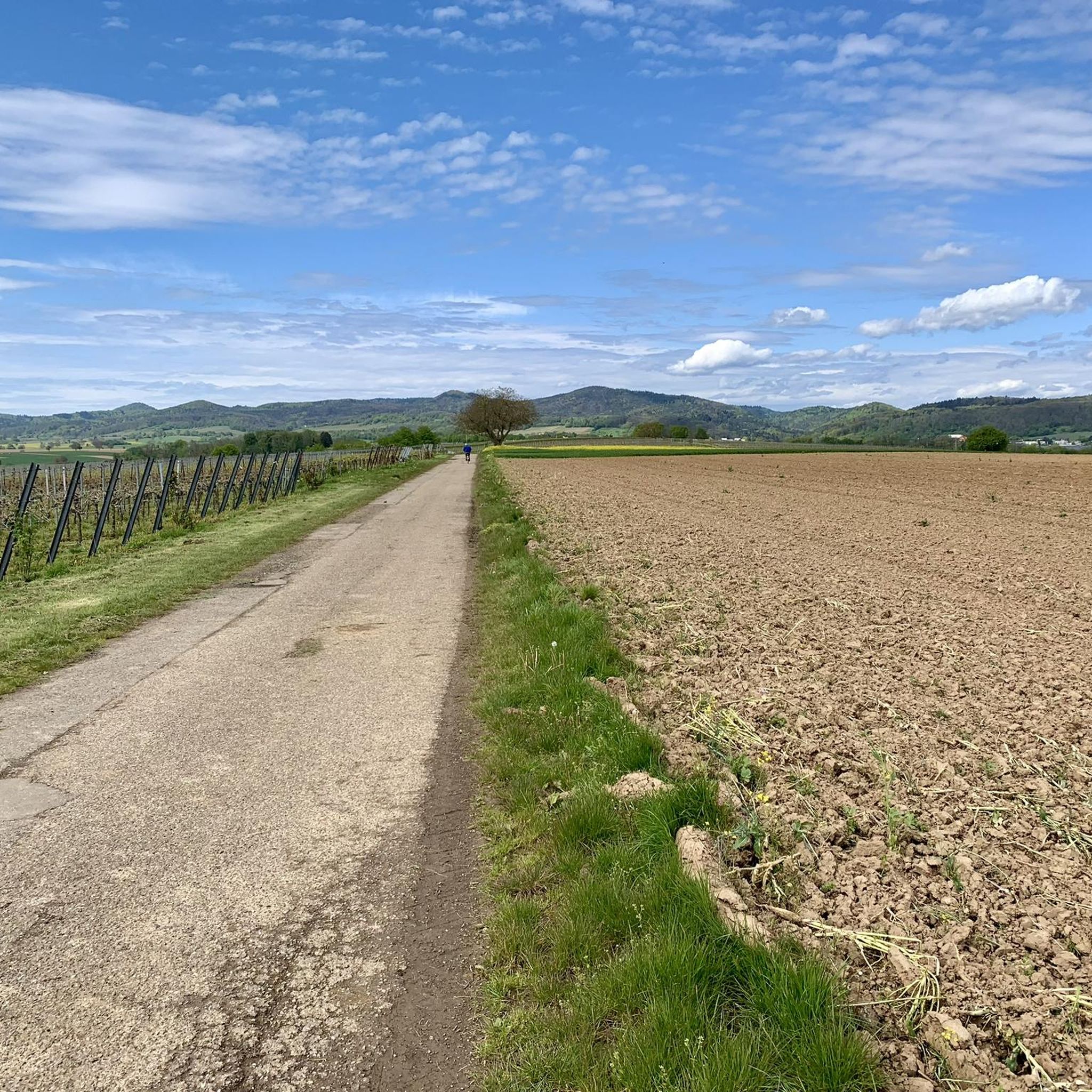
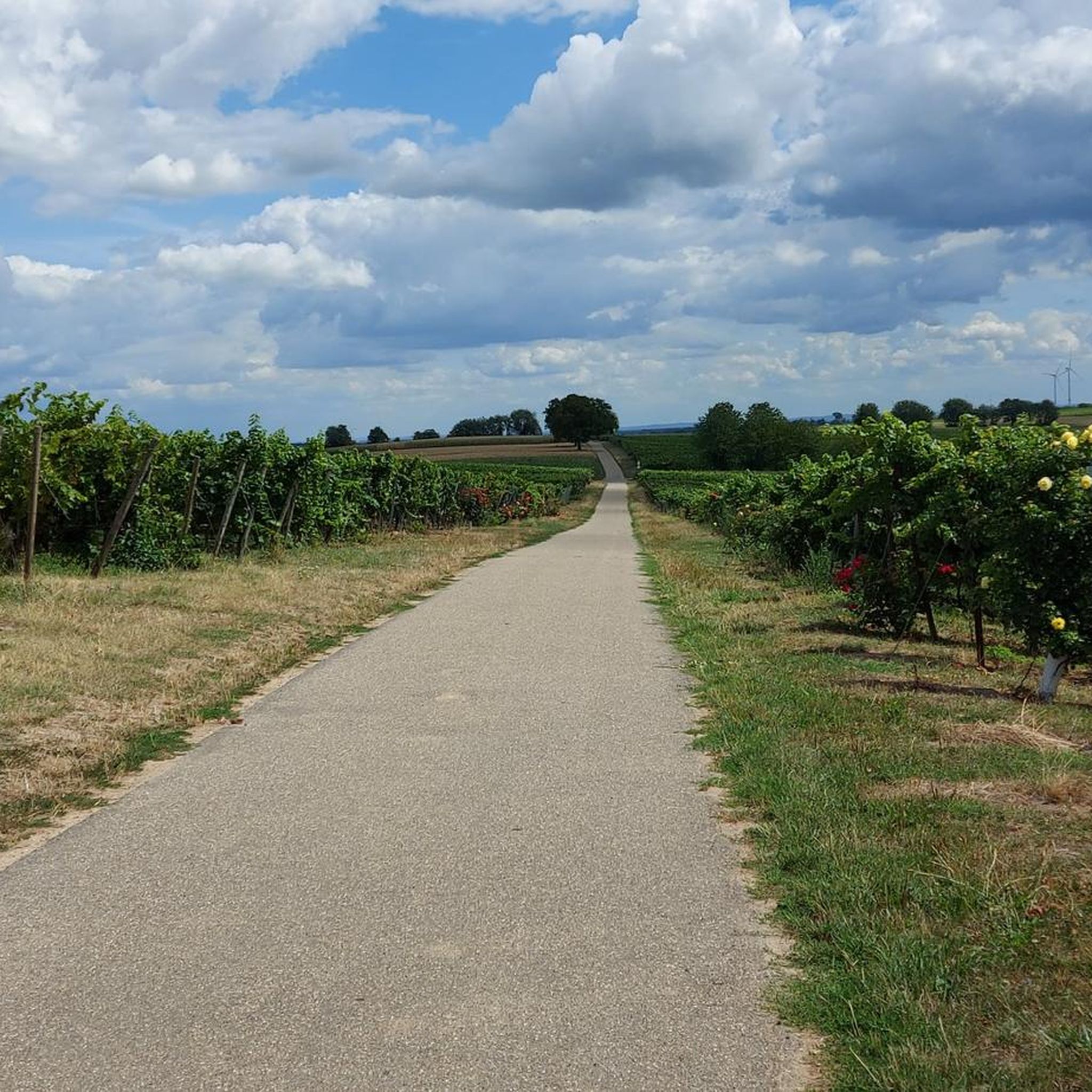
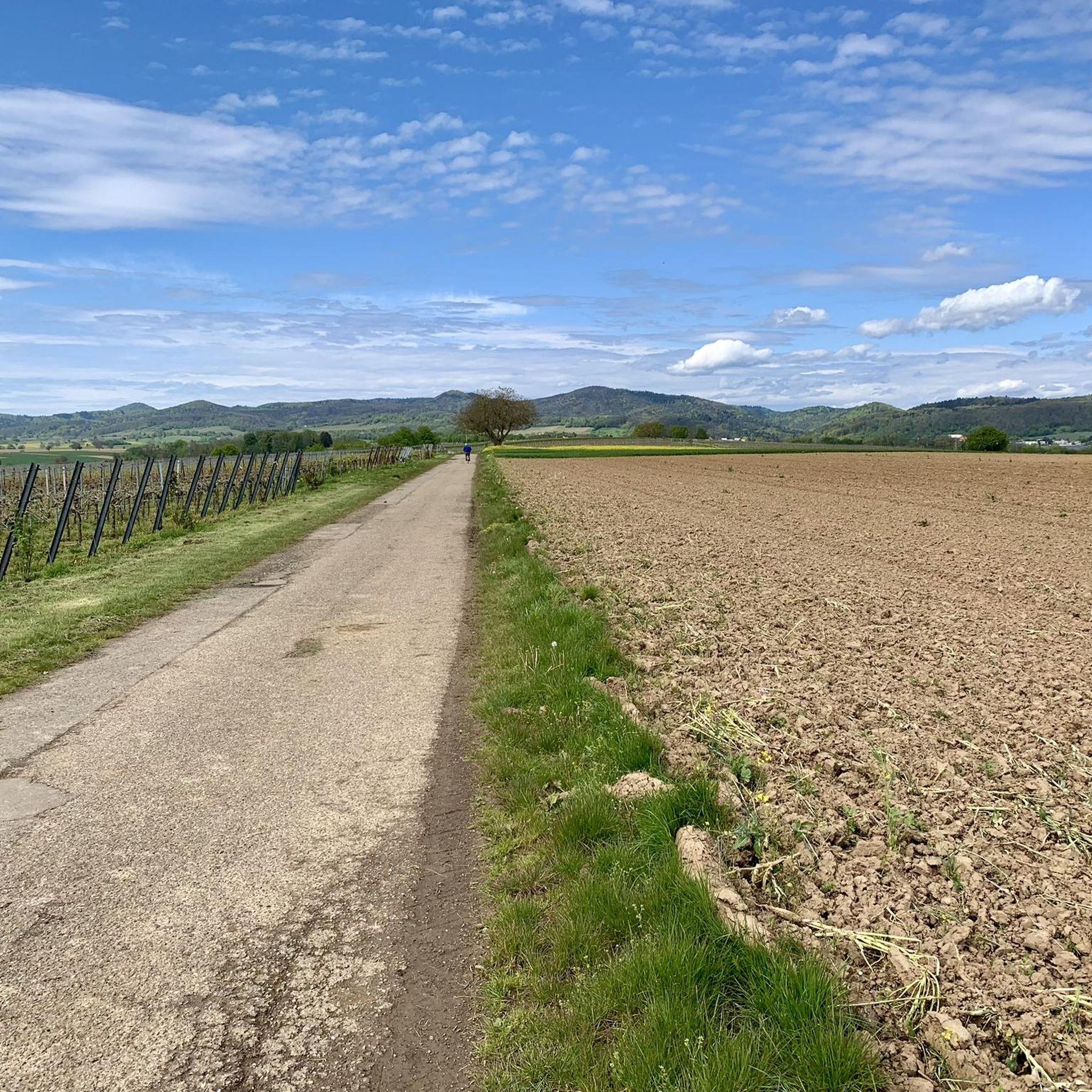
Tips from the Community

Pure landscape! No matter which direction you look.
0
0

The Westwall was a military defense system over 600 km long during World War II. It consisted of several thousand bunkers, tunnels, trenches, minefields, and anti-tank obstacles and stretched along the western border of the then German Reich from Holland to Basel. The Westwall was built between 1936 and 1940 in three defensive lines, likely for propaganda reasons. Its French counterpart, the Maginot Line, was built between 1930 and 1936. In the Palatinate, a 10 km long anti-tank barrier ran from the Palatinate Forest near Oberotterbach through the Weißenburg Saddle to the Bienwald near Steinfeld. The second defensive line led from Göcklingen via Mörzheim, Impflingen, Insheim, in the direction of Herxheim. The anti-tank barrier was built in the form of dragon's teeth lines. Dragon's teeth made of reinforced concrete, placed in several rows and connected by a foundation, were intended to prevent enemy tanks from entering. Today, most of the Westwall has been dismantled, bunkers have been blown up. Relics of the dragon's teeth lines in the Palatinate can still be found near Steinfeld and Niederotterbach, as well as parts of the rear defensive line in Göcklingen and Mörzheim.
2
0

Nature trail
0
0

It's worth taking a look at the Lauter from the many bridges. The perspectives are always different.
7
0

France is in the other direction 🙈
0
0

A very nice tour through the beautiful Palatinate landscape with its vineyards, small villages and many opportunities to stop and linger.
0
0

With the beginning of the German Wine Route and the Wine Gate, the wine country opens up in all directions🥰🍇
0
0
Frequently Asked Questions
How many touring cycling routes are available around Kapellen-Drusweiler?
There are over 790 touring cycling routes in the Kapellen-Drusweiler region, offering a wide variety of options for different skill levels and preferences.
Are there easy touring cycling routes suitable for beginners or families?
Yes, Kapellen-Drusweiler offers a good selection of easier routes. Approximately 300 routes are rated as easy, providing gentle terrain suitable for beginners and families. For a moderate option that features historical landmarks and scenic vineyard landscapes, consider the Dicker Turm – View of the German Wine Gate loop from Kapellen-Drusweiler.
What kind of landscapes can I expect on touring bike trails in Kapellen-Drusweiler?
The region is characterized by diverse landscapes, including the scenic Kaiserbach Valley, the extensive Bienwald forest, and picturesque vineyard regions near the German Wine Gate. You'll encounter rolling hills, tranquil river valleys, historic villages, agricultural lands, and open vistas.
Are there any challenging touring cycling routes for experienced cyclists?
Yes, for experienced cyclists seeking a challenge, there are over 200 difficult routes available. A demanding option is the View of Landeck Castle – Kaiserbach Valley loop from Kapellen-Drusweiler, which covers 35.3 miles (56.9 km) with significant elevation changes.
What are some notable landmarks or attractions to see along the cycling routes?
Many routes pass by significant landmarks. You can explore historic sites like Landeck Castle and Madenburg Castle Ruins. The iconic German Wine Gate (Deutsches Weintor) is also a prominent feature in the vineyard regions. The charming town of Wissembourg is another highlight.
Are there circular touring cycling routes around Kapellen-Drusweiler?
Yes, many routes in the region are designed as loops, allowing you to start and end at the same point. An example is the Klingbach Cycle Path loop from Bad Bergzabern, which offers a moderate ride through the local scenery.
What do other touring cyclists say about the routes in Kapellen-Drusweiler?
The touring cycling routes around Kapellen-Drusweiler are highly rated by the komoot community, with an average score of 4.5 stars from over 5,000 reviews. Cyclists often praise the varied terrain, the well-maintained paths, and the beautiful mix of forests, vineyards, and historic sites.
Are there places to stop for refreshments or rest along the trails?
Yes, the region offers various opportunities for breaks. You can find huts and cabins, some with beer gardens, like the Cramerhaus Lindelbrunn Beer Garden, or shelters such as the Silzer Linde Shelter. Many routes also pass through villages where cafes and pubs are available.
What is the best time of year for touring cycling in Kapellen-Drusweiler?
Spring and autumn are generally ideal for touring cycling in Kapellen-Drusweiler. Spring brings blooming vineyards and mild temperatures, while autumn offers pleasant weather and vibrant fall foliage. Summer can be enjoyable, but it's advisable to start early to avoid the midday heat, especially on longer routes.
Can I find routes that go through the Bienwald forest?
Yes, the Bienwald forest is a significant natural feature in the region, and several touring cycling routes traverse its dense woodlands. The Bienwald loop from Bad Bergzabern is a moderate option that takes you directly through this extensive forest.
Are there routes that connect urban areas with village centers?
Yes, some routes offer a mix of urban and rural experiences. For example, the Rathausplatz, Landau (Town Hall Square) – Klingenmünster village center loop from Bad Bergzabern leads through both town squares and charming village centers.
Most popular routes around Kapellen-Drusweiler
Most popular attractions around Kapellen-Drusweiler

Get inspired with the komoot mobile app


Explore more
Browse the best Cycling routes in other regions.
