The best road cycling routes around Lureuil
3.3
(3)
103
riders
39
rides
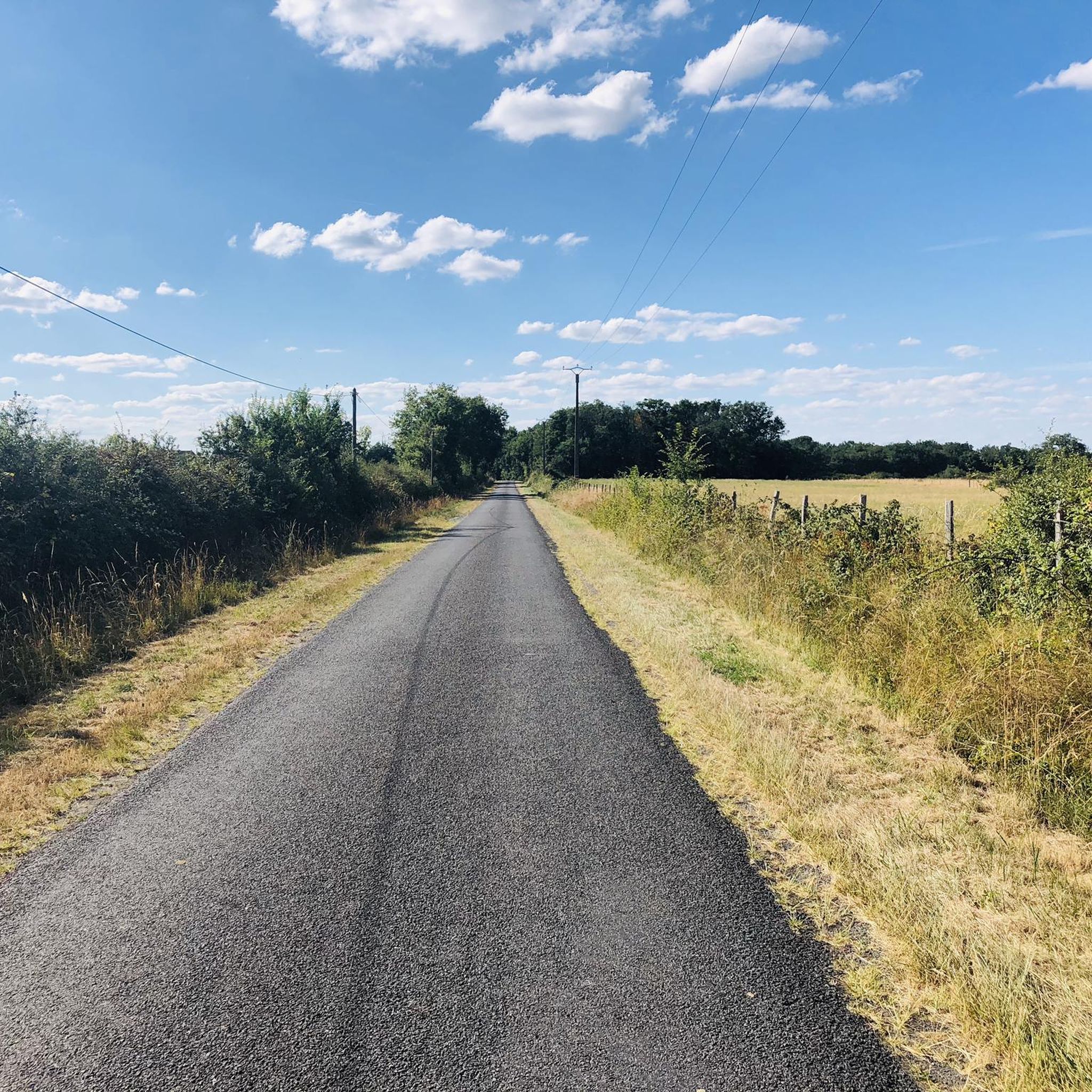
Road cycling around Lureuil offers routes through the Indre department, characterized by its gently rolling countryside and agricultural landscapes. The region features a network of quiet rural roads, often passing through fields of sunflowers and past historic châteaux. Elevation gains are generally moderate, making the area accessible for various fitness levels. The terrain primarily consists of open plains interspersed with small woodlands and river valleys.
Best road cycling routes around Lureuil
- The most popular road cycling route is Naillac Castle…
Last updated: July 2, 2026
7
riders
63.4km
02:35
280m
280m
Moderate road ride. Good fitness required. Some segments of this route may be unpaved and difficult to ride.
9
riders
10.3km
00:26
60m
60m
Easy road ride. Great for any fitness level. Mostly well-paved surfaces and easy to ride.

Sign up for free
3.0
(1)
5
riders
35.7km
01:38
180m
180m
Moderate road ride. Great for any fitness level. Some segments of this route may be unpaved and difficult to ride.
4
riders
55.5km
02:25
330m
330m
Moderate road ride. Good fitness required. Mostly well-paved surfaces and easy to ride.
3
riders
Moderate road ride. Good fitness required. Some segments of this route may be unpaved and difficult to ride.
Get access to more routes and recommendations from other explorers.
Sign up for free
Already have an account?
Our route recommendations are based on thousands of hikes, rides, and runs completed by other people on komoot.
Start today with a free account
Your next adventure awaits.
Login or Signup

Tips from the Community

Hike up to the old Château-Naillac with its twin 12th-century donjons—towers without buttresses—standing just above the Creuse River. Inside, you'll find remnants of prisoners' graffiti, a hall with a magnificent Romanesque fireplace, and a model showing what the castle once looked like.
2
0


The Château de Boussay is a castle located in the commune of Boussay, in Indre-et-Loire, in the Centre-Val de Loire region, not far from the Vienne. This castle, although less known than the famous castles of the Loire, offers a particular charm with its history, its architecture and its natural environment. Points of Interest: History and Architecture: Medieval Origins: The Château de Boussay dates back to the Middle Ages, with origins that can be traced back to the 12th century. It was modified and enlarged over the centuries, particularly during the Renaissance, which gives it a unique architecture that mixes medieval and classical elements. Architecture: The castle has an architecture typical of the manors of the region with round towers, moats, and an elegant main building. The different periods of construction are reflected in the architectural styles present on the site. Why visit the Château de Boussay? Historical Heritage: The Château de Boussay offers a dive into medieval and Renaissance history, with preserved architecture and a rich history to discover. Natural Setting: The castle is surrounded by a magnificent park that invites you to walk and relax, ideal for an outing with family or as a couple. Cultural Experience: The guided tours and cultural events organized at the castle allow you to discover the heritage from a different angle, enriching the visit with varied activities. In short, the Château de Boussay is an interesting destination for lovers of history, architecture, and nature, offering an authentic and enriching experience in a peaceful and historical setting.
1
0

Pretty pass on the river, with the bell tower of Saint-Pierre abbey. The commune of Preuilly-sur-Claise has several archaeological sites. The archaeological site of Picardy is an open-air site, discovered in the 1980s, located on the left bank of the Claise, on a plateau.
0
0
This park is known for its 3,000 ponds, 267 species of birds, 100,000 pond turtles, 1,600 plant species including wild orchids and thousands of insects and animals. The Brenne Regional Natural Park attracts thousands of visitors each year in search of a calm, natural and authentic setting.
0
0

Château Naillac is a heterogeneous castle which has known several uses over the centuries. From the 12th century it was a fortress but much later, in the 18th century, it became a prison. It then became a school and now houses the Brenne Ecomuseum.
3
0
The church of Saint-Cyran, built in the 11th century, is now used as an exhibition space.
4
0
Hard to miss, this ancient 11th century fortress stands proudly on a hill of red sandstone and dominates the area around it. Open to visits from April to November, this castle has been completely renovated to make you feel what it was like during its history, especially during the Hundred Years War.
3
0
Frequently Asked Questions
How many road cycling routes are available around Lureuil?
There are over 30 road cycling routes around Lureuil, offering a variety of options for different skill levels. The komoot community has explored these routes extensively, providing valuable insights.
Are there easy road cycling routes suitable for beginners in Lureuil?
Yes, Lureuil offers several easy road cycling routes perfect for beginners. For example, the Roadbike loop from Pouligny-Saint-Pierre is an easy 6.4-mile (10.3 km) route with minimal elevation gain, ideal for a relaxed ride.
What are the typical distances and elevation gains for road cycling routes in Lureuil?
Road cycling routes in Lureuil generally feature moderate distances and elevation gains, making them accessible. Many routes range from 20 to 40 miles (30-65 km) with elevation gains typically between 180 and 400 meters. For instance, the Naillac Castle – Bouchet Castle loop from Martizay covers 39.3 miles (63.2 km) with around 280 meters of ascent.
Are there challenging road bike routes near Lureuil for experienced cyclists?
While Lureuil is known for its gently rolling countryside, some routes offer more extended distances and moderate climbs for experienced cyclists. The Rys Castle – Greenway Near Chaumussay loop from Martizay, for example, is a moderate 37.3-mile (60.0 km) route with nearly 400 meters of elevation gain, providing a good workout.
What is the best time of year for road biking in Lureuil?
The best time for road biking in Lureuil is typically from spring to autumn. During these seasons, you can enjoy the region's agricultural landscapes, including fields of sunflowers in summer, and pleasant temperatures. Autumn also offers beautiful scenery with changing foliage.
Are there road cycling routes in Lureuil that pass by scenic viewpoints or historic sites?
Yes, many routes in Lureuil offer scenic views and pass by historic sites. The region is characterized by quiet rural roads, often leading past historic châteaux and through picturesque agricultural fields. The Riding along the sunflowers – Château de Boussay loop from Lurais combines both natural beauty and a historic castle.
Can I find circular road cycling routes around Lureuil?
Yes, the majority of road cycling routes around Lureuil are designed as loops, allowing you to start and finish at the same point. This makes planning your ride convenient. Examples include the Riding along the sunflowers loop from Tournon-Saint-Pierre and the Naillac Castle – Bouchet Castle loop from Martizay.
What kind of attractions can I see along the road cycling routes in Lureuil?
Road cycling routes in Lureuil often lead past interesting landmarks. You might encounter historic structures like Bouchet Castle, or cross impressive engineering like the Viaduc du Blanc. Some routes also incorporate sections of dedicated paths, such as the Cycling Path on Former Railway in Parc naturel régional de la Brenne.
What do other road cyclists enjoy most about road cycling in Lureuil?
The area is highly rated by the komoot community, with an average score of 3.8 stars from 4 reviews. Reviewers often praise the quiet rural roads, the charming agricultural landscapes, and the opportunity to cycle through fields of sunflowers and past historic châteaux.
Are there any hidden gem road cycling trails in Lureuil?
Lureuil's network of quiet rural roads means many routes feel like hidden gems, offering peaceful rides away from traffic. Exploring routes that connect smaller villages or venture into the less-traveled parts of the Indre department can reveal charming, less-known paths through the countryside.
What should I wear for road biking in Lureuil during autumn?
For autumn road biking in Lureuil, it's advisable to dress in layers. Mornings can be cool, so a long-sleeved base layer, a cycling jersey, and a light windproof or waterproof jacket are recommended. As the day warms up, you can shed layers. Don't forget gloves and a neck warmer for added comfort.
Are there family-friendly road cycling routes in Lureuil?
Given the gently rolling terrain and numerous easy routes, Lureuil is suitable for family-friendly road cycling. Routes with lower elevation gains and quieter roads, such as the Roadbike loop from Pouligny-Saint-Pierre, are excellent choices for families looking to enjoy a ride together.
Most popular attractions around Lureuil

Get inspired with the komoot mobile app


Explore more
Browse the best Road cycling routes in other regions.
