Attractions and Places To See around Kaltensundheim - Top 20
Best attractions and places to see around Kaltensundheim include a blend of historical sites, cultural insights, and natural beauty within the Rhön Mountains. The village, situated along the Felda river, features landmarks such as the Kirchenburg Kaltensundheim and historic half-timbered houses. Natural features like the Schwarzes Moor and nearby mountains Gebaberg and Ellenbogen offer opportunities to explore the Rhön landscape. The area provides a range of points of interest for visitors.
Best attractions and places to see around Kaltensundheim
- The…
Last updated: July 6, 2026
Schwarzes Moor Nature Trail
Highlight (Segment) • Natural Monument
Translated by Google •
Tip by

Great Moor Eye (Black Moor)
Highlight • Natural
Translated by Google •
Tip by

Sign up now to discover places like this
Get recommendations on the best single tracks, peaks, & plenty of other exciting outdoor places.
Sign up for free
Boardwalk Through the Black Moor
Highlight • Trail
Translated by Google •
Tip by

Grabenberg Border Tower
Highlight • Monument
Translated by Google •
Tip by

Schwarzes Moor Boardwalk
Highlight • Trail
Translated by Google •
Tip by
Sign up for free to discover even more attractions around Kaltensundheim.
Sign up for free
Already have an account?
Start today with a free account
Your next adventure awaits.
Login or Signup
Tips from the Community

On the nature trail through the moor – a two-kilometer-long boardwalk – you can discover rare animal and plant species. The Black Moor is the best-preserved and still-growing raised bog in Germany's low mountain ranges. The moor is located in the Rhön Biosphere Reserve, in the border triangle of Bavaria, Hesse, and Thuringia – a unique cultural landscape in the heart of Germany. The area offers a wealth of exciting outdoor excursions. You can find more information here: https://nationale-naturlandschaften.de/gebiete/biosphaerenreservat-rhoen.
2
0

When you step onto the boardwalk, which winds gently through the extensive moor, you immediately feel that you are entering a special place. The path, made of robust wooden planks, rises slightly above the moor, providing a unique view and at the same time protecting the sensitive moor landscape. You don't just hike here; you almost float above the land, accompanied by a chorus of bird songs and the gentle rustling of the wind. Information boards line the path, they are like windows into the past and present of the moor. With every step you learn more about the origins, the diverse flora and fauna and the previous use of this natural wonder. It is an educational trail that enriches both the heart and the mind. What is particularly noteworthy is the care with which the path was laid out. The staggered wooden boards not only create a pleasant walking experience, but also reflect the care with which the work was carried out. One feels invited to enjoy the beauty of nature, but with a deep respect for its vulnerability. A highlight of the path is the observation tower, from which the moor is revealed in all its size. Although it is currently inaccessible due to maintenance work, the idea of looking at the endless greenery and mysterious waters from up there remains fascinating. The Black Moor is a place that makes you think. It is an ecosystem that is both delicate and resilient, a testament to the power of nature and human efforts at conservation. It is a place that teaches us the importance of appreciating and protecting our natural treasures.
16
1

A different face in every season, and even the time of day often makes it appear in new splendor... beautiful to look at... but you are rarely really alone here
7
0
We can only hope that we can marvel at this moor for a long time to come
17
0

Here the size of the bog becomes clear
11
0

The wooden plank path in the moor is something special and because you walk a little higher up, you have a great view of the moor.
17
0

Beautiful nature trail with good descriptions
9
0
Fine circular route through the moor... easy and manageable for everyone
16
0
Frequently Asked Questions
What natural attractions can I explore near Kaltensundheim?
The Schwarzes Moor Nature Trail is a must-see, offering a two-kilometer-long boardwalk through the best-preserved raised bog in the German low mountain ranges. You can discover rare animal and plant species here. The Boardwalk Through the Black Moor provides a unique perspective of this natural environment. Additionally, the Great Moor Eye (Black Moor) is a station on the nature trail explaining the formation of the bog's smaller lakes.
Are there historical sites to visit in Kaltensundheim?
Yes, Kaltensundheim boasts several historical sites. The Kirchenburg Kaltensundheim, a fortified church built in 1495, features a Baroque organ from 1683 and a 1440 baptismal font. The village also preserves beautiful old half-timbered houses from the 17th century and remnants of its 14th-century town wall. For a glimpse into Cold War history, visit the Grabenberg Border Tower, which offers insights into the former inner-German border.
What kind of hiking trails are available around Kaltensundheim?
The Rhön Mountains offer diverse hiking opportunities. Nearby mountains like Gebaberg (751 m) and Ellenbogen (813 m) feature well-maintained trails suitable for various skill levels. For easier walks, you can explore routes like the 'Kaltensundheim Church – Altes Bräuhaus Kaltensundheim loop' or the 'Grimmelbach Reservoir loop'. Find more options on the easy hikes around Kaltensundheim guide.
Are there cycling or mountain biking routes in the area?
Absolutely! Kaltensundheim is a great starting point for cycling. The Felda Rail Trail (Feldatal Cycle Path) offers scenic rides. You can find various routes, from easy to difficult, for both touring bicycles and mountain bikes. Explore options like the 'Felda Rail Trail – Kaltennordheim Town Center loop' for cycling or the 'Gläserberg Viewpoint – Feldatal Cycle Path loop' for mountain biking. Check out the Cycling around Kaltensundheim guide and the MTB Trails around Kaltensundheim guide for detailed routes.
What cultural insights can I gain in Kaltensundheim?
The Dorfmuseum Kaltensundheim, housed in the former village bakery, showcases local history, including a permanent exhibition about a mastodon found in 1958. It also preserves traditions of wood carving. Additionally, the Landgasthof "Zur Guten Quelle", where Johann Wolfgang von Goethe once stayed, now features a Goethe exhibition in its "Goethestube," offering a glimpse into his visit to the Felda valley.
Are there any family-friendly attractions around Kaltensundheim?
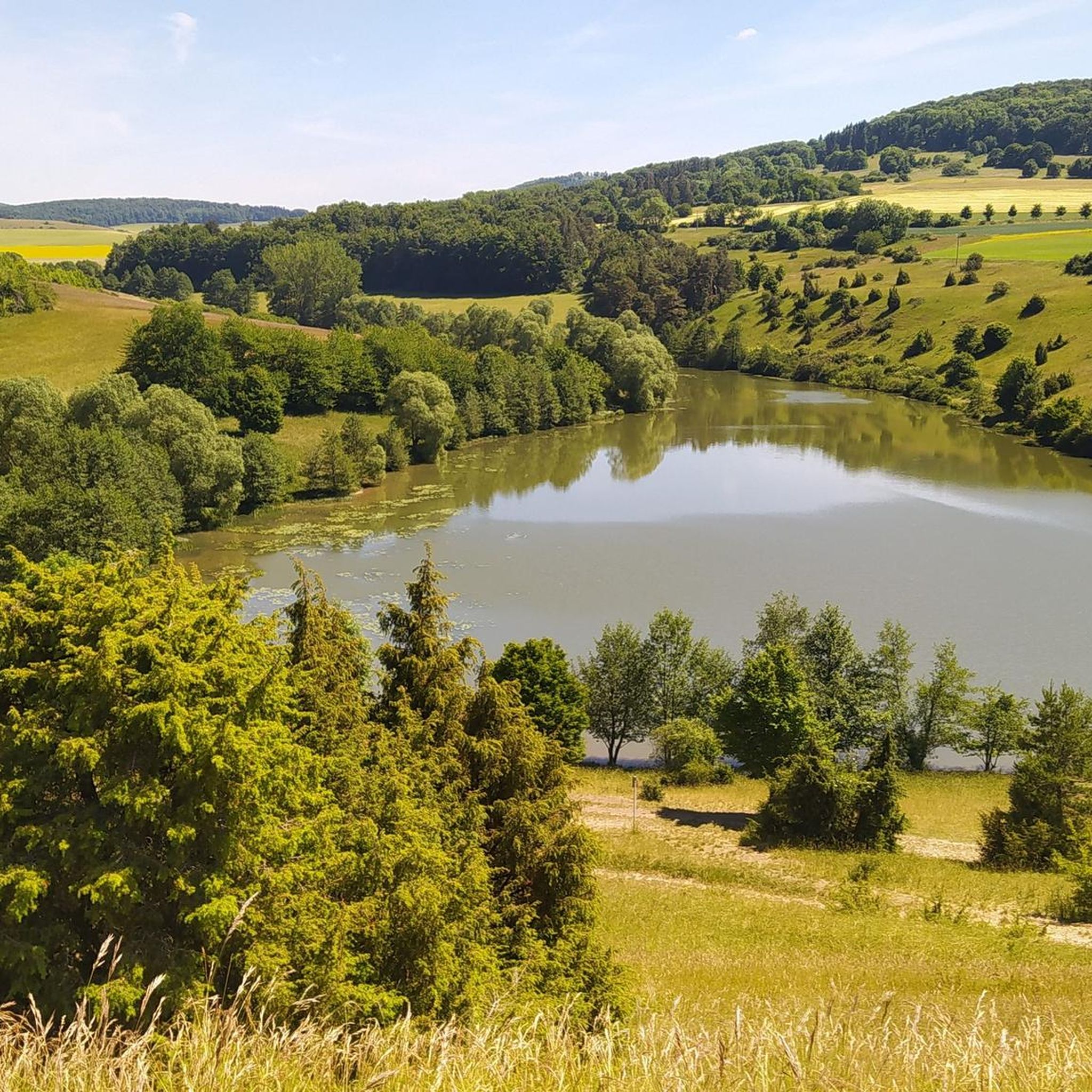
Yes, the Schwarzes Moor Nature Trail and its boardwalk are excellent for families, allowing children to explore nature safely. The educational information boards along the path make it an engaging experience. The nearby Grimmelbachtal with its reservoir and carp ponds can also be a pleasant spot for a family outing.
What do visitors enjoy most about the Schwarzes Moor?
Visitors particularly appreciate the unique experience of walking on the wooden plank path through the moor, which offers a great view without disturbing the delicate ecosystem. The well-designed information boards along the Schwarzes Moor Nature Trail are also highly praised for making the visit informative and engaging, sparking interest in the bog's formation, flora, and fauna.
Can I find viewpoints with scenic vistas in the area?
Yes, the Rhön landscape offers several scenic viewpoints. The Ellenbogen mountain features 'Noahs Segel,' a lookout point with expansive views. The Schwarzes Moor Observation Tower, when open, provides panoramic views over the moor. Additionally, the Grabenberg Border Tower offers views of the surrounding area alongside its historical significance.
Is the Rhön Biosphere Reserve accessible for visitors?
The Rhön Biosphere Reserve, where the Schwarzes Moor is located, is generally accessible. The boardwalks through the moor are designed to allow visitors to explore the unique environment. While specific accessibility for wheelchairs may vary by trail, the main boardwalks are typically well-maintained for easy walking.
What is the best time of year to visit Kaltensundheim for outdoor activities?
The warmer months, from late spring to early autumn (May to October), are generally ideal for outdoor activities like hiking and cycling in the Rhön Mountains. During this period, the weather is usually pleasant, and the natural landscapes, including the Schwarzes Moor, are at their most vibrant. Winter can offer opportunities for snow-related activities, but some trails might be less accessible.
Are there any hidden gems or lesser-known spots worth visiting?
Beyond the main attractions, exploring the Grimmelbachtal with its reservoir and carp ponds offers a tranquil escape. The charming River Felda, which flows through Kaltensundheim, provides picturesque scenery for leisurely strolls. Discovering the individual historic half-timbered houses scattered throughout the village also reveals the area's rich craftsmanship and history.
Can I bring my dog on trails around Kaltensundheim?
Many trails in the Rhön Mountains are dog-friendly, but it's always advisable to keep dogs on a leash, especially in nature reserves like the Rhön Biosphere Reserve, to protect wildlife and ensure a pleasant experience for all visitors. Specific rules may apply in certain protected areas, so look for local signage.
Most popular routes around Kaltensundheim
Most popular attractions around Kaltensundheim

Get inspired with the komoot mobile app


Explore more
Still not found the Highlight you’re looking for? See guides of the top attractions in other regions:
