Top 20 Caves around Esthal
Best caves around Esthal are found within the broader Palatinate Forest region in Germany, offering a variety of natural rock formations and historical sites. Esthal is situated in an area known for its diverse geological features, including numerous caves and rock shelters. The region provides opportunities to explore unique natural monuments and historical hideouts. These sites contribute to the area's appeal for outdoor enthusiasts interested in geological exploration and local history.
Best caves around Esthal
- The most popular caves is…
Last updated: June 19, 2026
Felsenmeer rock formations
Highlight (Segment) • Natural Monument
Showing Translation
Tip by

Dragon’s Cave at Drachenfels
Highlight • Cave
Translated by Google •
Tip by

Sign up now to discover places like this
Get recommendations on the best single tracks, peaks, & plenty of other exciting outdoor places.
Sign up for free
South Rock Viewpoint, Drachenfels
Highlight • Viewpoint
Two viewing platforms (Westfels and Südfels) offer panoramic views …
Translated by Google •
Tip by

Ramburg Castle Ruins
Highlight • Castle
Translated by Google •
Tip by

Hohler Fels Cave (Freischärler Hideout)
Highlight • Cave
Translated by Google •
Tip by

Sign up for free to discover even more caves around Esthal.
Sign up for free
Already have an account?
Start today with a free account
Your next adventure awaits.
Login or Signup
Tips from the Community

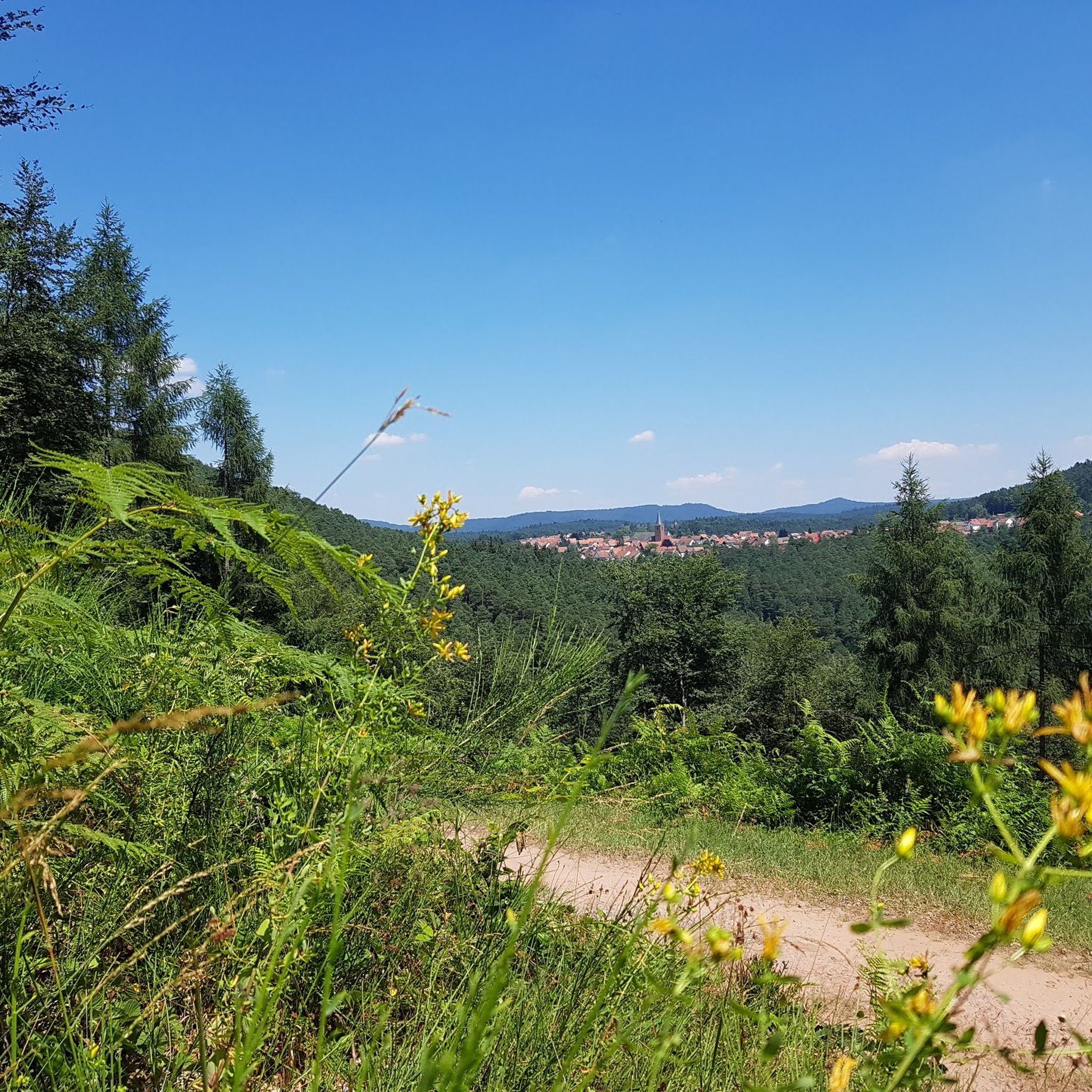
A highlight of the hike from Sankt Martin to Kalmit is the Felsenmeer. Many spectacular rock formations please the eye.
6
0

This is where the rebels hid in 1848... today it serves as a shelter at best
1
0

The Hohle Fels, occasionally also called Hohler Felsen, in the forest area of the Palatinate town of Deidesheim is a room-sized rock cave that was once used as a temporary residence by people - according to traces of work on the walls. Wikipedia
2
0

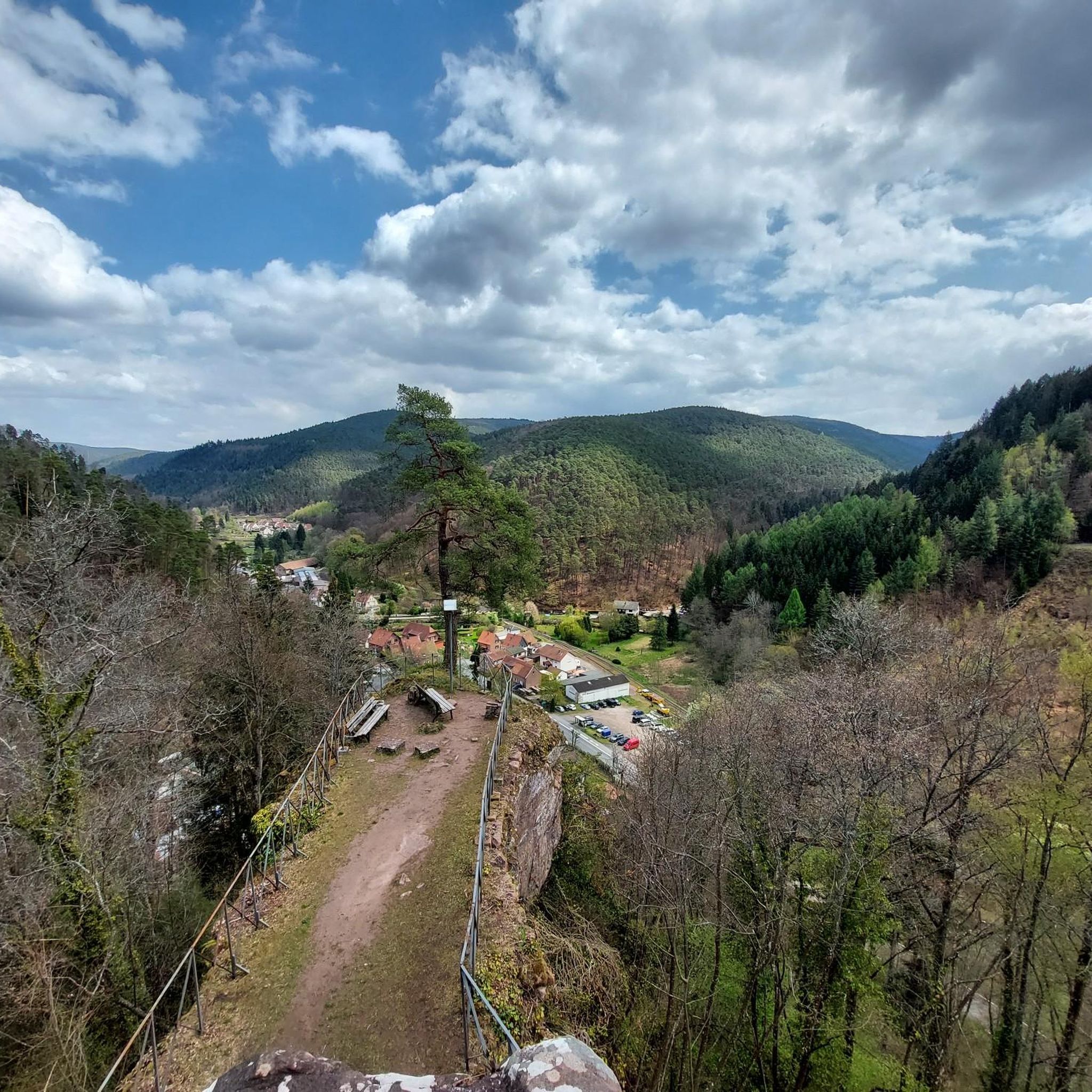
The Viewing Chamber (not to be confused with the Dragon's Cave!) is, as the name suggests, open on two sides (southwest and south/northeast) and lies just a few meters below the South Rock. There is NO railing here (except on the stairs). You reach the Viewing Chamber from the South Rock via an entrance at the base of a birch tree (which branches into two trunks) and then via a staircase hewn into the rock, which makes a 90-degree turn and has a metal railing at the bottom. A truly special place! One of the rock faces down here looks like a dragon's face!
8
0

Great adventurous trail along many different rock formations
2
0

This castle is worth seeing. A sensation for explorers of all ages! Detailed information can be found on an information board there. About the exciting history of the extensions and renovations; the changing owners with stories that have written about life, politics, natural events and social upheavals. The shield wall is still 18 meters high. You can walk around the castle and also into the cellar, which was carved into the rock and has the astonishing dimensions of 18 by 10 meters. The various parts of the castle are described on the back of the information board. And you have a good view of the valley from here.
6
0

I was there yesterday at -5 ° C. It's amazing how much warmer it felt in this artificial cave - even without a fire :-). Otherwise it is a beautiful place and the way there is also very beautiful, especially in winter (narrow hiking trail, of course, pleasant to walk) with a special atmosphere (at least that's how I felt yesterday morning).
2
0

Uffbasse Narrow access to the cave, a small railing ensures safety. You should still be sure-footed, pay particular attention to your children, a fall would be fatal. But your courage will be rewarded
8
0
Frequently Asked Questions
What types of caves can I explore around Esthal?
The region around Esthal, particularly within the broader Palatinate Forest, offers a variety of caves and rock formations. You can find natural geological features like the Felsenmeer rock formations with its various niches, as well as historically significant sites such as the Hohler Fels Cave (Freischärler Hideout), which served as a hiding place for volunteers in 1848.
Are there any historically significant caves in the Esthal region?
Yes, several caves in the Esthal region have historical importance. The Hohler Fels Cave (Freischärler Hideout) is known for sheltering Deidesheim volunteers in 1848. Additionally, the Dragon’s Cave at Drachenfels is steeped in legend, said to be where the lindworm from the Nibelungen saga once resided.
What are some unique natural rock formations to see near Esthal?
The Felsenmeer rock formations are a prominent natural monument near Esthal, featuring various caves and niches. A narrow path below the rocks allows for exploration, with opportunities to detour to rocky outcrops. The Hohfels Prehistoric Dwelling Cave, a tertiary limestone reef with an opening to the east, also offers unique geological interest.
Are there any caves with local legends or myths?
The Dragon’s Cave at Drachenfels is famously associated with the legend of the lindworm, a dragon-like creature from the Nibelungen saga. It's said that Siegfried killed the lindworm here, a tale that has captivated visitors for centuries.
What do visitors enjoy most about the caves in this area?
Visitors particularly enjoy the blend of natural beauty and historical intrigue. The Felsenmeer rock formations are popular for bouldering and exploration, while the Dragon’s Cave at Drachenfels draws interest for its legendary past. The historical significance of sites like the Hohler Fels Cave (Freischärler Hideout) also resonates with many.
Are there family-friendly caves to visit near Esthal?
While specific caves may require careful navigation, the Ramburg Castle Ruins, which includes a cave feature, is considered family-friendly and offers beautiful views. The Felsenmeer rock formations also provide an engaging environment for families to explore its various caves and niches.
What is the best time of year to visit caves around Esthal?
The Palatinate Forest region is generally pleasant for outdoor activities from spring through autumn. Visiting during these seasons ensures more comfortable temperatures for exploring the surrounding trails and accessing the caves. Winter visits are possible but may involve colder conditions and potentially slippery paths.
Do I need any special permits for caving in the Esthal area?
For general exploration of the publicly accessible caves and rock formations mentioned, such as Felsenmeer rock formations or Dragon’s Cave at Drachenfels, special permits are typically not required. However, for advanced caving expeditions or exploring private land, it's always advisable to check local regulations and obtain necessary permissions.
What should I wear for exploring caves in the Esthal region?
For exploring caves and their surrounding trails, wear sturdy, closed-toe shoes with good grip, as paths can be uneven or slippery. Layered clothing is recommended, as cave interiors can be cooler than outside temperatures. A headlamp or flashlight is also advisable for better visibility inside darker cave sections.
Are there any hidden gem caves around Esthal?
The Diebskeller Cave, a small sandstone cave in the Palatinate Forest, is considered a hidden gem. It's somewhat tucked away and requires descending a steep, mossy stone staircase to reach. Historically, it was used by highwaymen as a hiding place, adding to its unique charm.
What outdoor activities can I combine with a visit to the caves near Esthal?
The Esthal area is excellent for combining cave exploration with various outdoor activities. You can find numerous MTB trails, running routes, and cycling routes. Many trails lead through the Palatinate Forest, offering opportunities to discover other natural monuments and viewpoints.
Are there hiking trails that lead to or past these caves?
Yes, many hiking trails in the Palatinate Forest lead to or near the caves. For instance, the path to the Dragon’s Cave at Drachenfels is accessible via hiking routes, though the final approach to the cave itself is a dead end. The Felsenmeer rock formations are also integrated into various hiking paths.
Can I bring my dog on trails near the caves?
Many trails in the Palatinate Forest are dog-friendly, allowing you to bring your canine companion. However, specific access rules for the interiors of caves may vary. It's best to keep dogs on a leash and ensure they are comfortable with potentially narrow or dark spaces if you plan to enter a cave.
Most popular routes around Esthal
Most popular attractions around Esthal

Get inspired with the komoot mobile app


Explore more
Extend your search for the best caves by checking out these guides of the top ones around Esthal:
