Top 20 Natural Monuments around Haimendorfer Forst
Best natural monuments around Haimendorfer Forst are found within the larger Lorenzer Reichswald, an extensive forest landscape in Bavaria. This region features diverse natural elements, including unique sand dunes, varied wet forests, and numerous watercourses. The area offers a range of habitats that support a wide array of plant and animal species. Its geological formations and varied ecosystems make it a notable destination for exploring natural features.
Best natural monuments around Haimendorfer Forst
- The most popular natural monuments is Röthenbach…
Last updated: September 29, 2026
Wöhrder Lake
Highlight • Lake
Translated by Google •
Tip by

Along the Pegnitz River
Highlight (Segment) • River
Translated by Google •
Tip by

Sign up now to discover places like this
Get recommendations on the best single tracks, peaks, & plenty of other exciting outdoor places.
Bitterbach Gorge
Highlight (Segment) • Gorge
Translated by Google •
Tip by

Nuremberg Main Market
Highlight • Settlement
Translated by Google •
Tip by
Klingender Waterfall
Highlight • Waterfall
Translated by Google •
Tip by

Sign up for free to discover even more natural monuments around Haimendorfer Forst.
Already have an account?
Start today with a free account
Your next adventure awaits.
Tips from the Community

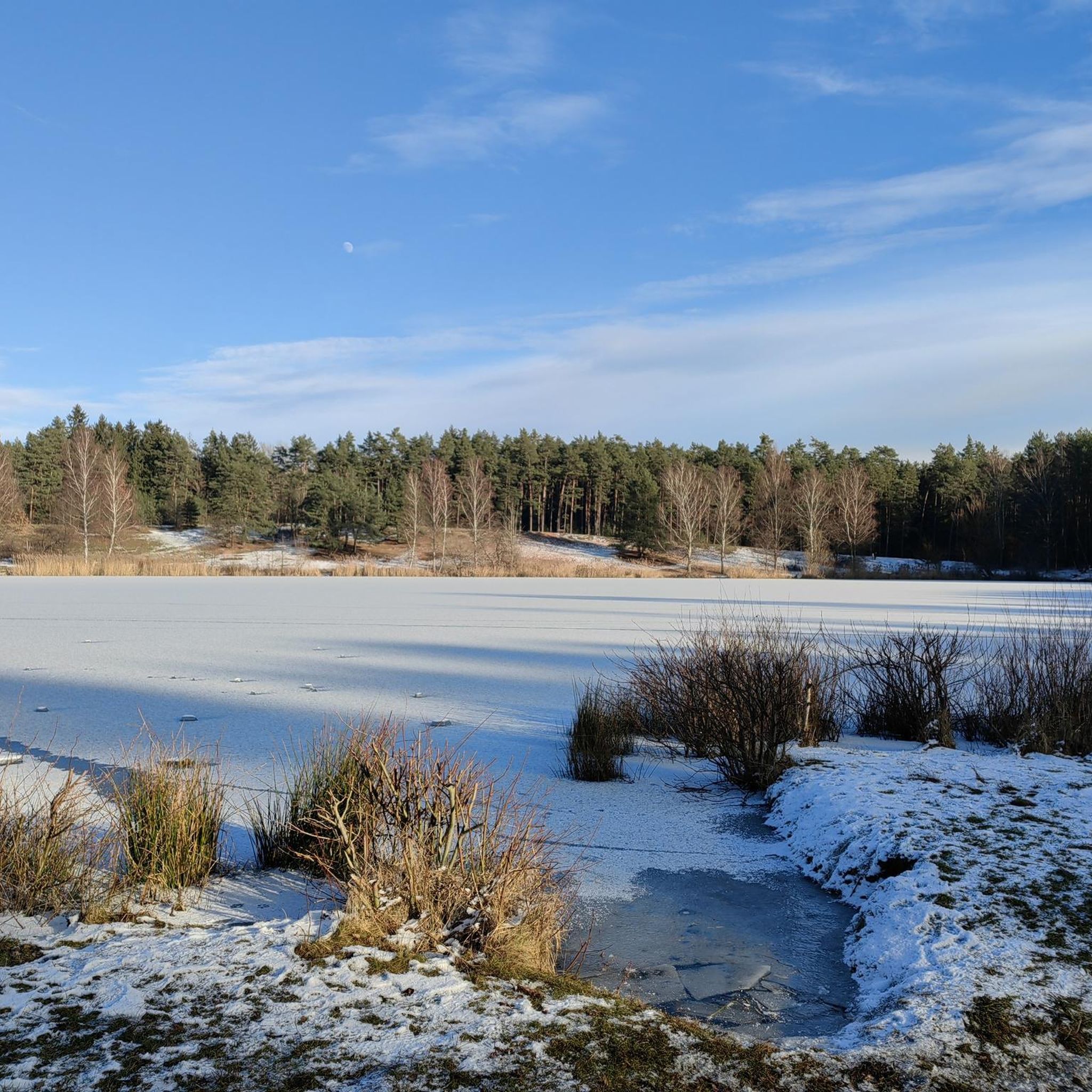
Wöhrder See, Nuremberg Wöhrder See, the youngest of Nuremberg's waterways, is a popular local recreation area in the heart of the city, providing a natural habitat for endangered species. It is not a natural lake, but was created by damming the Pegnitz River, which flows through it. The idea for an inner-city lake existed as early as the 1930s. The project was approved for implementation in October 1959. In addition to the City of Nuremberg, the State Water Management Authority and the Middle Franconia District were involved in the planning and construction. Recreational concerns were not the only priority in the design. The lake is also part of the extensive flood protection measures after the Second World War. Construction work began in 1968 with the Lower Wöhrder See and continued until 1972. The sand trap above the waterway was built between 1972 and 1975. The final construction phase of the Upper Wöhrder Lake was completed in 1981. Text / Source: Nürnberg Infos.de / Nürnberger Nachrichten https://nuernberginfos.de/gewaesser-nuernberg/woehrder-see.php
16
0

The main market is the central square of Nuremberg's old town. Unfortunately, the main market was badly damaged in World War II, and the only architecturally significant buildings left on the market square today are the Frauenkirche and the Schöne Brunnen. The weekly market takes place every weekday on the main market. The annual Nuremberg Christmas market is a particular attraction.
13
4

The weekly market also takes place on the main market. It is open from Monday to Saturday, with core sales times from 9 a.m. to 6 p.m. Around 40 traders offer their fresh products at stalls. In addition to fruit and vegetables, these include flowers, delicatessen specialties and cheese, eggs and poultry, honey, spices, coffee and smoothies. The culinary offering ranges from Nuremberg grilled sausages to oriental dishes, sushi and Baumstriezel.
18
6

A walk around the lake can be a lovely family walk. A total of 6.5 km with no elevation gain and a lovely, varied route.
19
0

"You gentlemen and women, who were once children, are again today", says the Christ Child when he greets his guests at the Nuremberg Main Market at the opening of the Nuremberg Christkindlesmarkt. Now, in the cold season, the place really blossoms.
21
8

Always fascinating, sometimes more, sometimes less water and again completely different when you walk along the stream bed in dry weather
8
0

In 1959 the Nuremberg city council decided to create the Wöhrder See. It was completed in 1981. Before that, the Pegnitz flowed through a floodplain in two arms, which was often flooded. In addition to the flood exposure of Nuremberg's old town, a much-used recreational area was created with the Wöhrder See and the bomb crater landscape in the Pegnitzwiesen, which the Second World War had left behind, was eliminated. (https://de.wikipedia.org/wiki/W%C3%B6hrder_See)
13
0

very nice lake with a very nice stretch of beach
10
0
Frequently Asked Questions
What unique natural features can I explore in and around Haimendorfer Forst?
Beyond the specific natural monuments, the broader Lorenzer Reichswald, which includes Haimendorfer Forst, is known for its unique natural features. You can explore extensive sand dunes, which are among Bavaria's largest and offer a distinct landscape shaped by ice-age history. The region also features diverse wet forests, including black alder and ash swamp forests, vital for biodiversity, and numerous natural watercourses like the Schneidersbach and Röthenbach.
Are there family-friendly natural monuments to visit in Haimendorfer Forst?
Yes, several natural monuments are suitable for families. Wöhrder Lake is a popular local recreation area offering a 6.5 km route perfect for walks and sports. The path Along the Pegnitz River is also family-friendly, with beautiful paths along the riverbanks. Additionally, the Klingender Waterfall is considered family-friendly, especially when combined with a visit to the Hüttenbach Gorge.
What kind of outdoor activities can I do near the natural monuments?
The area around Haimendorfer Forst offers a variety of outdoor activities. You can enjoy hiking on numerous trails, including easy hikes around the region. For cyclists, there are many road cycling routes available. You can find more details on these activities in the guides for Hiking around Haimendorfer Forst, Easy hikes around Haimendorfer Forst, and Road Cycling Routes around Haimendorfer Forst.
What is special about the gorges in Haimendorfer Forst?
Haimendorfer Forst is known for its impressive gorges. The Röthenbach Gorge offers a scenic hiking route along the stream, featuring bridges and many bends, providing a varied experience. The Bitterbach Gorge, cut into the Burgsandstein, provides a different experience throughout the seasons, making it worth visiting multiple times a year.
What do visitors particularly enjoy about the natural monuments in this region?
Visitors appreciate the diverse natural environment and recreational opportunities. Many enjoy the peaceful walks around Wöhrder Lake, noting it as a great local recreation area. The scenic hiking routes along streams, such as in the Röthenbach Gorge, are also highly praised for their natural beauty and shade in summer. The seasonal changes in places like the Bitterbach Gorge also make for repeated visits.
Are there any waterfalls to see in Haimendorfer Forst?
Yes, you can visit the Klingender Waterfall near Haimendorf. This natural monument has a fall height of about 5 meters and is designated as a geotope. It's particularly recommended to visit in winter when it's frozen, but it's also beautiful at other times of the year, especially when combined with the Hüttenbach Gorge.
What kind of terrain can I expect when exploring the natural monuments?
The terrain around Haimendorfer Forst is quite varied. You'll find paths along riverbanks, through dense forests, and even unique sand dune landscapes within the broader Lorenzer Reichswald. Gorges like the Bitterbach Gorge are cut into Burgsandstein, offering distinct geological formations. While many paths are easy, some areas, especially within gorges, might present intermediate challenges.
What is the best time of year to visit the natural monuments around Haimendorfer Forst?
The natural monuments offer different experiences throughout the year. For instance, the Bitterbach Gorge is noted for its changing appearance with the seasons. The Klingender Waterfall is particularly worth seeing in winter when it's frozen, and the Röthenbach Gorge provides a shady and pleasant hiking experience in summer. Spring after snowmelt can also be ideal for seeing water flow in the gorges.
Are there opportunities for long walks or sports around the natural monuments?
Absolutely. Wöhrder Lake offers a 6.5 km route around its perimeter, perfect for walks, jogging, or other sports. The numerous hiking and cycling trails throughout the Lorenzer Reichswald, including those along the Pegnitz River and through the various gorges, provide ample opportunities for longer excursions and active recreation.
How do the natural monuments contribute to the local ecosystem?
The natural monuments and features in and around Haimendorfer Forst are crucial for the local ecosystem. The diverse habitats, from dry sand dunes to wet forests and flowing streams like the Schneidersbach and Röthenbach, support a wide array of plant and animal species, including rare ones. As part of the large, protected Nuremberg Reichswald, these areas contribute to biodiversity, climate regulation, and air and water purification, serving as an important green lung for the surrounding urban areas.
Can I find any historical or cultural landmarks near the natural monuments?
While the focus is on natural monuments, the path Along the Pegnitz River takes you past old buildings and the nature reserve Pegnitztal east, offering glimpses into the region's past alongside its natural beauty. You might also find historical context related to the formation of the sand dunes, which are a testament to the region's ice-age history.
Most popular routes around Haimendorfer Forst
Most popular attractions around Haimendorfer Forst

Get inspired with the komoot mobile app


Explore more
Extend your search for the best caves by checking out these guides of the top ones around Haimendorfer Forst:
