The best gravel rides around Échevannes
4.8
(9)
45
riders
14
rides
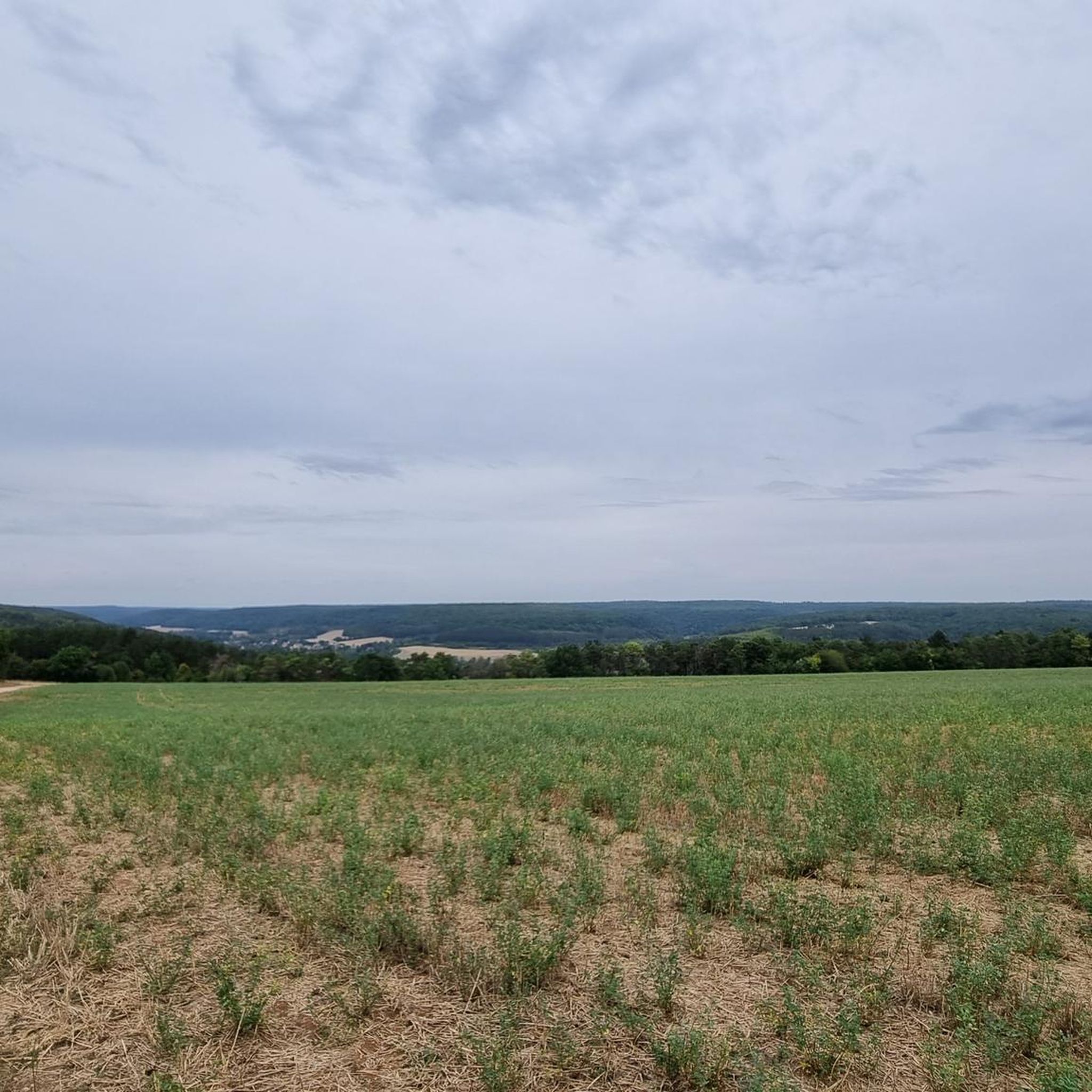
Gravel biking around Échevannes features a landscape characterized by rolling hills, agricultural plains, and river valleys, offering varied terrain for cyclists. The region includes a mix of open fields and wooded sections, with routes often following quiet country roads and gravel paths. Elevation changes are present, ranging from gentle ascents to more challenging climbs, providing diverse experiences for gravel bikers.
Best gravel bike trails around Échevannes
- The most popular gravel bike trail is Ferme du Fossé – The Ignon at…
Last updated: July 3, 2026
5.0
(1)
21
riders
95.0km
06:12
860m
860m
Hard gravel ride. Very good fitness required. You may need to push your bike for some segments of this route.
4.3
(3)
5
riders
41.2km
02:40
390m
390m
Moderate gravel ride. Good fitness required. Mostly paved surfaces. Suitable for all skill levels.

Sign up for free
4.5
(2)
7
riders
67.1km
04:44
890m
890m
Hard gravel ride. Very good fitness required. Mostly paved surfaces. Suitable for all skill levels.
5.0
(1)
5
riders
19.5km
01:12
160m
160m
Hard gravel ride. Good fitness required. You may need to push your bike for some segments of this route.
5.0
(1)
3
riders
18.3km
01:08
140m
140m
Easy gravel ride. Great for any fitness level. Mostly paved surfaces. Suitable for all skill levels.
Get access to more routes and recommendations from other explorers.
Sign up for free
Already have an account?
Our route recommendations are based on thousands of hikes, rides, and runs completed by other people on komoot.
Start today with a free account
Your next adventure awaits.
Login or Signup


Tips from the Community

The Dijon Owl (La Chouette de Dijon) is a small medieval sculpture on the north buttress of the Église Notre-Dame in Dijon, and has been considered a lucky charm for centuries. According to tradition, you should touch the owl with your left hand while making a wish, without looking, to bring good luck. Its exact origin is unknown, but it is suspected that the owl symbolized wisdom or served as the signature of a medieval stonemason's guild. Due to frequent touching, the owl has been restored several times, including after vandalism in 2001. The owl also marks the starting point of the "Parcours de la Chouette," a walking route that takes in 22 Dijon landmarks, recognizable by small bronze owls set into the pavement. The owl has become an iconic and beloved symbol of the city.
1
0
The Palais des Ducs et des États de Bourgogne is one of Dijon's most striking buildings and reflects the rich history of the Burgundian Dukes. The complex originated in the Middle Ages and was expanded in later centuries with elements of classical style, including the stately façade with columns and wrought-iron balconies. Strategically located on the Place de la Libération, the palace forms the historical and administrative heart of the city. Inside, you'll find the Musée des Beaux-Arts, with one of the oldest and most important art collections in France. The combination of architecture, culture, and historical significance makes this palace an essential visit when exploring Dijon.
1
0

Very beautiful park, worth a stop
0
0

magnificent little path between Foncegrives and Selongey
0
0

In place of an old gate in the 12th-century city wall, the architect Jean-Philippe Maret had this monument built between 1786 and 1788 in homage to the Prince of Condé, governor of Burgundy. The building was then named Porte Condé. The monument was connected by walls to the ramparts that still existed, and its gate was closed by a gate, traces of which can still be seen. During the Revolution in 1791, the gate was named the Arc de la Liberté; in the 19th century, it became Porte Guillaume, in reference to Guillaume de Volpiano, abbot of the Abbey of Saint-Bénigne.
1
0
Darcy Garden or Darcy Square is a 19th-century neo-Renaissance public garden in Darcy Square, in the city center of Dijon in Côte-d'Or. It is dedicated to the hydraulic engineer Henry Darcy (1803-1858) and has been listed as a historic monument since 2015.
0
0

Very nicely laid out and definitely the highlight of the park.
4
0

Restaurants in central squares often cater to tourists. Here in Dijon, some of the establishments on Place de la Libération are highly recommended, such as Le Pré au Clercs.
4
0
Frequently Asked Questions
What are the general difficulty levels of gravel bike trails around Échevannes?
The gravel biking routes in Échevannes offer a range of difficulties. You'll find a mix of easy, moderate, and difficult trails, catering to various skill levels. For instance, the Gémeaux Market Hall – Water point loop from Gemeaux is an easy option, while others like the The line from Vivey to Musseau – Saint Gertrude Chapel loop from Selongey present a more challenging experience.
Are there any easy gravel bike routes suitable for beginners in Échevannes?
Yes, beginners can find suitable routes. The region offers several easy options, such as the Gémeaux Market Hall – Water point loop from Gemeaux, which is rated as easy and provides a gentle introduction to gravel biking in the area.
What options are available for experienced gravel bikers seeking a challenge?
Experienced riders looking for a challenge will find several difficult routes. For example, the The line from Vivey to Musseau – Saint Gertrude Chapel loop from Selongey is a demanding 67.9 km route with significant elevation gain, perfect for those seeking a longer, more strenuous ride.
What are some longer gravel biking options in the Échevannes area?
For longer rides, consider the The line from Vivey to Musseau – Saint Gertrude Chapel loop from Selongey, which spans nearly 68 km. This route offers an extended journey through the varied terrain of the region.
When is the best time of year to go gravel biking in Échevannes?
Generally, spring and autumn offer the most pleasant conditions for gravel biking in Échevannes, with milder temperatures and beautiful scenery. Summer can also be enjoyable, though it's advisable to ride earlier in the morning or later in the afternoon to avoid the midday heat. Winter rides are possible but be prepared for potentially muddy sections and colder weather.
How does weather typically affect gravel biking conditions in Échevannes?
The region's mix of open fields and wooded sections means conditions can vary. Rain can make gravel paths and country roads muddy, especially in wooded areas. During dry spells, some sections might be dusty. Always check the local weather forecast before heading out, particularly if recent rainfall has occurred.
Are most gravel bike routes around Échevannes circular?
Yes, all the highlighted gravel bike routes in this guide, such as the Ferme du Fossé – The Ignon at Is-sur-Tille loop from Selongey and the The Ignon at Is-sur-Tille – Mont de Marcilly loop from Is-sur-Tille, are designed as loops, allowing you to start and finish at the same point.
What can I see along the gravel bike trails or nearby Échevannes?
While riding, you'll experience a landscape of rolling hills, agricultural plains, and river valleys. For specific points of interest, consider exploring nearby attractions like the natural wonder of Bèze Spring, the historic Gémeaux Market Hall, or the charming Bèze, medieval village.
Are there any less-known or 'hidden gem' gravel routes worth exploring?
While not explicitly 'hidden,' the Venarde Pond – Gémeaux Market Hall loop from Is-sur-Tille is a local favorite that leads through rural landscapes and past local landmarks, offering a pleasant and perhaps less crowded experience compared to the most popular trails.
What do other komoot users say about gravel biking in Échevannes?
The gravel biking experience in Échevannes is highly rated by the komoot community, with an average score of 4.9 stars from more than 7 reviews. Users often praise the varied terrain, the mix of open countryside and wooded sections, and the well-maintained gravel paths that make for enjoyable rides.
Where do the gravel bike trails typically start in Échevannes?
Many routes in the Échevannes area begin from nearby towns such as Selongey or Is-sur-Tille. For example, the popular Ferme du Fossé – The Ignon at Is-sur-Tille loop from Selongey starts from Selongey, making these towns convenient points to begin your adventure.
Most popular routes around Échevannes
Most popular attractions around Échevannes

Get inspired with the komoot mobile app


Explore more
Browse the best Gravel rides in other regions.
