The best gravel rides around Cravant-Les-Côteaux
43
riders
9
rides
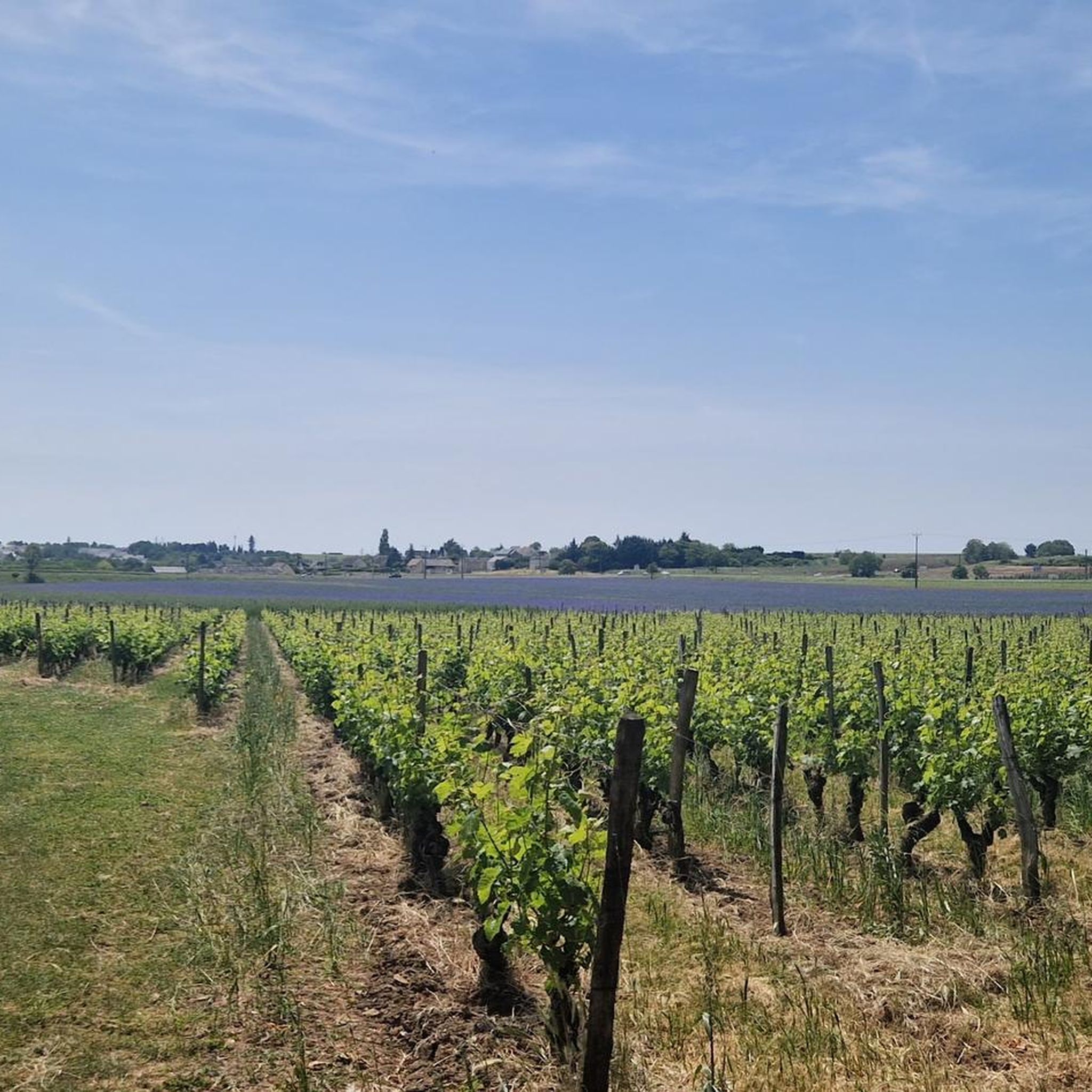
Gravel biking around Cravant-Les-Côteaux offers diverse landscapes within the Loire-Anjou-Touraine Regional Natural Park. The terrain features gravel paths traversing extensive vineyards and forests, alongside routes that follow the banks of the Loire and Vienne rivers. This region is characterized by a network of farm tracks, forest trails, and secondary roads, providing varied sections from fast, smooth surfaces to more technical stretches with sand, roots, or loose gravel. Limestone hills overlook the plain along the Vienne River, contributing to the varied…
Last updated: May 21, 2026
8
riders
Hard gravel ride. Good fitness required. You may need to push your bike for some segments of this route.
5
riders
48.7km
03:04
360m
360m
Moderate gravel ride. Good fitness required. Mostly paved surfaces. Suitable for all skill levels.

Sign up for free
6
riders
58.1km
03:36
150m
150m
Moderate gravel ride. Good fitness required. Mostly paved surfaces. Suitable for all skill levels.
5
riders
55.5km
03:56
620m
620m
Hard gravel ride. Very good fitness required. Mostly paved surfaces. Suitable for all skill levels.
6
riders
90.3km
05:42
760m
760m
Hard gravel ride. Very good fitness required. Mostly paved surfaces. Suitable for all skill levels.
Get access to more routes and recommendations from other explorers.
Sign up for free
Already have an account?
Our route recommendations are based on thousands of hikes, rides, and runs completed by other people on komoot.
Start today with a free account
Your next adventure awaits.
Login or Signup
Tips from the Community

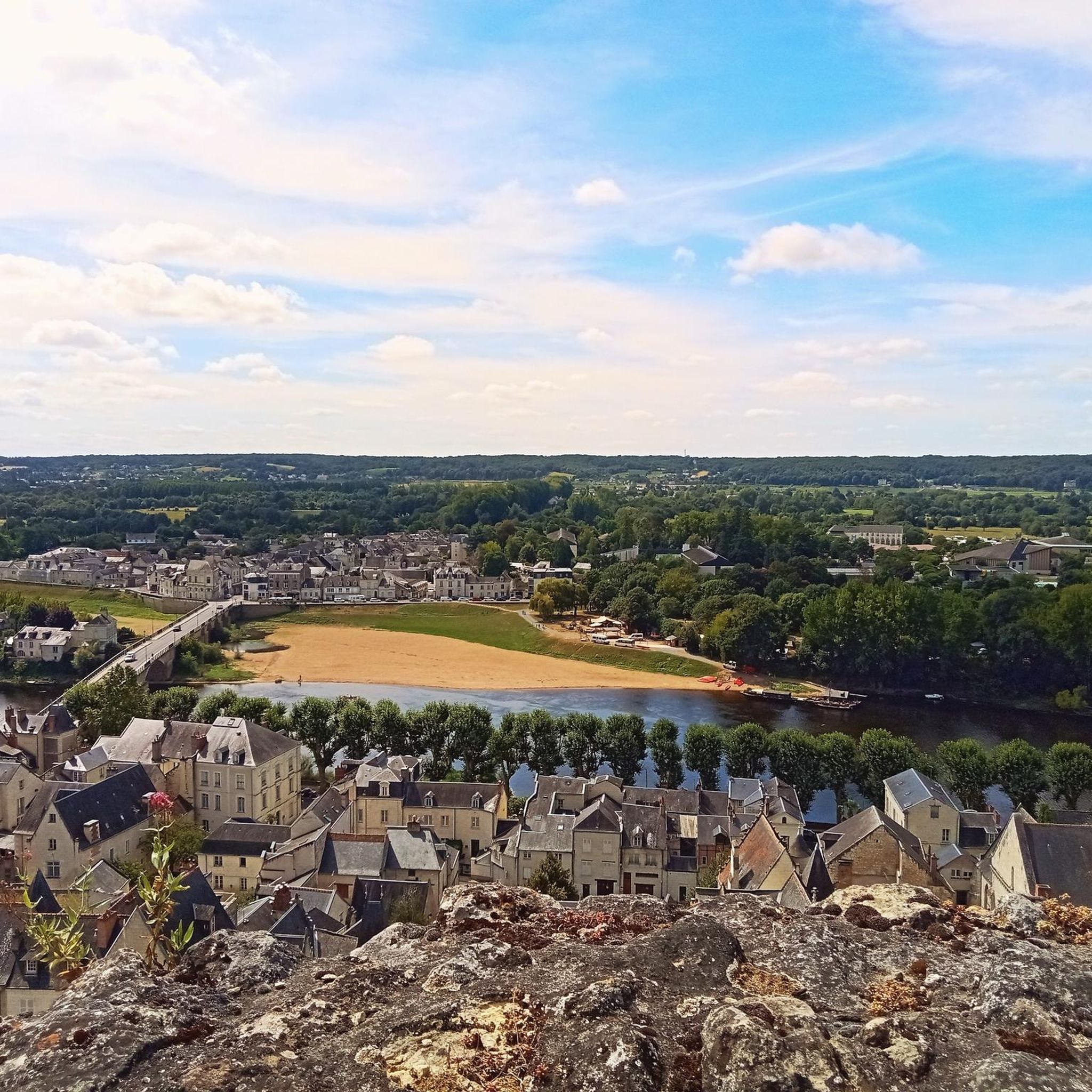
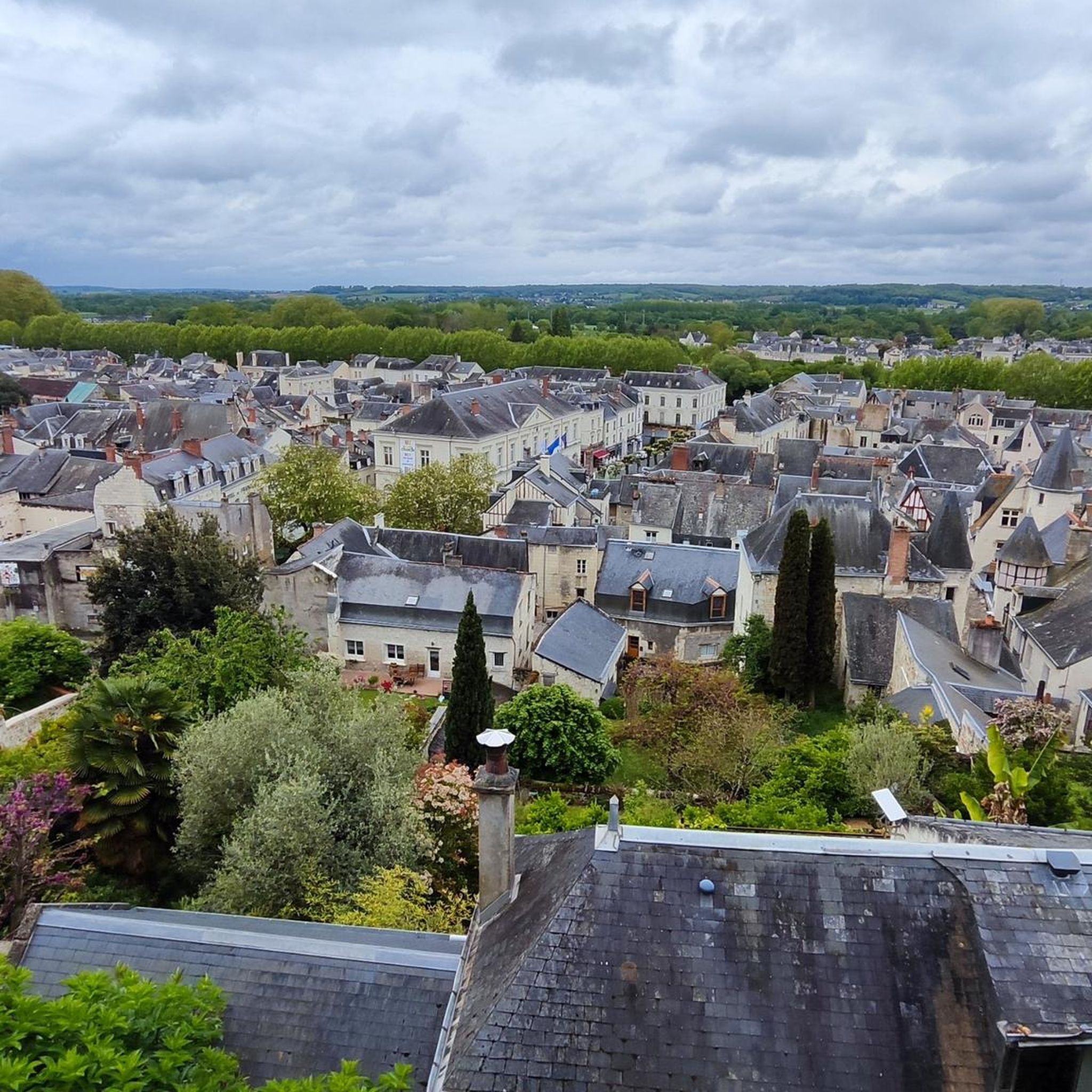
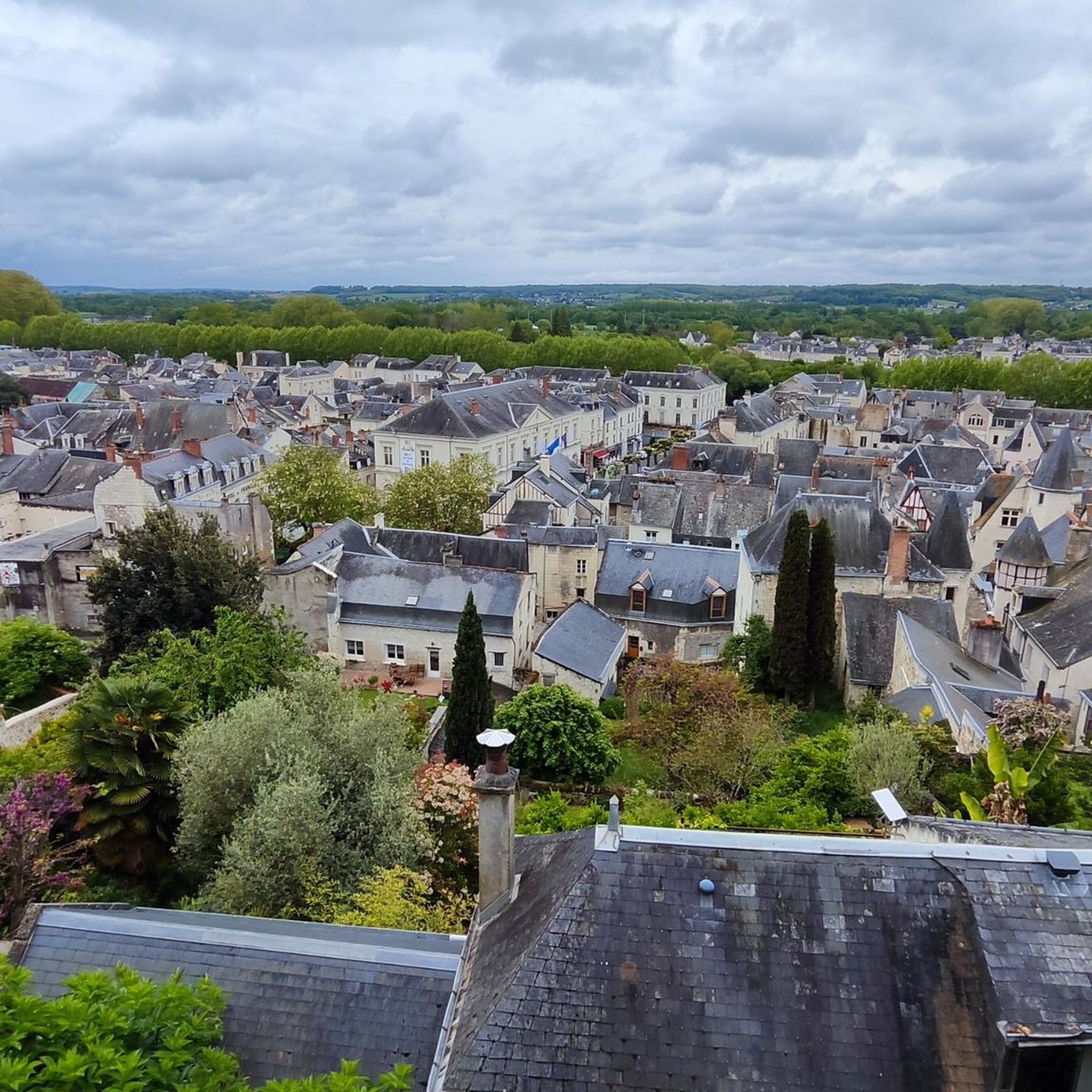
History in brief Antiquity: the site is strategically located on a promontory and has been inhabited for 3,000 years. It was not fortified until the end of the Roman Empire. Middle Ages: in 1154, the new King of England, Henry II Plantagenet, became ruler of an empire stretching from Scotland to the Pyrenees and made Chinon his continental capital. He had a large palace built next to the fortress, which has now disappeared. In 1189, abandoned by his sons, Richard the Lionheart and John Lackland, and fleeing from the King of France, he eventually died there. Philippe Auguste had the defensive Tour du Coudray built there after the siege of 1205. Renaissance: in 1454, the fortress became the main residence of Queen Marie d'Anjou, who lived there without her husband. She spent lavishly on decorating the house to her taste. From the 16th century onwards, the fortress was gradually abandoned and fell into disrepair. Despite the dangerous nature of the terrain, it became a public promenade in 1824 and was listed as a monument in 1840. The restoration of the estate began in 1854 thanks to the efforts of the writer Prosper Mérimée. Source: https://loirelovers.fr/en/visit-royal-fort-chinon/
6
0
Nice location to take a break here. Picnic benches are set up in the shaded area. The terrace of the summer bar La Guinguette has a nice view of the river Vienne and the Royal Fort of Chinon.
5
0
This impressive suspension bridge spans the Loire between La Chapelle-aux-Naux and Langeais and was originally completed in 1849. The bridge has been repaired and rebuilt many times and has a two-lane road over the Loire. On the Langeais side, a walk along the banks of the Loire, on both sides of the bridge, is highly recommended. The Langeais bridge is a stubborn bridge. It has been rebuilt five times! The story begins in 1848, the year in which King Louis Philippe authorised the construction of a "wire bridge", as it was then called (bridge 1). But wires are excellent lightning conductors! And 10 years after its opening in 1859, the bridge collapsed into the Loire after a heavy storm, its deck and suspension elements. Two years later in 1861, the bridge was repaired and operational again as a toll bridge (bridge 2). But shortly afterwards, in 1870, war broke out and the advance of the Prussian enemy had to be slowed down. Boom! Bridge was blown up (bridge 3) The fourth was completed in 1914, but then came the... car! They were heavy, they came and went! The bridge therefore had to be extensively rebuilt to bear the weight of modernity. This happened in the 1930s, and the opportunity was taken to decorate the bridge with its very special Gothic pillars, which reflected the Gothic style of the castle; the two form a mirror image. Bridge 4 was built! All is well, all is well... but then it is June 1940. And this time it is the Germans who have to be stopped. To stop the invader, the bridge was blown up again. After first using a ferry and then a temporary footbridge, the inhabitants waited until 1949 for a bridge over the Loire (bridge 5). The bridge of Langeais is the only bridge between Tours and Port Boulet. It is now a rather imposing bridge with a turbulent history.
2
0
The Château de Langeais , a former royal estate and property of the Institut de France, is one of the major sites in the Loire Valley . Near Tours , in the heart of the Loire Valley , it offers a guided tour of fifteen rooms, decorated with richly carved medieval furniture . You will discover a collection of tapestries and the reconstruction of the royal wedding of Anne of Brittany, told by Stéphane Bern . Langeais, a Renaissance Loire castle, will surprise you with its park planted with cedars and sequoias and its playful elements. More information on https://chateau-de-langeais.com/
2
0

Magnificent view of the Loire. Possible stopover (picnic, meal, bar)
0
0
WARNING For safety reasons, the bridge may only be crossed by hand! Enjoy the great current at walking pace.
5
0
On the horizon, when the weather is clear, you can see the silhouette of the Château de Ussé. This fairytale castle has a magical appearance that overlooks the Indre and the Loire. It is so beautiful that it inspired Charles Perrault for his Sleeping Beauty. Triggered? Drive there and you will end up in a fairytale world. Young and old, immerse yourself in castle life and the scenes from this fairytale come to life before your eyes. Follow in the footsteps of Vauban, Perrault, Chateaubriand, Le Nôtre and the Blacas family, who still live in this illustrious castle in the Loire Valley.
5
0
Just enjoy the great current of the Loire. Small beaches or picnic benches give you the opportunity to take a breather.
5
0
Frequently Asked Questions
How many gravel bike trails are available around Cravant-Les-Côteaux?
There are 15 gravel bike trails around Cravant-Les-Côteaux listed on komoot. The majority, 12 routes, are rated as moderate, with 3 routes considered difficult, offering options for various skill levels.
What kind of terrain can I expect on gravel bike trails in Cravant-Les-Côteaux?
The region offers a diverse gravel biking experience. You'll find gravel paths winding through extensive vineyards and dense forests, as well as routes along the banks of the Loire and Vienne rivers. The network includes farm tracks, forest trails, riverside paths, and small secondary roads, with sections ranging from fast, smooth surfaces to more technical stretches with sand, roots, or loose gravel.
Are there any family-friendly gravel bike routes in the area?
While specific 'easy' routes are not highlighted, the varied terrain includes less technical sections suitable for families. Routes that stick to riverside paths or smoother vineyard tracks might be more appropriate. Always check the route details on komoot for elevation and surface descriptions to ensure it matches your family's ability.
What are the best seasons for gravel biking in Cravant-Les-Côteaux?
The region is enjoyable for gravel biking across multiple seasons. Spring and autumn offer pleasant temperatures and beautiful scenery, especially through the vineyards. Summer can be warm, but routes through forests provide shade. Even winter can be an option, though some technical sections might be muddier or more challenging due to weather conditions.
Can I find routes that offer scenic viewpoints?
Yes, the region is known for its picturesque landscapes. You can enjoy panoramic views of the Vienne Valley from spots like 'Le Panorama' at 'La Croix Boissée'. Many routes also traverse the renowned Chinon vineyards, offering stunning vistas. For a specific viewpoint, consider exploring Views of Chinon and beyond.
Are there any circular gravel bike routes available?
Many of the gravel bike trails in Cravant-Les-Côteaux are designed as loops. For example, the View of Candes-Saint-Martin – Saumur loop from Chinon and the View of Château de Chinon – Chinon Fortress loop from Chinon are popular circular options, allowing you to start and finish at the same point.
What historical or cultural attractions can I see along the gravel bike trails?
The region is rich in history and culture. You can cycle past the Carolingian Sanctuary, known as 'La Vieille Église du Vieux Bourg', an exceptional example of early Romanesque art. Many routes also offer views of impressive châteaux. Notable castles nearby include Ussé Castle and the Royal Fortress of Chinon. The area is also famous for its Chinon vineyards, with opportunities to visit local wineries.
Are there any routes that pass through forests or natural reserves?
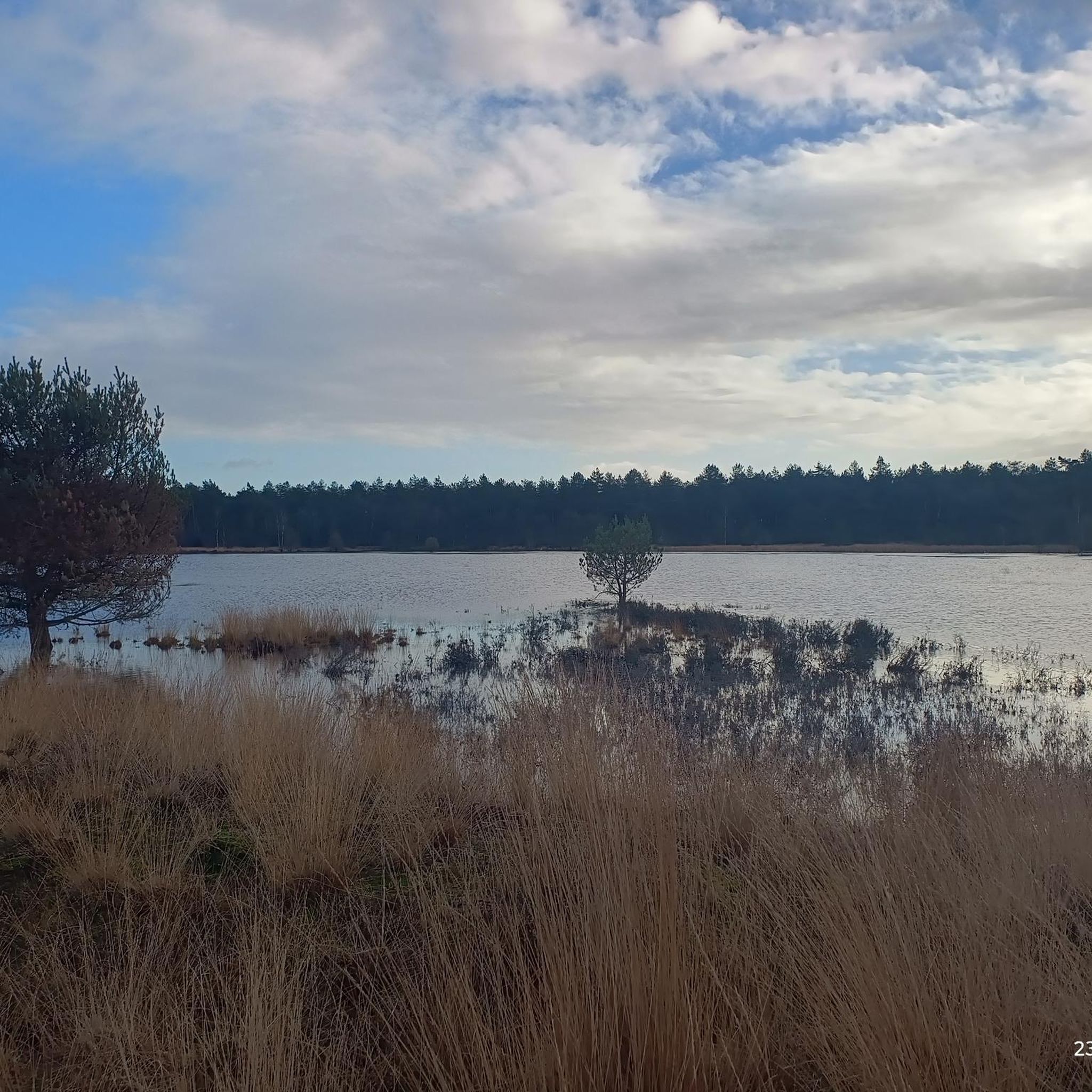
Absolutely. The region is part of the Loire-Anjou-Touraine Regional Natural Park and features significant natural areas. You can find routes that take you through the Chinon Forest Complex and Ruchard Heathlands, recognized as a special conservation zone. The Chinon State Forest is a prominent natural feature you might encounter.
What do other gravel bikers enjoy most about the trails in Cravant-Les-Côteaux?
The gravel bike trails in Cravant-Les-Côteaux are highly rated by the komoot community, with an average score of 4.6 stars from over 6 reviews. Riders often praise the diverse landscapes, from extensive vineyards to dense forests and scenic riverbanks, as well as the variety of terrain that keeps rides engaging.
Is it possible to access the gravel bike trails using public transport?
While Cravant-Les-Côteaux itself is a smaller commune, nearby larger towns like Chinon may offer better public transport connections. It's advisable to check local bus or train schedules to see if they accommodate bicycles or if there are convenient starting points accessible via public transport that allow you to connect to the gravel network.
Are there places to park my car when starting a gravel bike ride?
Yes, you can typically find parking in Cravant-Les-Côteaux or in nearby villages and towns that serve as starting points for routes. Look for designated parking areas near trailheads or in village centers. Always ensure parking is permitted and secure before leaving your vehicle.
Can I bring my dog along on the gravel bike trails?
Many outdoor trails in France, especially those through natural parks and forests, are generally dog-friendly, provided your dog is kept under control, ideally on a leash. However, specific rules can vary, particularly in protected areas or private vineyard lands. Always check local signage and be respectful of wildlife and other trail users.
Most popular routes around Cravant-Les-Côteaux
Most popular attractions around Cravant-Les-Côteaux

Get inspired with the komoot mobile app


Explore more
Browse the best Gravel rides in other regions.
