The best gravel rides around Salteras
4.1
(24)
752
riders
124
rides
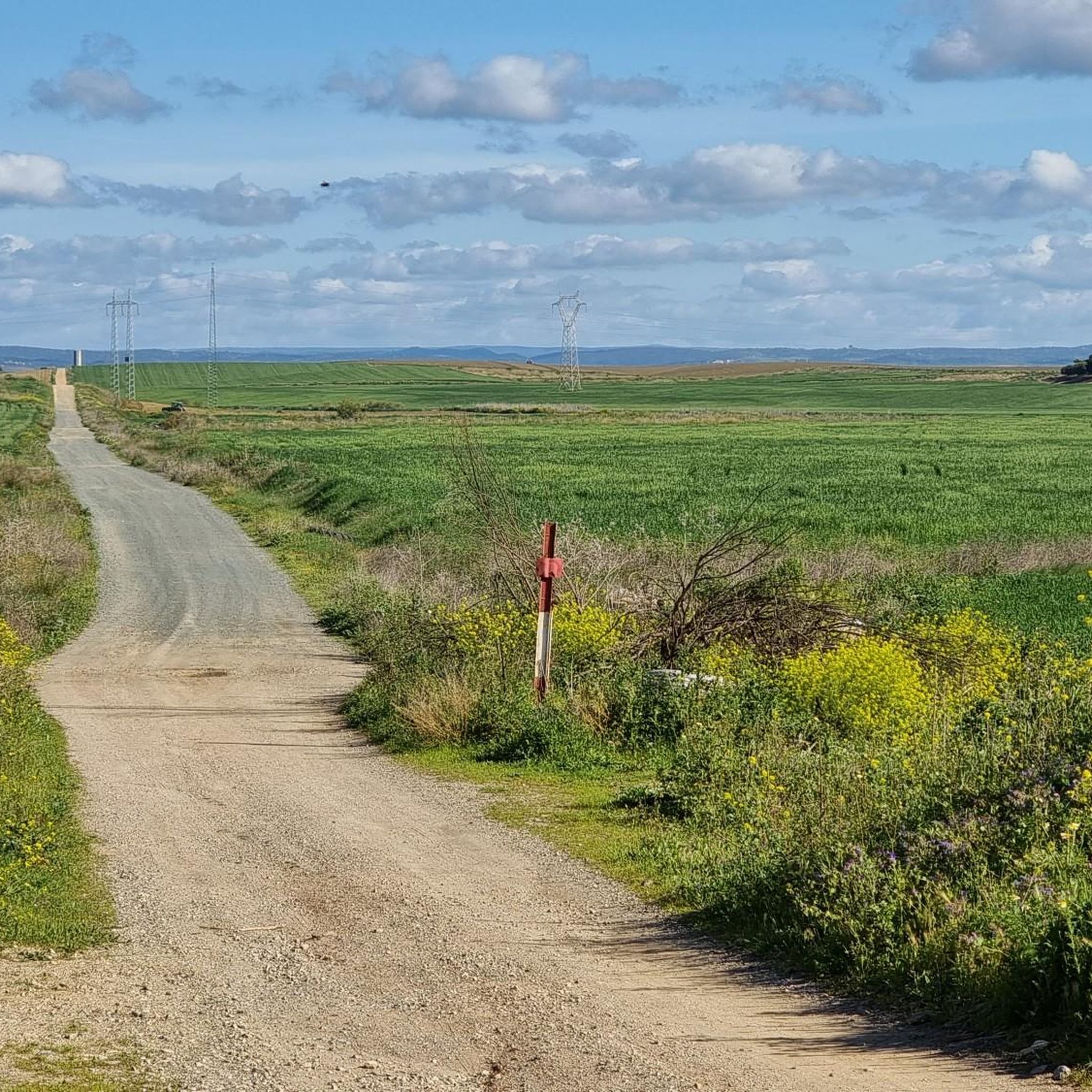
Gravel biking around Salteras offers a diverse landscape characterized by gently rolling terrain, historical pathways, and a mix of open fields and riverine environments. The region features a network of trails that connect urban green spaces with more natural, wooded areas and ancient routes. These gravel bike routes provide varied surfaces, from compacted dirt to gravel paths, suitable for different skill levels. The area's topography generally presents moderate elevation changes, making it accessible for extended rides.
Best gravel bike trails…
Last updated: May 28, 2026
31
riders
58.1km
04:08
300m
300m
Moderate gravel ride. Good fitness required. Mostly paved surfaces. Suitable for all skill levels.
4.0
(1)
10
riders
Moderate gravel ride. Good fitness required. Mostly paved surfaces. Suitable for all skill levels.

Sign up for free
4.0
(1)
17
riders
46.3km
03:06
110m
110m
Moderate gravel ride. Good fitness required. Mostly paved surfaces. Suitable for all skill levels.
14
riders
83.9km
06:32
380m
380m
Hard gravel ride. Very good fitness required. You may need to push your bike for some segments of this route.
19
riders
38.2km
02:51
320m
320m
Moderate gravel ride. Good fitness required. Mostly paved surfaces. Suitable for all skill levels.
Get access to more routes and recommendations from other explorers.
Sign up for free
Already have an account?
Our route recommendations are based on thousands of hikes, rides, and runs completed by other people on komoot.
Start today with a free account
Your next adventure awaits.
Login or Signup
Tips from the Community

View of the Edificio Torretriana, an administrative building of the Junta de Andalucia, built in 1993. It is known for its unique circular shape and color (a yellow tint).
9
0

maximum respect for this place
3
0
Guillena is a small town located in the province of Seville known for its rich history, diverse landscape and beautiful architecture. The historic centre of the town retains much of its original charm and contains impressive buildings such as the church of Nuestra Señora de la Granada, the monastery of Santa Clara and the palace of the Counts of Torreblanca and the Sierra Norte de Sevilla, a large natural area that offers many possibilities. Guillena is also an important centre for agriculture and livestock, with the production of olive oil, wine and citrus fruits, and a rich gastronomy with traditional dishes such as gazpacho and salmorejo.
9
0
The Estadio Olímpico de Sevilla, also known as Estadio de La Cartuja, is a multi-purpose stadium located on the Isla de la Cartuja. The stadium opened in 1999 and has a capacity of 57,619 seats. It was built specifically for the World Athletics Championships that year and was part of Seville's bid to host the 2008 Olympic Games. The stadium has a unique octagonal shape and is surrounded by a running track. It is mainly used for football matches and has also hosted the 2003 UEFA Cup final and the 2004 and 2011 Davis Cup finals. The stadium has no permanent occupants, but the Spanish national football team occasionally plays international matches there.
8
0
The Monasterio de Santa María de las Cuevas, also known as La Cartuja, is a historic monastery located on the Isla de la Cartuja in Seville. It was originally built in the 15th century by the Carthusian order and has enjoyed a rich history ever since. After the monastery closed in 1836, the building was converted into a ceramics factory. The factory became a major producer of pottery and was known for its innovative production techniques. Today, the monastery is home to the Centro Andaluz de Arte Contemporáneo (CAAC), a centre for contemporary art.
9
1
It is the fifth longest river in the Iberian Peninsula. It is 657 km from the Sierra de Cazorla (source) to Sanlúcar (Atlantic Ocean). On its journey through Andalusia from east to west it passes through cities such as Andújar, Córdoba and Seville. From pre-Roman times it was known as Baetis or Betis, and was called Wad al-Kibir (Great River) by the Arabs from the eleventh century.
7
0
The Puente de la Señorita, also known as the Puente de Camas, is a bridge over the Guadalquivir River in Seville. This bridge connects the Isla de la Cartuja with the village of Camas in the comarca of Aljarafe. The bridge was originally built in 1981 as part of the Seville-Huelva railway line, but since 1991 it has been used mainly for road traffic, cycling and walking.
8
0
The Amphitheatre of Itálica in Santiponce is an impressive Roman amphitheatre that was built between 117 and 138 AD during the reign of Emperor Hadrian. It is one of the largest amphitheatres in the Roman Empire, with a capacity of approximately 25,000 spectators. The amphitheatre has an elliptical shape and consists of three levels of stands, the first level of which is still intact. The amphitheatre was used for gladiatorial combats and fights between animals and humans, and had an underground service pit for these events. Today it is a tourist attraction and an important archaeological heritage.
7
0
Frequently Asked Questions
What kind of terrain can I expect on gravel bike trails around Salteras?
The gravel bike trails around Salteras feature a diverse landscape with gently rolling terrain, historical pathways, and a mix of open fields and riverine environments. You'll encounter varied surfaces, from compacted dirt to gravel paths, with generally moderate elevation changes, making them accessible for different skill levels.
Are there gravel bike routes suitable for beginners or families in Salteras?
Yes, Salteras offers several routes suitable for beginners and families. Out of 105 total routes, 8 are classified as easy. These trails typically have moderate elevation changes and varied surfaces, making them enjoyable for those new to gravel biking or riding with children. For a moderate option that's still very accessible, consider the Estadio Olímpico de Sevilla – Ruta del Agua Trail loop from Estadio Olímpico, which leads through urban green spaces and riverside paths.
How long are the gravel bike trails in Salteras?
The length of gravel bike trails in Salteras varies significantly. You can find shorter routes, like the Estadio Olímpico de Sevilla – Ruta del Agua Trail loop from Estadio Olímpico at 44.9 km (about 3 hours 32 minutes), to much longer and more challenging options such as the Alamillo Park – Forest Trail loop from San Jerónimo, which spans 128.5 km and takes nearly 10 hours to complete.
Are there any challenging gravel bike routes for experienced riders?
Absolutely. For experienced gravel bikers seeking a challenge, Salteras has 29 difficult routes. An example is the extensive Alamillo Park – Forest Trail loop from San Jerónimo, a 128.5 km path that winds through extensive parkland and wooded areas, offering a demanding ride.
What historical sites or attractions can I see along gravel bike routes near Salteras?
Many gravel routes in the Salteras region connect with historical sites. For instance, the Amphitheatre of Italica – Vía de la Plata loop from Salteras connects historical sites with natural paths. Nearby attractions include the stunning Real Alcázar of Seville, the historic San Jacinto Street and San Jorge Castle, and the iconic Seville Cathedral. You can also visit the magnificent Plaza of Spain.
Are there circular gravel bike routes available in Salteras?
Yes, many of the gravel bike routes around Salteras are designed as loops, allowing you to start and end at the same point. Examples include the Amphitheatre of Italica – Vía de la Plata loop from Salteras and the Green Corridor of Seville – Corredor del Pudio loop from Cartuja, which is a moderate 50.8 km ride.
What do other gravel bikers say about the trails in Salteras?
The gravel biking routes in Salteras are highly regarded by the komoot community, holding an average score of 4.0 stars from over 20 reviews. Users often praise the diverse terrain, the connection to historical sites, and the variety of options available for different skill levels.
When is the best time of year for gravel biking in Salteras?
Given the region's climate, spring (March to May) and autumn (September to November) are generally the most pleasant times for gravel biking in Salteras. Temperatures are milder, and the natural landscapes are vibrant. Summer can be very hot, while winter offers cooler, but often still rideable, conditions.
Are there any routes that offer scenic viewpoints or natural highlights?
Many routes in Salteras traverse scenic areas, particularly those that follow riverine environments or pass through extensive parkland. While specific named viewpoints aren't detailed, the varied landscape of open fields, wooded areas, and historical paths ensures a picturesque ride. The Alamillo Park – Forest Trail loop from San Jerónimo, for example, winds through extensive parkland.
How many gravel bike trails are there in the Salteras region?
There are over 100 gravel bike trails available in the Salteras region, offering a wide range of options for different skill levels and preferences. This includes 8 easy, 68 moderate, and 29 difficult routes.
Are there any hidden gem gravel bike trails in Salteras?
While specific 'hidden gems' are often discovered through local exploration, routes like the Forest Trail – Rivera de Huelva loop from Guillena, a challenging 38.6 km path, offer a deeper dive into the region's natural beauty away from the most popular spots, providing a sense of discovery for those looking for less-traveled paths.
Most popular attractions around Salteras

Get inspired with the komoot mobile app


Explore more
Browse the best Gravel rides in other regions.
