The best gravel rides around Nambroca
4.4
(7)
52
riders
10
rides
Gravel biking around Nambroca offers routes through the scenic Castilla-La Mancha region of Spain. The terrain is characterized by natural landscapes featuring olive trees and holm oaks, providing a varied environment for cycling. Riders can expect panoramic views, including vistas of the Sierra de Nambroca mountains. The area's proximity to Toledo also integrates historic elements into some routes.
Best gravel bike trails around Nambroca
- The most popular gravel bike trail is Alcántara Bridge – View of the Palacio de Galiana…
Last updated: May 22, 2026
5.0
(2)
10
riders
43.6km
02:49
490m
490m
Hard gravel ride. Very good fitness required. Mostly paved surfaces. Suitable for all skill levels.
4
riders
40.1km
03:05
320m
320m
Moderate gravel ride. Good fitness required. Mostly paved surfaces. Suitable for all skill levels.

Sign up for free
3.7
(3)
4
riders
36.1km
02:19
350m
350m
Moderate gravel ride. Good fitness required. Mostly paved surfaces. Suitable for all skill levels.
4.0
(1)
5
riders
47.2km
03:25
310m
310m
Moderate gravel ride. Good fitness required. Mostly paved surfaces. Suitable for all skill levels.
3.7
(3)
7
riders
Moderate gravel ride. Good fitness required. Mostly paved surfaces. Suitable for all skill levels.
Get access to more routes and recommendations from other explorers.
Sign up for free
Already have an account?
Our route recommendations are based on thousands of hikes, rides, and runs completed by other people on komoot.
Start today with a free account
Your next adventure awaits.
Login or Signup

Tips from the Community

Toledo is a historic city in central Spain, the capital of the autonomous community of Castile-La Mancha. Located about 70 kilometers south of Madrid, it stands on a rocky promontory surrounded by the Tagus River and is entirely declared a UNESCO World Heritage Site. It is universally known as the "City of Three Cultures" for the centuries-long and peaceful coexistence of Christians, Muslims, and Jews.
0
0

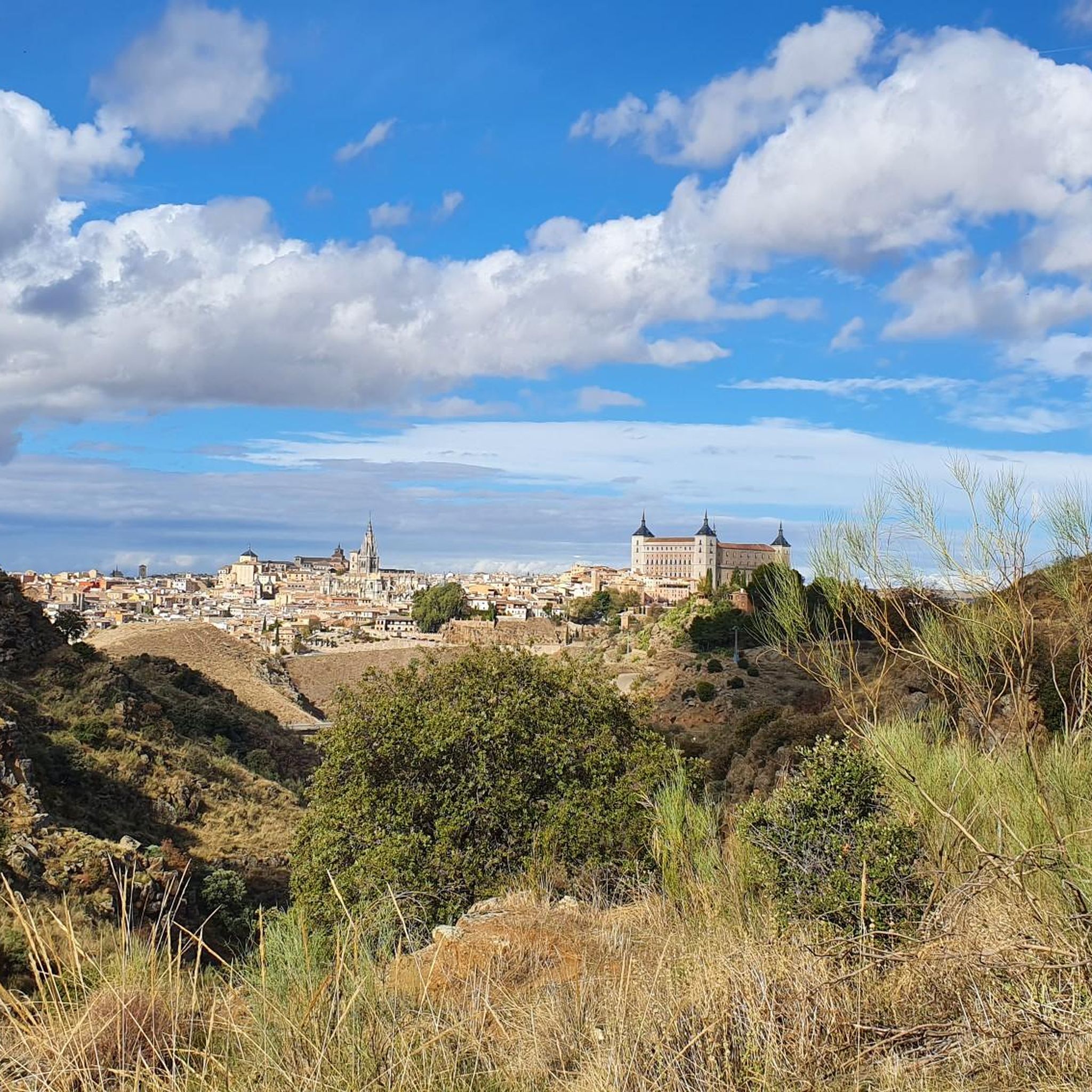
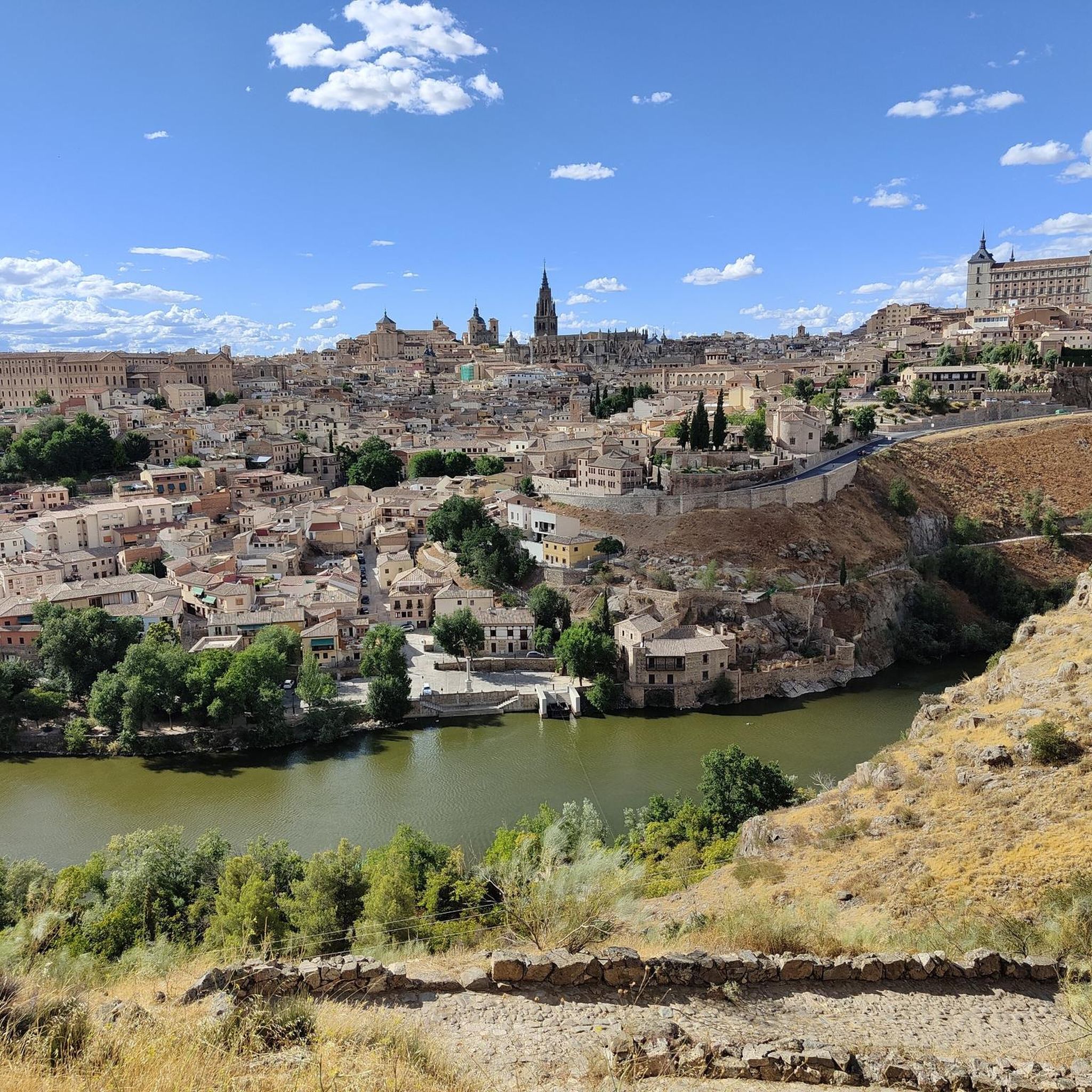
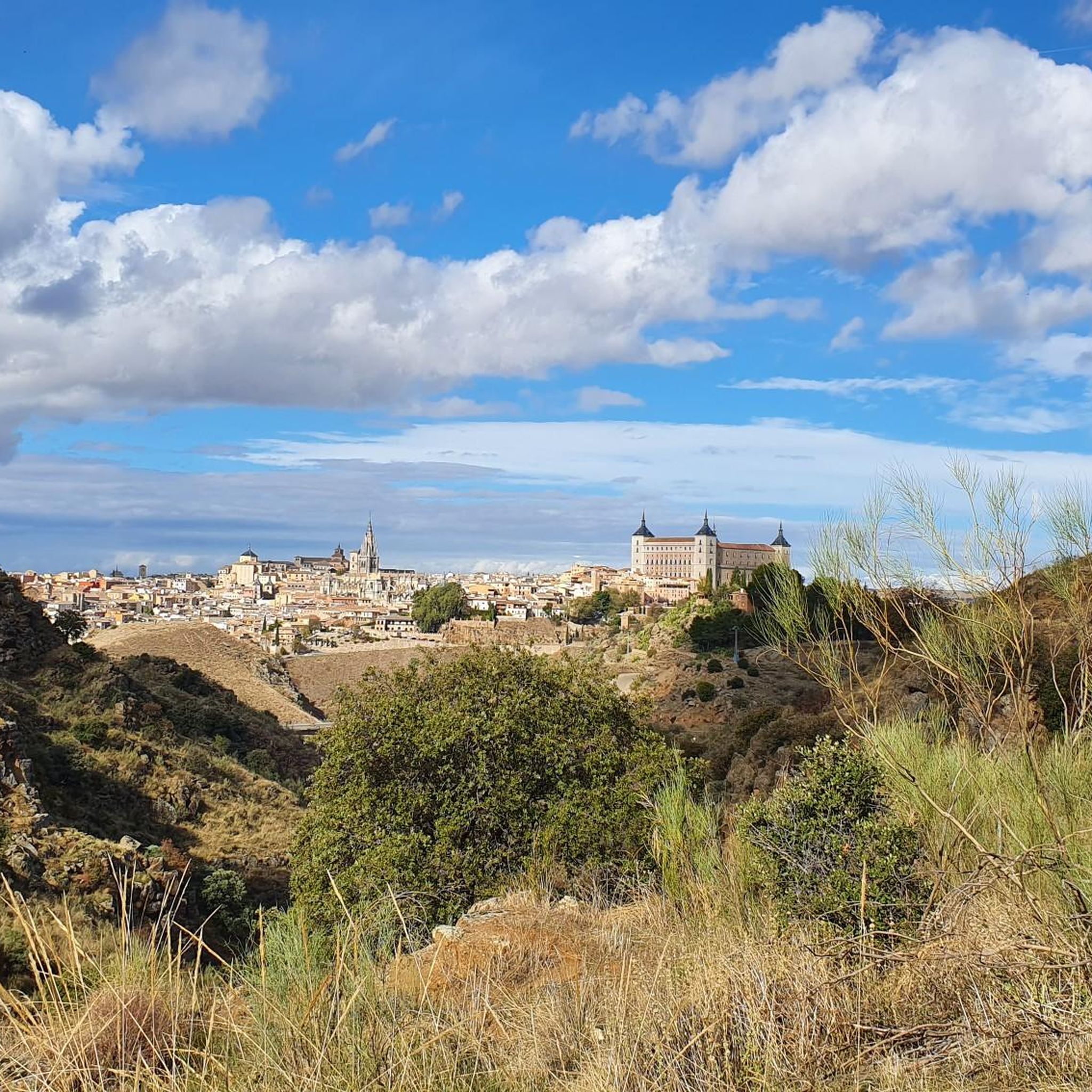
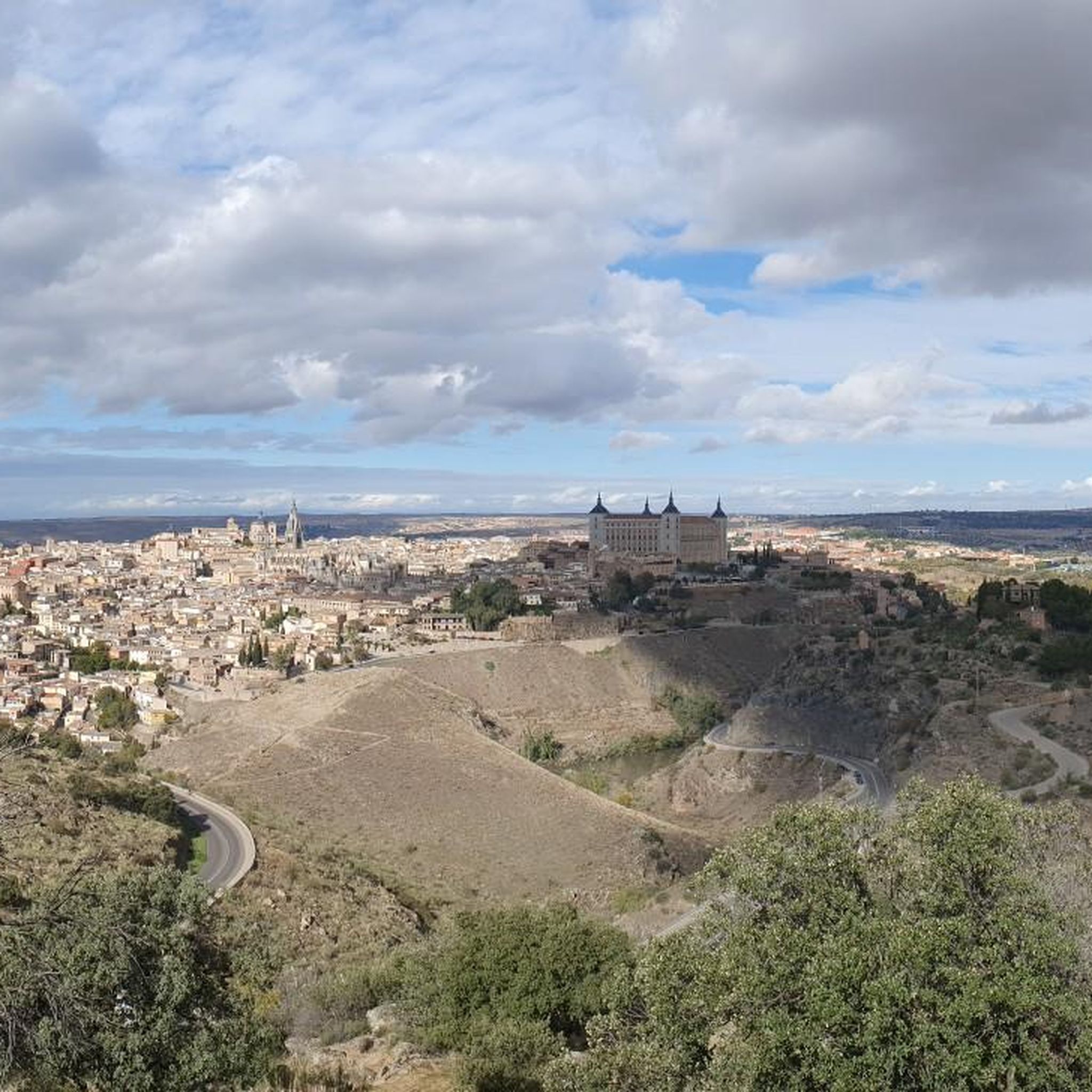
The view of Toledo from the Mirador del Valle road is considered one of the most iconic panoramas in Spain and, for many, the best way to admire the city. From this vantage point, you can appreciate the historic center surrounded by the Tagus River, which forms a meander that embraces the city. The Alcázar of Toledo dominates the upper part of the city. The Primate Cathedral, with its prominent Gothic tower, is also visible. Historic bridges such as the Alcántara Bridge and the San Martín Bridge are also prominent.
7
0
What to see in Cabañas de la Sagra Parish Church of Our Lady of the Assumption Built between the 16th and 17th centuries, with a Mudéjar coffered ceiling and unique wooden details. Roman Villa Archaeological remains from the 3rd century AD, evidence of the Roman past in the area. Osborne Bull A Spanish cultural icon, visible from the road, ideal for photos. Natural surroundings Walks to Fuente de la Mora and Los Pinos, peaceful routes through fields of grain.
2
0
Cabañas de la Sagra is a peaceful and welcoming village, perfect for escaping the hustle and bustle of the city. It stands out for its agricultural surroundings (cereals and legumes), its culinary traditions, and its proximity to Toledo and Madrid.
2
0
The view of Toledo from the Mirador del Valle road is considered one of the most iconic panoramas in Spain and, for many, the best way to admire the city. From this vantage point, you can appreciate the historic center surrounded by the Tagus River, which forms a meander that embraces the city. The Alcázar of Toledo dominates the upper part of the city. The Primate Cathedral, with its prominent Gothic tower, is also visible. Historic bridges such as the Alcántara Bridge and the San Martín Bridge are also prominent.
7
0
The most iconic view of Toledo from the road in the Cabeza area is from the Mirador del Valle, located in Ronda del Valle, very close to the Hermitage of the Virgen de la Cabeza. This spot is famous for its classic panoramic view, seen on postcards and paintings, with the Alcázar, the Primate Cathedral, and the Tagus River framing the city.
3
1
Cobisa, very close to Toledo, is ideal for cycling and hiking.
9
0
The Bisagra Gate is one of Toledo's most iconic monuments and a monumental entrance to its historic center. Muslim Origin: The original gate, known as the Old Bisagra Gate or Bab al-Saqra ("Sacred Gate"), was built in the 9th century during Islamic rule. Renaissance Reconstruction: In the 16th century, under the reigns of Charles V and Philip II, the New Bisagra Gate was built, the gate that remains today. Construction began around 1540 and was completed in 1576. Notable Architects: Alonso de Covarrubias, Nicolás de Vergara the Elder, Juan de Benavides, Eugenio Sánchez, among others, participated.
10
0
Frequently Asked Questions
How many gravel bike trails are available around Nambroca?
There are over a dozen gravel bike trails around Nambroca, offering a variety of experiences. The komoot community has explored 12 different routes in the area.
What kind of difficulty levels can I expect on Nambroca's gravel bike trails?
The gravel bike trails in Nambroca cater to various skill levels, with 4 moderate routes and 8 difficult routes. For example, the Alcántara Bridge – View of the Palacio de Galiana loop from Toledo is a difficult route with significant elevation gain, while the Plaza de la Concordia, Cobisa – Picnic Area loop from Argés offers a moderate challenge.
What are the typical landscapes and natural features I'll encounter on Nambroca's gravel trails?
Gravel biking around Nambroca takes you through scenic natural landscapes characterized by extensive olive groves and holm oak forests. You can also expect panoramic views, including vistas of the Sierra de Nambroca mountains, providing a picturesque and tranquil environment for your ride.
Are there any long-distance gravel routes in Nambroca?
Yes, Nambroca offers several longer gravel routes. The View of the Palacio de Galiana – Public Fountain (Parking lots) loop from Argés is one of the longest, spanning approximately 64.8 kilometers (40.3 miles) with substantial elevation changes. Another significant route is the Cathedral of Toledo – View of the Palacio de Galiana loop from Toledo, which covers about 63.2 kilometers (39.3 miles).
What landmarks or attractions can I see along the gravel bike trails near Nambroca?
Many gravel routes in the Nambroca area pass by or offer views of historical and natural attractions. You might encounter historic bridges like the Alcántara Bridge and San Martín Bridge. Other notable sights include the Palacio de Galiana and the impressive Toledo Cathedral. The region also features various castles such as Almonacid Castle and San Servando Castle.
Are there any scenic viewpoints on the gravel bike routes in Nambroca?
Yes, the Nambroca region is known for its panoramic views, especially of the Sierra de Nambroca mountains. Many routes are designed to showcase these vistas. The Public Fountain (Parking lots) is also a recognized viewpoint in the area, often included in routes like the Public Fountain (Parking lots) – View of the Palacio de Galiana loop from Santa María de Benquerencia.
Is there parking available near the gravel bike trails in Nambroca?
Yes, some routes start from locations with parking facilities. For instance, the Public Fountain (Parking lots) is a known starting point for several gravel bike tours, indicating available parking in that vicinity.
What do other gravel bikers say about the trails in Nambroca?
The gravel bike trails in Nambroca are highly rated by the komoot community, with an average score of 5.0 stars from over 2 reviews. More than 30 gravel bikers have used komoot to explore the varied terrain, often praising the scenic routes through olive groves and holm oak forests, as well as the views of the Sierra de Nambroca mountains.
Are there family-friendly gravel biking options in Nambroca?
While many routes in Nambroca are rated as moderate to difficult, the region's tranquil environment and varied landscapes can be enjoyable for families seeking an outdoor adventure. It's recommended to check the specific route details, including distance and elevation, to ensure it matches your family's experience level. The natural surroundings with olive trees and holm oaks offer a pleasant backdrop for a ride.
What is the best time of year for gravel biking in Nambroca?
The region of Castilla-La Mancha, where Nambroca is located, generally offers pleasant conditions for outdoor activities. Spring and autumn typically provide mild temperatures, making them ideal for gravel biking. Summers can be hot, while winters are usually mild but can have cooler days. Always check the local weather forecast before heading out.
Are most gravel bike routes in Nambroca circular?
Yes, many of the gravel bike routes around Nambroca are designed as loops, allowing you to start and end at the same point. Examples include the Alcántara Bridge – View of the Palacio de Galiana loop from Toledo and the Public Fountain (Parking lots) – View of the Palacio de Galiana loop from Santa María de Benquerencia, which are both circular tours.
Most popular attractions around Nambroca

Get inspired with the komoot mobile app


Explore more
Browse the best Gravel rides in other regions.
