The best gravel rides around Beaconsfield
4.4
(15)
79
riders
18
rides
Gravel biking around Beaconsfield offers access to the varied terrain of the Chiltern Hills, an Area of Outstanding Natural Beauty. The region features rolling hills, ancient woodlands, and a network of unpaved roads and trails suitable for gravel cycling. Riders can expect a mix of dirt paths, gravel tracks, and forest trails, providing diverse surfaces for exploration. The landscape is characterized by ancient woodlands and scenic countryside, offering a range of routes for different skill levels.
Best gravel bike trails around Beaconsfield
- The most popular gravel bike trail is Wendover Village Centre – Great Missenden village loop from Hazlemere, a 29.1 miles (46.9 km) trail that takes 3 hours 9 minutes to complete. This difficult route traverses the Chiltern Hills, offering varied terrain.
- Another top favourite among local gravel bikers is Jubilee River Weir – View of the Jubilee River loop from Maidenhead, a moderate 34.0 miles (54.8 km) path. This route follows the Jubilee River, known for its grit cycleways and tranquil wildlife habitats.
- Local gravel bikers also love the Holloway Lane – Marlow Suspension Bridge loop from Cookham, a 33.0 miles (53.1 km) trail leading through woodlands and open fields, often completed in about 3 hours 26 minutes.
- Gravel biking around Beaconsfield is defined by rolling hills, ancient woodlands, and a mix of unpaved roads and forest trails. The network offers options for different ability levels, from moderate to difficult routes.
- The routes in Beaconsfield are highly rated by the komoot community with an average score of 4.6 stars from over 10 reviews. More than 80 gravel bikers have used komoot to explore Beaconsfield's varied terrain.
Last updated: July 3, 2026
4.0
(3)
14
riders
Moderate gravel ride. Good fitness required. Mostly paved surfaces. Suitable for all skill levels.
7
riders
54.8km
03:05
160m
160m
Moderate gravel ride. Good fitness required. Mostly paved surfaces. Suitable for all skill levels.

Sign up for free
3
riders
46.9km
03:10
530m
530m
Hard gravel ride. Very good fitness required. Mostly paved surfaces. Suitable for all skill levels.
4.0
(1)
10
riders
52.8km
03:25
680m
680m
Hard gravel ride. Very good fitness required. You may need to push your bike for some segments of this route.
5
riders
53.0km
03:18
370m
360m
Moderate gravel ride. Good fitness required. Mostly paved surfaces. Suitable for all skill levels.
Get access to more routes and recommendations from other explorers.
Sign up for free
Already have an account?
Our route recommendations are based on thousands of hikes, rides, and runs completed by other people on komoot.
Start today with a free account
Your next adventure awaits.
Login or Signup
Tips from the Community


About 1922, the land between the River Colne and the canal was taken over by Rickmansworth Gravel Company. Building in the capital was booming and gravel was in demand. Extraction at the site began and the resulting pit became Stocker's Lake. The original Wembley stadium was built at around this time and many have since speculated on the possibility of a Wembley Connection? Dredging and gravel extraction continued until the 1940s. In 1947 Rickmansworth and Uxbridge Valley Water Company purchased Stocker's Lake (an area of 93.7 acres) for £5000 as the dredging agreement had expired. This was to protect the aquifer and pumping sources at Stocker's and Springwell. The company became Rickmansworth Water Company in 1985 and later part of Three Valleys Water Company, eventually Affinity Water, the present owners. In the 1970s Stocker’s Lake became a nature reserve and day to day management was assigned by the water company to Herts and Middlesex Wildlife Trust.
2
0
The land on which Stocker's Lake now stands was once part of Stocker's Farm which is still there today. Records from 1427 show that the farm already existed and was owned by John Stockere or Stocker. In 1861, Stocker's House was built for the Corporation of London to house the Collector of Coal Dues on the Grand Union Canal. Stocker's House cost £850 to build and the first tenant was Mr. Charles Browton. The dues he collected were, for example, 4 shillings per ton of wine and 12 pence a ton of coal. However with the railways becoming increasingly popular it was decided to sell the house and in 1869 Lord Ebury offered £300
1
0

Stop at No2 Pound Street (adjacent to the mini roundabout up the hill) Their main business is a delicatessen specialising in cheese and wine ... but you can grab a tea/cofffee with cake or a toastie, Sit outside or in depending on the weather! Highly recommended. If you've room in your saddlebag, grab a bottle of wine, with some excellent cheese, having taken note of the expert advice from the staff!
0
0
Pretty level ride close to the Thames. Only hassel is several 'reduced width' barriers en-route requiring a dismount.
0
0
The Ebury Way is a 3.5-mile (5.6 km) rail trail in Hertfordshire between Watford and Rickmansworth. The route crosses the Grand Union Canal and three rivers: the River Colne, the River Chess and the River Gade. Its origin as the Watford and Rickmansworth Railway means that it is wide and largely flat. It forms part of National Cycle Route 61
0
0

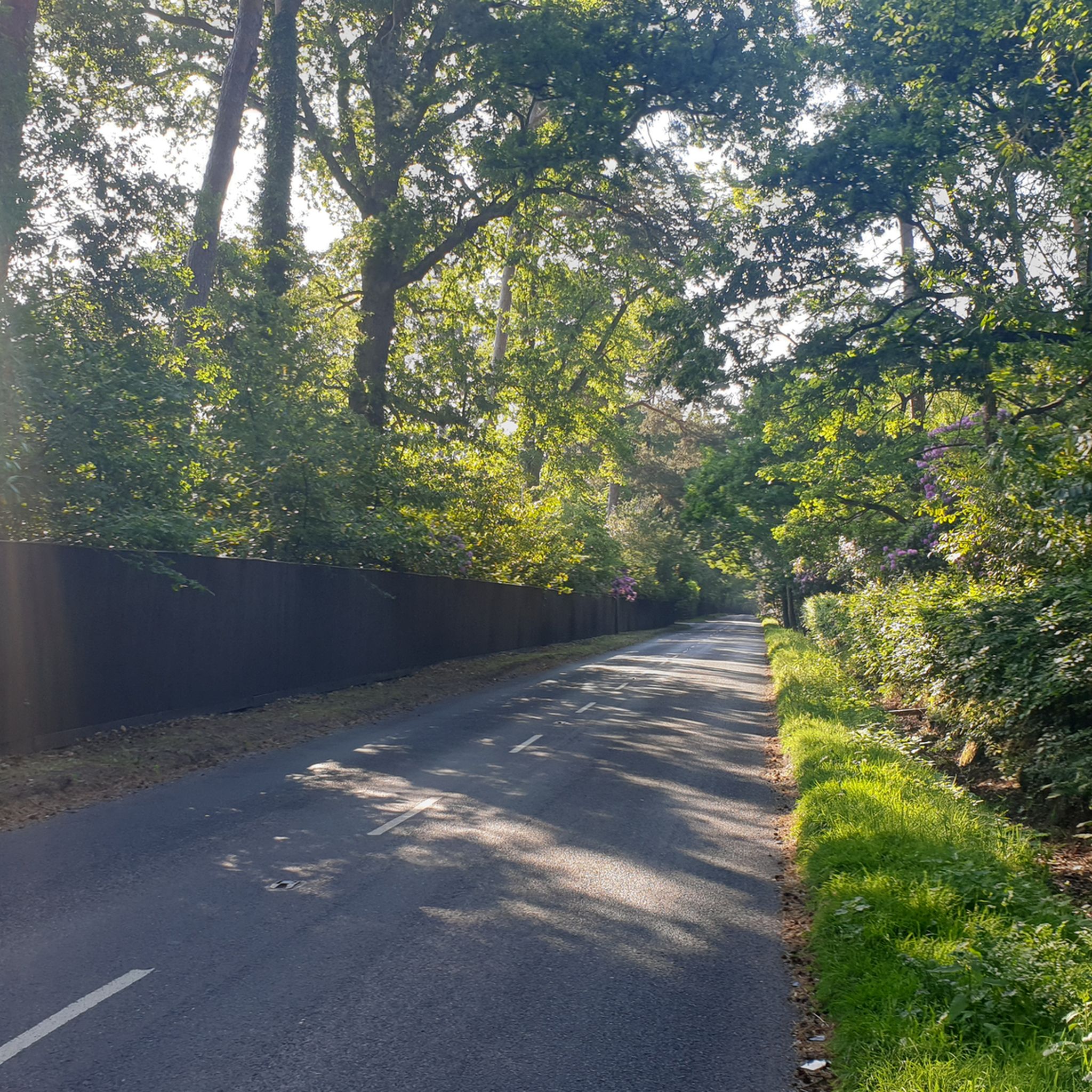
Lovely wide gravel path alongside the quiet & serene Jubilee River.
0
0
Frequently Asked Questions
How many gravel bike trails are available around Beaconsfield?
There are over 25 gravel bike trails available around Beaconsfield, offering a diverse range of options for riders. These routes vary in difficulty, from moderate to challenging, and traverse the scenic Chiltern Hills.
What kind of terrain can I expect on gravel bike trails near Beaconsfield?
Gravel biking around Beaconsfield primarily features the varied terrain of the Chiltern Hills, an Area of Outstanding Natural Beauty. You can expect a mix of unpaved roads, dirt paths, gravel tracks, and forest trails, often characterized by rolling hills and ancient woodlands.
What do other gravel bikers say about the trails in Beaconsfield?
The gravel biking routes around Beaconsfield are highly rated by the komoot community, with an average score of 4.7 stars from over 20 reviews. Riders often praise the diverse terrain, scenic countryside views, and the opportunity to explore the extensive woodlands of the Chiltern Hills.
Are there gravel bike trails suitable for beginners in the Beaconsfield area?
Yes, there are several moderate gravel bike trails suitable for those newer to the sport. For example, the Marlow Suspension Bridge – Marlow Suspension Bridge loop from Marlow Bottom is a moderate 32.9-mile route that offers a good mix of unpaved surfaces and scenic views without extreme elevation.
What are some of the more challenging gravel routes around Beaconsfield?
For experienced gravel bikers seeking a challenge, routes like the Wendover Village Centre – Great Missenden village loop from Hazlemere offer a difficult 29.4-mile ride with significant elevation changes through the Chiltern Hills. Another demanding option is the Marlow Bridge – Holloway Lane loop from Cookham, which is 32.9 miles long and features substantial climbs.
Are there any family-friendly gravel biking options near Beaconsfield?
While many routes in the Chilterns can be challenging, some sections or shorter loops might be suitable for families with older children or those comfortable with moderate distances. The region's parks and green spaces, such as Parc Beaconsfield or Parc Centennial, offer well-maintained trails that could be explored for shorter, less strenuous rides.
What attractions or landmarks can I see along the gravel bike trails near Beaconsfield?
Many gravel routes will take you through or near charming villages and natural beauty spots. You might encounter highlights like the Jubilee River Weir, or pass by historical sites such as Hughenden Manor. The trails also offer views of picturesque lakes, including Shardeloes Lake.
Are there any gravel bike routes that are circular?
Yes, many of the gravel bike routes around Beaconsfield are designed as loops, allowing you to start and finish at the same point. Examples include the Jubilee River Weir – View of the Jubilee River loop from Cookham and the Ebury Way – Belsize Hamlet loop from Amersham.
Can I find cafes or pubs along the gravel bike routes in the Beaconsfield area?
Yes, the Beaconsfield area and surrounding villages are dotted with traditional pubs and cafes. Many routes pass through or near charming market towns like Old Beaconsfield or Marlow, where you can find places to stop for refreshments. These establishments are often popular with cyclists.
What is the best time of year for gravel biking around Beaconsfield?
The temperate climate of the Beaconsfield region allows for year-round enjoyment of gravel biking. However, spring and autumn often provide the most pleasant conditions with milder temperatures and beautiful scenery as the woodlands change color. Winter rides are possible but may require appropriate gear for colder, potentially wetter conditions.
Are there public transport options for cyclists in the Beaconsfield area?
Beaconsfield is well-connected by train, and some local bus services may accommodate bikes, though it's always best to check specific operator policies in advance. The proximity to London and other towns means public transport can be a viable option for reaching starting points for your gravel adventures.
Where can I park my car when going gravel biking near Beaconsfield?
Parking facilities are generally available in Beaconsfield town center and in many of the surrounding villages that serve as starting points for gravel routes. Look for public car parks or designated parking areas near trailheads. Always check local signage for any restrictions or fees.
Most popular routes around Beaconsfield
Most popular attractions around Beaconsfield

Get inspired with the komoot mobile app


Explore more
Browse the best Gravel rides in other regions.
