The best gravel rides around Sant'Urbano
4.5
(36)
275
riders
18
rides
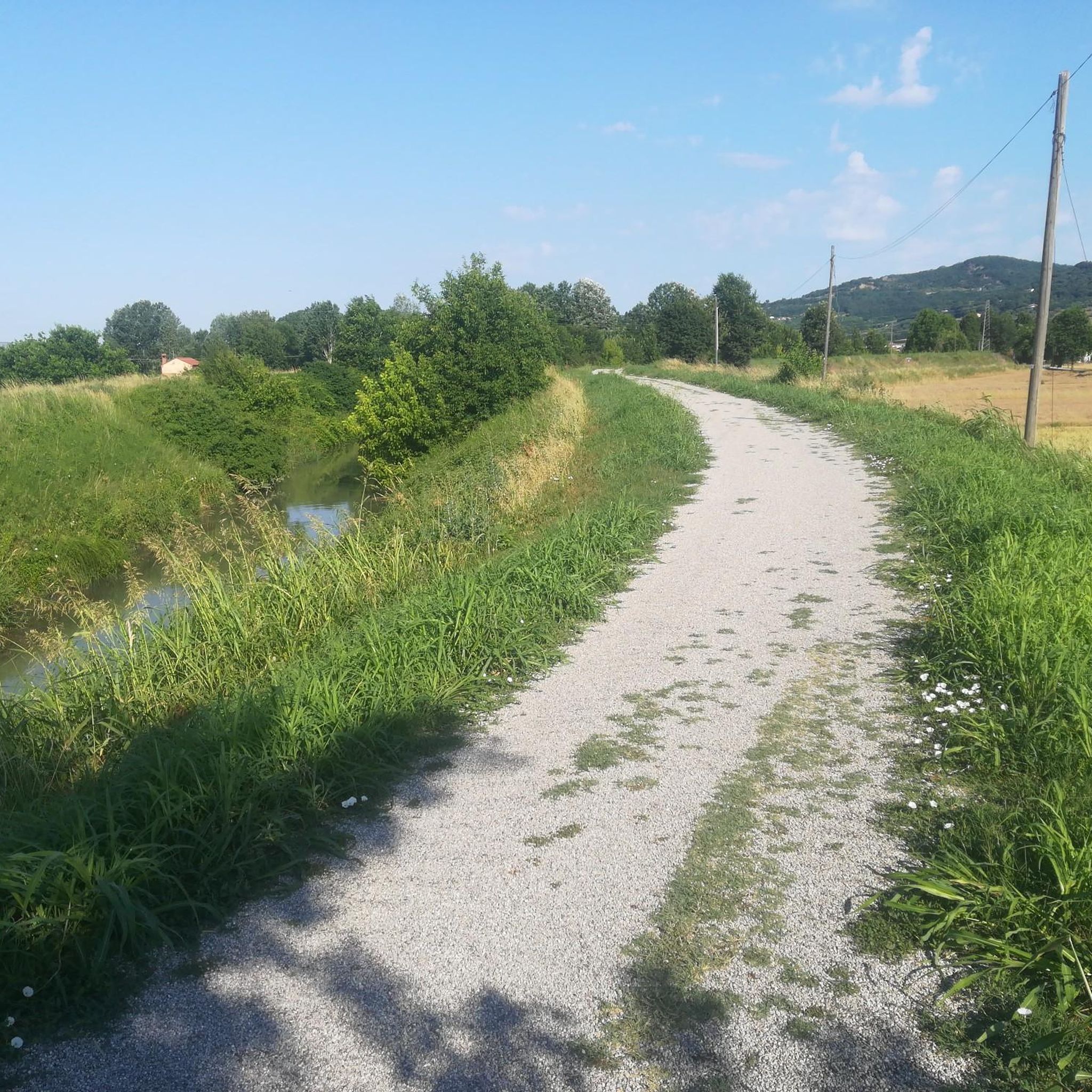
Gravel biking around Sant'Urbano, located in Italy's Veneto region, offers routes through tranquil countryside and a network of cycle paths. The terrain features secondary roads, dedicated cycle paths, and rural landscapes, including vineyards. Modest hills like Monte Buso add varied elevation to the area's predominantly flat agricultural setting. The region is characterized by its network of waterways, such as the Bisatto Canal, which provide scenic biking opportunities.
Best gravel bike trails around Sant'Urbano
- The most popular gravel bike trail is…
Last updated: October 25, 2026
5.0
(1)
30
riders
100km
06:24
880m
880m
Hard gravel ride. Very good fitness required. You may need to push your bike for some segments of this route.
4.3
(18)
60
riders
33.1km
01:36
30m
30m
Easy gravel ride. Mostly paved surfaces.

4.0
(1)
20
riders
33.1km
02:16
540m
540m
Hard gravel ride. Very good fitness required. Mostly paved surfaces.
4.0
(1)
21
riders
70.3km
04:19
430m
430m
Moderate gravel ride. Good fitness required. Mostly paved surfaces.
5.0
(2)
30
riders
40.8km
02:13
60m
60m
Moderate gravel ride. Good fitness required. Mostly paved surfaces.
Get access to more routes and recommendations from other explorers.
Already have an account?
Our route recommendations are based on thousands of hikes, rides, and runs completed by other people on komoot.
Start today with a free account
Your next adventure awaits.
Tips from the Community

Panoramic view of the Adige River from one of the access bridges to Badia Polesine, with the plains of Veneto stretching out on either side.
0
0

The Public Gardens of Este, located in the heart of the town at the foot of the Euganean Hills, offer a fascinating green oasis enclosed within the imposing fourteenth-century walls of the Carrarese Castle. This historic park combines the solemnity of medieval architecture, with its towers and ramparts, with rich vegetation characterized by large lawns and majestic centuries-old trees, including imposing Lebanon cedars. Within the same area stands Palazzo Mocenigo, home to the National Atestino Museum, creating a perfect blend of nature, archaeology, and history. The garden has always been the ideal meeting place for relaxing walks, cultural events, and city flower shows, offering evocative views and a serene atmosphere in every season.
0
0
Arquà Petrarca is a charming medieval village nestled on the slopes of the Euganean Hills, considered one of the most fascinating villages in Italy. Its destiny is linked to the poet Francesco Petrarca, who chose it as his home to spend the last years of his life, attracted by the peace of the landscape. Divided between the upper and lower areas, the village retains an untouched atmosphere, characterized by stone alleys, ancient residences in Venetian Gothic style, and lush nature made of olive trees, vineyards, and jujube trees, the symbolic fruit of the place. Among the points of greatest interest are the poet's house, his tomb in red Verona marble placed on the parvis of the church of Santa Maria Assunta, and the 14th-century fountain. The village offers enchanting views of the Padan plain and is an unmissable destination for those seeking history, poetry, and food and wine excellences such as the famous jujube broth.
0
0

route through the Euganean Hills
0
0

One of the oldest garden complexes in Italy with ancient trees. Worth a visit for nature lovers.
0
0
The Villa Barbarigo Pizzoni Ardemani in Valsanzibio di Galzignano Terme is a Baroque masterpiece from the 17th century, world-renowned for its extraordinary historic garden, considered among the most important and intact in Europe. Designed by architect Luigi Bernini, the complex was created at the behest of the noble Venetian Barbarigo family as a solemn vow to God for having escaped the terrible plague of 1631. The park is not a simple ornamental work, but a true allegorical and spiritual path of purification. The visitor is invited to experience a journey of salvation that unfolds through scenic fountains, streams, fishponds, and over seventy statues rich in symbolism. The central and iconic element of the garden is the monumental labyrinth of centuries-old boxwood, one of the oldest and largest in the world, symbolizing the difficulties and redemption of the human soul.
1
0

I don't have a gravel bike, but those trails are for MTB, at least for normal bikers!
0
0
Frequently Asked Questions
How many gravel bike trails are available around Sant'Urbano?
There are over 50 gravel bike trails around Sant'Urbano, offering a wide range of options for different skill levels and preferences. The komoot community has rated these routes highly, with an average score of 4.3 stars.
What kind of terrain can I expect on gravel bike trails in Sant'Urbano?
The gravel bike trails in Sant'Urbano primarily feature tranquil countryside, secondary roads, and dedicated cycle paths. You'll ride through picturesque rural landscapes, including vineyards, and along extensive cycle paths bordering canals like the Bisatto Canal. While mostly flat, some routes incorporate modest hills such as Monte Buso, adding varied elevation.
Are there any family-friendly gravel routes in Sant'Urbano?
Yes, Sant'Urbano offers several moderate routes suitable for families. These often utilize dedicated cycle paths and quieter secondary roads, providing a safer and more enjoyable experience. For example, the Adige Cycle Path – Adige Cycle Path loop from Stanghella is a moderate 31.4 km ride with minimal elevation, perfect for a family outing.
What are some notable historical or natural attractions I can see along the gravel routes?
Many gravel routes in Sant'Urbano pass by interesting landmarks. You might encounter the ancient Torre Morosini, a crenellated tower near the Adige River. Further afield, but within cycling distance, is the impressive Carrarese Castle in Este. The region also features unique natural elements like the Blue Lake near Monte Buso.
Are there any challenging gravel routes for experienced riders?
Absolutely. Sant'Urbano offers 22 difficult gravel routes for those seeking a challenge. One such route is the Valsanzibio Gardens – Vineyard Road to Monte Fasolo loop from Stanghella, a 100.2 km trail with significant elevation gain, taking you through vineyards and offering views of Monte Fasolo.
What do other gravel bikers enjoy most about gravel biking in Sant'Urbano?
The area is highly rated by the komoot community, with an average score of 4.3 stars from over 50 reviews. Reviewers often praise the tranquil countryside, the extensive network of cycle paths along canals, and the opportunity to explore rural landscapes and vineyards away from urban bustle. The variety of routes, from moderate to difficult, is also frequently highlighted.
Are there any loop gravel bike trails available?
Yes, many of the gravel bike trails in Sant'Urbano are designed as loops, allowing you to start and finish at the same point. Examples include the Monselice Castle – Arquà Petrarca loop from Vescovana, which is a moderate 70.2 km path featuring historical landmarks, and the San Martino Tower – Torre Morosini loop from Lendinara, a 46.9 km route through rural landscapes.
What is the best time of year for gravel biking in Sant'Urbano?
The best time for gravel biking in Sant'Urbano is generally during spring and autumn. These seasons offer pleasant temperatures and beautiful scenery, with the changing colors of the vineyards. While summer can be warm, early mornings or late afternoons are still enjoyable. Winter rides are possible, but be prepared for cooler temperatures and potentially damp conditions on some paths.
Are there options for longer gravel bike tours in the region?
Yes, for those looking for longer rides, Sant'Urbano's network connects to broader cycling routes. The Bisatto Canal cycle path, for instance, can link to the Euganean Hills. Additionally, the region is part of the Via Romea Strata, an extensive itinerary, suggesting possibilities for multi-day or long-distance cycling adventures. A good example of a longer route is the Rest Area at Castagnaro – Legnago loop from Stanghella, a difficult 93.6 km ride.
Where can I find parking for gravel biking trails in Sant'Urbano?
While specific parking areas for each trail are not always designated, many routes start from towns or villages like Stanghella, Vescovana, or Lendinara, where public parking is typically available. It's advisable to check local parking options in the starting point of your chosen route.
Are there any cafes or places to stop for refreshments along the routes?
Given the rural nature of Sant'Urbano, many routes pass through or near small towns and villages where you can find local cafes, trattorias, or small shops for refreshments. Planning your route to include these stops is recommended, especially for longer rides, to enjoy local hospitality and refuel.
Most popular routes around Sant'Urbano
Most popular attractions around Sant'Urbano

Get inspired with the komoot mobile app


Explore more
Browse the best Gravel rides in other regions.
