The 20 Most Amazing Peaks around Klingenberg
Mountain peaks around Klingenberg, a region in Saxony, offer diverse features for exploration. The area is characterized by its geological history, including volcanic formations and historical surveying points. Visitors can find summits providing views of the surrounding landscape and sites of historical significance. This region presents a range of elevated areas for those interested in natural and historical exploration.
Best mountain peaks around Klingenberg
- The most popular mountain peaks is Wilisch Summit Triangulation Pillar and World War I Memorial,…
Last updated: June 24, 2026
Wilisch Summit Triangulation Pillar and World War I Memorial
Highlight • Summit
Translated by Google •
Tip by

Kaitzer Heights
Highlight • Viewpoint
Translated by Google •
Tip by

Sign up now to discover places like this
Get recommendations on the best single tracks, peaks, & plenty of other exciting outdoor places.
Sign up for free
Gohlig Triangulation Pillar
Highlight • Monument
Translated by Google •
Tip by

Burgberg summit cross (622 m)
Highlight • Summit
Translated by Google •
Tip by

Götzenbusch Geological Monument
Highlight • Natural Monument
-Tropical red loams, which were formed by weathering of the gray gneiss and have …
Translated by Google •
Tip by

Sign up for free to discover even more peaks around Klingenberg.
Sign up for free
Already have an account?
Start today with a free account
Your next adventure awaits.
Login or Signup
Popular around Klingenberg


Tips from the Community

Gohlig Triangulation Pillar, with seating and a view. Information: Gohlig Saxon Station. Land survey pillar (Nagel Pillar), erected in 1865. The Gohlig, also known as Golden Height, is a hill in Bannewitz, approximately 345 meters high. The name originates from Sorbian and means "bare, treeless hill".
1
0
Götzenbusch near Oelsa. Geological monument. "Climbing prohibited." There are clearly marked paths along the rocks that can be used without climbing. Information: Götzenbüschchen/Götzenbusch is a wooded hill in the Eastern Ore Mountains, situated on an inconspicuous ridge whose highest point is 361.3 meters above sea level. The area consists of Cretaceous sandstone and is a protected natural monument due to its unique geology. 1. Tropical red clays formed by the weathering of grey gneiss. 2. Clays and sandstone originating from Cretaceous sea deposits.
1
0

In 2022, two Lichtenberg natives, Jörg and Sven, had a special idea: they wanted to revive an old local legend – the legend of the "Light on the Mountain." This tale, passed down from generation to generation for centuries, was deeply intertwined with the history of Lichtenberg and its surroundings. Inspired by this somber legend, Jörg and Sven decided to create a symbol of hope and light. They planned to erect a new summit cross on the mountain that would glow at night, just like the light in the windows of the old legend. But this light would no longer spread fear, but rather inspire hope. Two chimes are also mounted in the center of the cross, which, played by the wind, carry peaceful sounds down into the valley. Opposite the cross is a new selfie stand, perfect for taking a selfie.
6
0

The 476 meter high Wilisch consists mainly of basalt, which is due to its volcanic origin. The last volcanic activity that led to the formation of the Wilisch dates back to the Tertiary, more precisely the Oligocene to Miocene. The region around the Wilisch is also geologically interesting because it is rich in basalt, which in the past led to the intensive extraction and use of this rock. The view from the Wilisch and the triangulation column are also really very impressive.
4
0

with a view of Dresden, several hiking trails
5
0
Erected in 1865, made of sandstone, techn. monument
3
0

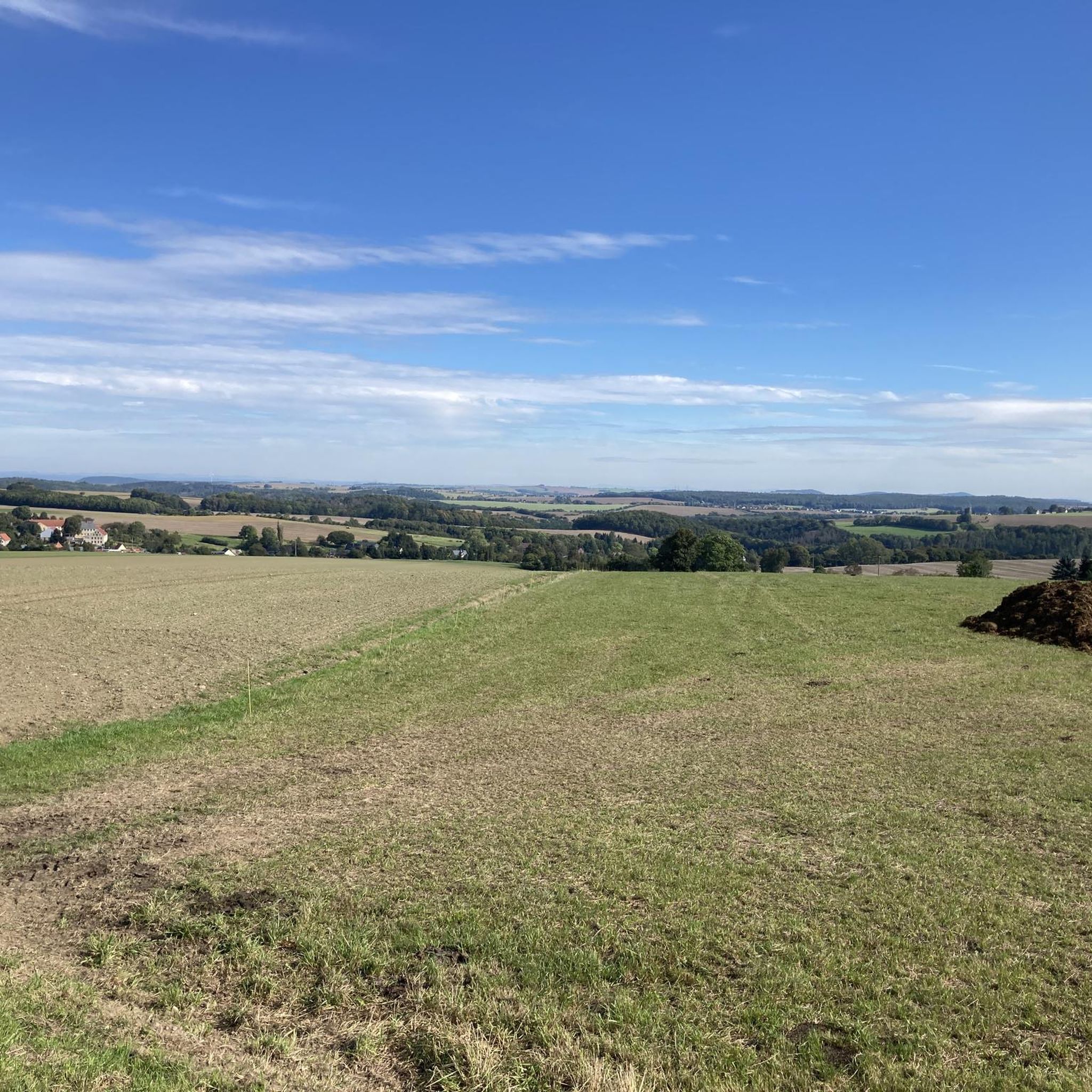
"The Götzenbüschchen (also: Götzenbusch) is a wooded hill near Oelsa in the Eastern Ore Mountains. The area consists of sandstone from the Cretaceous period and is under state protection as a natural monument because of its special geology." - https://de.wikipedia.org/wiki/G%C3%B6tzenb%C3%BCschchen A fine, small trail leads along the edge of the field. It also offers a beautiful view over the Weisseritz Valley.
2
0
The Royal Saxon Triangulation was a large-scale surveying project carried out in the Kingdom of Saxony between 1862 and 1902. The aim was to measure the country precisely and determine geographic coordinates in order to create better maps. The survey covered numerous points throughout the kingdom and 36 1st order and 122 2nd order triangulation pillars were erected, including the triangulation pillar on the Gohilg. The survey results formed the basis for the creation of the first topographical map of the Kingdom of Saxony.
4
0
Frequently Asked Questions
What are some of the most notable mountain peaks to visit around Klingenberg?
The Klingenberg region in Saxony offers several distinct peaks. Among the most popular are the Wilisch Summit Triangulation Pillar and World War I Memorial, known for its volcanic origin and impressive views, and the Burgberg summit cross (622 m), which features a summit cross with chimes and panoramic vistas. Another interesting spot is the Gohlig Triangulation Pillar, a historical land survey point.
Are there any mountain peaks with unique geological features in the Klingenberg area?
Yes, the Wilisch Summit Triangulation Pillar and World War I Memorial is particularly notable for its volcanic origin. Standing at 476 meters, it's primarily composed of basalt from the Tertiary period, making it a significant site for those interested in geology. Additionally, the Götzenbusch Geological Monument presents rare natural phenomena, including tropical red loams and sandstones with fossils from the Cretaceous Sea.
Which mountain peaks offer the best viewpoints for scenic photography?
For stunning views, the Burgberg summit cross (622 m) provides beautiful panoramas of the surrounding landscape, complete with a selfie stand. The Wilisch Summit Triangulation Pillar and World War I Memorial also offers impressive views. For a different perspective, the Kaitzer Heights viewpoint, though not a mountain peak, offers expansive views of southern Dresden, the Elbe slopes near Pillnitz, and the Elbe Sandstone Mountains.
Are there family-friendly mountain peaks or viewpoints suitable for all ages?
Yes, the Kaitzer Heights is considered family-friendly, offering well-developed paths and great views. The Gohlig Triangulation Pillar is also listed as family-friendly, providing a historical point of interest with seating and a view.
What historical sites can be found on or near the mountain peaks?
The Wilisch Summit Triangulation Pillar and World War I Memorial features both a historical triangulation column and a World War I Memorial. The Gohlig Triangulation Pillar is a significant historical land survey pillar erected in 1865 as part of the Royal Saxon Triangulation project.
What outdoor activities can I do near the mountain peaks around Klingenberg?
The region around Klingenberg offers a variety of outdoor activities. You can explore numerous hiking trails, such as the 'Water, Silver, Edle Krone – Ritter Theler Tour' or routes around the Klingenberg Dam. For mountain biking enthusiasts, there are trails like the 'Freiberger Mulde Valley' route. Cycling is also popular, with options like the 'Along the Wilde Weißeritz – Klingenberg Reservoir loop'. You can find more details on these activities in the Hiking around Klingenberg, MTB Trails around Klingenberg, and Cycling around Klingenberg guides.
What makes the Burgberg summit cross unique?
The Burgberg summit cross (622 m) is unique for several reasons. It offers beautiful views and has benches for resting, along with a summit register. A newer addition is a selfie stand opposite the cross. In 2022, a new, illuminated summit cross was erected to revive the legend of the 'Light on the Mountain,' symbolizing hope. It also features two chimes that produce peaceful sounds carried by the wind into the valley.
What is the significance of the Gohlig Triangulation Pillar?
The Gohlig Triangulation Pillar, also known as Golden Height, is a historical land survey pillar erected in 1865. It was part of the Royal Saxon Triangulation, a large-scale surveying project from 1862 to 1902 aimed at precisely measuring the Kingdom of Saxony and creating better maps. These pillars allowed for visual axes to surrounding elevations to measure distances.
What do visitors particularly enjoy about the mountain peaks around Klingenberg?
Visitors appreciate the diverse experiences offered by the peaks. Many enjoy the beautiful views from summits like Wilisch and Burgberg, the geological insights provided by Wilisch's volcanic basalt, and the historical significance of the triangulation pillars. The well-developed paths and opportunities for rest, such as benches at Burgberg, also contribute to a positive experience.
Are there any challenging hiking routes to reach the mountain peaks?
While many paths are accessible, some routes in the broader Klingenberg area offer more challenge. For instance, the 'Water, Silver, Edle Krone – Ritter Theler Tour' is rated as difficult. You can find more challenging options within the Hiking around Klingenberg guide, which includes routes with varying difficulty grades.
What is the Götzenbusch Geological Monument and why is it important?
The Götzenbusch Geological Monument near Oelsa is a geologically significant site. It features two rare natural phenomena: tropical red loams formed from weathered gray gneiss and clays/sandstones from the Cretaceous Sea containing fossils. This combination is unique, with occurrences only known once elsewhere in the Andes/America, making it an area of high scientific importance requiring strict protection.
Most popular routes around Klingenberg
Most popular attractions around Klingenberg

Get inspired with the komoot mobile app


Explore more
See even more amazing summits around Klingenberg with these guides:
