Attractions and Places To See in Craters Of The Moon National Monument - Top 19
Best attractions and places to see in Craters Of The Moon National Monument include a unique volcanic landscape shaped by ancient lava flows. This national monument features diverse geological formations such as cinder cones, lava tubes, and vast lava fields. The area offers opportunities to explore the aftermath of volcanic activity, providing insights into geological processes. Visitors can experience a landscape that resembles the surface of the moon, making it a distinctive natural area to explore.
Best attractions and places…
Last updated: October 9, 2026
Top of Inferno Cone
Highlight • Summit
Tip by

Spatter Cones
Highlight • Volcano
Tip by
Sign up now to discover places like this
Get recommendations on the best single tracks, peaks, & plenty of other exciting outdoor places.
Devils Orchard information boards
Highlight • Natural Monument
Tip by
North Crater Flow Trail
Highlight • Trail
Tip by
Indian Tunnel
Highlight • Cave
Tip by
Sign up for free to discover even more attractions in Craters Of The Moon National Monument.
Already have an account?
Start today with a free account
Your next adventure awaits.
Popular around Craters Of The Moon National Monument
Other adventures in Craters Of The Moon National Monument

Tips from the Community

You will find several information boards with interesting facts about the changing environment in Craters of the Moon National Monument. So take your time to learn a bit more about this unique place. There are also benches, in case you want to rest.
4
0
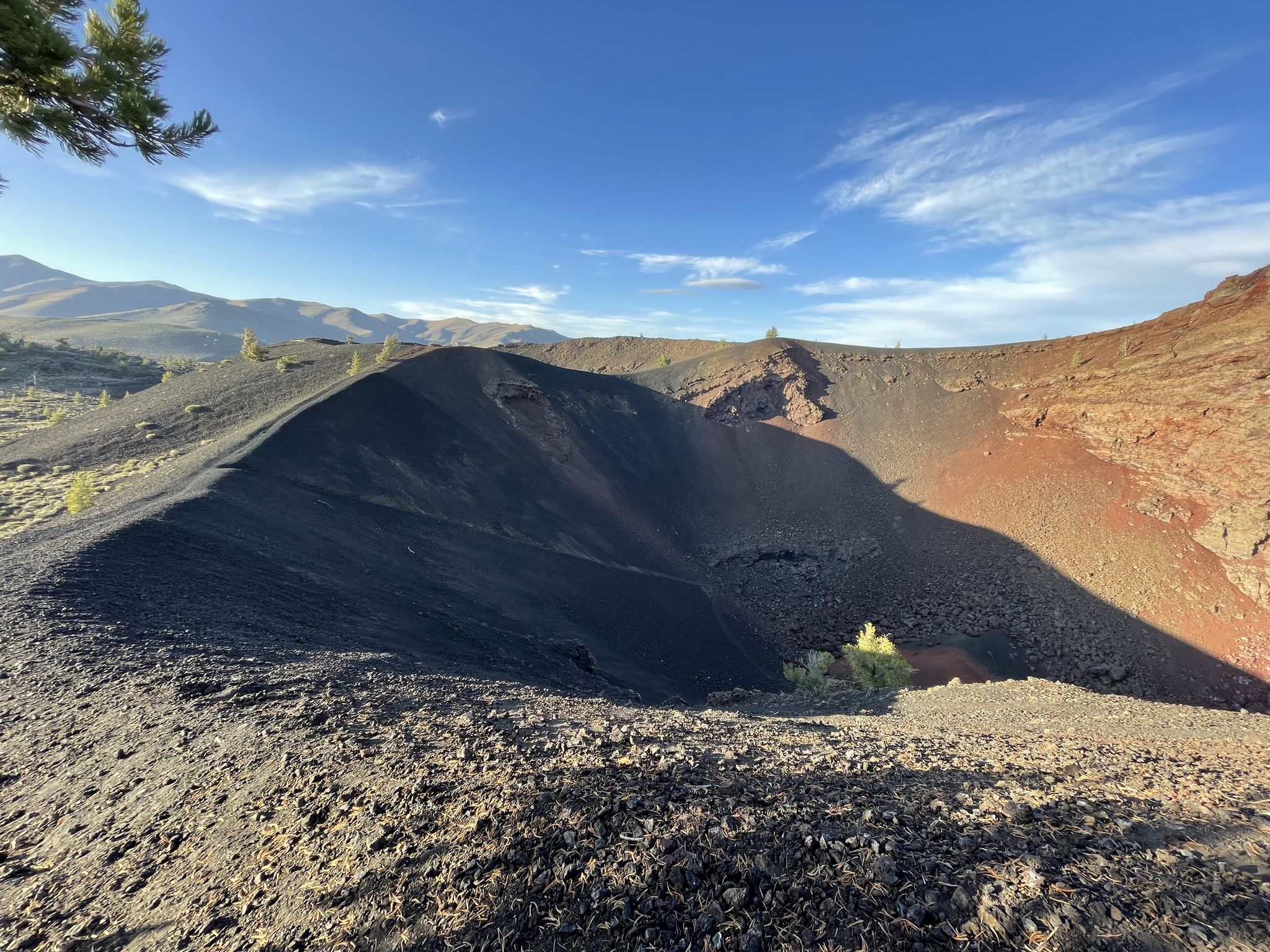
Once you make it to the 6,181 foot summit of Inferno Cone, there is a single old tree that offers some shade. Enjoy the stunning view over the dramatic landscape with the nearby Spatter Cones, the Great Rift, the Snake River Plain, and the Pioneer Mountains.
2
0
The Spatter Cones are no classic vents. They were formed when hot chunks of lava were thrown a short distance into the air before falling back to earth at the edge of a central vent. The still molten lumps landed on top of each other, cooled down and formed a kind of mini volcano.
1
0
The "Indian Tunnel" is the largest and longest of the lava tubes along the Caves Trail that can be accessed. To do so, you need to obtain a free permit at the Visitor Center. You will climb over rocks that can be slippery in places, but it is a unique small adventure. On the ceiling of the tube you can see lava stalactites formed as the river of lava pulled away from the ceiling, and molten material began to drip from the hot ceiling. The exit is about 800 feet further north.
1
0
North Crater Flow Trail is a popular 0.25-mile loop that leads into old lava flows that occured during the most recent eruptive period. It ended approximately 2,000 years ago and also formed the North Crater. Along the boardwalk that was constructed in 2023, you will visit several information boards for different types of lava like Blue Dragon and other interesting facts.
1
0


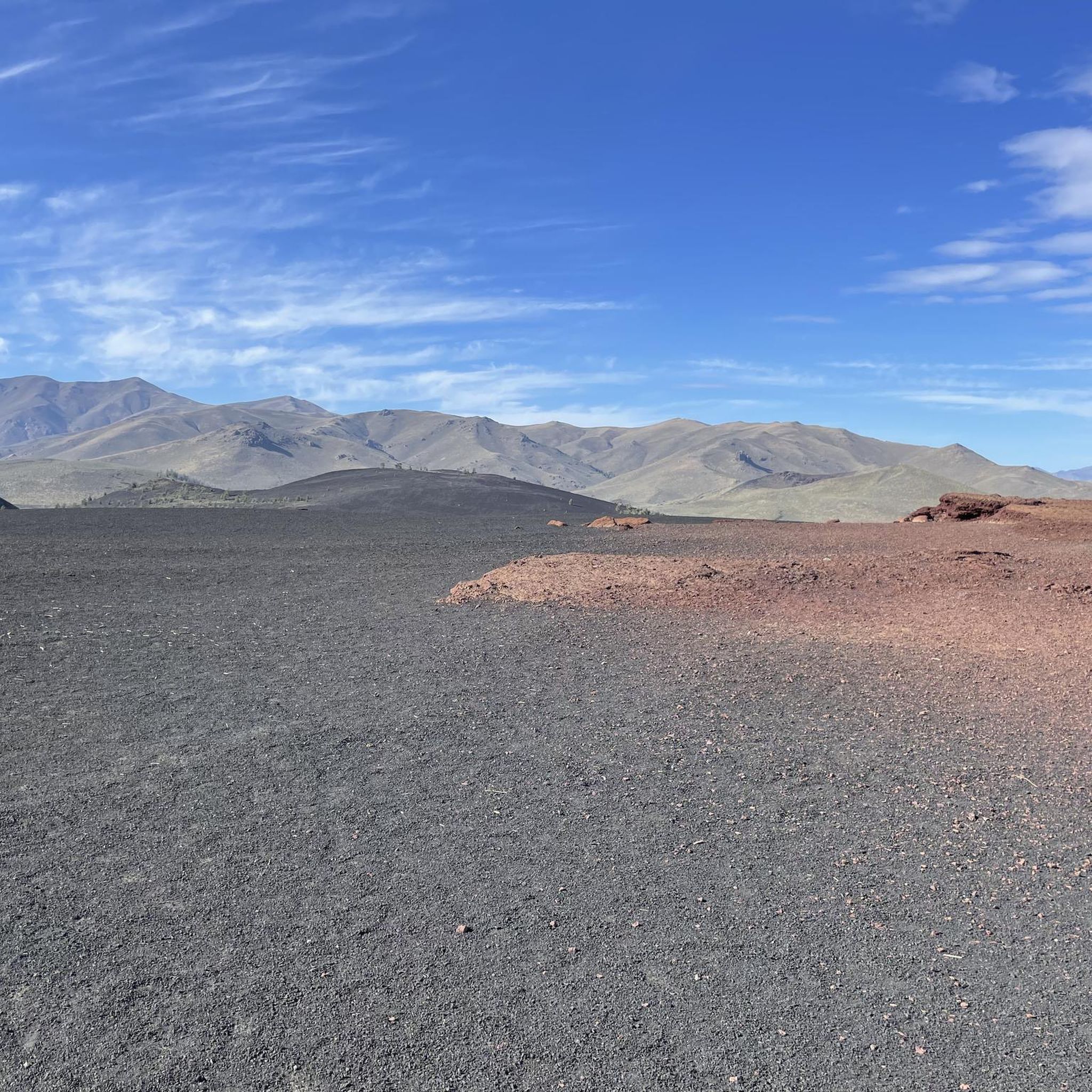
From up here you have a great view of the bizarre landscape all around
2
1

This short, approx. 1 km long circular route gives a good insight into the different life forms in this lava landscape. Even if it gives the impression that no life is possible here, some plants that have adapted have grown. In spring, after the snow has melted, wild flowers even bloom occasionally.
0
0
Frequently Asked Questions
How long do typical hikes take in Craters of the Moon National Monument?
Hiking times vary depending on the trail. For example, the North Crater Flow Trail is a short 0.25-mile loop. Longer trails like the Caves Trail are about 1.3 miles (2 km) round trip, while the Broken Top Loop Trail is around 1.6 miles (2.6 km). You can find more details on various routes in the Easy hikes in Craters Of The Moon National Monument guide.
Are permits required to explore attractions in Craters of the Moon National Monument?
Yes, a free permit is required to enter any of the lava tubes, such as the Indian Tunnel. These permits can be obtained at the Visitor Center and are necessary to ensure visitor safety and prevent the spread of White-Nose Syndrome, a fungal disease affecting bats.
What are some family-friendly activities in Craters of the Moon National Monument?
Families can enjoy exploring the unique volcanic landscape. The Spatter Cones offer a short, easy walk to see mini-volcanoes up close. The North Crater Flow Trail is a 0.25-mile loop with information boards, and the boardwalk makes it accessible for many. The Devils Orchard information boards also provide an easy walk with educational content.
Are there accessible attractions for visitors with mobility needs?
Yes, Craters of the Moon National Monument offers several accessible options. The North Crater Flow Trail features a boardwalk, making it wheelchair accessible. The Devils Orchard information boards also offer an easy, approximately 800-meter path suitable for those with mobility challenges.
What is the best time of year to visit Craters of the Moon National Monument?
The best time to visit is typically during the spring (May-June) and fall (September-October) when temperatures are milder and more comfortable for outdoor activities. Summer months can be very hot, with temperatures often exceeding 90°F (32°C), while winters bring snow and can limit access to certain areas.
What should I pack for a trip to Craters of the Moon National Monument?
Given the high desert environment, it's essential to pack layers of clothing, sturdy hiking shoes, plenty of water, sunscreen, a hat, and sunglasses. If you plan to explore lava tubes like Indian Tunnel, bring a flashlight or headlamp and wear long pants and sleeves to protect against rough surfaces.
Can I bring my dog to Craters of the Moon National Monument?
Dogs are generally permitted in developed areas such as campgrounds, picnic areas, and along paved roads and parking lots. However, they are typically not allowed on unpaved trails or inside lava tubes to protect wildlife and the fragile ecosystem. Always keep your dog on a leash and clean up after them.
What unique geological features can I see at Craters of the Moon?
The monument is renowned for its diverse volcanic features. You can explore cinder cones like Top of Inferno Cone, see the unique formations of Spatter Cones, walk across vast lava fields on trails like the North Crater Flow Trail, and venture into lava tubes such as Indian Tunnel.
Are there opportunities for wildlife viewing?
Despite the harsh volcanic landscape, Craters of the Moon supports a variety of wildlife. Keep an eye out for mule deer, coyotes, bobcats, and various species of birds, including raptors. Small mammals like pikas and ground squirrels are also common. Early mornings and late evenings are often the best times for wildlife sightings.
What outdoor activities can I do near these attractions?
Beyond exploring the attractions, the area offers various outdoor activities. You can enjoy hiking on numerous trails, from easy walks to more challenging routes. The monument is also popular for stargazing due to its dark night skies. For specific hiking routes, refer to the Hiking in Craters Of The Moon National Monument guide.
What do visitors enjoy most about Craters of the Moon National Monument?
Visitors frequently highlight the unique, otherworldly landscape, often comparing it to the moon's surface. They appreciate the opportunity to explore lava tubes and cinder cones, and the educational information provided along trails. The panoramic views from summits like Top of Inferno Cone are also a favorite, offering dramatic vistas of the volcanic terrain.
Most popular routes in Craters Of The Moon National Monument
Most popular attractions in Craters Of The Moon National Monument

Get inspired with the komoot mobile app


