Gowk Bank National Nature Reserve
Gowk Bank National Nature Reserve
The best MTB trails in Gowk Bank National Nature Reserve
4.5
(4)
20
riders
4
rides
Mountain biking in Gowk Bank National Nature Reserve offers a variety of routes through a landscape characterized by rolling hills, open moorland, and areas of woodland. The terrain provides a mix of gradients, from gentle ascents to more sustained climbs, suitable for different skill levels. Trails often traverse natural features and offer expansive views across the reserve. The area's natural composition makes it a suitable location for exploring on two wheels.
Best mountain bike trails in Gowk Bank National Nature…
Last updated: July 9, 2026
1
riders
8.03km
00:42
80m
80m
Easy mountain bike ride. Great for any fitness level. Suitable for all skill levels.
3.5
(2)
7
riders
18.3km
01:24
230m
230m
Easy mountain bike ride. Great for any fitness level. Suitable for all skill levels.

Sign up for free
2
riders
54.8km
03:58
660m
660m
Moderate mountain bike ride. Good fitness required. Suitable for all skill levels.
5.0
(1)
3
riders
Easy mountain bike ride. Great for any fitness level. Suitable for all skill levels.
5.0
(1)
7
riders
62.8km
04:17
760m
760m
Moderate mountain bike ride. Good fitness required. Suitable for all skill levels.
Our route recommendations are based on thousands of hikes, rides, and runs completed by other people on komoot.
Start today with a free account
Your next adventure awaits.
Login or Signup
Popular around Gowk Bank National Nature Reserve
Tips from the Community

Askerton Castle is a rare example of a fortified medieval manor house, situated in remote north Cumbria, about three miles north of Hadrian's Wall. The original building was constructed around 1290 as an unfortified hall, but in the late 15th century, two battlemented towers—the Dacre Tower and the Dovecot Tower—were added by Thomas, Lord Dacre, as part of a border defense against the notorious Border Reivers. In the 16th century, the complex was expanded with a stable block and additional wings for troop accommodation. A third tower on the northwest corner is believed to have been lost, possibly to fire, but traces of its stonework and staircases are still visible in the walls. The structure contains impressive oak beams, dated between 1494 and 1510, and shows clear stages of architectural evolution—from a simple hall to a military stronghold. Although the castle is not open to the public, it is now part of the Askerton Castle Estate, an organic farm that produces beef, lamb, pork, and poultry. The building is a Grade I listed building, indicating its exceptional historical value.
7
0
Bewcastle Fort (Latin: Fanum Cocidi) was a Roman fort in the English town of Bewcastle. The fort lay north of Hadrian's Wall and was connected by a road (Maiden Way) to the Banna (Birdoswald) fort on the wall. The fort's Latin name (The Shrine of Cocidius) indicates that it enclosed an existing local shrine. The Romans equated the deity Cocidius with Mars, and the fort was possibly built there to control tribal gatherings. In the second century, the Cohors I Dacorum mil. eq. (a mixed cohort with infantry and cavalry in dual garrisons, with auxiliaries from Dacia) was stationed there. A dual garrison cohort was also likely stationed there in the third century. By 400, before Hadrian's Wall was abandoned, Bewcastle Fort had already been abandoned. Around 1092, Bewcastle Castle was built in a corner of the former fortress, using Roman stone. The church of St. Cuthbert is also located within the old fortress walls.
7
0
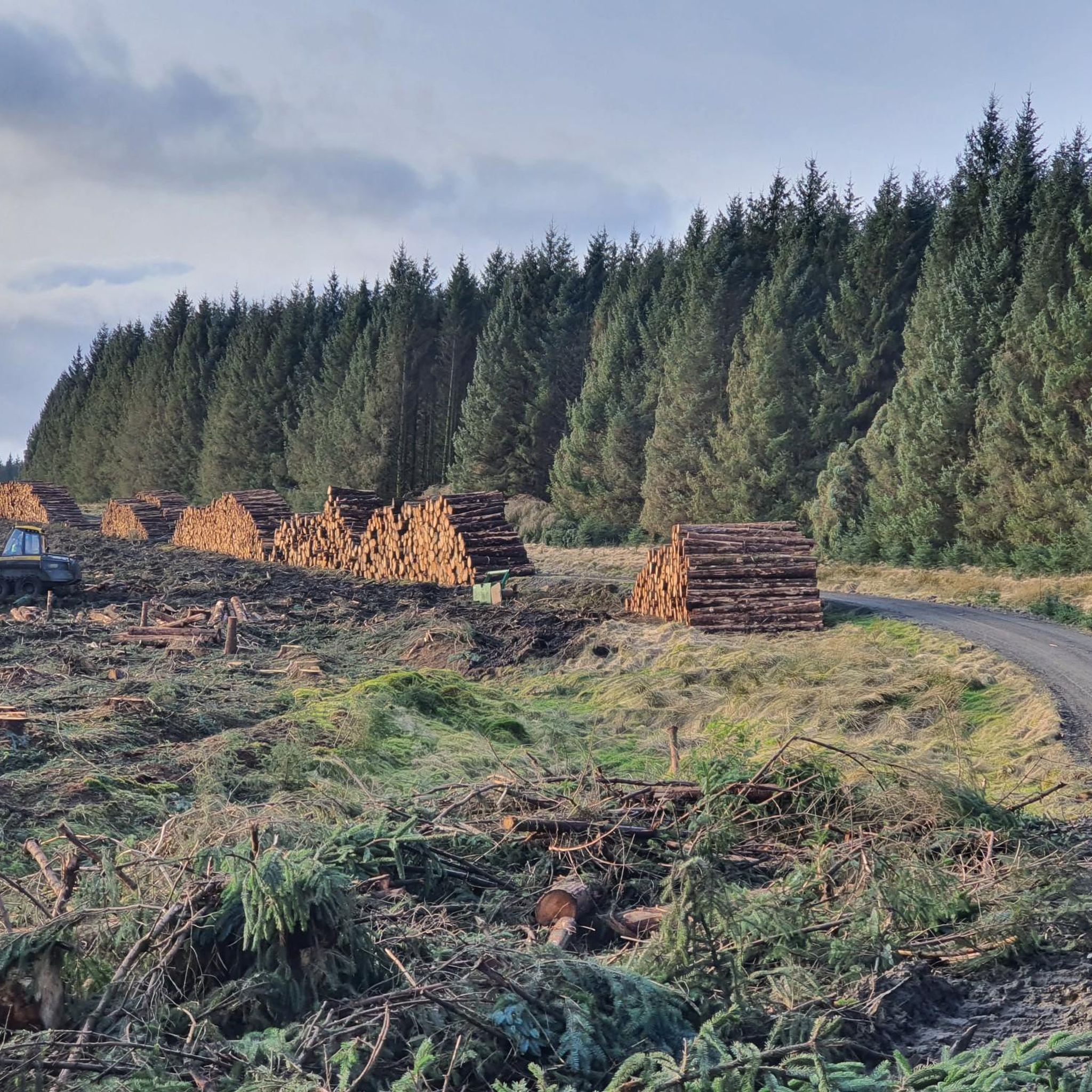
Cattle grid, a bypass and an intersection
7
0
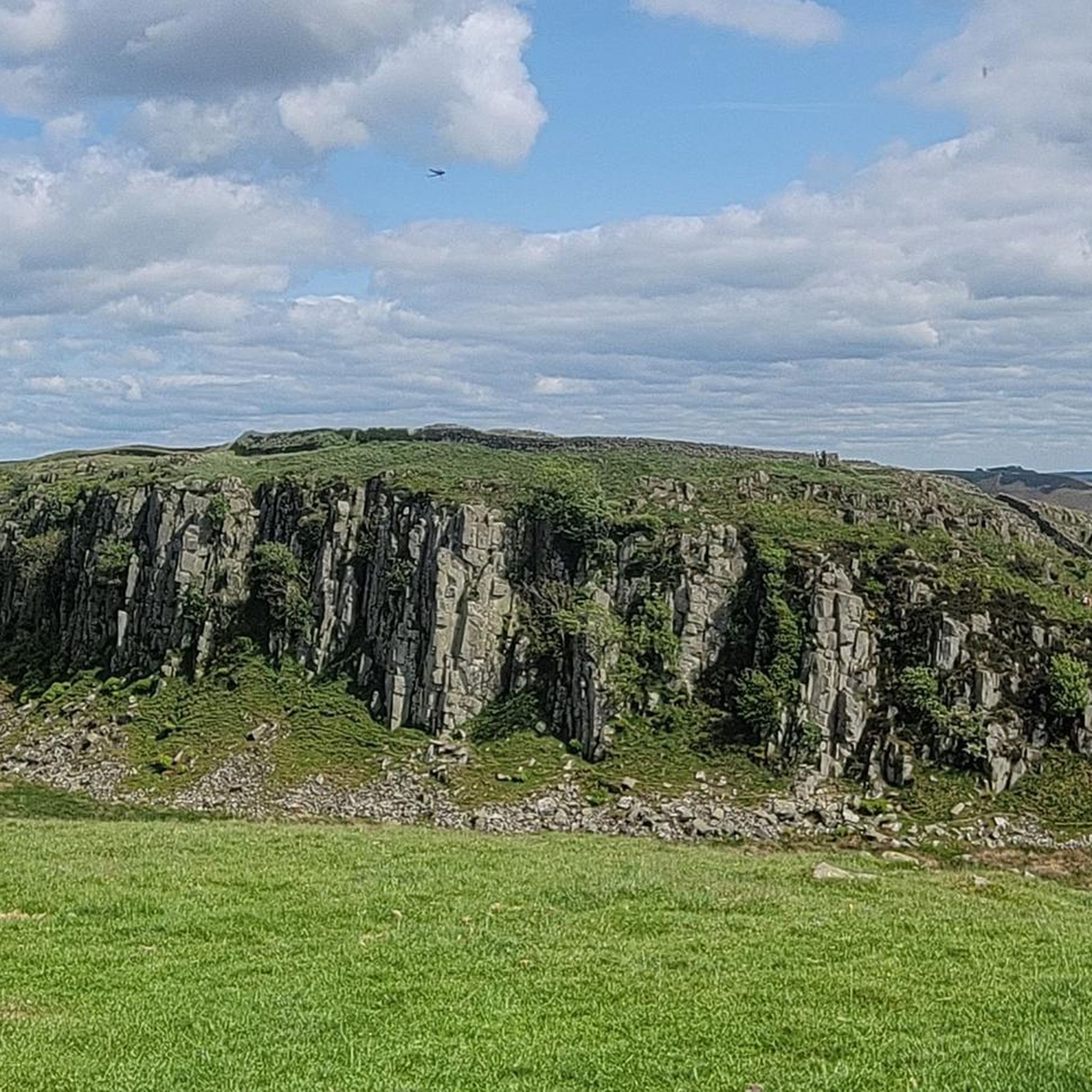
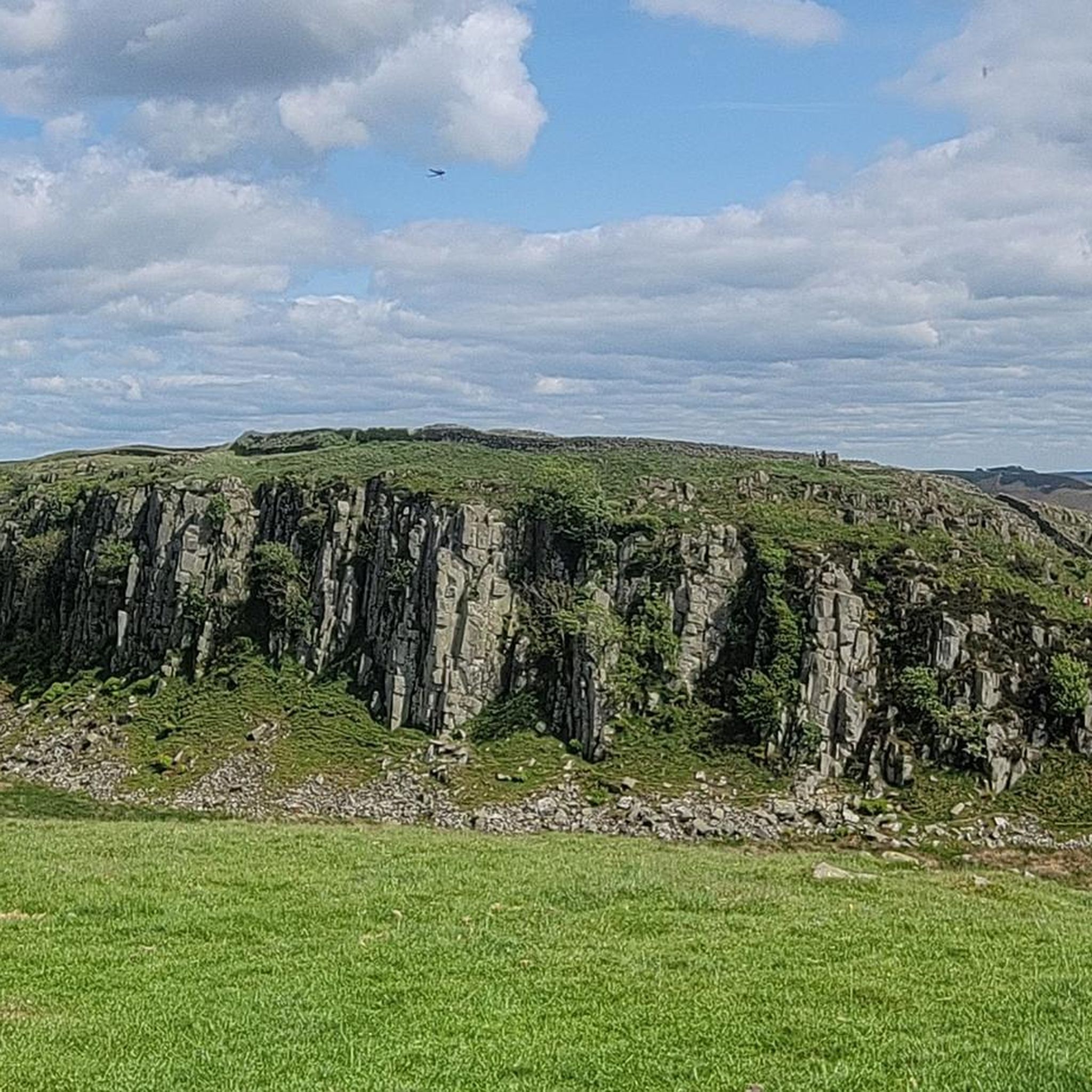
One of the most iconic viewpoints in Northumberland National Park is just minutes from Steel Rigg Car Park. From here, a panoramic view unfolds of Hadrian's Wall, winding like a ribbon of stone across the rugged cliffs of Whin Sill. The landscape here is particularly photogenic, with views of Crag Lough, Hotbank Crags, and the famous Sycamore Gap.
8
0
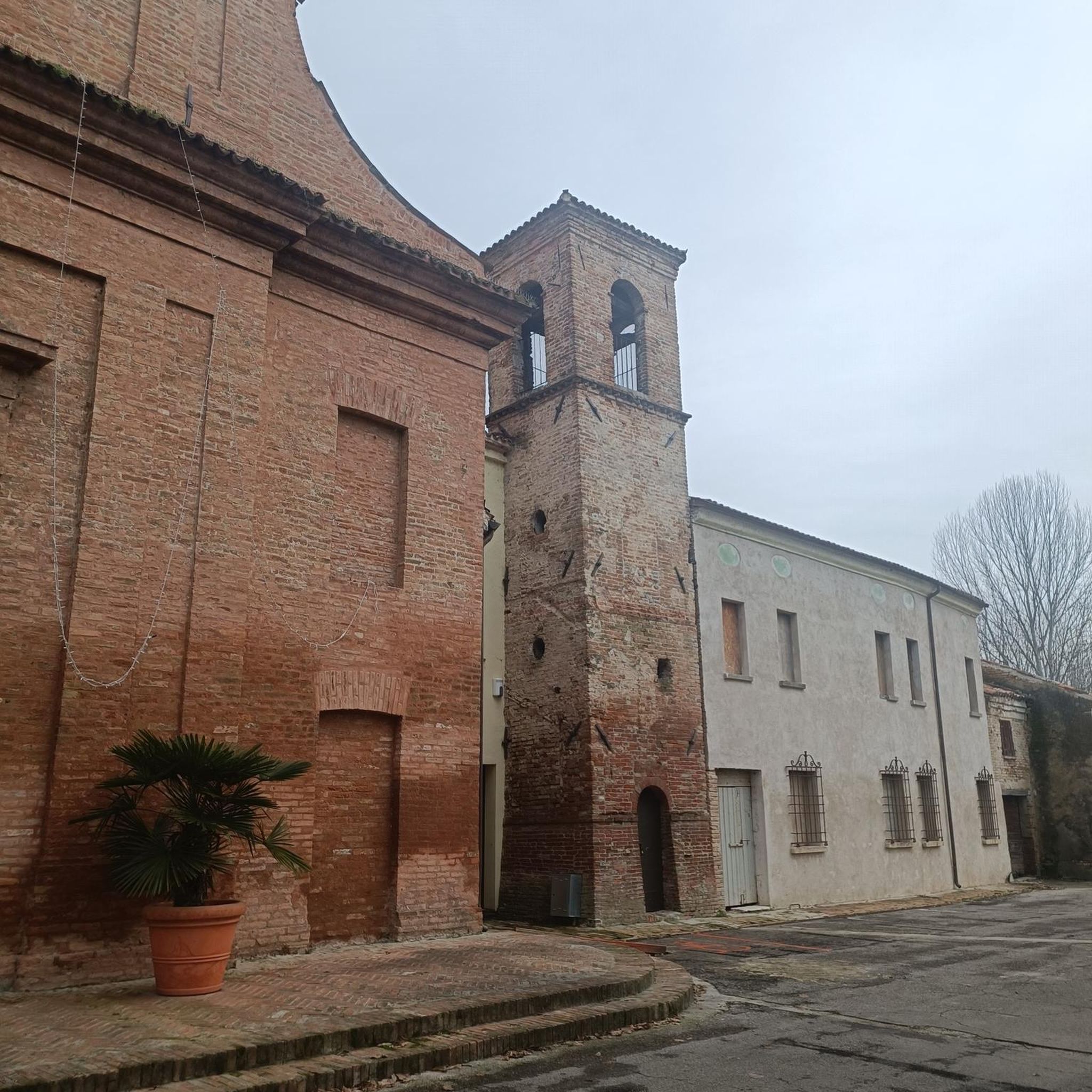
This impressive Augustinian priory, founded around 1169, is just a stone's throw from Hadrian's Wall. Its ruins tell stories of kings, wars, and pilgrims. King Edward I stayed here in 1306 during his final campaign against the Scots, and Robert the Bruce later attacked the monastery. The church ruins still stand tall, with a dramatic triple-arched structure. Built partly with stones from Hadrian's Wall, they include Roman inscriptions. Inside, you'll find the Lanercost Cross (1214) and the Lanercost Dossal, a work of art designed by William Morris.
11
0

To the right of the church entrance door is a tap with fresh water. :)
1
0

There is a permissive but limited parking area at this location. You may want want to attempt to park here first and if there is no room then park at High Rigg car park.
0
0

Frequently Asked Questions
What is the general difficulty level of mountain bike trails in Gowk Bank National Nature Reserve?
The mountain bike trails in Gowk Bank National Nature Reserve cater to a range of abilities. You'll find a good mix of easy and moderate routes, with no technically difficult trails listed. This makes it accessible for various skill levels, from beginners to more experienced riders looking for scenic, less extreme challenges.
Are there any easy mountain bike trails suitable for beginners or families in Gowk Bank National Nature Reserve?
Yes, there are several easy routes perfect for beginners or families. For instance, the Route 68 Signpost – Hopealone Mast loop from Robin Rock Drift is an easy 8 km trail that takes about 42 minutes. Another great option is the Scotchcoulthard – Viewpoint near Steel Rigg loop from Melkridge, an easy 18.3 km path offering varied natural terrain.
What are the longer mountain bike routes available for more experienced riders?
For those seeking a longer ride, the Scotchcoulthard – View from Outer Butt Hill loop from Haltwhistle is a moderate 54.8 km trail, typically completed in under 4 hours. Another substantial moderate option is the Butterburn Bridge – Lanercost Priory loop from Brampton, which covers 62.7 km.
Are there circular mountain bike routes in Gowk Bank National Nature Reserve?
Yes, many of the trails in Gowk Bank National Nature Reserve are designed as circular routes, allowing you to start and finish at the same point. Examples include the Route 68 Signpost – Hopealone Mast loop from Robin Rock Drift and the Scotchcoulthard – Viewpoint near Steel Rigg loop from Milecastle 40 (Winshields).
What is the best season for mountain biking in Gowk Bank National Nature Reserve?
The best season for mountain biking in Gowk Bank National Nature Reserve is generally spring through autumn (April to October). During these months, the weather is typically milder, and the trails are less likely to be waterlogged. However, the open moorland character means conditions can change quickly, so always be prepared for varied weather.
What should I wear for mountain biking in Gowk Bank during winter?
For winter mountain biking in Gowk Bank, layering is key. Given the open moorland, expect cold winds and potentially wet conditions. Wear waterproof and windproof outer layers, thermal base layers, warm gloves, a hat or buff, and waterproof cycling shoes or overshoes. Always check the forecast before heading out.
Are there good viewpoints along the mountain bike trails in Gowk Bank National Nature Reserve?
Yes, the reserve's landscape of rolling hills and open moorland offers numerous scenic viewpoints. Trails like the Scotchcoulthard – Viewpoint near Steel Rigg loop from Melkridge are specifically highlighted for their views, including those near Steel Rigg and Outer Butt Hill, providing expansive vistas across the natural landscape.
What are the parking options for mountain bikers visiting Gowk Bank National Nature Reserve?
While specific parking areas for each trail are not detailed, National Nature Reserves typically have designated car parks, often near popular access points or visitor centers. It's advisable to check local signage upon arrival or consult detailed maps for specific starting points like Robin Rock Drift, Melkridge, Haltwhistle, or Brampton, as these villages often provide parking facilities.
Are there public transport options to reach the mountain bike trails in Gowk Bank National Nature Reserve?
Public transport to rural National Nature Reserves like Gowk Bank can be limited. While some nearby towns like Haltwhistle or Brampton may have bus or train connections, direct access to trailheads within the reserve via public transport might be challenging. Planning your route in advance and checking local bus schedules for the specific area is recommended.
Are there any cafes or places to eat near the mountain bike trails?
Gowk Bank National Nature Reserve itself is a natural area, so cafes are unlikely to be directly on the trails. However, nearby villages and towns such as Haltwhistle, Melkridge, and Brampton, which serve as common starting points for rides, offer various amenities including cafes, pubs, and shops where you can refuel before or after your ride.
What do other mountain bikers enjoy most about Gowk Bank National Nature Reserve?
The area is highly rated by the komoot community, with an average score of 4.5 stars. Reviewers often praise the varied terrain, the expansive views across the open moorland, and the sense of tranquility found on the trails. The mix of easy and moderate routes also makes it a popular choice for different experience levels.
How many mountain bike trails are featured in Gowk Bank National Nature Reserve?
There are several mountain bike trails featured in Gowk Bank National Nature Reserve, offering a diverse range of experiences. Currently, you can explore at least five distinct routes, ranging from short, easy loops to longer, moderate adventures.
Most popular routes in Gowk Bank National Nature Reserve

Get inspired with the komoot mobile app


Explore more
Browse the best MTB trails in other regions.
