Attractions and Places To See in Mauna Loa Forest Reserve - Top 5
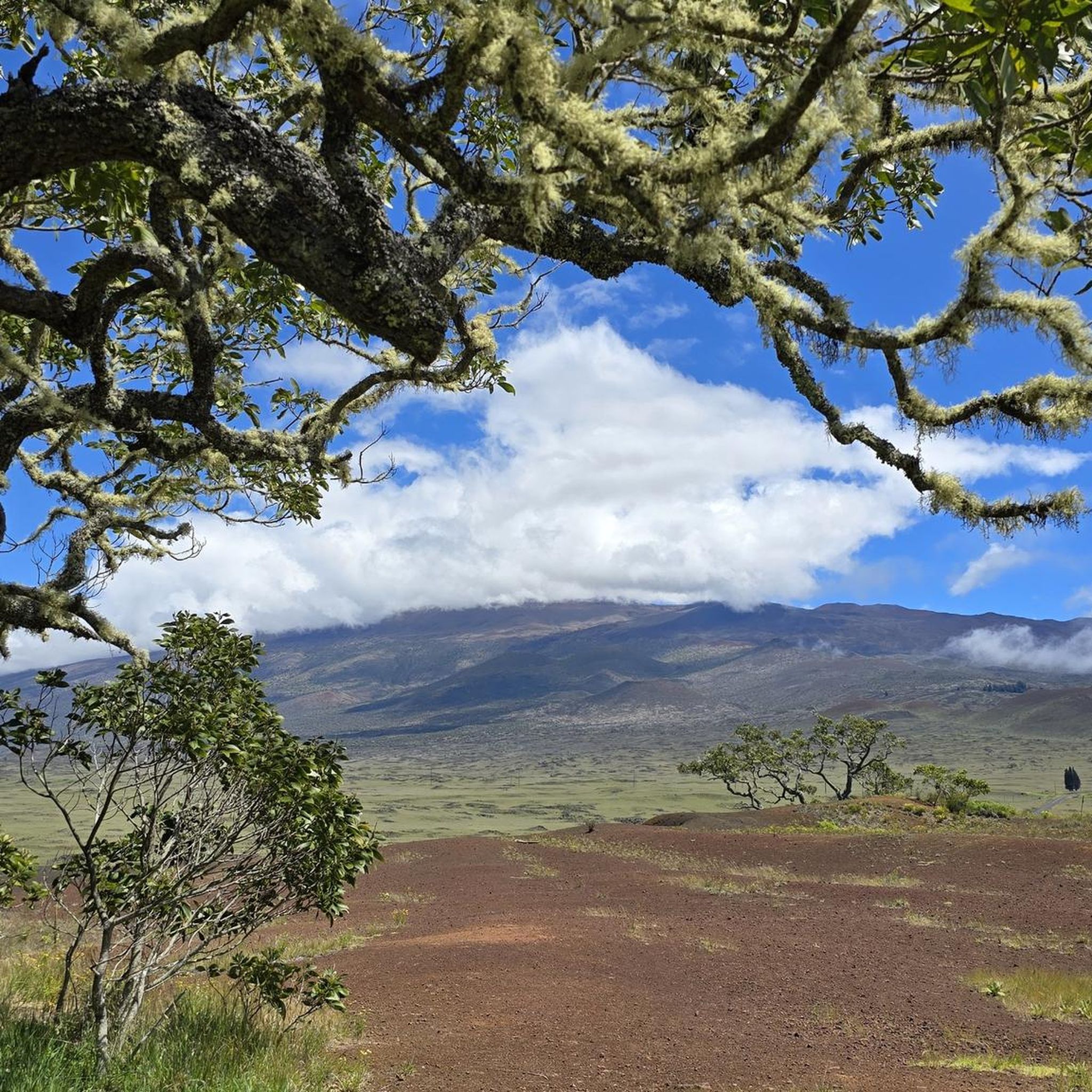
Best attractions and places to see in Mauna Loa Forest Reserve include a vast 54,662-acre area on the northern slopes of the Mauna Loa volcano in Hawaiʻi. This region features a unique volcanic landscape and diverse ecosystems, serving as both a forest reserve and a game management area. It encompasses various natural features, from subalpine woodlands to montane wet forests, showcasing the dynamic geology of Mauna Loa. The reserve holds cultural significance for Native Hawaiians, who have a strong spiritual…
Last updated: July 5, 2026
Puʻu Huluhulu (Hairy Hill)
Highlight • Volcano
Tip by

Mauna Loa Observatory
Highlight • Monument
Tip by

Sign up now to discover places like this
Get recommendations on the best single tracks, peaks, & plenty of other exciting outdoor places.
Sign up for free
Mauna Kea Climb
Highlight (Segment) • Climb
Leaving …
Tip by

Mauna Loa Climb
Highlight (Segment) • Climb
The initial 40 miles …
Tip by
Mauna Kea Base Start
Highlight • Trail
Tip by

Start today with a free account
Your next adventure awaits.
Login or Signup
Popular around Mauna Loa Forest Reserve
Tips from the Community

Mauna Loa is considered one of the longest climbs in the world. Starting from Waikoloa Beach, you'll ascend nearly 11,000 feet to the Mauna Loa Observatory. The initial 40 miles pack in 7,000 feet of elevation gain, taking you through stark, treeless mountain terrain. Most of the ride is on Saddle Road, a two-lane highway. Once you pass Pu'u Huluhulu station, you will turn right onto Mauna Loa Observatory Road. At this point, you still have 17 more miles to go and a 7,000-foot climb. This is a surreal, moon-like landscape of lava flows. Be prepared for extreme winds and rapidly changing weather conditions.
0
0
This legendary climb begins in the city of Hilo and ascends to the summit of Mauna Kea. It's a breathtaking 13,800-foot climb into the clouds, a challenging 42-mile undertaking. Leaving Hilo's streets, you transition onto Kumana Drive, which merges into Saddle Road, or Hawaii Route 200. This scenic highway, a twisting two-lane road connecting the east to the west, takes you through a stunning array of landscapes: verdant rainforests, lava fields, desert-like plains, rolling grasslands, and ocean views. The saddle marks the point where you rise into the clouds. The last ten miles are a moon-like terrain where you'll find telescope and viewpoints. The summit's thin air and the road's steepness create a brutal final push, demanding every last bit of your energy!
0
0

This marks the start of Mauna Kea! From here you can enjoy the views of the absolutely gargantuan mountain overhead. By this point whether you rode from Hilo or the west coast, you've already done enough climbing to put most cyclists to shame. You can give yourself a pat on the back and enjoy the long descent back into town, or drop a gear and head up the mountain!
0
0

The Mauna Loa Observatory deals with atmospheric change, and according to NOAA (the National Oceanic and Atmospheric Administration) it is the oldest CO2 monitoring station in the world. The observatory is closed to the public. At the time of writing the trails to Mauna Loa's summit are closed due to volcanic activity. Before planning a hike, visitors should check the national park website here: nps.gov/havo/planyourvisit/hike_maunaloa.htm
0
0

If you translate Puʻu Huluhulu, it means hairy hill. But to be precise, it is a volcanic cone that is now covered with vegetation but is still surrounded by younger lava. Thanks to that phenomenon, you get a great combination of plants with volcanic features. The area includes some nice trails that can be combined however you like to extend or shorten the distance.
0
0
The Mauna Loa Observatory deals with atmospheric change, and according to NOAA (the National Oceanic and Atmospheric Administration) it is the oldest CO2 monitoring station in the world. The observatory is closed to the public. At the time of writing the trails to Mauna Loa's summit are closed due to volcanic activity. Before planning a hike, visitors should check the national park website here: https://www.nps.gov/havo/planyourvisit/hike_maunaloa.htm
0
0
Frequently Asked Questions
What unique natural features can I explore in Mauna Loa Forest Reserve?
The reserve is renowned for its dynamic volcanic landscapes, featuring vast expanses of hardened lava from past eruptions. You can also discover diverse ecosystems, from subalpine woodlands with koa, māmane, and ʻōhiʻa trees at higher elevations to montane wet forests. A notable feature is Puʻu Huluhulu (Hairy Hill), a volcanic cone covered in vegetation surrounded by younger lava flows, creating a unique ecological 'kipuka'.
Are there any easy hiking trails suitable for beginners or families?
Yes, the Puʻu Huluhulu Trail is an easy 1.0-mile trail that allows exploration of a unique volcanic landscape and native forest, offering panoramic views. For more options, you can find several easy routes, including a loop from Puʻuhuluhulu, in the guide to Easy hikes in Mauna Loa Forest Reserve.
What are the more challenging hiking and climbing opportunities in the reserve?
For experienced adventurers, the Mauna Loa Climb is considered one of the longest climbs globally, ascending nearly 11,000 feet to the Mauna Loa Observatory. The Mauna Loa Observatory Road/Trail is a 17.5-mile managed trail leading towards the summit. The strenuous Mauna Loa Trail also begins at the Mauna Loa Lookout. You can find more details on these and other challenging routes in the guide to Hiking in Mauna Loa Forest Reserve.
What kind of wildlife can I expect to see in Mauna Loa Forest Reserve?
The reserve is home to various native plant and animal species. It's particularly significant for endangered birds such as the ʻAkiapōlāʻau, Hawaiʻi Creeper, Hawaiʻi ʻAkepa, and ʻIʻiwi, especially in areas like the Pu'u Maka'ala Natural Area Reserve, which protects montane wet forests. You'll also encounter unique native flora adapted to the volcanic environment.
Are there any significant viewpoints or lookouts in the area?
Yes, the Mauna Loa Lookout, situated at 6,662 feet (2,031 meters), offers stunning views of the Kīlauea volcano, ancient lava flows, and the distant ocean on clear days. It also features a short trail to an exclosure showcasing endangered Mauna Loa silversword plants. The Puʻu Huluhulu Trail also provides panoramic views of the volcanic landscape.
What is the cultural significance of Mauna Loa and its surrounding areas to Native Hawaiians?
The Mauna Loa region, including the Kaʻū Forest Reserve, holds deep cultural significance for Native Hawaiians. They have a strong spiritual connection to the mountain landscape and its native plants and animals, viewing them as family. The area contains resources vital for maintaining Hawaiian culture and practices.
Do I need permits for hiking or overnight stays in Mauna Loa Forest Reserve?
Yes, permits are often required for specific activities. For instance, overnight stays in cabins, such as the Mauna Loa Summit Cabin or the ʻĀinapō Cabin, require reservations and permits from the State of Hawaiʻi or the National Park Service. It's always best to check official sources for the latest requirements before your visit. For information on Mauna Loa trails, you can check the National Park Service website: nps.gov/havo/planyourvisit/hike_maunaloa.htm.
What should I know about visiting the Mauna Loa Observatory?
The Mauna Loa Observatory is the oldest CO2 monitoring station in the world, dealing with atmospheric change. While the observatory itself is closed to the public, the surrounding area offers impressive views of the volcanic landscape. Be aware that trails to Mauna Loa's summit may be closed due to volcanic activity, so always check the National Park Service website for current conditions.
What is the best time to visit Mauna Loa Forest Reserve?
The Mauna Loa Forest Reserve can be visited year-round, but weather conditions can change rapidly, especially at higher elevations. Clear days offer the best views. It's advisable to check weather forecasts before heading out and be prepared for varying temperatures and potential winds. High altitude considerations are important, so allow for acclimatization.
Are there any specific considerations for high-altitude hiking in the reserve?
Hiking on Mauna Loa involves high altitudes, which can pose health risks, especially for children, pregnant women, and individuals with certain medical conditions. It is highly recommended to consult a physician before undertaking such hikes. Always allow time for acclimatization, stay hydrated, and be prepared for extreme winds and rapidly changing weather conditions.
Where can I find information about hunting in the Mauna Loa Forest Reserve?
The Mauna Loa Forest Reserve also serves as a game management area. If you are interested in game mammal and game bird hunting, you can find information and check-in/check-out procedures at the Hunter Check Station located on Daniel K. Inouye Highway. More details on hunting regulations and areas can be found on the Hawaiʻi Department of Land and Natural Resources website: dlnr.hawaii.gov/recreation/hunting/gma/maunaloa/.
What is the 'Leave No Trace' policy in the reserve?
To preserve the natural environment of the Mauna Loa Forest Reserve, visitors are required to practice 'Leave No Trace' principles. This means packing out everything you pack in, including all trash and waste, to ensure the pristine condition of the landscape and protect its delicate ecosystems.
Most popular routes in Mauna Loa Forest Reserve

Get inspired with the komoot mobile app


Explore more
Still not found the Highlight you’re looking for? See guides of the top attractions in other regions:
