The best road cycling routes in Réserve Naturelle Des Sept-Îles
4.7
(37)
906
riders
51
rides
Road cycling in Réserve Naturelle Des Sept-Îles features a coastal landscape characterized by diverse terrain. The region includes stretches along the sea, offering views of the coastline and nearby islands. Inland sections may present rolling hills and varied natural environments suitable for road biking. The area provides a range of routes for different skill levels.
Best road cycling routes in Réserve Naturelle Des Sept-Îles
- The most popular road cycling route is Trestel Beach – Beautiful Coastal Trail loop from Aquarium…
Last updated: July 5, 2026
27
riders
Moderate road ride. Great for any fitness level. Some segments of this route may be unpaved and difficult to ride.
10
riders
37.2km
01:46
360m
360m
Moderate road ride. Good fitness required. Some segments of this route may be unpaved and difficult to ride.

Sign up for free
5.0
(2)
77
riders
41.3km
01:45
280m
280m
Easy road ride. Great for any fitness level. Mostly well-paved surfaces and easy to ride.
72
riders
Hard road ride. Very good fitness required. Some segments of this route may be unpaved and difficult to ride.
43
riders
11.8km
00:30
70m
70m
Moderate road ride. Great for any fitness level. Some segments of this route may be unpaved and difficult to ride.
Get access to more routes and recommendations from other explorers.
Sign up for free
Already have an account?
Our route recommendations are based on thousands of hikes, rides, and runs completed by other people on komoot.
Start today with a free account
Your next adventure awaits.
Login or Signup
Popular around Réserve Naturelle Des Sept-Îles
Tips from the Community

The Oratory of Saint-Guirec was built in the 12th century on the beach where, according to legend, Saint Guirec landed from Wales in the 6th century. He is said to have sailed in a granite trough. However, his arrival in a curragh, a boat made of wooden slats covered with leather, is historically documented. The trough proved extremely useful on board, serving as ballast, a hearth, and a storage container. Over the centuries, legends arose about Breton saints, based on more or less verifiable facts and Celtic traditions, which were later adopted by the Church. Inside the oratory is the granite statue of Saint Guirec. Young girls would come and stick a needle into it, and if it got stuck, they would get married within a year. Saint Guirec was also invoked to help children learn to walk by placing them in the Gwele of Saint Guirec, a hollow rock behind the Calvary.
1
0

One of the most beautiful beaches on the Pink Granite Coast.
0
0

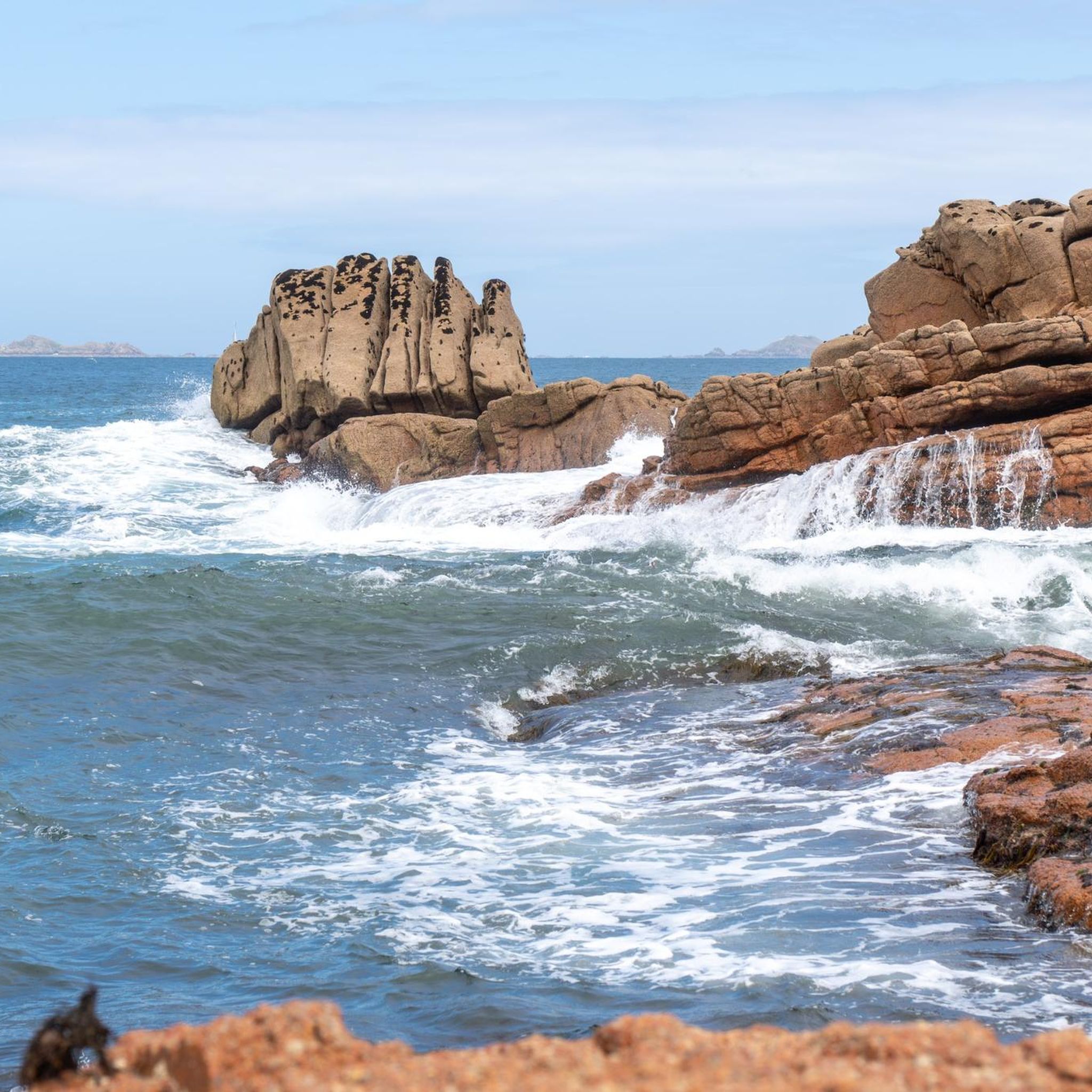
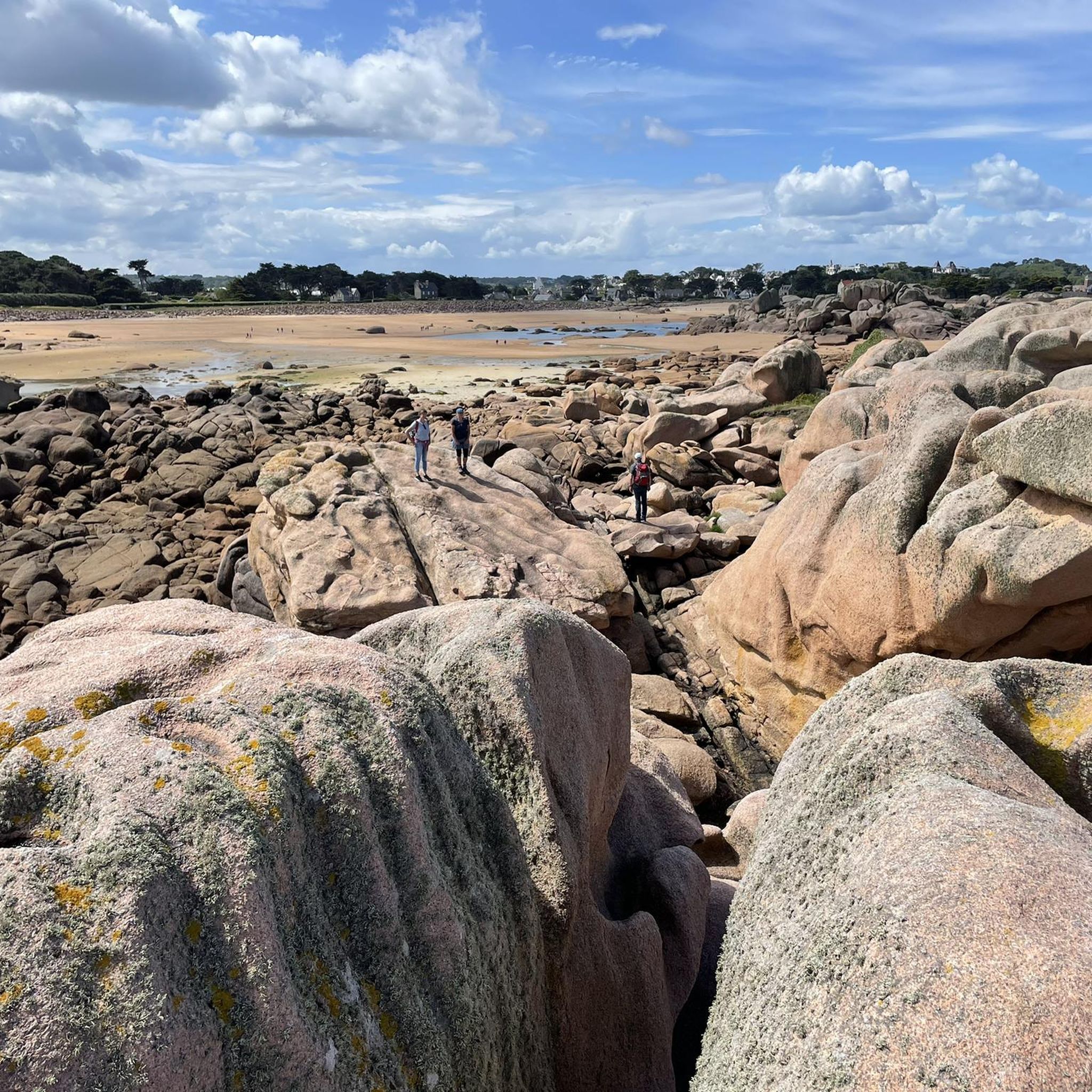
Saint-Guirec beach is picturesquely situated among the pink granite cliffs of the Côte de Granit Rose (Pink Granite Coast). Highlights include the Saint-Guirec Oratory on the beach with its marriage legend, a small chapel nearby, the Château de Costaérès offshore, and the GR34 coastal hiking trail, which runs directly along the beach and offers spectacular views.
1
0
The Oratory of Saint-Guirec dates back to the 12th century. A statue of Saint Guirec is housed in a small niche. For centuries, women, especially, have made pilgrimages here to pray for their husbands' safety at sea or to wish for a husband. According to an old tradition, unmarried women place a pine needle in the statue's nose; if it remains stuck during the next high tide, it is considered a sign of an impending wedding. The original 14th-century wooden statue was moved to the Chapel of Saint-Guirec in 1904, while the granite statue that replaced it was partially damaged in 1934.
2
0
The Chapelle Saint-Guirec is a small Romanesque church dating back to the 12th century. According to legend, it was built on the spot where Saint Guirec landed in the 6th century to spread Christianity. The chapel contains the original 14th-century wooden statue of the saint, which once stood in the oratory. It has been a destination for pilgrims for centuries.
2
0
The fine sandy beach slopes gently into the turquoise sea, inviting you to linger. At low tide, a fascinating mudflat area is revealed. On the shore stands the small oratory of Saint-Guirec, a chapel to which pilgrims have flocked for centuries to pray for the safety of sailors or to seek a husband. The stone statue standing there today dates from 1904.
1
0

The roof table measures 5.75 m long, 3.55 m wide and 0.75 m thick. The orthostat on the north side measures 2 m high, 1.50 m wide and 0.20 m thick. It continues to the west with a dry stone wall which does not appear to be original. The orthostat on the west side is slightly domed. It measures 2.55 m wide by 2.305 m high with a thickness between 0.40 m at the base and 0.30 m at the top. The southern orthostat is backed by the slope. It measures 2.50 m wide, 2.40 m high and 0.35 m thick. The internal chamber measures 5 m long by 3 m wide with a height under the slab of 2 m
1
0
St-Guirec is a Roman Catholic chapel in Ploumanac'h, a hamlet of Perros-Guirec in the Côtes-d'Armor department of Brittany. The Oratory of St-Guirec (French: Oratoire de Saint-Guirec) is a medieval chapel in Ploumanac'h, a hamlet of Perros-Guirec in the Côtes-d'Armor department of Brittany. The chapel is situated on a rocky promontory just offshore and can be reached on foot at low tide. It has been a listed historical monument since 1903.
2
0
Frequently Asked Questions
What are the difficulty levels of road cycling routes in Réserve Naturelle Des Sept-Îles?
Réserve Naturelle Des Sept-Îles offers a range of road cycling routes catering to various skill levels. You'll find 10 easy routes, 23 moderate routes, and 8 difficult routes, ensuring options for beginners to experienced cyclists.
Are there beginner-friendly road cycling routes in the region?
Yes, there are 10 easy road cycling routes available in Réserve Naturelle Des Sept-Îles. An example of a shorter, easier ride is the Allée couverte de Keryvon loop from Aquarium Marin de Trégastel, which covers about 10 km.
Are there challenging road cycling routes for experienced riders?
Absolutely. For experienced cyclists seeking a challenge, there are 8 difficult routes. A notable option is the Trestignel Beach – Bois Riou Pond loop from Aquarium Marin de Trégastel, a demanding 107.5 km path with significant elevation changes.
What is the best time of year to go road cycling in Réserve Naturelle Des Sept-Îles?
The coastal climate of Réserve Naturelle Des Sept-Îles makes spring and early autumn ideal for road cycling. The weather is generally milder, and the natural scenery is vibrant, offering comfortable conditions for longer rides.
What kind of weather should I expect when road cycling in this region?
Given its coastal location, the weather in Réserve Naturelle Des Sept-Îles can be variable. Expect a mix of sun, occasional wind, and possibly light rain, even in warmer months. It's always advisable to check the local forecast before heading out.
Are there places to stop for refreshments or food along the road cycling routes?
Many routes in Réserve Naturelle Des Sept-Îles pass through or near charming coastal towns and villages. These often provide opportunities to stop at local cafes, bakeries, or restaurants for refreshments and meals.
Can I expect scenic viewpoints along the road cycling routes?
Yes, the region is known for its stunning coastal landscape. Many road cycling routes offer breathtaking views of the coastline, the sea, and the nearby islands. The Beautiful Coastal Trail – View above Ploumanach loop from Trégastel is a great example of a route with picturesque vistas.
Is it possible to see wildlife while road cycling in Réserve Naturelle Des Sept-Îles?
As a natural reserve, the area is rich in wildlife, particularly seabirds. While cycling, especially along coastal paths, you may spot various bird species. Keep an eye out, but remember to maintain a respectful distance from any animals you encounter.
How can I find detailed maps for road cycling routes in Réserve Naturelle Des Sept-Îles?
Komoot provides detailed maps and navigation for all road cycling routes in Réserve Naturelle Des Sept-Îles. You can explore routes, download them for offline use, and get turn-by-turn directions directly through the komoot app or website.
What is the typical duration for road cycling routes in Réserve Naturelle Des Sept-Îles?
Route durations vary significantly based on distance and difficulty. Shorter, easy routes like the Allée couverte de Keryvon loop can take around 25 minutes, while longer, difficult routes such as the Trestignel Beach – Bois Riou Pond loop can take over 5 hours.
What do other road cyclists enjoy the most about road cycling in Réserve Naturelle Des Sept-Îles?
The area is highly rated by the komoot community, with an average score of 4.7 stars from over 20 reviews. Reviewers often praise the diverse coastal and inland terrain, the stunning sea views, and the well-maintained paths that offer a rewarding cycling experience.
Are there any long-distance road cycling routes available?
Yes, for those looking for longer rides, Réserve Naturelle Des Sept-Îles offers several options. The Trestignel Beach – Bois Riou Pond loop is a substantial 107.5 km route, providing an extensive journey through varied landscapes.
Most popular routes in Réserve Naturelle Des Sept-Îles

Get inspired with the komoot mobile app


Explore more
Browse the best Road cycling routes in other regions.
