The best road cycling routes around Hohe Wand
4.7
(272)
5,011
riders
161
rides
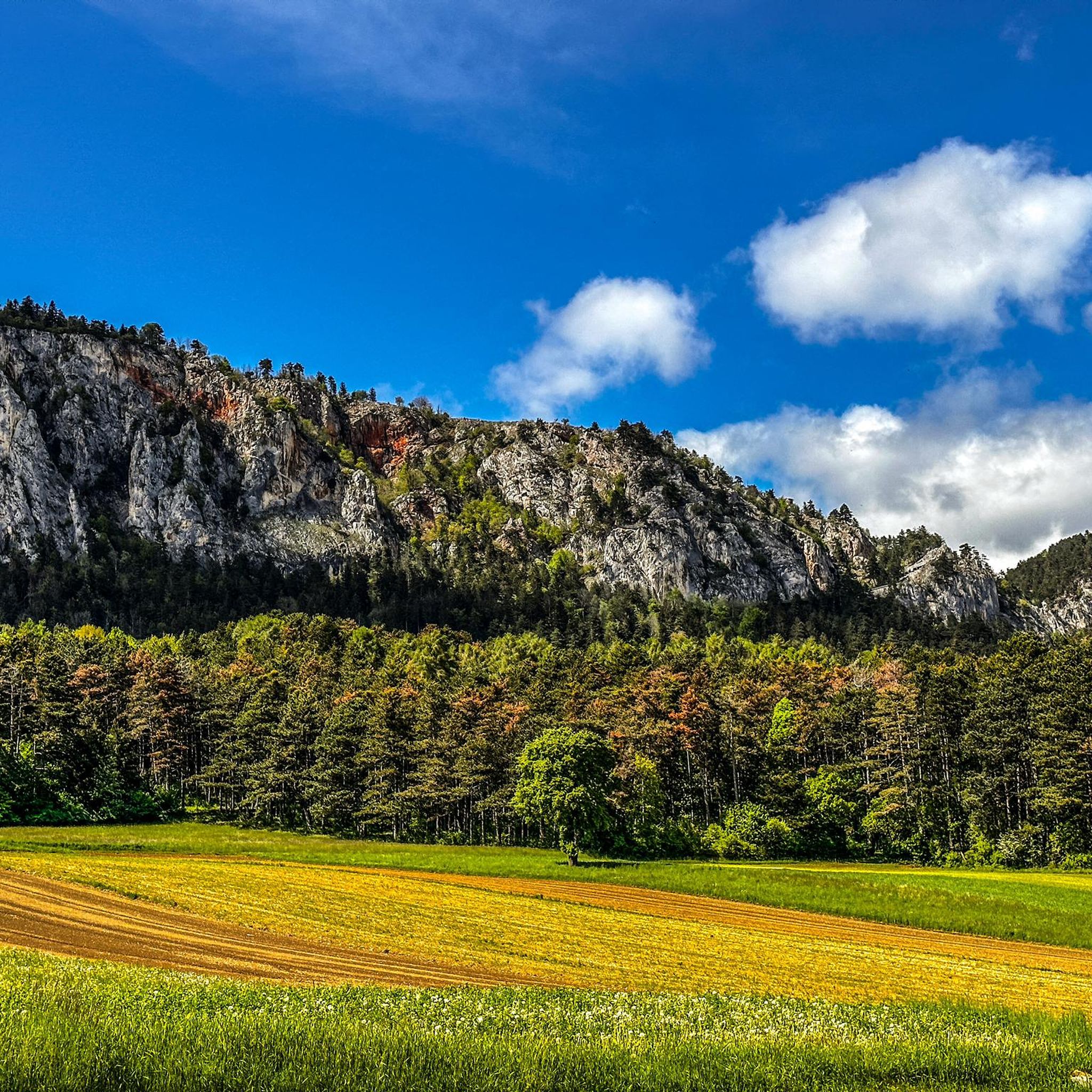
Road cycling routes around Hohe Wand traverse the easternmost 1,000-meter-high mountain in the Alps, offering a transition into the Pannonian Plain. The region features impressive limestone bedrock and rocky cliffs, some reaching up to 230 meters high, alongside a wooded plateau. This diverse landscape provides varied terrain for road cyclists, from valley floors to elevated sections.
Best road cycling routes around Hohe Wand
- The most popular road cycling route is Schwarza Valley – Payerbach Viaduct loop from Urschendorf, a…
Last updated: September 25, 2026
4.8
(6)
80
riders
66.8km
02:45
300m
300m
Moderate road ride. Good fitness required. Some segments of this route may be unpaved and difficult to ride.
5.0
(13)
38
riders
22.5km
01:11
380m
380m
Moderate road ride. Good fitness required. Mostly well-paved surfaces and easy to ride.

23
riders
39.0km
01:52
490m
490m
Moderate road ride. Good fitness required. Mostly well-paved surfaces and easy to ride.
24
riders
46.9km
01:52
160m
160m
Easy road ride. Great for any fitness level. Mostly well-paved surfaces and easy to ride.
28
riders
56.8km
02:27
450m
450m
Moderate road ride. Good fitness required. Mostly well-paved surfaces and easy to ride.
Get access to more routes and recommendations from other explorers.
Already have an account?
Our route recommendations are based on thousands of hikes, rides, and runs completed by other people on komoot.


Tips from the Community

The village church, consecrated to St. Lawrence, is located in the center of the village of Katzelsdorf. Although the building suffered severe damage during hostilities in World War II, it was rebuilt in the post-war years. Among the remarkable elements of the house of worship is a medieval tower made of rubble masonry.
1
0
The Winzendorf quarry in the Wiener Neustadt district is primarily known for the historical extraction of the characteristic red Engelsberg marble, which was used, among other things, in Vienna's St. Stephen's Cathedral. The disused area was declared a protected geotop and technical monument in 1998. Today, the imposing natural backdrop of the quarry serves as a covered open-air stage for cultural events such as the Karl-May-Festspiele and musicals.
2
0
The historic Fischau Thermal Baths in Bad Fischau-Brunn are characterized by their two green-bordered, protected stone pools, which are fed by natural thermal water with a temperature of around 19 °C. Its origins date back to Roman times, and the facility was expanded in the 19th century into an elegant summer resort for Viennese celebrities. Today, in addition to the nostalgic swimming experience in summer, the baths also offer year-round sauna and bathing fun in the heart of the thermal region.
2
0

Beautiful paved cycle path from the underpass at St. Egyden am Steinfelde train station to the roundabout at Blätterstraße / Wasserwerk. There are a handful of benches along the cycle path. The wooded strip in the direction of Bahnstraße has since been cleared.
0
0

Very nostalgic bath, large sunbathing lawns with many trees. The thermal water is cold 19°C, but a welcome change on hot days. There is also a large restaurant with nice service.
0
0
From the Payerbach-Reichenau station, the first major structure of the Semmering Railway can already be made out. With a length of 227.6 meters and a height of 24.7 meters, the viaduct forms the longest structure of its kind on the Semmering line.
0
0
We booked a Day Spa at Linsberg Asia Therme for €120 per person – and, in our opinion, the value for money is absolutely not justified.
1
0
Reichenau Castle in Reichenau an der Rax was first mentioned in a document in 1256. Today it is used for exhibitions, concerts, and seminars.
1
0
Frequently Asked Questions
How many road cycling routes are available in the Hohe Wand region?
There are over 160 road cycling routes around Hohe Wand, offering diverse options for cyclists. These routes range from easy to difficult, with 40 easy, 103 moderate, and 22 difficult trails.
What kind of terrain and elevation can I expect on road cycling routes in Hohe Wand?
The Hohe Wand region, marking the easternmost 1,000-meter-high mountain in the Alps, offers varied terrain. You'll encounter impressive limestone bedrock and rocky cliffs, alongside wooded plateaus. Routes can range from valley floors to elevated sections, with some spanning between 450 to 1135 meters in altitude, providing significant elevation gains on certain trails.
Are there any easy road cycling routes suitable for beginners in Hohe Wand?
Yes, Hohe Wand offers several easy road cycling routes. For instance, the Neusiedler Pond – Linsberg Asia Spa loop from Urschendorf is an easy 46.3 km route with a modest elevation gain of 160 meters, making it suitable for those new to road cycling or looking for a more relaxed ride.
What are some notable landmarks or viewpoints I can see along the road cycling routes?
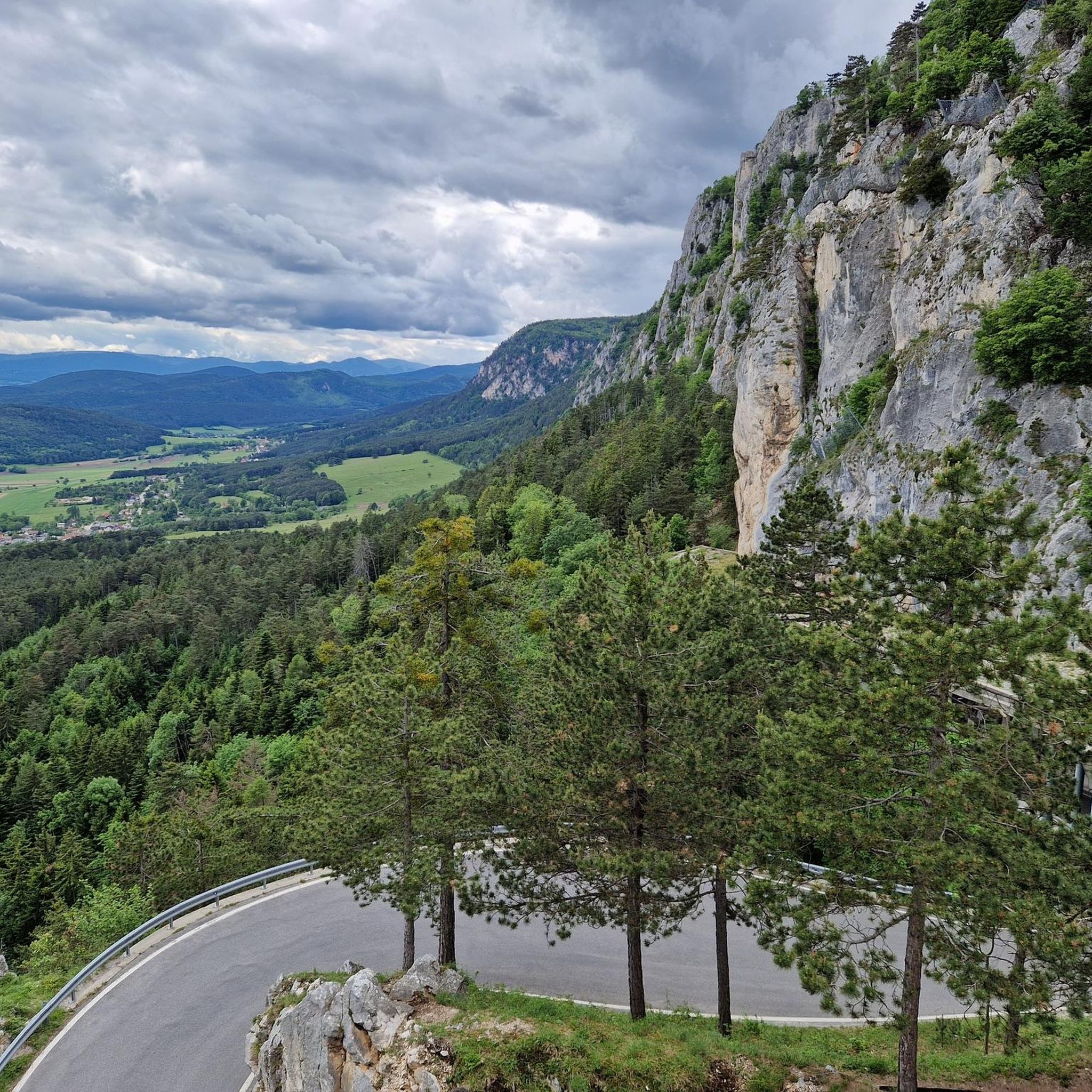
Many routes offer stunning views and pass by interesting landmarks. You can enjoy panoramic views of the Piestingtal valley, Schneeberg, and even Ötscher from various points. The "Skywalk" observation deck and the observation tower provide breathtaking vistas from the edge of the plateau. Some routes also offer views of historical sites like Hernstein Castle or the Hohe Wand Serpentines.
What do other road cyclists enjoy most about cycling in Hohe Wand?
The road cycling routes in Hohe Wand are highly rated by the komoot community, with an average score of 4.7 stars from over 200 reviews. Cyclists often praise the diverse landscape, from rocky cliffs to wooded plateaus, and the variety of routes that cater to different ability levels. The scenic views and well-maintained paths are frequently highlighted.
Are there any road cycling routes that feature mountain passes?
Yes, the Hohe Wand region includes several mountain passes that can be incorporated into road cycling routes. Notable passes include the Hohe Wand Serpentines, Hals Pass, and Geyer Saddle, offering challenging climbs and rewarding descents.
Can I find circular road cycling routes in Hohe Wand?
Absolutely. Many road cycling routes in Hohe Wand are designed as loops, allowing you to start and end at the same point. An example is the View of Burg Sebenstein – Raglitzer Straße loop from Urschendorf, a moderate 54.5 km route with 442 meters of elevation gain.
What is the best time of year for road cycling in Hohe Wand?
The Hohe Wand region is generally pleasant for road cycling from spring through autumn. The diverse flora and fauna, influenced by both Alpine and Pannonian characteristics, are particularly vibrant during these seasons. While specific weather conditions vary, summer offers longer daylight hours and generally warmer temperatures, ideal for longer rides.
Are there any family-friendly road cycling options in the Hohe Wand area?
While many road cycling routes involve significant elevation, some easier, flatter sections or dedicated paths within the Hohe Wand Nature Park might be suitable for families. The nature park itself offers facilities like a semi-natural playground and a petting zoo, which could be combined with shorter, less demanding rides on well-paved roads in the surrounding valleys.
Where can I find parking for road cycling routes in Hohe Wand?
The Hohe Wand Nature Park is easily accessible, with a public road leading up to the plateau, where parking facilities are available. Additionally, many routes start from towns and villages in the surrounding area, such as Urschendorf or near Einhornhöhle, which typically offer designated parking areas for visitors.
Are there any caves or unique natural features to explore near the cycling routes?
Yes, the limestone bedrock of Hohe Wand is home to several caves. The Unicorn Cave (Einhornhöhle) near Dreistetten is a notable show cave. While not directly on every cycling route, it's a significant natural feature in the region worth exploring, often accessible via short detours from main cycling paths.
Can I access Hohe Wand road cycling routes using public transport?
The Hohe Wand Nature Park is generally accessible, and public transport options to the surrounding towns and villages are available. From these points, you can often connect to the start of various road cycling routes. It's advisable to check local bus and train schedules for the most convenient access points to the region.
Most popular routes around Hohe Wand
Most popular attractions around Hohe Wand

Get inspired with the komoot mobile app


Explore more
Browse the best Road cycling routes in other regions.
