The best road cycling routes in Γεράνεια (Λουτρακίου-Περαχώρας)
4.8
(8)
263
riders
13
rides
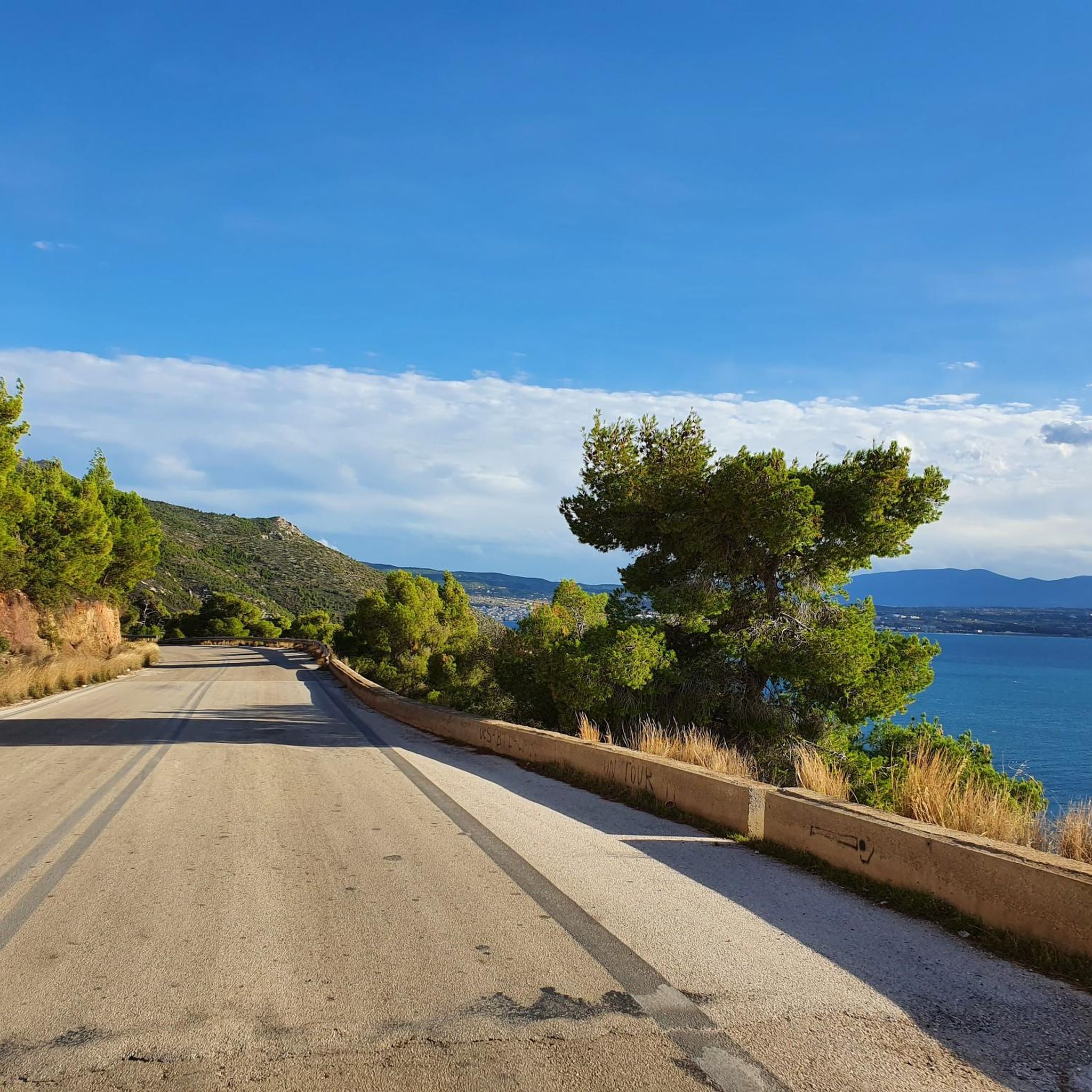
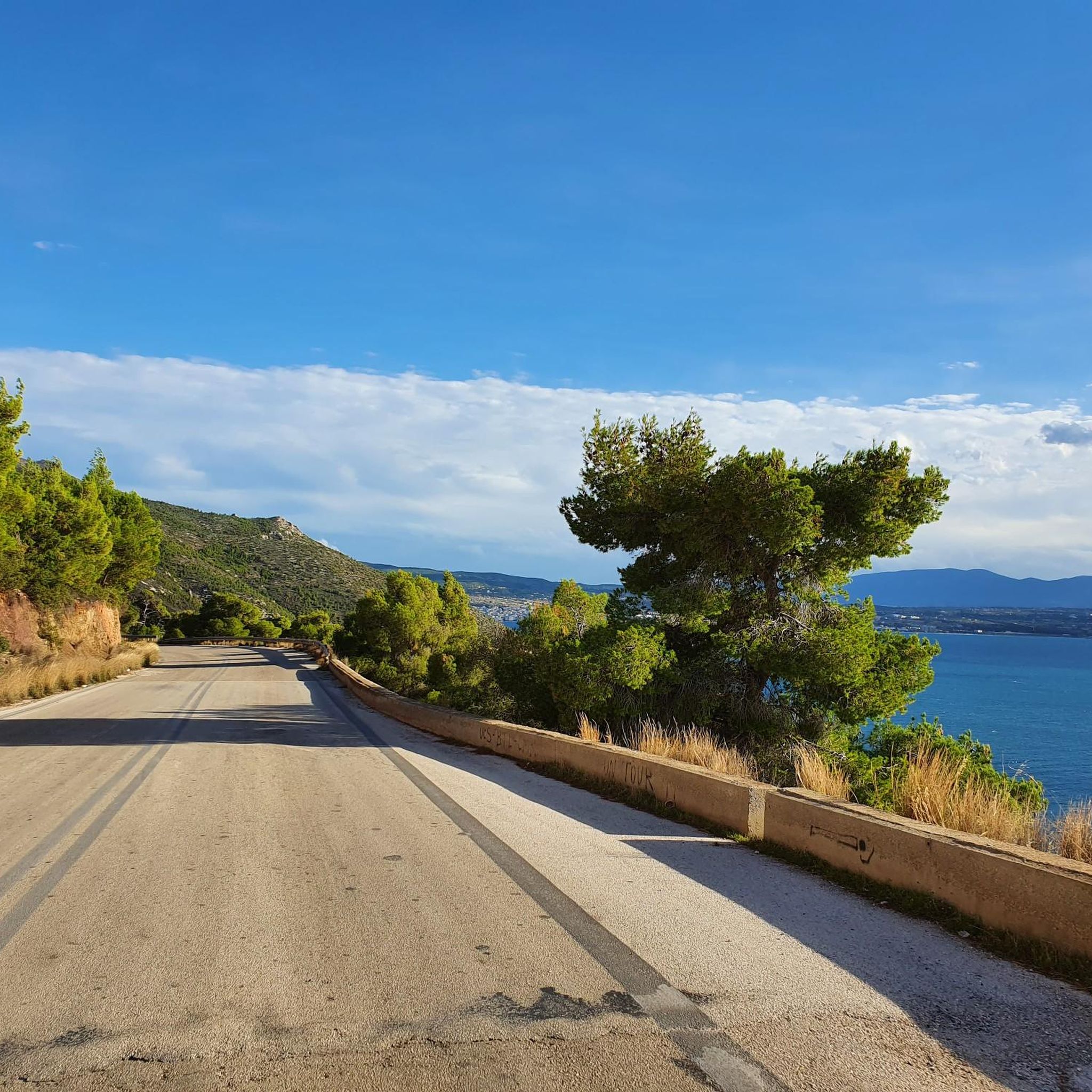
Road cycling routes in Γεράνεια (Λουτρακίου-Περαχώρας) traverse a varied landscape in the Korinthia region, characterized by coastal roads, significant climbs, and views of the Corinth Canal. The area offers a mix of terrain, from flatter sections near the coast to more challenging ascents into the natural park. Road cyclists can explore routes that feature engineering marvels like the Isthmia Submersible Bridge and scenic stretches along the Gulf. This region provides diverse road cycling experiences for various skill levels.
Best road cycling routes in Γεράνεια (Λουτρακίου-Περαχώρας)
- The most popular road cycling route is Bridge Over the Corinth Canal – Isthmia Submersible Bridge loop from Αγία Παρασκευή, a 64.5 miles (103.7 km) trail that takes about 5 hours 20 minutes to complete. This route features substantial elevation gain and views of the Corinth Canal.
- Another top favourite among local road cyclists is Bridge Over the Corinth Canal – Amazing colors! loop from Loutraki, a moderate 33.9 miles (54.6 km) path. This route offers scenic views of the Corinth Canal and surrounding landscapes.
- Local road cyclists also love the Bridge Over the Corinth Canal – Isthmia Submersible Bridge loop from Loutraki, a 29.4 miles (47.3 km) trail leading through coastal areas and past the Isthmia Submersible Bridge, often completed in about 2 hours 7 minutes.
- Road cycling in Γεράνεια (Λουτρακίου-Περαχώρας) is defined by coastal roads, significant climbs, and views of the Corinth Canal. The network offers options for easy, moderate, and difficult routes, catering to different ability levels.
- The routes in Γεράνεια (Λουτρακίου-Περαχώρας) are highly rated by the komoot community with an average score of 4.7 stars from over 7 reviews. More than 200 road cyclists have used komoot to explore Γεράνεια (Λουτρακίου-Περαχώρας)'s varied terrain.
Last updated: July 5, 2026
8
riders
102km
05:10
1,700m
1,700m
Hard road ride. Very good fitness required. Mostly well-paved surfaces and easy to ride.
14
riders
Moderate road ride. Good fitness required. Mostly well-paved surfaces and easy to ride.

Sign up for free
14
riders
43.8km
01:41
110m
110m
Easy road ride. Great for any fitness level. Mostly well-paved surfaces and easy to ride.
5.0
(1)
12
riders
80.9km
04:26
1,640m
1,640m
Hard road ride. Very good fitness required. Mostly well-paved surfaces and easy to ride.
9
riders
48.8km
02:12
540m
540m
Moderate road ride. Good fitness required. Mostly well-paved surfaces and easy to ride.
Get access to more routes and recommendations from other explorers.
Sign up for free
Already have an account?
Our route recommendations are based on thousands of hikes, rides, and runs completed by other people on komoot.
Start today with a free account
Your next adventure awaits.
Login or Signup
Popular around Γεράνεια (Λουτρακίου-Περαχώρας)
Tips from the Community

The image shows a bust of Dimitrios Plapoutas (1786-1864), a hero of the Greek War of Independence. Dimitrios Plapoutas was a prominent general and freedom fighter during the Greek Revolution of 1821. He came from Gortynia in Arcadia and was a close ally of Theodoros Kolokotronis, one of the central figures of the independence struggle. He was known as an excellent dancer and a brave warrior. The original bust was erected in the 1970s.
0
0
The retractable bridge (West) on the Corinth Canal, also known as the Posidonia sinking bridge, is located at the western end of the canal. It is one of two unique bridges in the world on the canal that are not folded up or turned when ships approach, but are completely sunk into the water. To allow ships to pass through, the middle section of the bridge is hydraulically lowered to the bottom of the canal. As soon as the ship has passed, it reappears. It serves as a road bridge for cars (up to 3 tons) as well as a pedestrian path. Waiting times: When the bridge is lowered for ship traffic, it can be closed for about an hour. During this time, traffic often gets backed up.
2
0
The church of Agios Konstantinos and Eleni in Solomos is an excellent example of modern Greek Orthodox sacral architecture in the region. The striking bell tower with the large cross-shaped window serves as a landmark far and wide. Solomos lies directly at the foot of the Akrokorinth massif. The church is built from the typical light-colored natural stone of the area. The large cross in the tower is often illuminated and offers an impressive sight at night for travelers on the nearby highway.
1
0
The Pegasus statue is a central landmark of the city and is located on Eleftherios Venizelos Square (often also referred to as Pegasus Square), right by the harbor of New Corinth. Pegasus, the winged horse of Greek mythology, is the official symbol of the city of Corinth. In ancient times, Pegasus was associated with the city, as it is said that he was tamed at the Peirene spring in Ancient Corinth. The statue stands in the middle of a fountain installation on a large, white mosaic base. The square is a popular meeting point for locals and tourists, and cultural events such as concerts are often held here.
2
0
This statue is a modern bronze copy of the famous ancient artwork, the Poseidon of Cape Artemision. The statue depicts either the sea god Poseidon or the father of the gods Zeus. As the attribute in the raised right hand (a trident for Poseidon or a thunderbolt for Zeus) is missing, the exact identity remains controversial in archaeology. The original is a life-size bronze statue dating from around 460 BC. It was recovered in two parts from an ancient shipwreck off Cape Artemision in the north of the island of Euboea in 1926 and 1928. Today, the original is housed in the National Archaeological Museum in Athens. This copy is located on the beach of Poseidonia.
2
0
The Church of Saint Nicholas (Agios Nikolaos) in Isthmia is a Greek Orthodox church located near the eastern entrance to the canal. It serves as the religious center for the village of Isthmia, which is primarily known for the ancient Temple of Poseidon and the Isthmian Games held there.
0
0
At both ends of the canal (Posidonia in the west and Isthmia in the east) there are unique, submersible road bridges. When a ship approaches, the bridge does not pivot upwards or sideways, but is completely submerged in the water, until it lies about 11 meters deep on the canal floor. For tourists, it is a spectacle to watch the bridge resurface after the ship has passed and the water drains from the roadway.
0
0
The Corinth Canal separates the Peloponnese peninsula from mainland Greece. It connects the Saronic Gulf in the east with the Gulf of Corinth in the west. The canal is about 6.3 kilometers long and was dug almost 80 meters deep into the rock at its deepest point. At the water's surface, it is only about 24 meters wide, making it one of the narrowest canals in the world. It saves ships the roughly 400-kilometer detour around the Peloponnese. The idea for the canal already existed in antiquity (e.g., under Emperor Nero), but it was only realized between 1881 and 1893 using modern means such as dynamite.
1
0
Frequently Asked Questions
How many road cycling routes are available in Γεράνεια (Λουτρακίου-Περαχώρας)?
There are 14 road cycling routes in Γεράνεια (Λουτρακίου-Περαχώρας), catering to various skill levels from easy coastal rides to challenging mountain ascents.
Are there easy road cycling routes suitable for beginners in Γεράνεια (Λουτρακίου-Περαχώρας)?
Yes, the region offers 2 easy road cycling routes. A good option for beginners is the Cycle path in Corinth – Corinth Canal loop from Loutraki, which is 43.7 km long with minimal elevation gain.
What are the options for advanced road cyclists looking for a challenge in Γεράνεια (Λουτρακίου-Περαχώρας)?
Advanced cyclists will find 5 difficult routes in the area. For a significant challenge, consider the Bridge Over the Corinth Canal – Isthmia Submersible Bridge loop from Αγία Παρασκευή, a 103.7 km route with over 1700 meters of elevation gain. Another demanding option is the Beautiful climb from Schinos – Agia Sotira Beach loop from Loutraki, covering 81.5 km with similar elevation.
Are there any circular road cycling routes in Γεράνεια (Λουτρακίου-Περαχώρας)?
Yes, many routes in the region are designed as loops. For example, the popular Bridge Over the Corinth Canal – Amazing colors! loop from Loutraki offers scenic views over 54.6 km, starting and ending in Loutraki.
What kind of terrain can I expect on road cycling routes in Γεράνεια (Λουτρακίου-Περαχώρας)?
The terrain is quite varied, ranging from flatter coastal roads near the Gulf to significant climbs into the Geraneia natural park. You'll encounter a mix of smooth asphalt and winding roads, often with stunning views of the Corinth Canal and the surrounding landscapes.
What are some scenic viewpoints or landmarks to see while road cycling in Γεράνεια (Λουτρακίου-Περαχώρας)?
Many routes offer spectacular views of the Corinth Canal, an engineering marvel. The Isthmia Submersible Bridge is another notable landmark you can pass by on routes like the Bridge Over the Corinth Canal – Isthmia Submersible Bridge loop from Loutraki. The coastal stretches also provide panoramic views of the Gulf.
What do other road cyclists enjoy most about road cycling in Γεράνεια (Λουτρακίου-Περαχώρας)?
The area is highly rated by the komoot community, with an average score of 4.7 stars. Reviewers often praise the diverse landscape, the challenging climbs, and the breathtaking views of the Corinth Canal and the coastline.
Are there any road cycling routes that pass by cafes or places to rest in Γεράνεια (Λουτρακίου-Περαχώρας)?
While specific cafes are not listed for individual routes, many routes start or pass through towns like Loutraki, where you can find various cafes and tavernas to refuel and rest. Coastal roads also often have establishments catering to visitors.
What is the best time of year for road biking in Γεράνεια (Λουτρακίου-Περαχώρας)?
The spring and autumn months typically offer the most pleasant weather for road cycling in the region, with milder temperatures and less intense sun than the peak summer. This allows for comfortable rides, especially on routes with significant climbs.
Is there parking available for road cyclists in the Geraneia mountains or Loutraki?
Yes, in Loutraki, you can typically find parking in and around the town center, which serves as a common starting point for many routes. For routes venturing deeper into the Geraneia mountains, it's advisable to check specific starting points for available parking facilities or roadside parking options.
What should I bring for road biking in Γεράνεια (Λουτρακίου-Περαχώρας)?
Given the varied terrain and potential for significant climbs, it's recommended to bring appropriate cycling gear, plenty of water, snacks, sun protection, and a repair kit. For longer or more challenging routes, consider carrying extra layers as temperatures can vary between coastal areas and higher elevations.
Are there any hidden gem road bike routes in Γεράνεια (Λουτρακίου-Περαχώρας) that are less known?
While the main routes are well-regarded, exploring some of the less-trafficked roads leading into the Geraneia mountains can reveal quieter, equally scenic stretches. These often offer a more secluded cycling experience away from the main coastal areas.
Most popular routes in Γεράνεια (Λουτρακίου-Περαχώρας)

Get inspired with the komoot mobile app


Explore more
Browse the best Road cycling routes in other regions.
