The best cycling routes in Motto D'Arbino
4.3
(630)
7,285
riders
66
rides
Touring cycling routes in Motto D'Arbino feature a diverse landscape, ranging from challenging alpine ascents to gentle river valleys. The region is characterized by significant climbs, such as the 1500-meter ascent to Alpe di Gesero, and offers panoramic views of the Magadino plain and Lake Maggiore. Cyclists can explore areas with diverse forests, including beech and Norway spruce, and follow routes along the Ticino and Moesa rivers. The historic center of Bellinzona often serves as a starting or ending point…
Last updated: July 5, 2026
4.6
(5)
64
riders
29.6km
01:58
360m
360m
Moderate bike ride. Good fitness required. Mostly paved surfaces. Suitable for all skill levels.
5.0
(1)
27
riders
Hard bike ride. Great for any fitness level. You may need to push your bike for some segments of this route.

Sign up for free
4.0
(1)
32
riders
Easy bike ride. Great for any fitness level. Mostly paved surfaces. Suitable for all skill levels.
2
riders
Hard bike ride. Great for any fitness level. You may need to push your bike for some segments of this route.
12
riders
Moderate bike ride. Good fitness required. Mostly paved surfaces. Suitable for all skill levels.
Get access to more routes and recommendations from other explorers.
Sign up for free
Already have an account?
Our route recommendations are based on thousands of hikes, rides, and runs completed by other people on komoot.
Start today with a free account
Your next adventure awaits.
Login or Signup

Tips from the Community

Barely recognizable in the landscape
0
0
Picturesque place in the middle of the valley.
0
0

At the bridge in Roveredo you have a beautiful view of the Moesa, which flows calmly through the valley here. All around, historical buildings, churches and towers shape the townscape. Everything framed by the mountains.
0
0

In Bellinzona's Old Town From the train station, the bus takes us to the stop at the end of Via Lugano. To the east is the Church of Santa Maria delle Grazie. On the other side of the railway line, we pass the Villa dei Cedri, nestled in a magnificent park and home to the municipal art collection. We head north along Via Pedotti to Piazza San Biagio, where the 13th-century church of the same name can be admired. The church, one of the most interesting in the region, has been restored and stripped of its Baroque additions. The remarkable frescoes date from the late Middle Ages. We return and follow Via Lugano north to Piazza Indipendenza, where we find the Church of San Rocco, a building dating back to 1330 and enlarged in 1478. This is where the actual old town begins. The town hall, with its elegant courtyard, was completely rebuilt in 1924, using materials from the previous 15th-century building. At Piazza Nosetto, with its beautiful porticoes, we turn left onto Via Teatro, passing the restored theater building from the previous century and reaching the government building. The oldest part consists of the former Ursuline convent, dating back to the 13th century and rebuilt in the previous century. Returning to Piazza Nosetto, we approach Piazza Collegiata, passing the Casa Rossa, a brick-clad building inspired by the Lombard style of the 15th century. The massive church of SS. Pietro e Stefano reflects the Renaissance style with Baroque elements. A lively market is held every Saturday in Piazza Collegiata. On Viale Stazione, we find ourselves in the city's commercial district. The post office building is noteworthy, a prime example of contemporary Ticino architecture. Text / Source: Agenzia turistica ticinese SA., Via C. Ghiringhelli 7, Bellinzona https://www.ticino.ch/de/commons/details/In-Bellinzonas-Altstadt/3156.html
14
0
Bellinzona Old Town With elegant churches, magnificent parks, and squares, Bellinzona's old town offers a fascinating insight into the region's history and culture. The remarkable post office building also reflects contemporary Ticino architecture. Bellinzona undoubtedly deserves its reputation as the most authentic old town in Ticino. The popular "Viale Stazione" street, which leads directly from the train station and into the old town, makes access particularly easy and convenient. An absolute highlight that shouldn't be missed is the 15th-century Church of Santa Maria delle Grazie. It impresses with its elegance and houses a stunning Renaissance fresco that transports visitors back to a bygone era. Bellinzona's old town also offers a variety of charming shops, cafés, and restaurants where you can enjoy local cuisine and the Ticino ambiance. The picturesque alleyways invite you to stroll and continually offer new discoveries. Not to be forgotten are the well-preserved city walls and castles that surround the old town, offering an interesting insight into medieval defensive architecture. Text / Source: Bellinzona e Valli Turismo, Piazza Collegiata 12, Bellinzona https://www.myswitzerland.com/de/erlebnisse/old-town-of-bellinzona/
14
0
Chiesa di San Giovanni, Bellinzona Church of St. Giovanni Battista The first mention of a building erected on this site can be found in historical documents dating back to 1136. However, in 1991, an archaeological excavation campaign uncovered the remains of an ancient apse dating from the 8th and 9th centuries, which, along with other finds from later centuries, are on display in the nearby Museum of San Martino. Fragments of polychrome stucco from the 12th to 13th centuries were also discovered in the choir, and parts of late 15th-century frescoes were discovered on the nave walls. In the 17th century, the building was significantly remodeled with Baroque elements, altering its original layout. The Romanesque-style bell tower was built in the 12th century. It has a rustic character, but its triple windows support a beautiful collection of Romanesque capitals carved from soapstone, depicting animals, heads, hexagons, spikes, palm trees, flowers, and leaves. These are carved in soapstone, which was also used to build the stoves that heated the houses. The church has a single nave covered by a barrel vault. There are several chapels along the sides. The interior features numerous paintings on the walls. The altars and choir are richly decorated with polychrome stucco, some of them by Carlo Terugia (1654). The high altar is made of gilded wood and painted with artificial marble (18th century). The openwork brass lamp in front of the altar was, according to tradition, donated by Saint Charles Borromeo. Of interest in the sacristy are three walnut cabinets with twisted columns from the 17th century. The parish church of San Martino was a plebeian and baptismal church in the valley, as a document from 1136 attests. Text / Source: Bellinzona e Valli Tourism https://www.bellinzonaevalli.ch/de/commons/details/Kirche-St-Giovanni-Battista/2868.html
15
0
Collegiate Church of Saints Peter and Stephen, Bellinzona This Renaissance building was designed by a master, Tomaso Rodari from Maroggia (sculptor and architect of the Como Cathedral). The stately façade, constructed of dark Castione stone, dominates the high flight of steps and, between the small, early Renaissance-style side portals, encloses the magnificent main portal, decorated in the upper part with the city's coat of arms. Of particular interest is the large, twelve-pointed rose window (5 m in diameter), created in the late 15th or early 16th centuries. The single-nave interior dates from the 16th and 17th centuries. The church, dating from the 17th century, is rich in stucco work from the 17th century and features a double row of side chapels decorated with paintings from various centuries, predominantly from the 17th century, by famous artists such as Pier Francesco Mazzucchelli (known as Morazzone), Camillo Procaccini, and Bartolomeo Roverio (known as il Genovesino). Among the frescoes, the "Musical Angels" by Giuseppe Antonio Felice Orelli from Locarno, painted in 1770, is particularly noteworthy. The main altarpiece, a Crucifixion attributed to Simone Peterzano, is beautiful. Also worth seeing is the pulpit made of polished colored plaster (an imitation of precious marble), created in 1784, and the holy water font located at the entrance (to the left of the right side portal). This is also called the "fontana trivulziana" (Trivulziana Fountain) because in the 15th century it was a castle fountain owned by the Trivulzio family of Mesocco. A faithful replica of this gem of 15th-century Lombard sculpture stands in the Sforza Castle in Milan. The Collegiata, property of the city of Bellinzona, is the seat of the city center's Catholic parish. It is administered by a chapter of canons under an archpriest. The oratory of St. Martha leans against the northern side wall of the church. The interior consists of a rectangular hall, the walls of which were completely covered with frescoes by Varese painters in 1762. The vaulted ceiling is also painted and depicts the "Triumph of St. Martha," the saint whose 17th-century wooden statue sits enthroned on the marble altar consecrated in 1763. Text / Source: Agenzia turistica ticinese SA., Via C. Ghiringhelli 7, Bellinzona https://www.ticino.ch/de/commons/details/Stiftskirche-St-Pietro-e-Stefano/2841.html
15
0
Bellinzona Railway Station (FFS/SBB) since 1874 Bellinzona Railway Station is a railway station in the Swiss city of Bellinzona and the largest railway junction in the canton of Ticino. The station was opened in 1874 with the opening of the Ticino Valley Railways, with the Biasca – Bellinzona – Lugano – Chiasso and Bellinzona – Locarno lines. In 1882, with the opening of the Gotthard Tunnel and the associated commencement of operations on the Airolo – Biasca line, connections to the north and German-speaking part of Switzerland were established. Text/Source: wikipedia.org https://de.wikipedia.org/wiki/Bahnhof_Bellinzona#:~:text=The%20Bahnhof%20Bellinzona%20ist%20a%20Bahnhof%20in%20der,1921%3B%20im%20Background%20die%20Schl%C3%B6sser%20Montebello%20und%20Castelgrande.
15
0
Frequently Asked Questions
How many touring cycling routes are available in Motto D'Arbino?
Motto D'Arbino offers a wide selection of touring cycling routes, with over 65 options to explore. These routes cater to various skill levels, including 19 easy, 16 moderate, and 30 difficult trails.
What is the difficulty level of touring cycling routes in Motto D'Arbino?
The touring cycling routes in Motto D'Arbino range from easy riverside paths to challenging alpine ascents. You'll find 19 easy routes, 16 moderate options, and 30 difficult trails, including significant climbs like the 1500-meter ascent to Alpe di Gesero.
When is the best season for touring cycling in Motto D'Arbino?
The best season for touring cycling in Motto D'Arbino is generally from spring through autumn. While specific trail conditions vary, the region offers diverse landscapes that are enjoyable in milder weather. Winter cycling options might be limited due to snow at higher elevations, especially on challenging alpine paths.
Are there family-friendly touring cycling routes in Motto D'Arbino?
Yes, Motto D'Arbino offers family-friendly touring cycling routes, particularly along the river paths. For example, the Arbedo Beach – Ticino Directional Signpost loop from Distretto di Bellinzona is an easy 13.0-mile (20.9 km) path that follows river routes, providing a gentle cycling experience suitable for families.
Can I bring my dog on touring cycling routes in Motto D'Arbino?
While the region offers many outdoor opportunities, specific regulations for dogs on cycling routes can vary. It's always best to keep your dog on a leash, especially in populated areas or near wildlife. For detailed information on dog-friendly trails, check local signage or specific route descriptions on komoot.
Are there any circular touring cycling routes in Motto D'Arbino?
Yes, many touring cycling routes in Motto D'Arbino are designed as loops, allowing you to start and end at the same point. Examples include the Torre di Pala, San Vittore – View of Torre Palas loop from Lumino and the Bellinzona Historic Centre – Old Town of Bellinzona loop from Distretto di Bellinzona.
What kind of views can I expect on touring cycling routes in Motto D'Arbino?
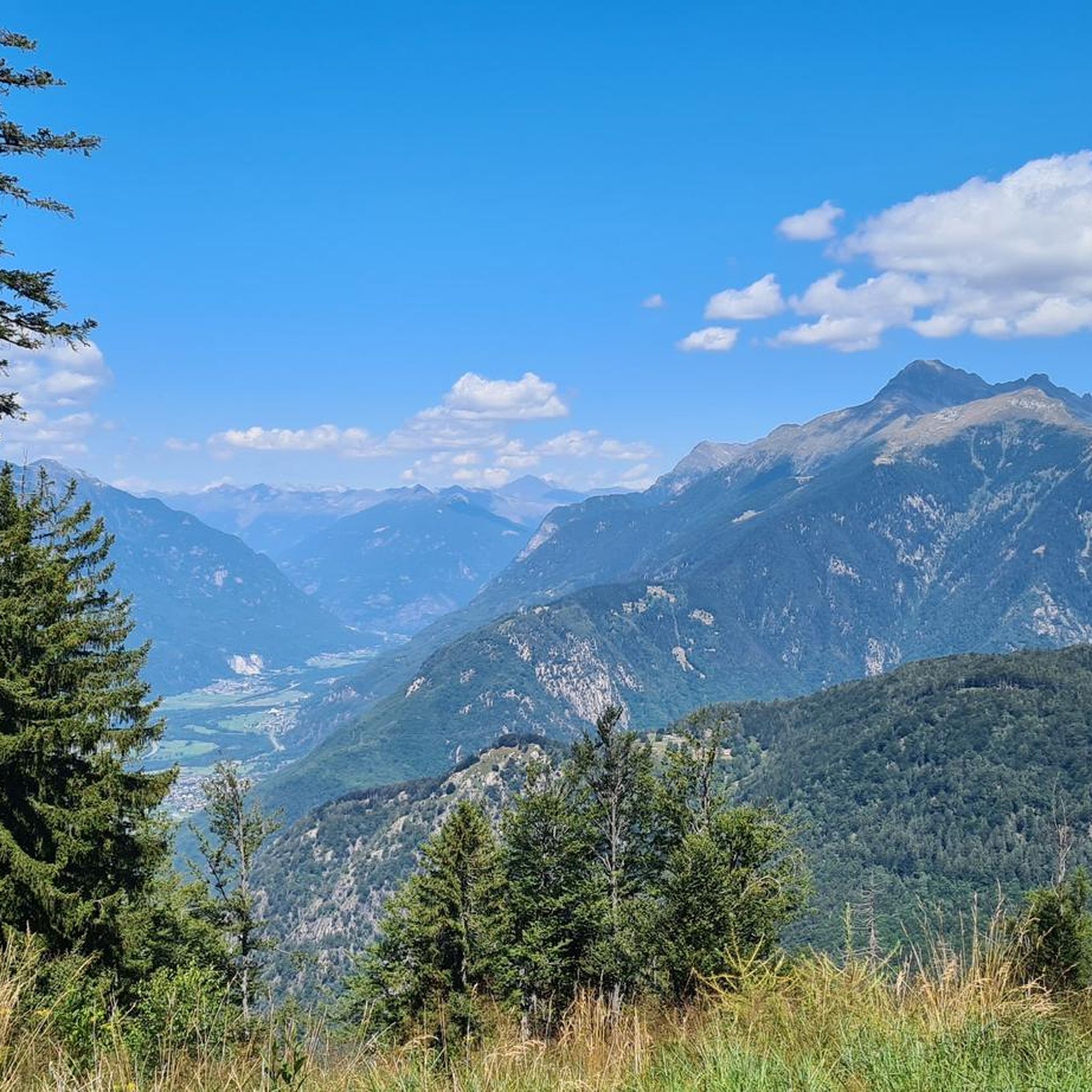
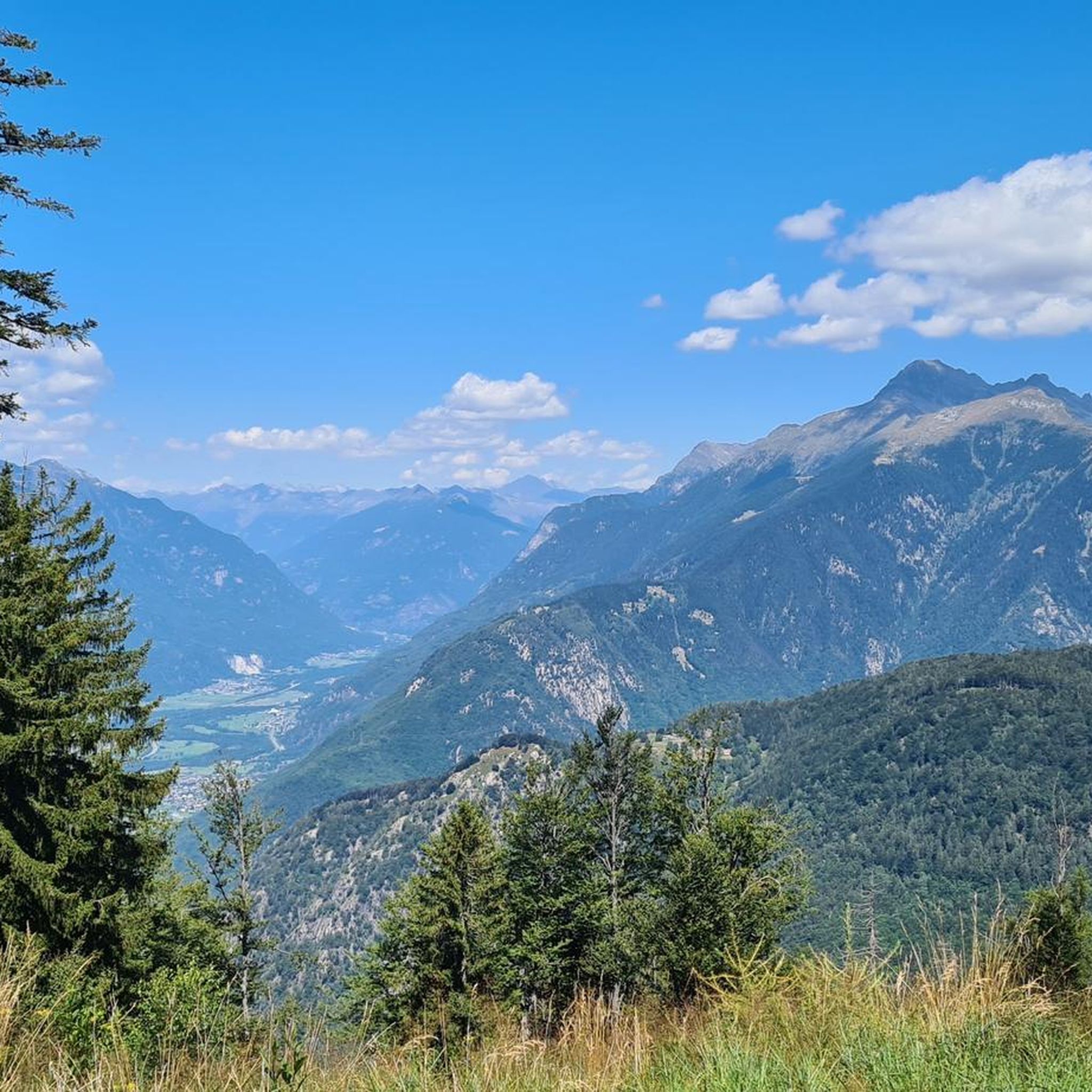
Touring cycling in Motto D'Arbino offers stunning panoramic views. From elevated points like Motto D'Arbino, you can enjoy unique vistas of the Magadino plain and Lake Maggiore. Routes also traverse diverse forests of beech and Norway spruce, and follow picturesque river valleys.
Where can I find parking for touring cycling routes near Motto D'Arbino?
Many touring cycling routes in the Motto D'Arbino area often start or pass through Bellinzona. The historic center of Bellinzona serves as an excellent starting or ending point, where various parking options are typically available. It's advisable to check for specific parking facilities near your chosen route's starting point.
Are there cafes or pubs along the touring cycling routes in Motto D'Arbino?
Yes, you can find places for refreshments along some routes. For instance, Alpe di Gesero, a destination for challenging ascents, often provides refreshments. Additionally, the historic center of Bellinzona, a common start/end point, offers numerous cafes and pubs to relax after your ride.
How can I access touring cycling routes in Motto D'Arbino using public transport?
Bellinzona, a central hub for many touring cycling routes in the region, is well-connected by public transport. You can often reach starting points for routes via train or bus services to Bellinzona. Some routes, like those following the 'Veloland route' along the Ticino and Moesa rivers, are easily accessible from urban centers.
What do other touring cyclists enjoy most about touring cycling in Motto D'Arbino?
The touring cycling experience in Motto D'Arbino is highly rated by the komoot community, with an average score of 4.4 stars from over 590 reviews. Cyclists frequently praise the diverse landscape, ranging from challenging alpine ascents to gentle river valleys, and the stunning panoramic views of the Magadino plain and Lake Maggiore.
Are there any easy touring cycling routes for beginners in Motto D'Arbino?
Yes, beginners can find easy touring cycling routes in Motto D'Arbino. There are 19 easy routes available, many of which follow river paths, offering a more gentle cycling experience. The Ticino Directional Signpost – Claro Cycle Path loop from Circolo di Arbedo-Castione is an example of an easy route suitable for those new to touring cycling.
What are some challenging touring cycling routes in Motto D'Arbino?
For experienced touring cyclists seeking a challenge, Motto D'Arbino offers 30 difficult routes. These often involve significant climbs, such as the approximately 1500-meter ascent to Alpe di Gesero and continuing towards Motto D'Arbino itself, which is perched steeply above Bellinzona. These routes can feature steep alpine paths and varied terrain.
Most popular routes in Motto D'Arbino

Get inspired with the komoot mobile app


Explore more
Browse the best Cycling routes in other regions.
