Hallerbos - Lembeekbos - Maasdalbos
Hallerbos - Lembeekbos - Maasdalbos
The best cycling routes in Hallerbos - Lembeekbos - Maasdalbos
4.3
(1326)
9,863
riders
40
rides
Touring cycling routes in Hallerbos - Lembeekbos - Maasdalbos traverse ancient woodlands, unique biodiversity, and picturesque natural features. The region features the renowned Hallerbos, known for its bluebell displays and undulating terrain, alongside the extensive forests of Lembeekbos. Further east, the Maasdalbos area is characterized by the Maasdalbeek stream and riverine landscapes, offering varied cycling experiences.
Best touring cycling routes in Hallerbos - Lembeekbos - Maasdalbos
- The most popular touring cycling route is Château de La Hulpe – Domaine Solvay…
Last updated: July 5, 2026
30
riders
44.2km
03:23
520m
520m
Hard bike ride. Very good fitness required. You may need to push your bike for some segments of this route.
4.0
(3)
8
riders
63.4km
04:12
610m
610m
Hard bike ride. Very good fitness required. Mostly paved surfaces. Suitable for all skill levels.

Sign up for free
5.0
(2)
17
riders
86.5km
05:03
300m
300m
Hard bike ride. Very good fitness required. Mostly paved surfaces. Suitable for all skill levels.
5.0
(2)
14
riders
Hard bike ride. Good fitness required. You may need to push your bike for some segments of this route.
5.0
(21)
11
riders
11.9km
00:45
100m
110m
Easy bike ride. Great for any fitness level. Mostly paved surfaces. Suitable for all skill levels.
Get access to more routes and recommendations from other explorers.
Sign up for free
Already have an account?
Our route recommendations are based on thousands of hikes, rides, and runs completed by other people on komoot.
Start today with a free account
Your next adventure awaits.
Login or Signup
Popular around Hallerbos - Lembeekbos - Maasdalbos

Tips from the Community

Beautiful gravel path at the battlefield of Waterloo, you also pass the former convent where Soeur Sourire lived.
0
0
From here you have a good view of the landscape in which the Battle of Waterloo was fought, you can still clearly see the slope in the landscape that allowed the British to take up a good defensive position.
1
0

The Groenendaal racecourse was built in 1888-1889 on the initiative of Leopold II in the middle of the Sonian Forest, next to the road to Waterloo, and in 1892, as part of easy access, it received its own railway connection to Groenendaal station. To realize this racecourse, approximately 100 hectares of forest were cleared at the end of the 19th century. King Leopold II had his own box there, located between two metal grandstands for the public. After the First World War, this area was used for the dismantling of weapons and ammunition left behind in the Westhoek. German prisoners of war had to clear mines under the supervision of the Belgian army. During a fire and the subsequent explosions of ammunition on May 6, 1919, the hippodrome's grandstands and buildings were heavily damaged. After another explosion in November, the ammunition depot was completely dismantled in 1920. Two years later, the racecourse was restored and the grandstands were rebuilt. The royal box for Albert I was not rebuilt until 1924. Its appearance was completely different from the pre-war grandstand. When the current appearance came about is not entirely clear, although the current box is attributed to Albert I in the literature, see also monogram. Inventory of Immovable Heritage: Royal Box and remains of bookmaker's room, https://id.erfgoed.net/erfgoedobjecten/302991
4
0

Here in the courtyard you can get something to drink and eat (be careful, it is only open until 6 p.m.), which is a bit of a shame.
1
0

Good for adventure
0
0
Very beautiful wood, worth a visit 🙏❤️🌳😎🌞
0
0

The path is once again passable along its entire length from Ronquières to Ecaussinnes with a beautiful tarmac strip.
0
0

At the marina club, you can enjoy a drink and a small snack, spaghetti, croque monsieur, and more. There's a very pleasant terrace overlooking the canal and the passing boats. Order at the bar with Koen, the owner. Payment can be made in cash or by card.
0
0
Frequently Asked Questions
How many touring cycling routes are available in the Hallerbos - Lembeekbos - Maasdalbos region?
The Hallerbos - Lembeekbos - Maasdalbos region offers a vast network of over 800 touring cycling routes. These routes cater to various skill levels, with approximately 260 easy, 390 moderate, and 180 difficult options available.
What kind of terrain can I expect on the touring cycling routes?
You'll encounter diverse terrain, from the undulating landscapes of Hallerbos, which feature a mix of gravel and singletrack dirt roads, to the flatter, riverine paths along the Meuse in the Maasdalbos area. Many routes also include paved sections, making them accessible for various cycling preferences.
What is the best time of year to go touring cycling in this region?
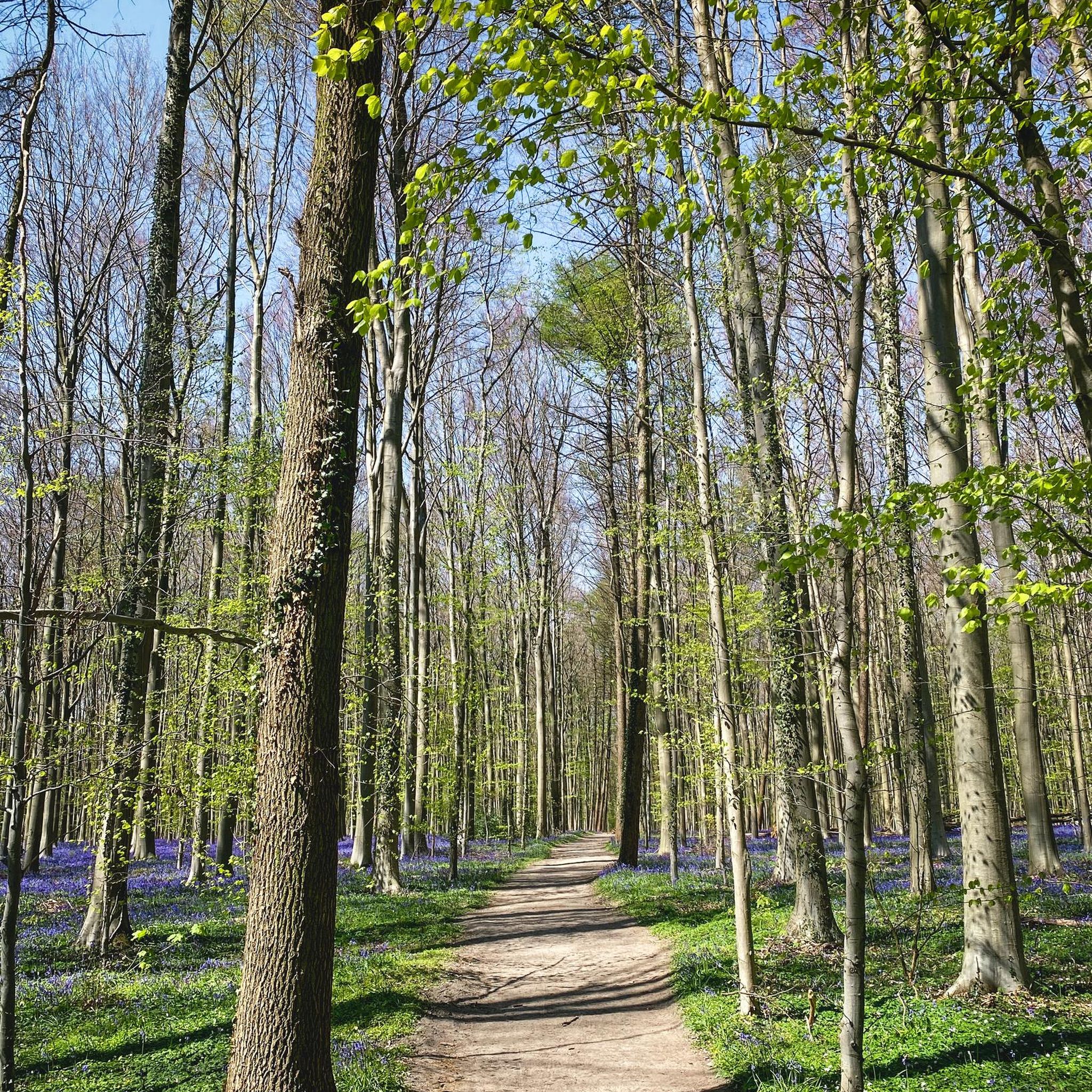
The region is beautiful year-round, but for a truly unique experience, visit around mid-April to witness the stunning bluebell bloom in Hallerbos. This transforms the forest floor into a magical purple carpet. The Maasland region is also popular for cycling, especially during milder weather.
Are there family-friendly touring cycling routes available?
Yes, there are many routes suitable for families and beginners. For instance, the Grote Markt Halle – St. Martin's Basilica, Halle loop from Dworp is an easy 8.8-mile (14.1 km) trail that takes you through a mix of urban and natural surroundings, perfect for a relaxed family outing.
What natural features or landmarks can I see along the touring cycling routes?
You can explore a variety of natural wonders and historical sites. Don't miss the world-renowned Hallerbos — The Bluebell Forest, especially during spring. In the Lembeekbos area, you might encounter the historic Malakoff tower. The Maasdalbos region features the unique Maasdalbeek stream and its associated biodiversity, including rare butterflies and plants like the marsh marigold.
Are there any challenging routes for experienced touring cyclists?
Absolutely. For experienced cyclists seeking a challenge, consider the Château de La Hulpe – Domaine Solvay loop from Lembeek. This difficult 59.3-mile (95.5 km) route features significant elevation gain through varied and demanding landscapes.
Where can I park my car when visiting the cycling routes?
Parking facilities are available at various access points to the forests and along the routes. For Hallerbos, specific parking areas are designated, especially during the bluebell season. It's advisable to check local signage or visitor information for the most convenient parking spots near your chosen starting point.
Is public transport an option to reach the cycling routes?
Yes, public transport can be used to access parts of the region. Halle, for example, is a central hub with train connections, and local bus services can bring you closer to the forest entrances. For detailed information on public transport options to Hallerbos, you can visit visithalle.be.
What do other touring cyclists enjoy most about cycling in Hallerbos - Lembeekbos - Maasdalbos?
The area is highly rated by the komoot community, with an average score of 4.4 stars from over 1,300 reviews. Cyclists often praise the stunning natural beauty, especially the bluebell displays in Hallerbos, the diverse forest ecosystems, and the well-maintained routes that offer a mix of challenges and scenic views.
Are there places to eat or stay near the touring cycling routes?
Yes, you'll find various cafes, pubs, and accommodations in the towns and villages surrounding the forests, such as Halle and Lembeek. Some accommodations even offer secure bike storage and maps tailored to specific distances and difficulty levels, making them ideal for touring cyclists.
Can I cycle through the bluebell bloom in Hallerbos?
Yes, you can experience the bluebell bloom while cycling. The Bluebell bloom in Hallerbos – Forest Path Through Hallerbos loop from Hallerbos - Bois de Hal is a dedicated 12-mile (19.3 km) route that guides you through the heart of the bluebell forest, allowing you to immerse yourself in this spectacular natural phenomenon.
Are there any circular touring cycling routes in the region?
Many routes in the region are designed as loops, offering convenient starting and ending points. An example is The swing bridge of Arquennes – Ronquières Houseboat Village loop from Essenbeek, a moderate 26.1-mile (42.0 km) path that provides a varied experience through waterways and local villages.
What unique wildlife might I encounter while cycling?
The forests are home to diverse wildlife. In Hallerbos, you might spot deer, squirrels, mustelids, and various bat and butterfly species. The Maasdalbos area is known for rare species like the brown hairstreak butterfly, and the broader Maasland region features Galloway cattle and Konik horses grazing along the riverbanks.
Most popular routes in Hallerbos - Lembeekbos - Maasdalbos
Most popular attractions in Hallerbos - Lembeekbos - Maasdalbos

Get inspired with the komoot mobile app


Explore more
Browse the best Cycling routes in other regions.
