Attractions and Places To See around Ummerstadt - Top 20
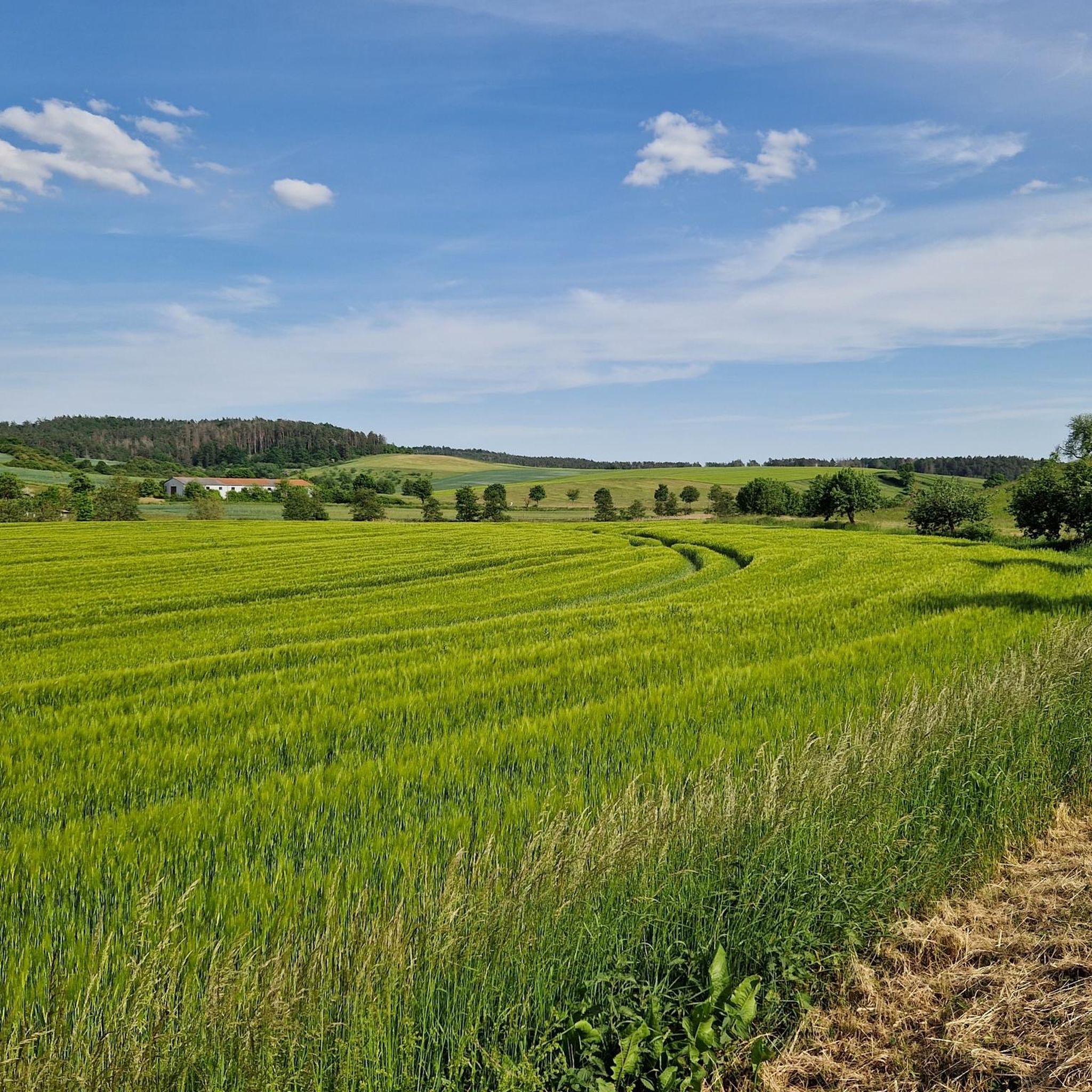
Best attractions and places to see around Ummerstadt include its historic Altstadt, known for well-preserved half-timbered architecture. Situated in Thuringia near the Bavarian border, the town is part of the Franconian Hill Country and lies along the Rodach River. Ummerstadt is historically significant, once a center for pottery and known as the "Five-Fountain-City" due to its natural spring-fed fountains. This region offers a blend of cultural heritage and natural landscapes.
Best attractions and places to see around Ummerstadt
- The most…
Last updated: November 19, 2026
Coburg Fortress
Highlight • Castle
Translated by Google •
Tip by

Coburg Market Square
Highlight • Historical Site
Translated by Google •
Tip by

Sign up now to discover places like this
Get recommendations on the best single tracks, peaks, & plenty of other exciting outdoor places.
Ehrenburg Palace
Highlight • Castle
Translated by Google •
Tip by

Coburg Town Hall
Highlight • Historical Site
Translated by Google •
Tip by

Rothenberg Gate Tower
Highlight • Monument
Translated by Google •
Tip by

Sign up for free to discover even more attractions around Ummerstadt.
Already have an account?
Start today with a free account
Your next adventure awaits.
Tips from the Community

This gate tower is very well preserved.
2
1

The Rothenberg Gate Tower is a four-storey sandstone ashlar tower with a tent roof, extended in 1610; in front of it is the massive parapet of the former Baroque arched bridge. It is one of the towers of the former city fortifications.
11
0
Three gates, connected by a city wall that is still intact today, enclose the old town of Seßlach. The complete city wall has a total length of 780 meters. The gates served as a prison or gatekeeper or bridge house. For more than 20 years, two of the three city gates have been closed on weekends and traffic has been banned from the city. Only residents receive a pass and a parking permit. This allows guests to stroll relaxed through the picturesque old town. Source: https://www.frankentourismus.de/poi/stadtmauer_mit_drei_tortuermen-39291/
9
4
The monument shows the prince consort in the robes of a Knight of the Trouser Order. In his hands he holds the blueprint of London's Crystal Palace, a building he designed himself for the first World Exhibition in London in 1851, and a marshal's baton. The larger-than-life statue, cast in bronze, was made based on a model by the English sculptor William Theed the Younger. Source: https://www.touren-lutherland-thueringen.de/mobile/de/punkt/denkmal/prinz-albert-denkmal/19383999/
11
2
Above the ballroom on the first floor, there was an equally large hall. Its beamed ceiling still rests today on three twisted wooden columns. It was the pride of the citizenry and was considered the city's most representative festive hall. The walls were still adorned with portraits of all former mayors. Weddings of wealthy citizens were celebrated here, as well as all sorts of "dancing festivities" and "feasts." Even princes gladly accepted the city's invitations to these celebrations.
10
1
The oldest reports about a town hall in the city of Coburg date from the last decade of the 14th century. A town hall on the churchyard is mentioned in 1405 and 1407, a "new town hall" on the market square in 1414. A town hall previously symbolized the political and economic independence of the city from its territorial lord. This independence had been fought for by the Coburg population in the 14th century. As early as 1324, the city had the right to levy taxes, followed by expanded town rights in 1331. Therefore, authorities were also needed that could enforce these rights and freedoms. A council of six members is mentioned for the first time in 1343. At the latest since 1351, these councils elected a mayor. The first town hall is likely to have been built next to the Morizkirche during this period. The current town hall was established in 1414 on the newly laid-out market square. It had a high and steep roof with a dormer window, on which a clock was mounted.
9
1

Located on the market square
7
0

In 1543, Duke Johann Ernst of Saxony decided to move his court from the Veste Coburg down into the city and chose the site of the dissolved Franciscan monastery, along which the city wall ran to the east. The monastery was in the area of the former middle courtyard. Recent research attributes the architectural design to the Saxon architect Nikolaus Gromann.[1] The building shows clear stylistic parallels with the work of Gromann, who may also have been close to the building project in organizational terms as the appointed court architect of Johann Ernst's half-brother, Elector Johann Friedrich. The complex was built until around 1547 under the construction management of Caspar Vischer. A complex was created around two square courtyards, which could be entered from the south via Steingasse.[2] The buildings of the first courtyard with the stair tower, the corner bay window and the dormer windows from this period are still preserved.[3] Between the courtyards was the three-storey princely building, which was accessed via another large stair tower on the north side and had a large hall and a dining room. The palace chapel and other living quarters were located around the second courtyard on the east side, the kitchen on an irregular floor plan to the north and other subordinate rooms to the west. This complex can still be seen with various subordinate extensions on Bieler's floor plan from 1679. It is unclear whether the third courtyard with the stables had already begun in 1543. Only paid craftsmen were employed for the construction and not, as was usual at the time, serf laborers. This special feature is said to have been the reason for the visit of Emperor Charles V in 1547. Charles is said to have given the newly occupied complex the name Ehrenburg on this occasion. The new city palace was inhabited as the residence of a ruling duke until the death of Johann Ernst in 1553 and was then only used extensively.
8
2
Frequently Asked Questions
What historical sites can I explore in Ummerstadt?
Ummerstadt is rich in history. You can explore the entire
Historic Old Town (Altstadt), which is a protected monument featuring numerous half-timbered houses, many dating from after the Thirty Years' War. The central Marktplatz is a focal point, home to the historical Town Hall, rebuilt in 1682. Don't miss the Bergkirche St. Andreas, one of the region's oldest churches with origins tracing back to 880 AD, or the historic Rodachbrücke, built in 1565.
What unique features define Ummerstadt?
Ummerstadt is famously known as the "Fünf-Brunnen-Stadt" (Five-Fountain-City) due to its five natural spring-fed public fountains. The largest and most important is the market fountain, topped with the Saxon lion holding Ummerstadt's coat of arms. These fountains were once the primary source of drinking water for the town.
Are there any castles or palaces near Ummerstadt?
Yes, just a short distance from Ummerstadt, you can visit the impressive Coburg Fortress, also known as the "Franconian Crown." This historic castle has never been taken by force and houses significant art collections, including works by Lucas Cranach. Another notable site is Ehrenburg Palace, a magnificent 16th-century city residence in Coburg.
What kind of architecture can I expect to see in Ummerstadt?
Ummerstadt is renowned for its well-preserved half-timbered architecture. The Historic Old Town showcases an impressive ensemble of these houses, many built after the Thirty Years' War. The construction often features distinctive vertical, horizontal, and diagonal beams with plastered fields made of willow tree branches and a clay/hay mixture.
What outdoor activities are available around Ummerstadt?
The area around Ummerstadt, situated in the Franconian Hill Country and near the Green Belt, offers various outdoor activities. You can explore numerous routes for gravel biking, road cycling, and mountain biking. The nearby Haßberge Nature Park also provides hiking routes and scenic viewpoints for outdoor enthusiasts.
What is Ummerstadt's cultural heritage?
Ummerstadt has a rich cultural heritage, particularly as a former pottery center. In the 18th and 19th centuries, it was known as the "pottery town," with around 50 potters producing wares sold across Germany. The local dialect, Itzgründisch, also reflects the area's historical and natural influence from Franconia.
Are there family-friendly attractions in Ummerstadt and the surrounding area?
Many attractions around Ummerstadt are suitable for families. The historic Old Town with its unique fountains and half-timbered houses offers an engaging walk. Nearby, Coburg Fortress, Coburg Market Square, Coburg Castle Square, and Ehrenburg Palace are all considered family-friendly and offer historical insights and open spaces to explore.
What natural landscapes can I discover near Ummerstadt?
Ummerstadt is nestled in the scenic Franconian Hill Country, along the Rodach River. It's also very close to the Green Belt, the former East/West German border, which is now a significant natural area. The broader region, including the nearby Haßberge Nature Park, features rolling hills, vineyards, and diverse natural beauty perfect for exploration.
What do visitors enjoy most about the attractions around Ummerstadt?
Visitors particularly appreciate the historical depth and well-preserved charm of the area. The unique half-timbered architecture, the historical significance of sites like Coburg Fortress, and the vibrant atmosphere of places like Coburg Market Square are frequently highlighted. The blend of cultural heritage and accessible outdoor activities also receives high praise from the komoot community.
Is there a specific building in Ummerstadt that stands out historically?
Yes, on the upper end of the marketplace, you can find the oldest surviving building in Ummerstadt, with the date 1553 carved into the sandstone above its front door. Adjacent to this building is the "Kaplanei," which formerly served as the minister's house.
What is the best time of year to visit Ummerstadt for outdoor activities?
The spring and summer months are ideal for enjoying outdoor activities around Ummerstadt. The Franconian Hill Country and nearby Haßberge Nature Park are particularly beautiful for cycling and hiking when the weather is mild and the landscape is green. Autumn also offers pleasant conditions with colorful foliage.
Can I find any local crafts or products in Ummerstadt?
Given Ummerstadt's history as a renowned pottery town, you might find local pottery or ceramics, though specific shops are not detailed. The town's past as a center for this craft suggests a strong tradition that may still be reflected in local markets or artisan offerings.
Most popular routes around Ummerstadt
Most popular attractions around Ummerstadt

Get inspired with the komoot mobile app


Explore more
Still not found the Highlight you’re looking for? See guides of the top attractions in other regions:
