Suchedniowsko-Oblęgorski Park Krajobrazowy
Suchedniowsko-Oblęgorski Park Krajobrazowy
Attractions and Places To See in Suchedniowsko-Oblęgorski Park Krajobrazowy - Top 17
Best attractions and places to see in Suchedniowsko-Oblęgorski Park Krajobrazowy, located in the central Świętokrzyskie Voivodeship, cover an area of over 21,400 hectares. The park encompasses the Suchedniowski Plateau and Oblęgorskie Range, characterized by extensive forests, a refuge for the Polish Larch, and diverse wildlife. It features significant historical landmarks from the Old Polish Industrial Basin and cultural sites like the Henryk Sienkiewicz Museum. The highest point in the park is Góra Siniewska at 448.8 m above sea level.
Best…
Last updated: July 5, 2026
Henryk Sienkiewicz Palace in Oblęgorek
Highlight • Historical Site
Translated by Google •
Tip by

Świnia Góra Nature Reserve
Highlight • Forest
Translated by Google •
Tip by

Sign up now to discover places like this
Get recommendations on the best single tracks, peaks, & plenty of other exciting outdoor places.
Sign up for free
St. Rosalia's Chapel in Perzowa Góra
Highlight • Religious Site
Translated by Google •
Tip by

Osieczyńska Góra (407 m)
Highlight • Summit
Translated by Google •
Tip by

Piekło Dalejowskie Rock Formations
Highlight • Natural Monument
Translated by Google •
Tip by
Sign up for free to discover even more attractions in Suchedniowsko-Oblęgorski Park Krajobrazowy.
Sign up for free
Already have an account?
Start today with a free account
Your next adventure awaits.
Login or Signup
Popular around Suchedniowsko-Oblęgorski Park Krajobrazowy
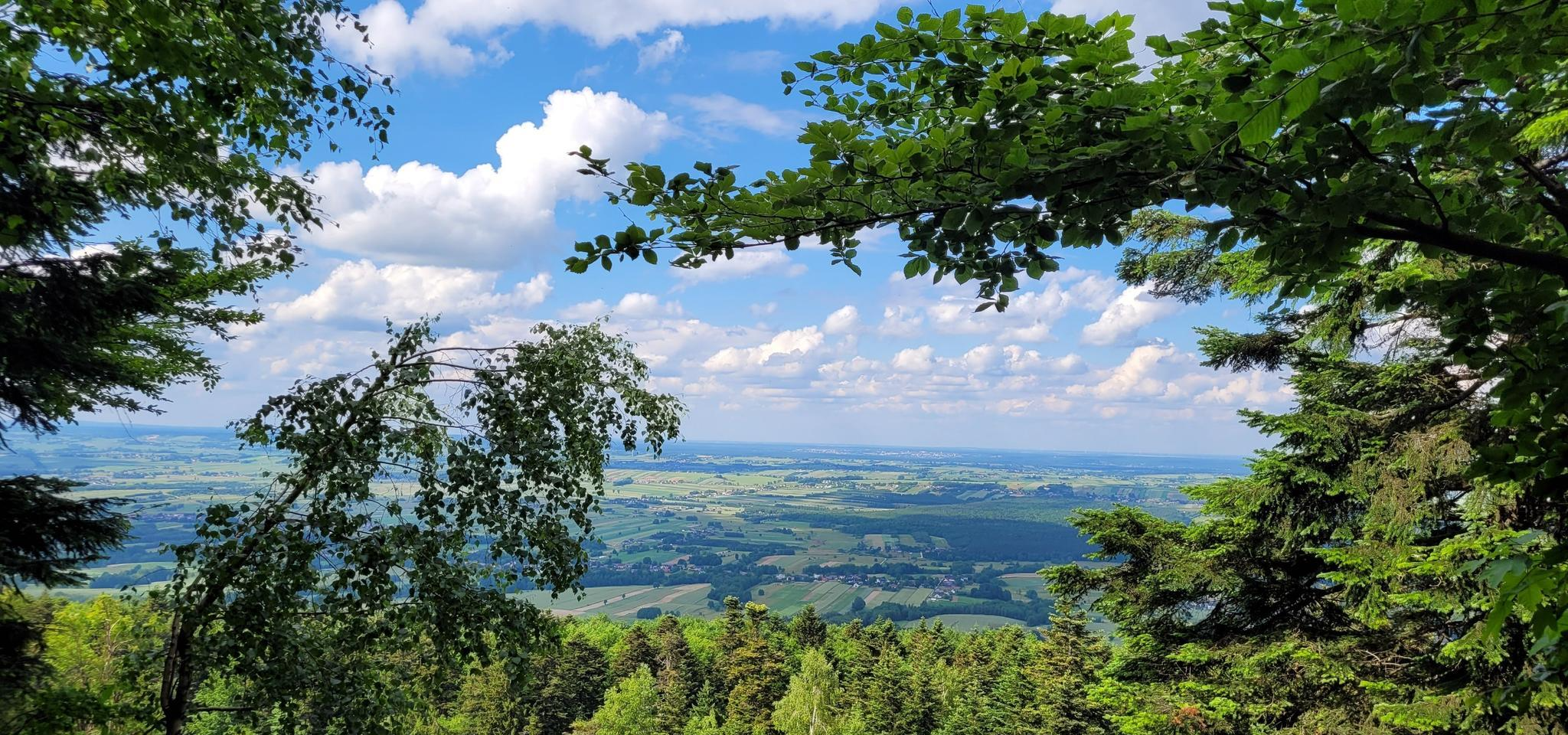
Główny Szlak Świętokrzyski – Spruce forest, magnificent peaks and Polish history
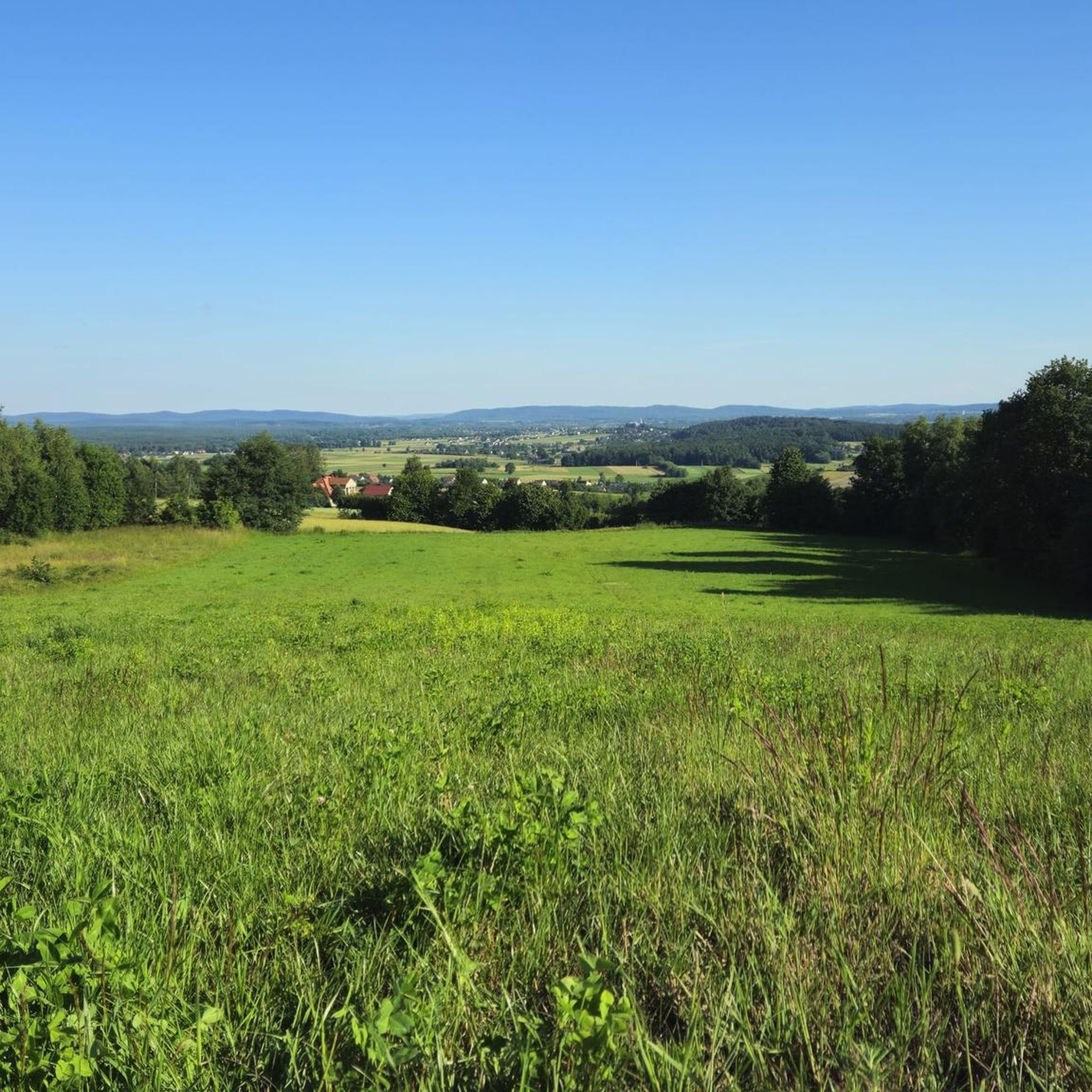
Road Cycling Routes in Suchedniowsko-Oblęgorski Park Krajobrazowy
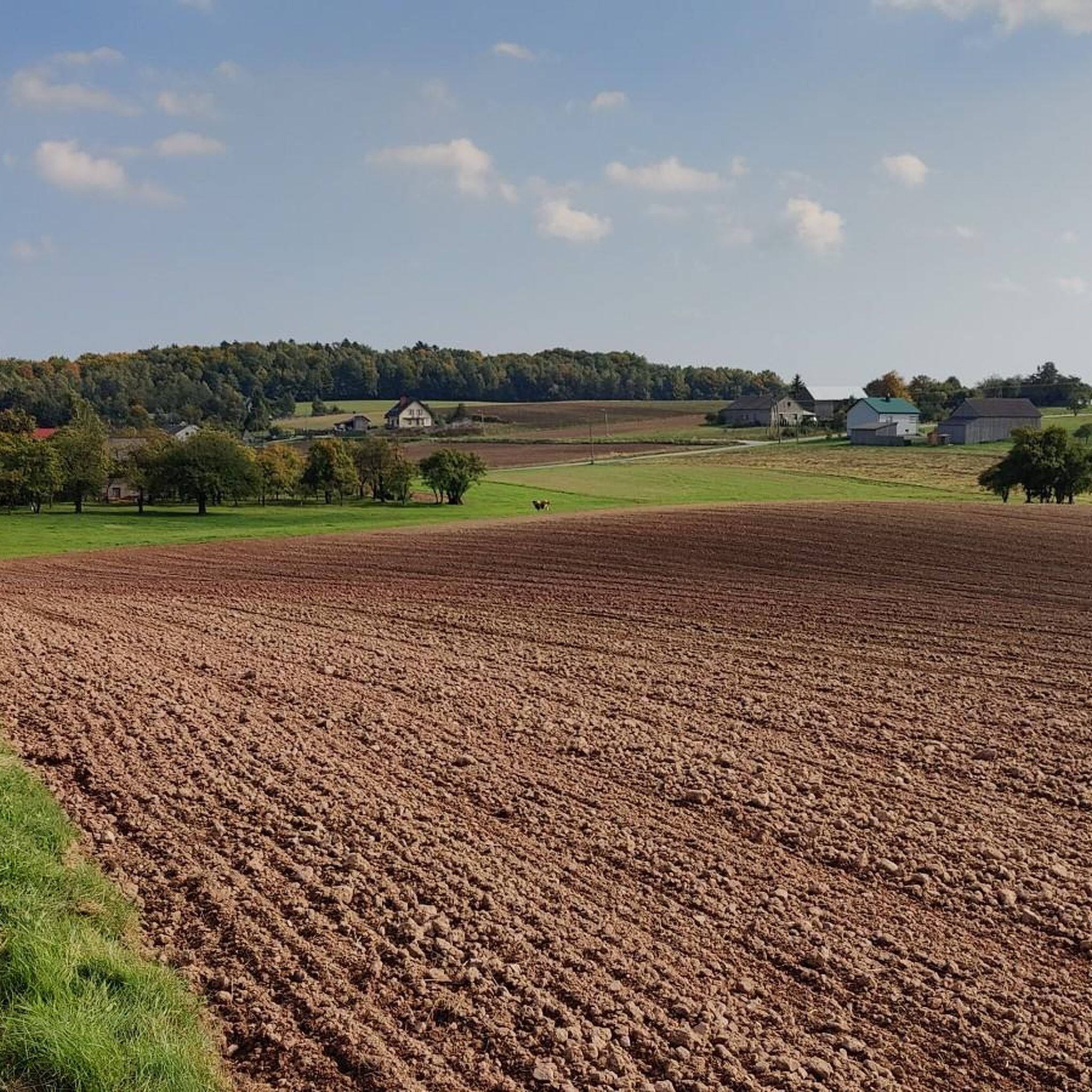
Hiking in Suchedniowsko-Oblęgorski Park Krajobrazowy
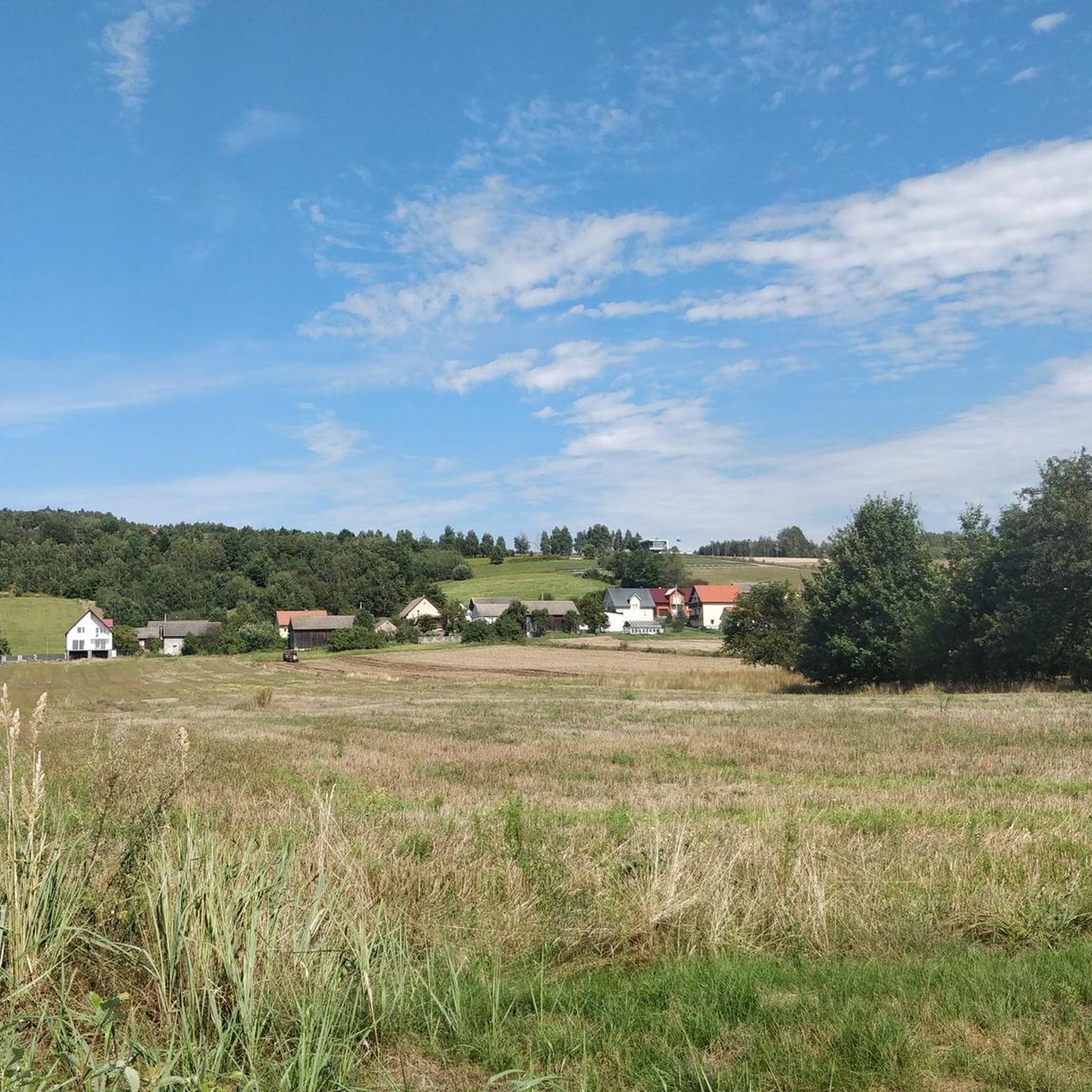
Running Trails in Suchedniowsko-Oblęgorski Park Krajobrazowy
MTB Trails in Suchedniowsko-Oblęgorski Park Krajobrazowy
Cycling in Suchedniowsko-Oblęgorski Park Krajobrazowy
Gravel biking in Suchedniowsko-Oblęgorski Park Krajobrazowy
Other adventures in Suchedniowsko-Oblęgorski Park Krajobrazowy

Tips from the Community

A very original chapel. There is also a legend about a shepherd named Perz, who pastured cattle here. The White Lady appeared to him and gave him the key to the monastery, which could be moved. Suddenly, there was a terrible bang and a large building was created from the rocks. Perz, however, got scared and lost the key. The building then fell apart, and all that remained was a crack in the rock, where the Chapel of Saint Rosalia was built. What a story!
4
0

By bike, we have a big climb ahead of us. There is a sign by the road, but from here it's another 150 m to the left to the summit.
0
0
In 1900, on the occasion of the 25th anniversary of his literary work, the Polish society organized a fundraiser for the future Nobel Prize winner and funded it in gratitude for his work. On this occasion, a civic committee was formed to prepare a program for the jubilee celebrations. The notarial deed was signed in Kielce on July 18, 1900 in the presence of counselor Tadeusz Kowalski and priest Zygmunt Chełmicki, who acted on behalf of the committee and the seller, notary Mieczysław Halik. The property was bought back for 51,249 rubles and 59 kopecks. The estate consisted of a total of 515 acres, including: 240 acres of forest, 160 acres of arable land, 90 acres of meadows, a park, an orchard, etc. With the funds left over from the collection, inventory was purchased for the writer (60 cattle, 6 horses, and agricultural machinery and tools). For this occasion, the sculptor Pius Weloński made a bust of the writer from white marble. The manor house designed by the Warsaw architect Hugo Kuder was built in 1895, the area around the palace, 49 hectares of land[3], was designed and arranged by the Warsaw gardener Franciszek Szanior. The road to the palace leads through the Red Gate and then through the linden alley.
0
0

The peak belongs to the Crown of the Świętokrzyskie Mountains. Wooded. Access via the former red trail from the old forester's lodge and gazebo next to it. The route in the forest has not been used for a long time and overgrown in summer. It is much better to walk from the gravel road from the north-west side. You have to go around a bit, but much more comfortably. It depends who likes what. You can leave your car at the gazebo, there is a parking lot for several cars.
0
0

Świnia Góra Nature Reserve – a forest reserve in the Suchedniowsko-Oblęgorski Landscape Park. Subject of protection: a fragment of the forest with natural and characteristic mixed stands of the Świętokrzyskie region. Rich flora, numerous monumental trees and rare and legally protected plants, including narrowleaf gentian, alpine globeflower, red fescue and Siberian iris. Almost all types of forest habitats occur here. In the western part, traces of historical iron ore mining, lasting from the 17th century to the 1920s. A green tourist trail from Bliżyn to Zagnańsk runs through the reserve. source: https://pl.wikipedia.org/wiki/Rezerwat_przyrody_%C5%9Awinia_G%C3%B3ra
2
0
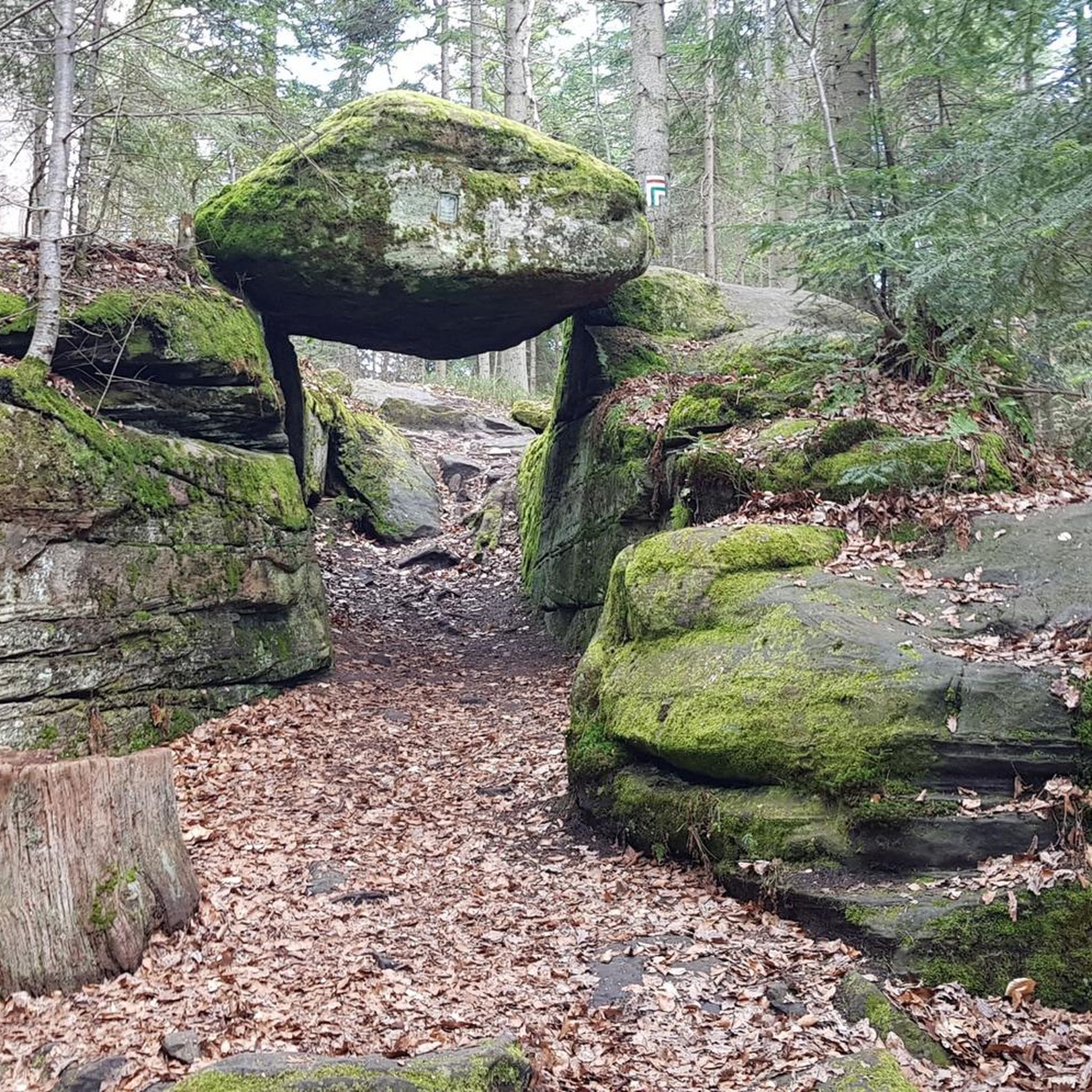
Inanimate nature monument (cluster 30 m wide and 130 m long). On site, we can admire numerous rock formations made of Triassic sandstones - including walls, thresholds, cliffs and rock blocks forming a rock gorge from 2 to 2.5 m high. Numerous small caves have been discovered and described here. The rocks of Hell's Nextowski are overgrown with beautiful ferns, creating spectacular hanging gardens. source: https://www.piekielnyszlak.pl/awodcje/gmina-blizyn/78-rezerwat-pieklo-dalejowskie
0
0
Interesting place with a chapel placed in a rock. Worth the climb and see. Near the peak of Perzowa Góra. The chapel is located on the route of the Main Świętokrzyski Trail (red trail).
2
0
Frequently Asked Questions
What natural features and reserves can I explore in Suchedniowsko-Oblęgorski Park Krajobrazowy?
The park is rich in natural beauty, featuring extensive forests, which are a crucial refuge for the unique Polish Larch. You can explore several nature reserves, including the pristine Świnia Góra Nature Reserve, known for its rich flora and monumental trees. Other notable reserves include Dalejów, with its atmospheric sandstone rocks known as Skałki Dalejowskie and the evocative Brama Piekielna (Hell's Gate), and Górna Krasna, the largest wetland area in the Świętokrzyskie region. Impressive rock walls can be found at Ciosowa Góra and the former quarry of Zachełmie.
Are there any historical or cultural sites to visit in the park?
Yes, the park and its buffer zone are rich in historical and cultural heritage, particularly from the Old Polish Industrial Basin. You can visit the ruins of blast furnaces in Samsonów, Bobrza, and the 'Jadwiga' blast furnace in Kuźniaki. A significant cultural highlight is the Henryk Sienkiewicz Museum in Oblęgorek, housed in the palace gifted to the Nobel Prize-winning author. Additionally, St. Rosalia's Chapel in Perzowa Góra offers a unique religious building set within a rock.
What kind of outdoor activities can I do in Suchedniowsko-Oblęgorski Park Krajobrazowy?
The park offers numerous opportunities for active visitors. You'll find a wide network of hiking and cycling routes, as well as educational paths. For hiking, you can explore trails like the easy 'Brama Piekło (Piekło Gate) – Brama Piekło Rock Formation loop from Jastrzębia' or the more challenging 'Perzowa Góra – Siniewska Mountain loop from Niedźwiedź'. Mountain biking enthusiasts can try routes such as the 'Summit of Osieczyńska Góra – Jaśle Reservoir loop from Ostojów'. You can find more details on these activities in our dedicated guides for Hiking in Suchedniowsko-Oblęgorski Park Krajobrazowy and MTB Trails in Suchedniowsko-Oblęgorski Park Krajobrazowy.
Are there family-friendly attractions or activities in the park?
While specific 'family_friendly' activities are not extensively listed, many natural and historical sites can be enjoyed by families. The Henryk Sienkiewicz Museum in Oblęgorek is categorized as family-friendly and offers an educational experience. Exploring the various nature reserves, such as Świnia Góra Nature Reserve, or walking on the easier hiking trails, like the 'Siniewska Mountain loop from Widoma', can be great options for families. Educational paths within the park also provide engaging learning opportunities about the local flora and fauna.
What is the best time of year to visit Suchedniowsko-Oblęgorski Park Krajobrazowy?
The park is beautiful year-round, but the best time to visit largely depends on your interests. Spring (April-May) is ideal for observing the diverse flora, including protected plant species and the blooming of the Polish Larch. Summer (June-August) offers warm weather perfect for hiking and cycling. Autumn (September-October) brings stunning fall foliage, making it a picturesque time for walks. Winter (November-March) can be magical for snowshoeing or cross-country skiing, though some trails might be less accessible.
Where can I find viewpoints with panoramic vistas?
The park features several strategic viewpoints offering panoramic vistas of its varied terrain. While specific named viewpoints are not detailed, areas around summits like Osieczyńska Góra (407 m) and the vicinity of St. Rosalia's Chapel in Perzowa Góra are known to offer good views. Exploring the numerous hiking trails will often lead you to elevated spots with scenic outlooks.
What kind of wildlife can I expect to see?
The park is home to a diverse array of wildlife. You might spot mammals such as roe deer, hares, foxes, wild boars, martens, badgers, and deer. Birdwatchers can look out for avifauna like black storks, grouse, woodcocks, and goshawks. The park also protects notable insect species, including the stag beetle and oak longhorn beetle, particularly within its extensive forest areas.
Are there any easy hiking trails suitable for beginners?
Yes, there are several easy hiking trails available. For instance, the 'Brama Piekło (Piekło Gate) – Brama Piekło Rock Formation loop from Jastrzębia' and the 'Perzowa Góra – Góra Kuźnicka loop from Hucisko' are both rated as easy. Another accessible option is the 'Siniewska Mountain loop from Widoma'. You can find more easy routes in our dedicated guide for Easy hikes in Suchedniowsko-Oblęgorski Park Krajobrazowy.
What is the significance of the Polish Larch in the park?
The Polish Larch (modrzew polski) is a highly valued and unique flora species in Poland, and the extensive forests of Suchedniowsko-Oblęgorski Park Krajobrazowy serve as a crucial refuge for it. These forests are a remnant of the ancient Świętokrzyska Forest and provide the ideal habitat for this distinctive tree, making it a significant botanical feature of the region.
Can I visit the Dąb Bartek (Bartek Oak) from the park?
Yes, the Dąb Bartek (Bartek Oak), one of Poland's most famous and oldest oak trees, is located in the park's buffer zone. While not directly within the core park area, it is easily accessible and often included in visits to the region. It's a popular natural monument worth seeing.
What is the highest point in Suchedniowsko-Oblęgorski Park Krajobrazowy?
The highest point within Suchedniowsko-Oblęgorski Park Krajobrazowy is Góra Siniewska, which reaches an elevation of 448.8 meters above sea level. It's part of the Oblęgorskie Range and offers opportunities for hiking and experiencing the park's varied terrain.
Are there any unique rock formations to see?
Absolutely. The park is home to impressive rock formations, most notably the Piekło Dalejowskie Rock Formations. These are a cluster of Triassic sandstones forming walls, thresholds, cliffs, and rock blocks, creating a rock gorge. You can also find the evocative Brama Piekielna (Hell's Gate) within the Dalejów reserve, and impressive rock walls at Ciosowa Góra and the former quarry of Zachełmie.
Most popular routes in Suchedniowsko-Oblęgorski Park Krajobrazowy
Most popular attractions in Suchedniowsko-Oblęgorski Park Krajobrazowy

Get inspired with the komoot mobile app


Explore more
Still not found the Highlight you’re looking for? See guides of the top attractions in other regions:
