Top 12 Castles around Winterbach (Pfalz)
Castles around Winterbach (Pfalz) are part of the rich "Burgenlandschaft" of the Palatinate region. While Winterbach (Pfalz) itself has no prominent castles, the surrounding area features numerous historical sites. The landscape is characterized by forested hills and river valleys, providing scenic backdrops for these ancient structures. Visitors can explore a range of sites, from well-preserved ruins to extensively rebuilt castles.
Best castles around Winterbach (Pfalz)
- The most popular castles is Orangerie Ruins at Karlsberg, a historical_site that once housed…
Last updated: May 9, 2026
Orangerie Ruins at Karlsberg
Highlight • Historical Site
Translated by Google •
Tip by

Hohenburg Castle Ruins (Homburg)
Highlight • Castle
Translated by Google •
Tip by
Sign up now to discover places like this
Get recommendations on the best single tracks, peaks, & plenty of other exciting outdoor places.
Sign up for free
Main Palace — Site of Karlsberg Palace
Highlight • Historical Site
Translated by Google •
Tip by

Merburg Castle Ruins at the Malafels
Highlight • Castle
Translated by Google •
Tip by
Ruins of Steinenschloss Castle
Highlight • Castle
Translated by Google •
Tip by

Sign up for free to discover even more castles around Winterbach (Pfalz).
Sign up for free
Already have an account?
Start today with a free account
Your next adventure awaits.
Login or Signup
Tips from the Community

The castle complex has the shape of an iron, the tip of which points to the south; the length is 70 meters, the width is about 46 meters. The 1.80 to 2.50 meter wide enclosing wall consists of hewn sandstone blocks, some of which are supplemented by hump blocks. The upper castle, situated on a sandstone rock, is separated from the lower castle by a rocky outcrop, which also contains the cistern. A bailey was west of the castle complex outside the ring wall. It stretched along the entire western side of the ditch, even a few meters further south. In addition to farm buildings and rooms presumably used as guard rooms, the lower castle also contained the entrance to the castle. It consisted of a gate 2.50 meters wide and 3.15 meters high, secured by a drawbridge and a moat. The upper castle is accessible through a passage carved into the rock. It housed the residential buildings, i.e. the palace, kitchen, toilet facilities, the armory and a mighty round tower that dominates the entire castle complex. With an inner diameter of 8.50 meters and 2.50 meter thick walls, it has an outer diameter of 13.5 metres. This tower probably served as a keep, but could also have been a residential tower due to its large diameter. In the north, the upper castle is protected by a broken shield wall, which was probably damaged in the 12th century. Its western half was rebuilt during the second half of this century, while the eastern part of the wall dates from the 11th century. Story The exact time when the castle was founded is not known. Excavation finds point to signs of settlement as early as the early Stone Age and the Hallstatt period. According to the masonry of the existing remains of the wall, the foundation of the castle took place around the year 1100. The builders were probably the Counts of Leiningen. A Roman villa about a kilometer away may have served as a source of building material for the late Salian castle complex. The massive round tower was built between 1125 and 1166, i.e. later than the castle. With its Salian-Staufen building elements, it is one of the largest in the Rhineland-Palatinate area of the time. Just a few years later a fire destroyed the castle; it could be one of the three Saarbrücken castles that Emperor Friedrich Barbarossa had razed in 1168 next to Saarbrücken Castle. In a document from 1237, the castle is said to have already been destroyed and was not rebuilt. From the 13th to the 18th century, the castle ruins changed hands several times. The counts of Leiningen-Dagsburg, Zweibrücken-Bitsch, Leiningen-Hardenburg are listed, from 1564 the estate of the counts of Leiningen-Hardenburg-Dagsberg, designated as a deserted settlement, and from 1570 Hanau-Lichtenberg. In the 19th century the ruins were used as a quarry and completely destroyed. The stones removed were used to build houses in the surrounding communities and, in 1875, to build the Pirmasens-Nord (Biebermühle) train station and the railway line. The ruin is currently state-owned and administered by the State Office for the Preservation of Monuments in Mainz. Excavations, reconstruction and finds In 1896/97, Mehlis carried out the first excavations, but had to stop the work due to a lack of funds. Under the supervision of the Office for Pre- and Early History, Speyer, excavation work was carried out by the doctor L.A. Hoffmann after the Second World War in 1956/57. This awakened public interest in the castle, which at that time was just a rubble dump overgrown with trees and forest plants. Excavation work began in the spring of 1968, and in 1973 the “Steinenschloss Castle Association” was founded. Today, the home club of Thaleischweiler-Fröschen oversees the excavations and work on the facility. In the meantime, the enclosing wall and palace area including toilet facilities have been renovated, the gate system of the lower castle has been reconstructed and the walls of some farm buildings have been made visible again. The tower, uncovered from 1985, was built up to a height of 10 meters from 1989/90 with stone blocks up to 1 m long and 55 cm high. The finds salvaged from the construction and fire debris of the ruins range from ceramic discs and game pieces made of sandstone or deer antlers to tools and weapon parts made of iron to door handles and keys. Gilded bronze decorative fittings also came to light; plus a double-headed eagle made of gilded bronze, probably also a decorative fitting. A stone work piece with a round-arched slit window was also recovered. A shell-like landmark was discovered during the excavation of the western perimeter. The extensive restoration and exposure work that has already taken place gives you an idea of what the former castle looked like.
1
0

Climbing from the Schwarzbach valley at the eastern edge of Thaleischweiler-Fröschen, you soon reach an extraordinary castle complex: Steinenschloss. A mighty round tower, over 13 meters in diameter, rises above the partially restored Salian-Staufer castle ruins. Similar tower structures are otherwise only found in Central Germany. Steinenschloss was built during the reign of the Salian emperors, around 1024-1125. Now only a ruin, Steinenschloss, with its massive sandstone blocks at the confluence of the Schwarzbach and Rodalb rivers, is a testament to how the Salian emperor Conrad II subdued the dukes and the Church in their internal powers. https://www.suedwestpfalz-touristik.de/Burgen/burgruine-steinenschloss.html
7
1

A very interesting and beautiful stone castle.
1
0
Can only recommend it, very nice!
1
0

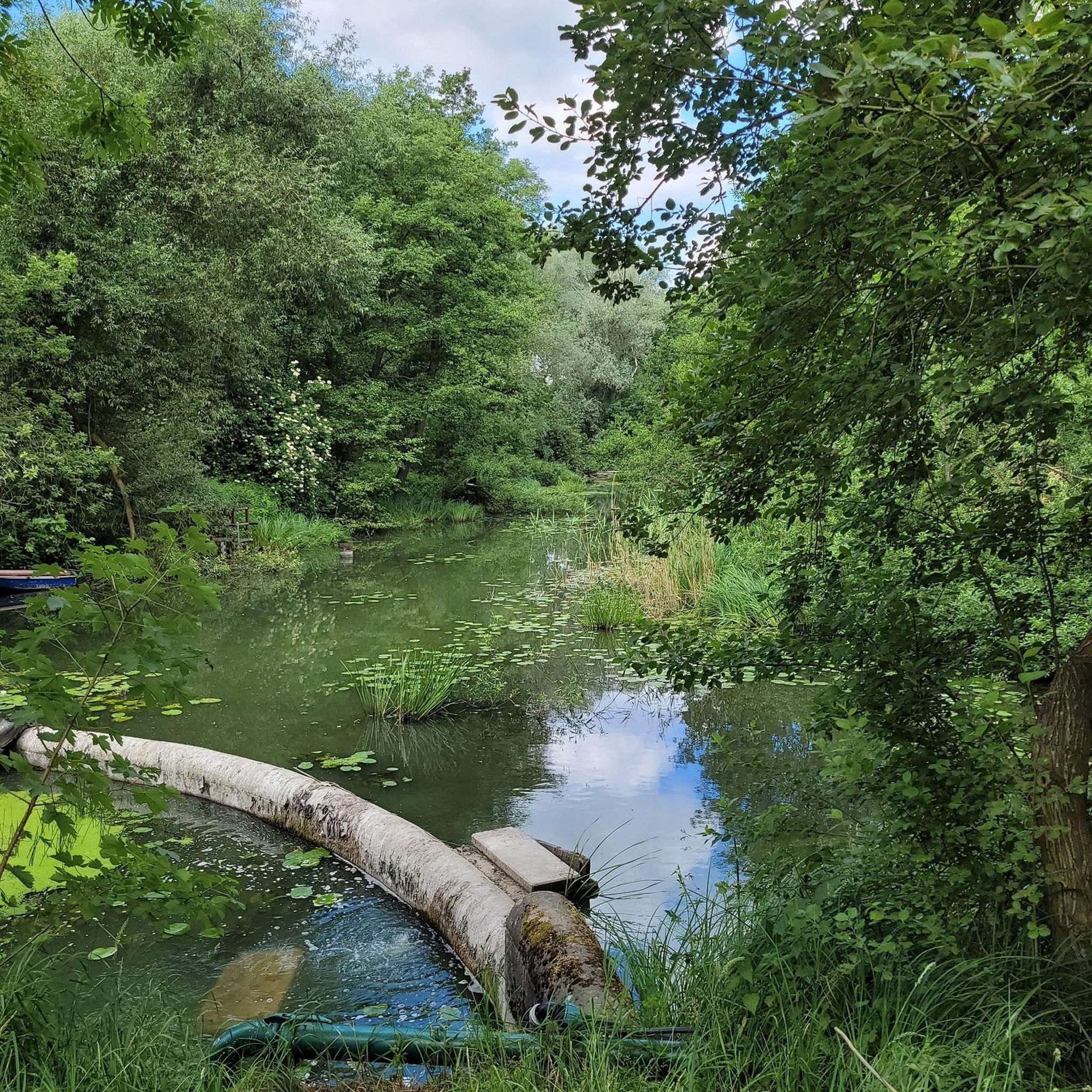
nice little ruin, right next to the fisherman's hut
7
0

It's a shame, but there is hardly anything left to see of the once imposing castle
4
0

Not much is left of the small castle, but a hike through the beautiful autumn forest is worth it!
8
0
This valley castle lies just 12 meters above the water level of the Lambsbach on a sandstone block, the Malafel. It is one of the smallest castles in the Saarland and was restored in its historic form between 1975 and 1980. Based on excavation finds, it is assumed that a refuge castle already existed in the 10th century and that a solid one-story house took over the protection of an important road to Landstuhl in the 11th century. Not much is left of the former keep. The remains of the wall of the former tower and the castle wall, which have been restored, are clearly visible. Certainly no longer the magnificent building today, but definitely worth a Sunday excursion due to its enchanted valley location, especially since there is a small fish pond, the Merwoog, with the associated fisherman's hut in the immediate vicinity. Source: https://www.saarpfalz-touristik.de/instrumente/merburg-und-fischweiher-f1e6f4c221
10
0
Frequently Asked Questions
What types of castles can I explore around Winterbach (Pfalz)?
The region around Winterbach (Pfalz) offers a diverse range of historical sites, including well-preserved castle ruins, majestic hilltop castles, and unique rock castles where structures are carved directly into natural stone. You'll find everything from ancient foundations to extensively rebuilt fortresses.
Are there any family-friendly castles to visit near Winterbach (Pfalz)?
Yes, several castles are great for families. The Hohenburg Castle Ruins (Homburg) are particularly popular, offering many paths, stairs, and rock corridors for exploration, along with a playground nearby. The Orangerie Ruins at Karlsberg are also considered family-friendly, located within the scenic WaldPark Schloss Karlsberg, perfect for a historical walk.
Which castles offer the best views of the Palatinate region?
For breathtaking panoramic views, consider visiting Hohenburg Castle Ruins (Homburg), which sits high above the city. Further afield, Burg Trifels near Annweiler offers extensive views of the Palatinate Forest, and the Dahn Castle Group provides stunning vistas over the castle complex and even as far as the Vosges mountains.
What historical significance do the castles in this region hold?
The castles in the Palatinate region are steeped in history. Burg Trifels, for example, was once a crucial center of power for the Holy Roman Empire and famously held the Imperial Regalia and imprisoned Richard the Lionheart. The Ruins of Steinenschloss Castle feature a massive round keep from the Salian-Staufer era, while the Orangery of Karlsberg Castle offers a glimpse into the grandeur of a former ducal residence.
Are there any unique castles that are still inhabited or offer guided tours?
Yes, Burg Berwartstein near Erlenbach is unique as the only continuously inhabited castle in the Palatinate. It offers guided tours where you can explore its interior, including a tunnel system with catacombs and a deep well carved into the rock. This provides a vivid impression of medieval life.
What outdoor activities can I do near the castles around Winterbach (Pfalz)?
The forested hills and river valleys surrounding the castles are ideal for outdoor activities. You can find numerous running, mountain biking, and road cycling trails. For example, there are challenging MTB routes like the 'Bomb Crater Camelride' or scenic road cycling routes like 'Ridge Road – Red Trail loop'. You can find more details on these activities and specific routes in the Running Trails around Winterbach (Pfalz), MTB Trails around Winterbach (Pfalz), and Road Cycling Routes around Winterbach (Pfalz) guides.
What is special about the Dahn Castle Group?
The Dahn Castle Group, consisting of Altdahn, Grafendahn, and Tanstein, is a remarkable ensemble of three rock castles. They are built directly into sandstone cliffs, with chambers, corridors, and staircases carved out of the natural stone. This unique integration with the rock formations makes them a fascinating visit, offering free admission and stunning views.
How accessible are the castle ruins, especially for those arriving by car or public transport?
Many castle ruins, like the Ruins of Steinenschloss Castle, are accessible from nearby parking areas, such as the P&R Biebermühle car park, and some even have ramps for easier access. For the Orangerie Ruins at Karlsberg, you can find parking within the WaldPark Schloss Karlsberg. While public transport options vary, many sites are reachable with a combination of bus and a short walk.
Are dogs allowed at the castle sites?
Dog policies can vary by specific castle or ruin. Generally, outdoor areas and hiking trails around ruins like the Ruins of Steinenschloss Castle and the Orangerie Ruins at Karlsberg are dog-friendly, often requiring dogs to be on a leash. For specific indoor areas or guided tours, it's always best to check the individual site's regulations beforehand.
What do visitors enjoy most about the castles around Winterbach (Pfalz)?
Visitors frequently praise the historical depth and the scenic beauty of the castle sites. They appreciate the well-preserved nature of ruins like Hohenburg Castle Ruins (Homburg), the unique architectural features like the massive round tower at Ruins of Steinenschloss Castle, and the integration of castles with natural rock formations. The opportunities for exploration, great views, and the peaceful atmosphere within the surrounding nature are also highly valued.
What is the best time of year to visit the castles in the Palatinate region?
The castles are enjoyable year-round, but spring and autumn offer particularly pleasant conditions. In spring, the surrounding forests are lush and green, and in autumn, the foliage provides a spectacular backdrop. Summer is also popular, though it can be warmer, while winter visits can offer a unique, serene experience, especially if there's snow, but some facilities might have reduced hours.
Are there any hidden gems or lesser-known castle ruins worth exploring?
While not as widely known as the larger castles, the Merburg Castle Ruins at the Malafels offer a charming glimpse into a small castle ruin. It's located near a fish pond and a fisherman's hut, providing a tranquil setting for exploration and a pleasant stop for rest.
Most popular routes around Winterbach (Pfalz)
Most popular attractions around Winterbach (Pfalz)

Get inspired with the komoot mobile app


Explore more
Looking for the best castles somewhere else? Discover other guides around Winterbach (Pfalz):
