Top 20 Castles around Frankeneck
Best castles around Frankeneck are found within the surrounding Palatinate region, an area characterized by its forested hills and historical significance. This landscape features vineyards and the extensive Palatinate Forest, providing varied terrain for outdoor activities. The region's rich history is evident in its numerous historical sites, including various castle structures. Frankeneck serves as a base for exploring these historical landmarks in the wider area.
Best castles around Frankeneck
- The most popular castles is Hambach Castle, a castle known…
Last updated: June 22, 2026
Hambach Castle
Highlight • Castle
Translated by Google •
Tip by

Heidenlöcher - 9th-10th century refuge (with knight's stone no. 260)
Highlight • Historical Site
Translated by Google •
Tip by

Sign up now to discover places like this
Get recommendations on the best single tracks, peaks, & plenty of other exciting outdoor places.
Sign up for free
Wolfsburg Castle Ruins (Neustadt an der Weinstraße)
Highlight • Castle
Translated by Google •
Tip by

Kropsburg
Highlight • Castle
Translated by Google •
Tip by
View of Hambach Castle
Highlight • Viewpoint
It is just one of the many possibilities in the vineyards from which you can see the castle well.
Translated by Google •
Tip by

Sign up for free to discover even more castles around Frankeneck.
Sign up for free
Already have an account?
Start today with a free account
Your next adventure awaits.
Login or Signup
Other adventures around Frankeneck

Tips from the Community

Very nice view of the Hambach Castle
6
0

The cradle of democracy is always impressive
5
0

View of Hambach Castle from below
5
0

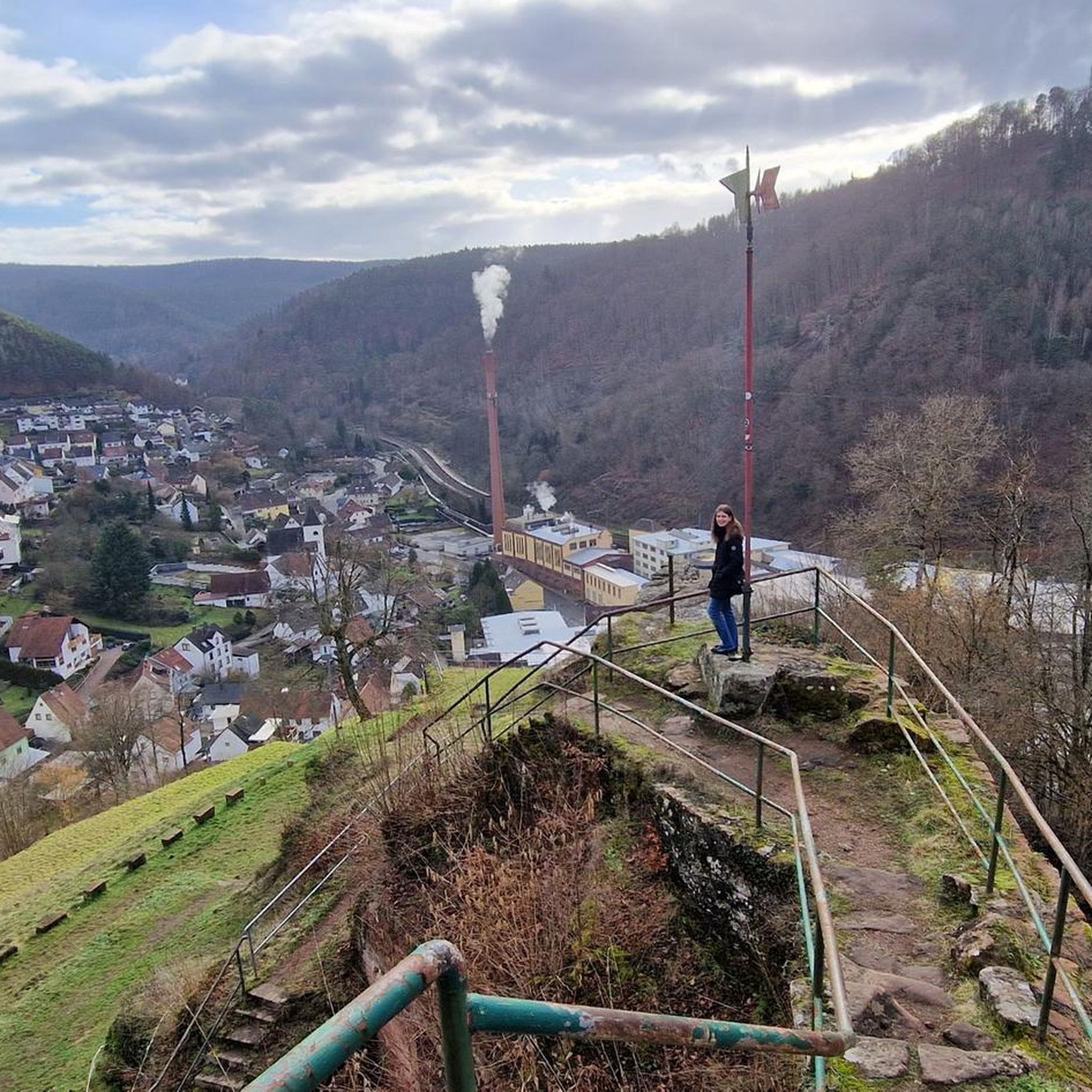
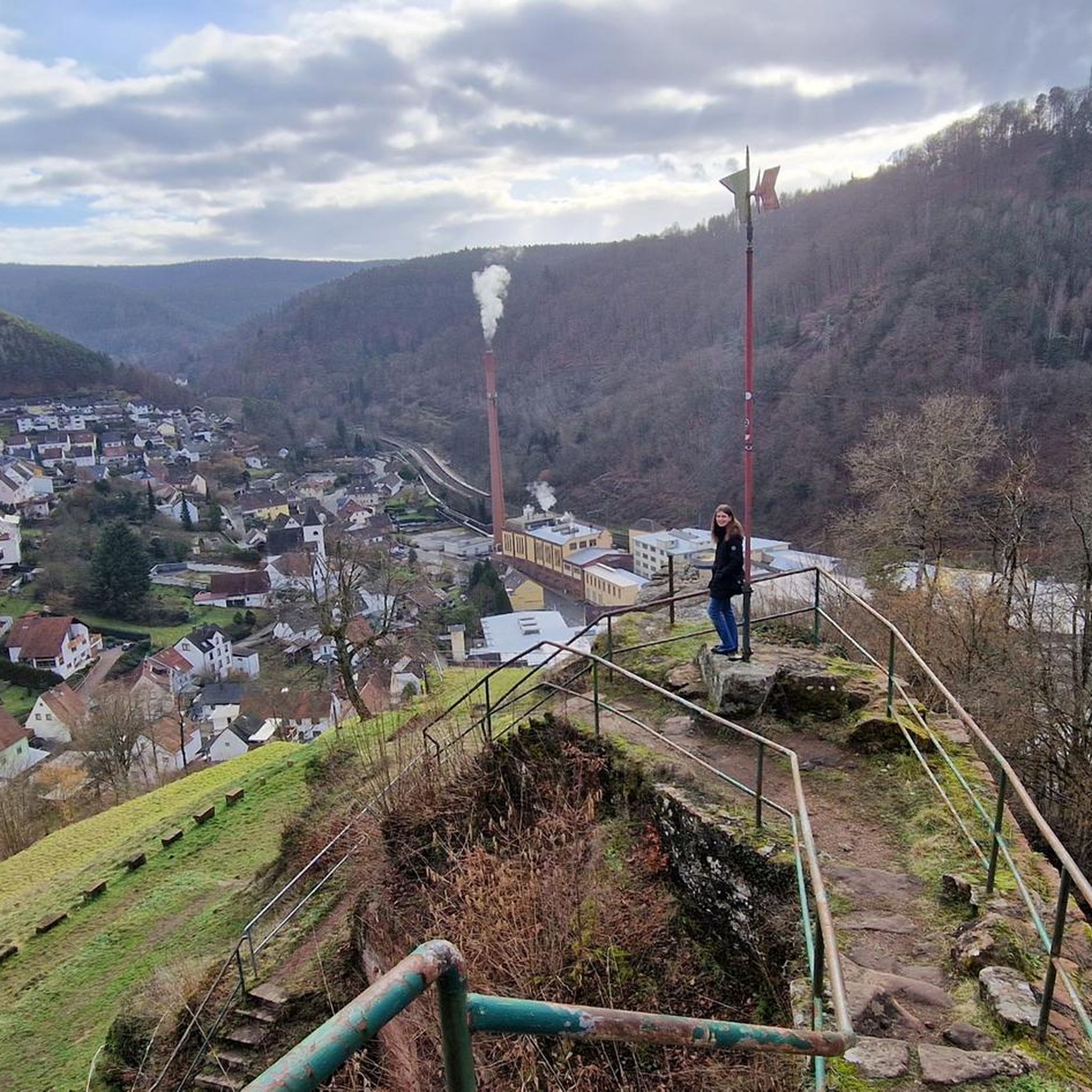
Small castle ruins with a great view of Neustadt
20
1

I like to walk this way, because this view of the Hambach Castle is awesome. 👍
5
0

The construction of the Kropsburg goes back to the Staufer and is dated to around 1200; At that time, a whole ring of castles was built to shield the Reichsburg Trifels, which was about 20 km away. Similar to the Hambach Castle to the north and the Rietburg Castle to the south, the Kropsburg offered a wide view of the Rhine plain. Initially, the Kropsburg was the seat of a ministerial. It was later inherited by the descendants of the vassals and thus became the Ganerbenburg with several owners, who expanded it into an upper and a lower castle. A small dominion, which consisted of the towns of Sankt Martin, Maikammer and Winnweiler, belonged to the castle.[2] After the end of the Staufers in the second half of the 13th century, it came into the possession of the Bishopric of Speyer. This enfeoffed various noble houses with the Kropsburg, including those of Kropsberg, von Ochsenstein and von Odenbach. John III Chamberlain von Worms first acquired a house in Kropsburg in 1323 from his son-in-law, Merkel von Kropsburg. In 1345 he then bought his entire 50% share in the castle and associated goods. The descendants of John III. between 1393 and 1439 they also bought the second half of the Kropsburg, so that it now belonged exclusively to the family of the chamberlains from Worms.[3] From 1492 to 1531 Johann XXII was from this family. Chamberlain of Worms Lord of the Kropsburg and in St. Martin, where his magnificent tomb is preserved in the local Martinskirche. In 1522, the castle chapel St. Ägidius is mentioned in a document, for which Georg von Schwalbach, cathedral custodian and general vicar of the Speyer diocese, approved the safekeeping of the holy of holies. The chaplain of St. Martin also receives permission to work there as a pastor.[4] While the Kropsburg survived the turmoil of the Peasants' War and the Thirty Years' War almost unscathed in the 16th and 17th centuries, it was completely and finally destroyed by French troops in 1689 during the Palatinate War of Succession. In 1771 Jakob Amandus von Dalberg built a new stately home on the ruins of the lower castle. After remodeling and modernization, it later operated as a restaurant until it closed. The new restaurant built on the site is known for its panoramic view over the Rhine plain. from Wikipedia
11
0

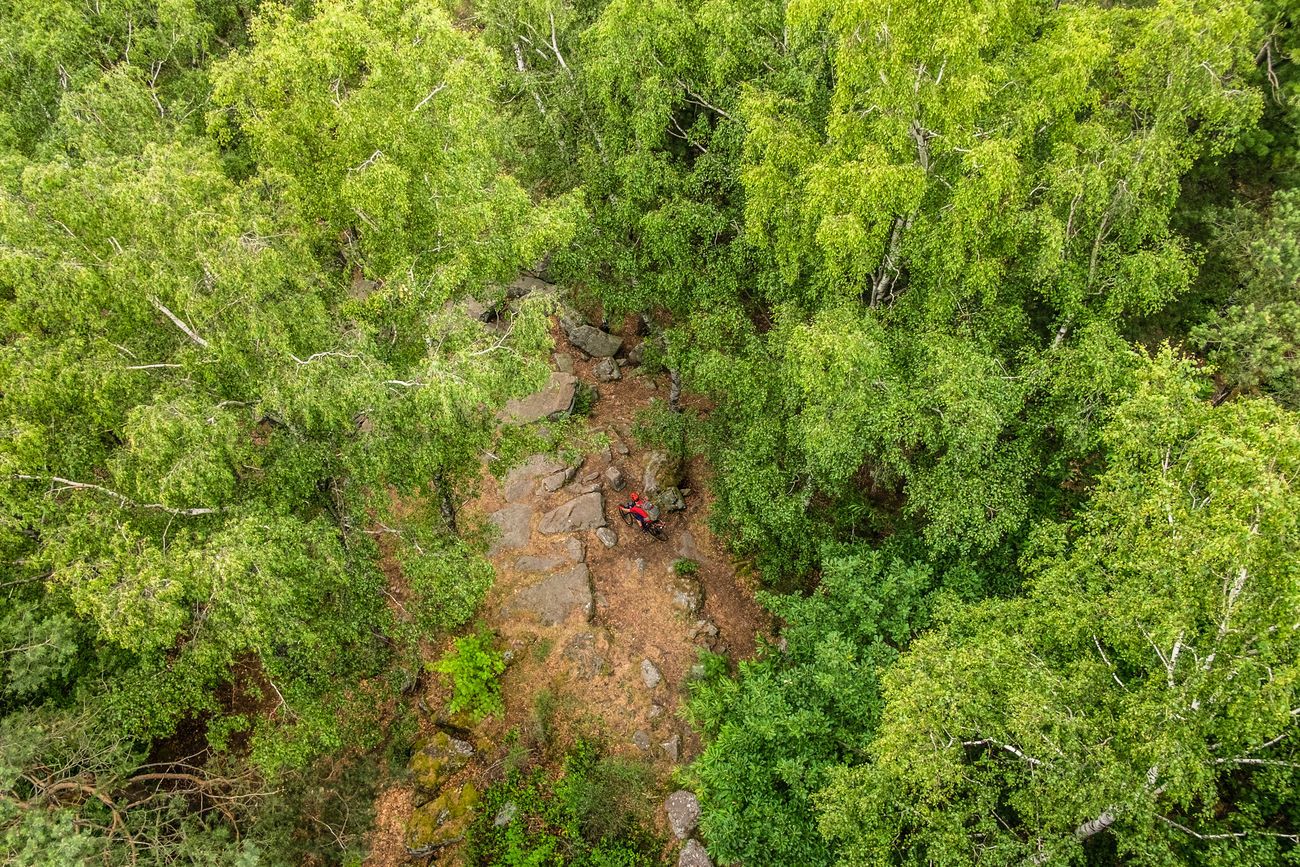
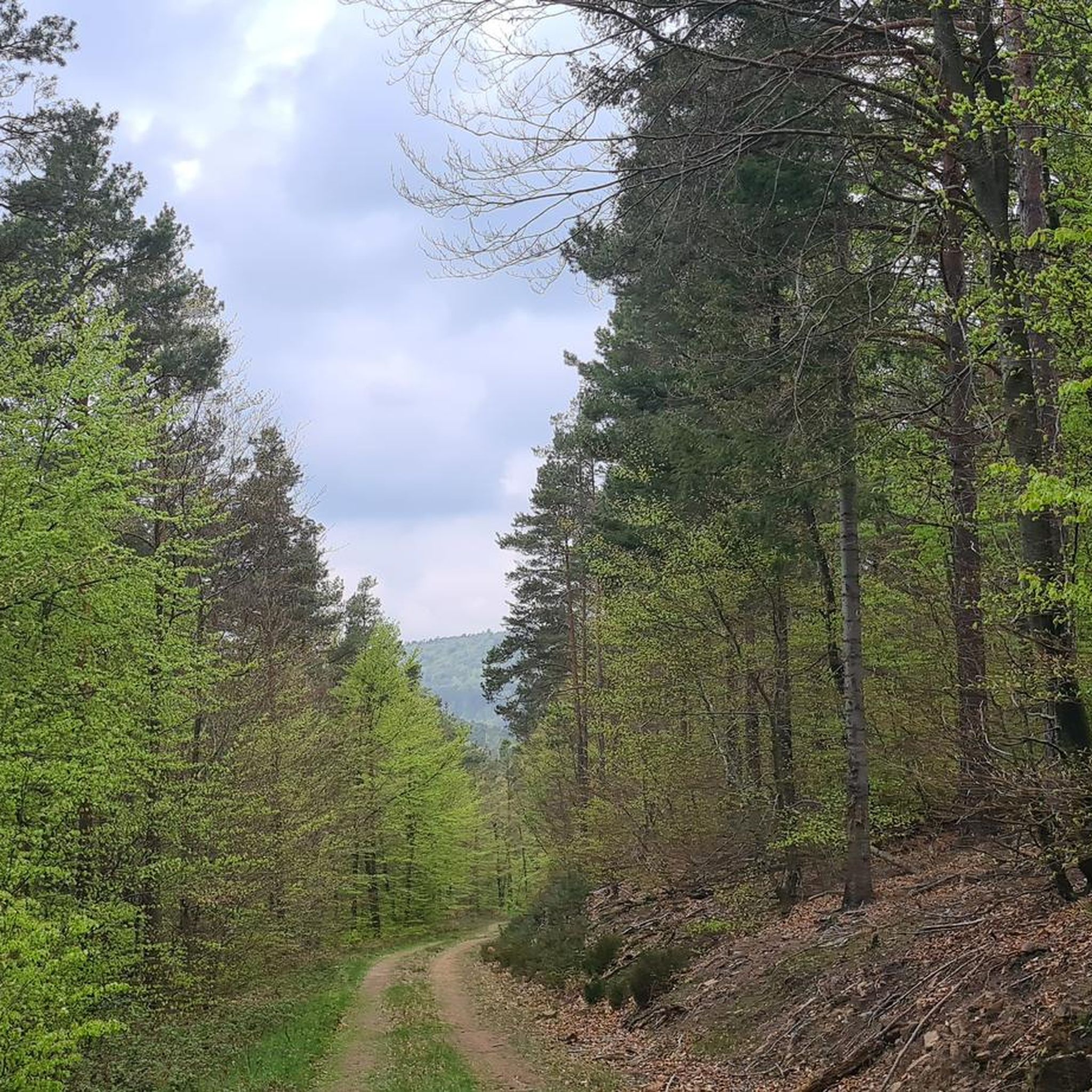
Here stands Ritterstein No. 260. It is one of over 300 Rittersteine (memorial stones) erected by the Palatinate Forest Association (PWV) and bears the inscription "Heidenlöcher – Refuge Castle 9th-10th Century." It marks the remains of a refuge castle that served as protection against the warring Normans and Hungarians. Today, the foundations of two gate structures, 65 stone houses, and a 450-meter-long curtain wall are still preserved. The inner of the two adjoining dry-stone walls served as a parapet walk. - Source: Information panels on site A little further to the right of this Ritterstein are the foundations of one of the gate structures. The refuge castle, or rather its remains, can be entered through the two gate structures. The curtain wall can be easily walked along (with minor exceptions): either on top of the wall or along its inner side – and the remains of many stone houses can be seen along the way. Without Komoot, it is easy to get lost here: Therefore, it is best to follow the "Palatinate Wine Trail" hiking signs!
12
0

The entire facility is very exciting. A look into early history.
8
0
Frequently Asked Questions
What types of castles can I explore around Frankeneck?
The area around Frankeneck features a variety of historical structures, including well-preserved castles, ancient castle ruins, and refuge castles. You can find sites like Hambach Castle, known for its historical significance, and the ruins of Heidenlöcher, a 9th-10th century refuge.
Are there any castles with significant historical importance near Frankeneck?
Yes, Hambach Castle is particularly significant as the birthplace of German democracy. It hosts an interesting museum that explains its role in history and offers beautiful views of the Rhine plain.
Which castles offer good viewpoints of the surrounding landscape?
Several castles provide excellent views. Hambach Castle offers panoramic views of the Rhine plain. The Wolfsburg Castle Ruins provide views of Neustadt an der Weinstraße, and the Kropsburg, though not fully accessible itself, has a restaurant in its outer bailey with a panoramic view over the Rhine plain.
Are there family-friendly castles to visit near Frankeneck?
Yes, both Hambach Castle and the Heidenlöcher refuge ruins are considered family-friendly. Hambach Castle has a museum that can engage older children, while the Heidenlöcher offers an adventurous exploration of ancient ruins in a forest setting.
Can I bring my dog to any of the castle sites?
The Heidenlöcher refuge ruins are dog-friendly, making it a good option for exploring with your canine companion. Always ensure dogs are kept on a leash and follow any local regulations.
Are there hiking trails near the castles around Frankeneck?
Yes, the region is excellent for hiking. You can find trails that lead to or past many castle sites. For example, there are routes like the 'Wolf Gorge Hut – Spangenberg Castle loop from Esthal' and the 'Dicker Stein Lookout Tower – Beautiful viewpoint loop from Lambrecht'. You can find more hiking options in the Hiking around Frankeneck guide.
What other outdoor activities can I do near these castles?
Beyond hiking, the area around Frankeneck is popular for cycling. You can explore gravel biking routes, such as those found in the Gravel biking around Frankeneck guide, or enjoy road cycling with routes like the 'View of Trifels Castle – Elmstein Valley loop from Lambrecht (Pfalz)' from the Road Cycling Routes around Frankeneck guide.
Are there any castles with dining options or cafes nearby?
Yes, Kropsburg features a Burgschänke (restaurant) in its outer bailey, offering good food in an idyllic setting with views. Hambach Castle also has a restaurant on-site.
What do visitors enjoy most about the castles around Frankeneck?
Visitors frequently praise the historical significance of sites like Hambach Castle, appreciating its well-maintained condition and informative museum. The stunning views of the Rhine plain from various castle locations and the opportunity to explore ancient ruins like Heidenlöcher are also highly valued.
Are there any hidden or less-known castle ruins to discover?
The Heidenlöcher refuge ruins offer a more exploratory experience. While marked by Ritterstein No. 260, its extensive foundations of gate structures and stone houses within a forest setting provide a sense of discovery, especially when following hiking signs like the 'Palatinate Wine Trail'.
Is there a specific castle that is a must-see for history enthusiasts?
For history enthusiasts, Hambach Castle is a must-see. It is celebrated as the birthplace of German democracy, offering a deep dive into its historical context through its museum and preserved grounds.
Most popular routes around Frankeneck
Most popular attractions around Frankeneck

Get inspired with the komoot mobile app


Explore more
Looking for the best castles somewhere else? Discover other guides around Frankeneck:
