The best walks and hikes in Illawarra Escarpment State Conservation Area
4.5
(107)
1,597
hikers
49
hikes
Hiking in Illawarra Escarpment State Conservation Area offers diverse terrain characterized by dramatic sandstone cliffs and varied forest types, including sub-tropical rainforests and eucalypt forests. The region features deep ravines, waterfalls, and accessible hills like Mount Keira and Mount Kembla. These geological formations provide panoramic views of the Pacific Ocean and the Illawarra coastline. The conservation area protects lush ecosystems, supporting diverse flora and fauna.
Best hiking trails in Illawarra Escarpment State Conservation Area
- The most popular hiking route is…
Last updated: November 18, 2026
37
hikers
2.54km
01:25
250m
250m
Hard hike. Sure-footedness, sturdy shoes and alpine experience required.
5.0
(2)
31
hikers
5.32km
02:03
190m
190m
Moderate hike. Good fitness required. Mostly walkable paths. Sure-footedness required.

5.0
(2)
29
hikers
4.55km
01:31
150m
150m
Moderate hike. Mostly walkable paths. Sure-footedness required.
5.0
(3)
13
hikers
6.32km
02:32
270m
270m
Hard hike. Good fitness required. Sure-footedness, sturdy shoes and alpine experience required.
5
hikers
3.49km
01:10
90m
90m
Moderate hike. Mostly walkable paths. Sure-footedness required.
Get access to more routes and recommendations from other explorers.
Already have an account?
Our route recommendations are based on thousands of hikes, rides, and runs completed by other people on komoot.
Start today with a free account
Your next adventure awaits.
Popular around Illawarra Escarpment State Conservation Area

Tips from the Community

A small waterfall drops through the forest near the Stanwell Creek section of the Wodi Wodi Track, adding another lovely stop to an already wild stretch of the walk. It’s much more impressive after rain, when water spills over the sandstone and fills the pools below. Take extra care around the rocks here, as the creek crossings and surrounding track can become very slippery in wet conditions.
0
0
Wodi Wodi Track cuts through dense escarpment bushland between Stanwell Park and Coalcliff, with creek crossings, rocky sections and some steep climbing along the way. The 6.5-kilometre route is named after the Wodi Wodi people, the Traditional Custodians of the Illawarra coast. It feels surprisingly wild in places, so keep your map handy and take extra care after rain when the track can become muddy, eroded and harder to follow.
0
0
A set of stairs brings the Wodi Wodi Track down to Lawrence Hargrave Drive, with a lovely glimpse of the ocean opening through the trees as you descend. If your route continues across the road, take your time here: traffic can move quickly and there isn’t a dedicated pedestrian crossing at the junction. Once you’re safely across, the track disappears back into the escarpment bushland.
0
0

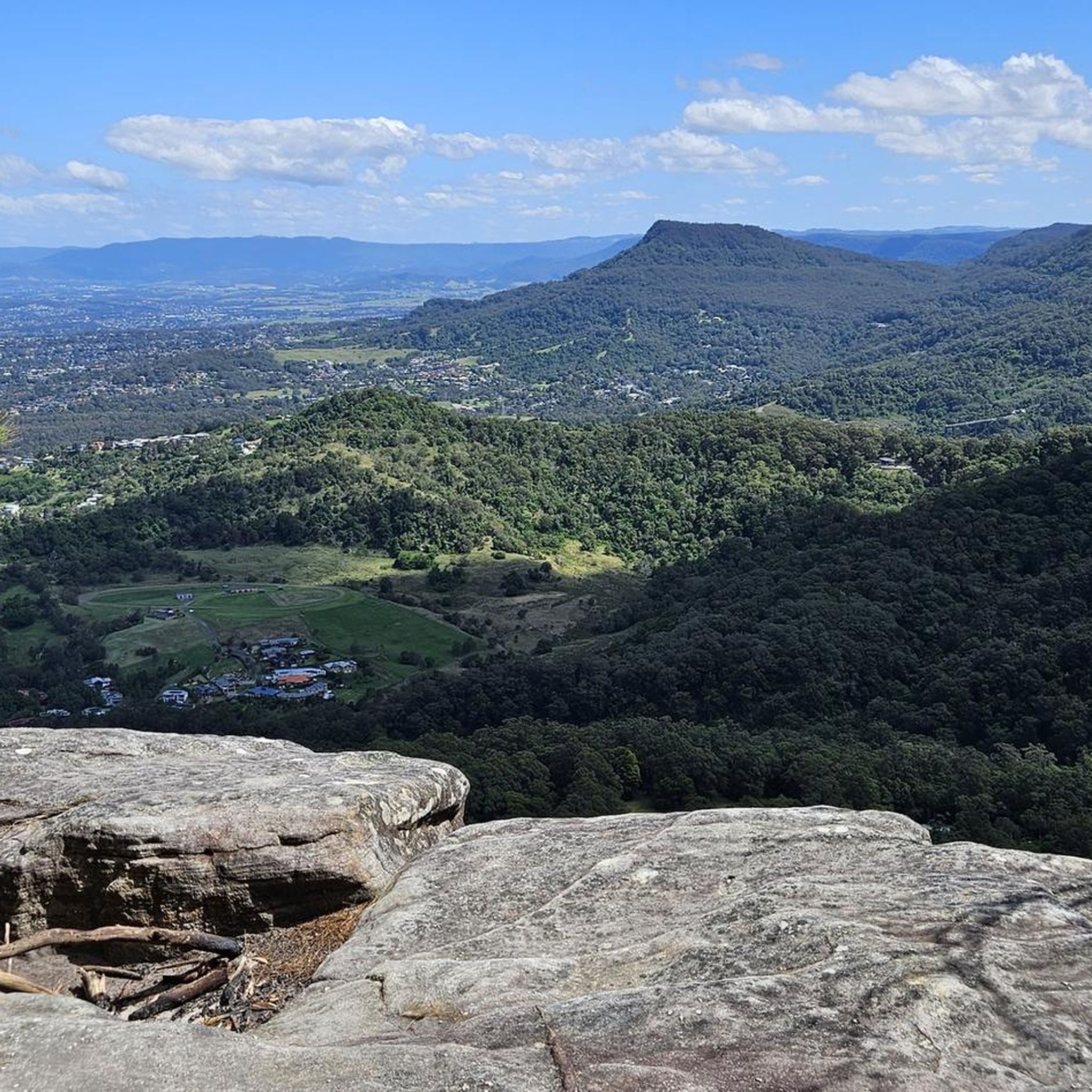
The Illawarra Escarpment State Conservation Area stretches along the forested slopes above Wollongong, protecting a band of rainforest, eucalypt forest, creeks and sandstone formations between the coast and the escarpment. The area is home to a variety of native plants and animals, including lyrebirds, eastern yellow robins and spotted-tailed quolls, with walking tracks climbing through the forest to lookouts and waterfalls. From the higher slopes, you can also look out across Wollongong and the Illawarra coast toward the Pacific Ocean.
0
0
Tarrawanna Foothills track is a relatively moderate loop through the northern foothills of the Illawarra Escarpment, climbing through eucalypt forest before passing into pockets of lush rainforest. The first part of the circuit has several steep sections, though the return is a bit easier as the track descends toward Foothills Road. Mountain bikers also share the track, and the natural surface can become muddy or boggy after rain, so it’s a good idea to wear sturdy footwear and keep your komoot map handy to help navigate the many junctions you’ll encounter along the way.
0
0
Towradgi Creek flows through the Illawarra Escarpment down through the suburbs of Tarrawanna and Towradgi before emptying into the sea at Corrimal Beach. Through the conservation area, it’s shallow and rocky, shaded by a canopy of ferns and dense forest, before widening as it passes through the suburban corridor below. The lower section near the mouth is popular with kayakers and paddleboarders, and keep an eye out for azure kingfishers and grey fantails along the banks.
0
0

Mount Keira Ring Track circles the subtropical rainforest of Mount Keira. The trees provide shade and the forest occasionally opens up to viewpoints of the Illawarra coastline. Bushwalkers pass large boulder fields and climb long sets of wooden stairs on this circuit. After rain, there is mud and some areas have leeches in the dead leaves under the trees, but stay on the well-marked track and come on a dry day for the most enjoyable adventure.
0
0
Mount Keira Ring Track has quite a few sets of stairs along its 5.5 kilometre route. The track is a gentle grade in many other areas, but when the stairs appear, prepare for an uphill effort! Luckily, the track is forested and provides plenty of shade.
0
0
Frequently Asked Questions
How many hiking trails are available in Illawarra Escarpment State Conservation Area, and what are their difficulty levels?
The Illawarra Escarpment State Conservation Area offers a wide network of hiking trails, with over 45 routes available. These cater to various fitness levels, including approximately 20 easy trails, 15 moderate trails, and 5 difficult trails for more experienced hikers.
What are the notable viewpoints and natural features hikers can expect to see?
Hikers can enjoy breathtaking panoramic views of the Pacific Ocean and the Illawarra coastline from various points along the escarpment. Key natural features include dramatic sandstone cliffs, diverse forest types ranging from sub-tropical rainforests to eucalypt forests, and deep ravines. Popular lookouts include Sublime Point Lookout and Robertson Lookout, which are excellent for whale watching during winter. You can also explore accessible mountains like Mount Keira and Mount Kembla.
Are there family-friendly hiking options in the Illawarra Escarpment State Conservation Area?
Yes, the area offers trails suitable for families. For an easy walk with scenic views, consider the Sea Cliff Bridge loop from Sea Cliff Bridge. Many picnic areas, such as Byarong Park, also serve as convenient starting points for shorter, less strenuous walks.
Are dogs allowed on the hiking trails in Illawarra Escarpment State Conservation Area?
As a State Conservation Area, restrictions apply to protect the diverse wildlife. Generally, dogs are not permitted on walking tracks within NSW national parks and state conservation areas. It's always best to check the official NSW National Parks website for the most current regulations regarding pets before your visit. You can find more information at NSW National Parks.
Can I find waterfalls along the hiking trails?
Yes, the Illawarra Escarpment features deep ravines and waterfalls. The conservation area protects lush rainforests, and Red Cedar Creek is a notable lush gorge featuring waterfalls, popular for peaceful hikes and nature observation. While Fitzroy Falls is a significant feature in the broader Illawarra region, it's located in the northern section and is a popular destination for nature lovers.
When is the best time of year to go hiking in the Illawarra Escarpment State Conservation Area?
The Illawarra Escarpment State Conservation Area is enjoyable year-round. The lush rainforests offer refreshing retreats, especially during summer. Spring and autumn provide pleasant temperatures for hiking, with vibrant flora. Winter can be ideal for clear views and whale watching from coastal lookouts.
What are the parking and public transport options for accessing the trails?
The Illawarra Escarpment State Conservation Area is conveniently located near Wollongong. Many trailheads, especially those leading to popular lookouts like Sublime Point and Robertson Lookout, have dedicated parking areas. For specific public transport options to trail access points, it's recommended to check local transport schedules as services can vary.
Are there any circular hiking routes or loop walks available?
Yes, the area features several loop walks that allow you to experience varied terrain without retracing your steps. Notable examples include the challenging Sublime Point Lookout loop from Austinmer and the Mount Keira Ring Track – Mount Keira Lookout loop from Mount Nebo, which offers an immersive experience around the mountain.
What do other hikers enjoy the most about hiking in Illawarra Escarpment State Conservation Area?
The area is highly rated by the komoot community, with an average score of 4.5 stars. Reviewers often praise the dramatic landscapes, the diverse ecosystems, and the breathtaking panoramic views of the Pacific Ocean. The variety of trails, from easy strolls to challenging ascents, is also frequently highlighted.
Are there opportunities for birdwatching or spotting wildlife?
Absolutely. The diverse flora and fauna make the escarpment a significant spot for nature observation. It's home to varied flora, including ancient Coachwood and Sassafras trees, and supports diverse wildlife such as lyrebirds, powerful owls, and wallabies. There are 12 threatened animal species residing in the area, making it a rich habitat for birdwatching and wildlife spotting.
What kind of terrain can I expect on the trails?
The terrain is highly varied, characterized by dramatic sandstone cliffs and a mix of forest types. You'll encounter sub-tropical rainforests with lush vegetation, olive-green eucalypt forests, and areas with towering cedars. Trails can range from relatively flat paths to steep ascents and descents, often featuring rocky sections and natural steps.
Are there any historical or cultural points of interest along the trails?
Yes, the Illawarra Escarpment holds significant colonial and Aboriginal heritage. Mount Kembla and Mount Keira, in particular, feature prominently in Aboriginal creation stories and contain traditional travel routes, offering a glimpse into the rich history of the land.
Most popular routes in Illawarra Escarpment State Conservation Area
Most popular attractions in Illawarra Escarpment State Conservation Area

Get inspired with the komoot mobile app


Explore more
Browse the best Hikes in other regions.
