Top 10 Castles around Heilenbach
Best castles around Heilenbach are found in the Eifel region, characterized by its diverse natural landscape and historical significance. The area offers a blend of cultural heritage and scenic routes, making it suitable for exploration. Heilenbach is a municipality within the Eifelkreis Bitburg-Prüm, known for its proximity to various historical structures. The surrounding terrain includes hills and valleys, providing varied settings for these historical sites.
Best castles around Heilenbach
- The most popular castles is Hamm Castle, a castle that…
Last updated: October 4, 2026
Rittersdorf Castle
Highlight • Castle
Translated by Google •
Tip by

Hamm Castle
Highlight • Castle
Translated by Google •
Tip by
Sign up now to discover places like this
Get recommendations on the best single tracks, peaks, & plenty of other exciting outdoor places.
Malberg Castle
Highlight • Castle
Translated by Google •
Tip by

Schönecken Castle
Highlight • Castle
Translated by Google •
Tip by

View of Schloss Hamm
Highlight • Viewpoint
The fortifications built on late medieval walls, …
Translated by Google •
Tip by

Sign up for free to discover even more castles around Heilenbach.
Already have an account?
Start today with a free account
Your next adventure awaits.
Tips from the Community

The House As early as 1052, a medieval defensive structure in Hamm was mentioned, which was repeatedly adapted to contemporary needs over the centuries through alterations and new constructions. It stands on the site of a much older, early medieval refuge castle, where the inhabitants of the surrounding manors could retreat in times of danger during the Migration Period. The present appearance is significantly shaped by the surrounding and defensive walls as well as a residential complex from the Gothic period. The complex has dimensions of 40 x 80 m. The oldest building, still preserved in its basic structure, can be traced back to the Romanesque period and includes, among other things, the chapel, which was converted in the Baroque style in 1700. Two round towers frame a palace from the 14th century, also dating back to the late Gothic period, which was replaced by a Renaissance building in 1586. After a long period of vacancy around the mid-19th century, a fundamental renovation with some structural changes took place from 1885-1896. The Renaissance palace, like parts of the adjacent Gothic building, fell victim to arson by German troops in 1945, who did not want to let any German cultural heritage fall into the hands of the Allies. The post-war reconstruction secured the courtyard facade of the Renaissance palace, but removed the garden side, which was heavily destroyed by the building fabric, and added a small half-timbered structure in its place. The Family The original owners of Hamm were the Counts of Hamm, who served as vogts of the Abbey of Prüm. It was a fief of the Counts of Vianden, with whom they had close family ties. For a long time, the Bidgau was also administered from here. In 1371, the property was passed on through the marriage of the last of their line, Maria von Hamm, to the von Malberg - Milburg family. The last of her name, Anna von Malberg, married Gerhard von der Horst around 1580, the builder of the Renaissance palace. About 100 years later, the property passed through the marriage of the last von der Horst to the Counts Lannoy, who, after a hall collapse in connection with a fire in 1835, in a part of the building no longer preserved today, retreated entirely to their homeland of Clerf (Clervaux/Luxemburg). After the castle stood empty and the estate fell into disrepair, a descendant of theirs, Baroness Sidonie v. Tornaco, finally received the inheritance. She married Count Friedrich v. Renesse and, with him, carried out the aforementioned fundamental renovation. Their daughter Elisabeth married Egon Graf von und zu Westerholt und Gysenberg in 1909. Their son Otto managed and lived in Hamm with his family. After his death in 1980, his son Ferdinand took over the property and the house. Since 1998, Schloss Hamm has been partially accessible to the public through tours, weddings, registry office branch, festivals and cultural events, and much more.
0
0

Unfortunately, it was closed during my visit, but it is a very beautiful and imposing fortification in the style of a moated castle.
4
0
A very beautiful complex in the style of a moated castle, with the river Nims flowing directly past it.
5
0

Rittersdorf Castle, a charming moated castle dating back to the 13th century, was first documented in 1263. Originally built as a fortified house for the Abbey of St. Maximin in Trier, it served to secure the trade routes between Trier, Bitburg, and Cologne. The imposing 26-meter-high keep, whose construction was approved by King Rudolf of Habsburg in 1290, still dominates the castle's appearance today. In the 16th century, the complex was expanded to include residential buildings with round towers. Today, the castle houses a restaurant, a small museum, and even a registry office, located in the historic Knights' Hall.
4
0

Years ago we had a Christmas party here.
4
0

Very nice castle with a great inner courtyard, definitely worth a visit 👍
1
0

Rittersdorf Castle is a so-called moated castle. The almost square complex is surrounded by a moat. On the east side is the round, 26 meter high keep. A residential tower from around 1300 is located on the north side. There is also a residential building from 1550 and a coat of arms gate from 1575. It was first mentioned in a document in 1263. A possible builder was Theodoric von Rittersdorf, who – presumably as sub-vogt of the Counts of Luxembourg – built the complex for the Abbey of Saint Maximin in Trier. It was probably the task of the castle to secure the Trier-Bitburg-Prüm-Cologne road. In 1290, King Rudolf of Habsburg gave permission to build a keep. The Lords of Enschringen had owned the Rittersdorf fiefdom since the 15th century. From 1550 they had a residential building with two round towers built. Between 1978 and 1987 the facility was extensively renovated. The complex now serves as a restaurant and local history museum. In addition, a wedding room of the VG Bitburg is housed here, because who wouldn't want to tie the knot romantically in a castle?
6
0

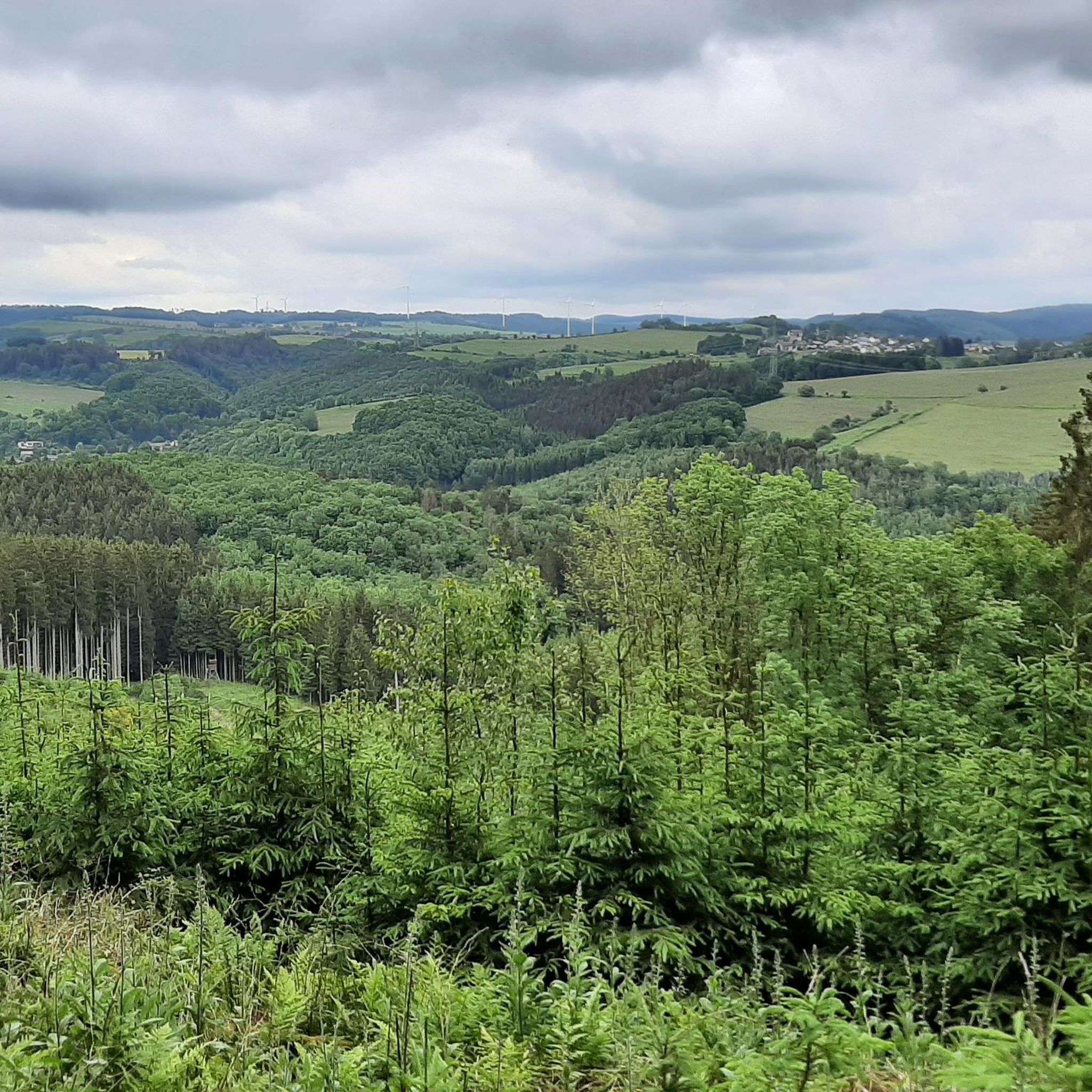
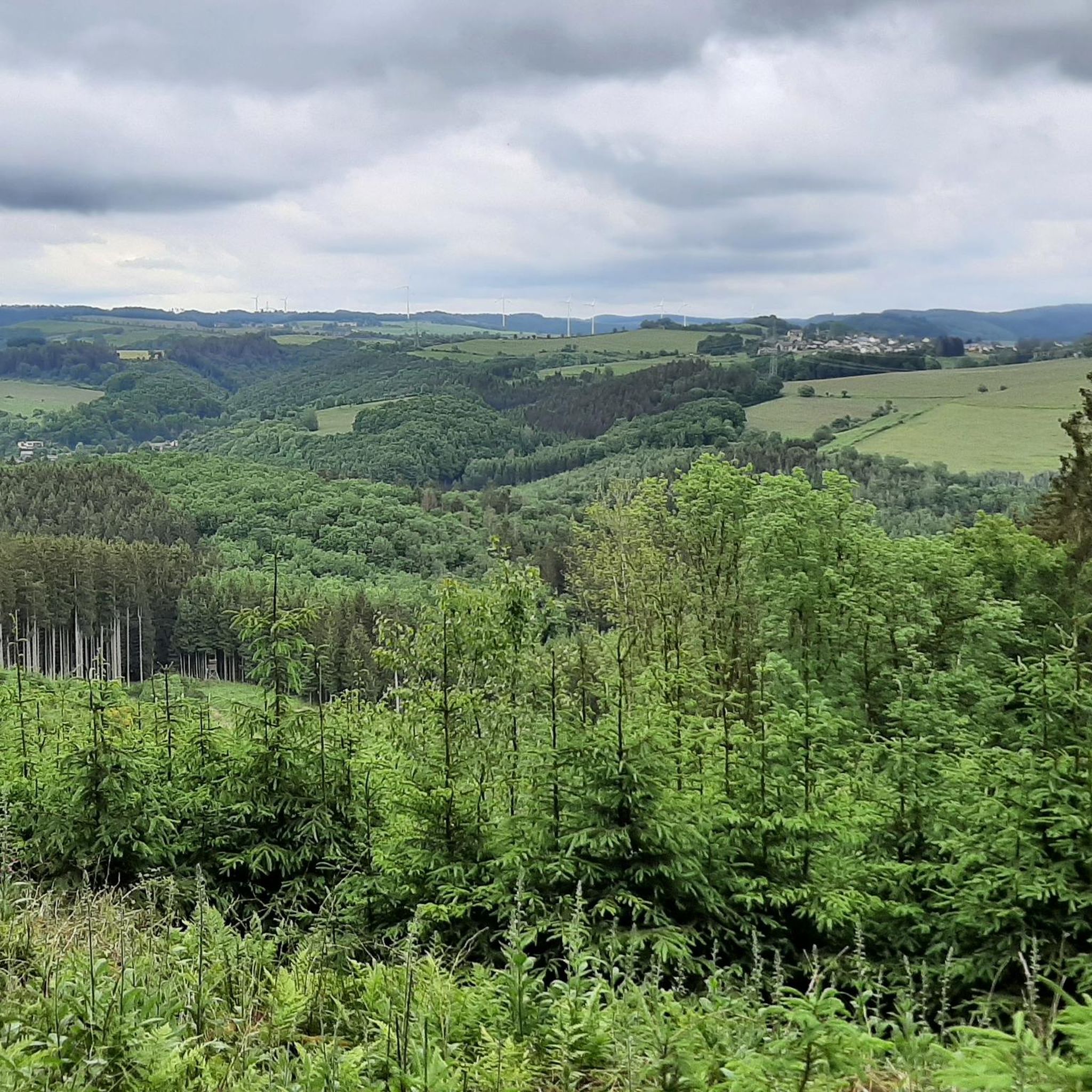
Beautiful view and wonderfully suitable for a break on a longer round.
1
0
Frequently Asked Questions
What types of castles can I explore around Heilenbach?
The region around Heilenbach offers a diverse range of historical structures, including moated castles, mountain castles, and baroque castles. You can find well-preserved fortifications like Hamm Castle, the baroque elegance of Malberg Castle, and the ruins of mountain castles such as Schönecken Castle.
Are there any castles that are particularly well-preserved or offer a glimpse into medieval life?
Rittersdorf Castle is a 700-year-old moated castle that has remained almost unadulterated, offering an impressive picture of late medieval and Renaissance living culture. It houses a local history museum and hosts medieval banquets. Hamm Castle, first mentioned in 1052, also retains much of its Gothic and Renaissance character.
Which castles are family-friendly for a visit?
Rittersdorf Castle and Hamm Castle are both noted as family-friendly. Rittersdorf offers a museum and medieval banquets, while Hamm Castle has holiday apartments and is a great place for events. The viewpoint overlooking Schloss Hamm is also family-friendly.
Can I find food or accommodation at any of the castles?
Yes, Rittersdorf Castle features a privately run restaurant with fine country cuisine and also hosts medieval banquets. Hamm Castle offers holiday apartments, allowing visitors to stay overnight within the historic grounds.
Are there hiking trails that lead to or near these castles?
Absolutely. The Eifel region is excellent for hiking. You can find various trails that pass by or offer views of castles. For example, there are MTB trails that lead to Hamm Castle and Schönecken Castle. Explore more options on the Hiking around Heilenbach guide.
What outdoor activities can I do near the castles around Heilenbach?
Beyond exploring the castles themselves, the surrounding area offers numerous outdoor activities. You can enjoy hiking on trails like the 'Untere Hardt – Heilenbacher Forest loop', cycling routes such as the 'Burg Rittersdorf – Shaded Forest Path loop', or mountain biking trails including the 'Bitburg Reservoir – Hamm Castle loop'. Find more details on the Hiking around Heilenbach, Cycling around Heilenbach, and MTB Trails around Heilenbach guides.
Which castle offers the best views of the surrounding landscape?
Schönecken Castle, a ruin of a mountain castle, provides a great vantage point over Schönecken and towards Lascheid. Additionally, the View of Schloss Hamm offers a cozy resting place with excellent views of Hamm Castle.
Is there a castle known for its unique architecture?
Malberg Castle is particularly notable for its baroque Palladio reception, which is unique in Rhineland-Palatinate. It is modeled after the Villa Valmarana in Italy, designed by the famous architect Palladio, making it a distinctive architectural landmark.
Can I visit castles that are part of historical routes or pilgrimages?
Schönecken Castle is part of the Way of St. James in Germany, specifically the "Via Coloniensis," making it a point of interest for those following historical pilgrimage routes.
What makes the castles around Heilenbach appealing to visitors?
Visitors appreciate the blend of cultural heritage and scenic routes. The castles offer a journey through history, from medieval fortifications to baroque residences. Many are well-preserved, some host museums or restaurants, and they are often situated in picturesque locations, providing great views and opportunities for outdoor activities like hiking and cycling.
Are there any castles that are particularly dog-friendly?
Schönecken Castle is listed as dog-friendly, allowing you to explore the castle ruins and enjoy the vantage point with your canine companion.
What is the best time of year to visit the castles in the Heilenbach region?
The Eifel region, where Heilenbach is located, is beautiful throughout the warmer months, from spring to autumn, when the weather is ideal for exploring the castle grounds and enjoying nearby hiking or cycling trails. Some castles, like Rittersdorf Castle, may host special events or medieval banquets, which could influence your visit depending on your interests.
Most popular routes around Heilenbach
Most popular attractions around Heilenbach

Get inspired with the komoot mobile app


Explore more
Looking for the best castles somewhere else? Discover other guides around Heilenbach:
