Attractions and Places To See around Flachslanden - Top 20
Best attractions and places to see around Flachslanden, a market town in the Ansbach district of Bavaria, Germany, offers a combination of historical sites, cultural experiences, and natural features. The region is characterized by scenic valley landscapes formed by rivers such as the Rezat, Bibert, Mettlach, and Zenn, providing typical Franconian scenery. These areas are well-suited for outdoor activities like hiking and cycling.
Best attractions and places to see around Flachslanden
- The most popular attractions is Hoheneck Castle, a…
Last updated: November 20, 2026
Market Square Bad Windsheim
Highlight • Settlement
Translated by Google •
Tip by

Ansbach Residence
Highlight • Historical Site
Translated by Google •
Tip by

Sign up now to discover places like this
Get recommendations on the best single tracks, peaks, & plenty of other exciting outdoor places.
Hoheneck Castle
Highlight • Castle
Translated by Google •
Tip by

Hofgarten and Orangery, Ansbach
Highlight • Natural Monument
Translated by Google •
Tip by

View of Colmberg Castle
Highlight • Viewpoint
Translated by Google •
Tip by

Sign up for free to discover even more attractions around Flachslanden.
Already have an account?
Start today with a free account
Your next adventure awaits.

Tips from the Community

Very beautiful, well-kept old town.
1
0

Here you can see that something used to happen here.
3
0

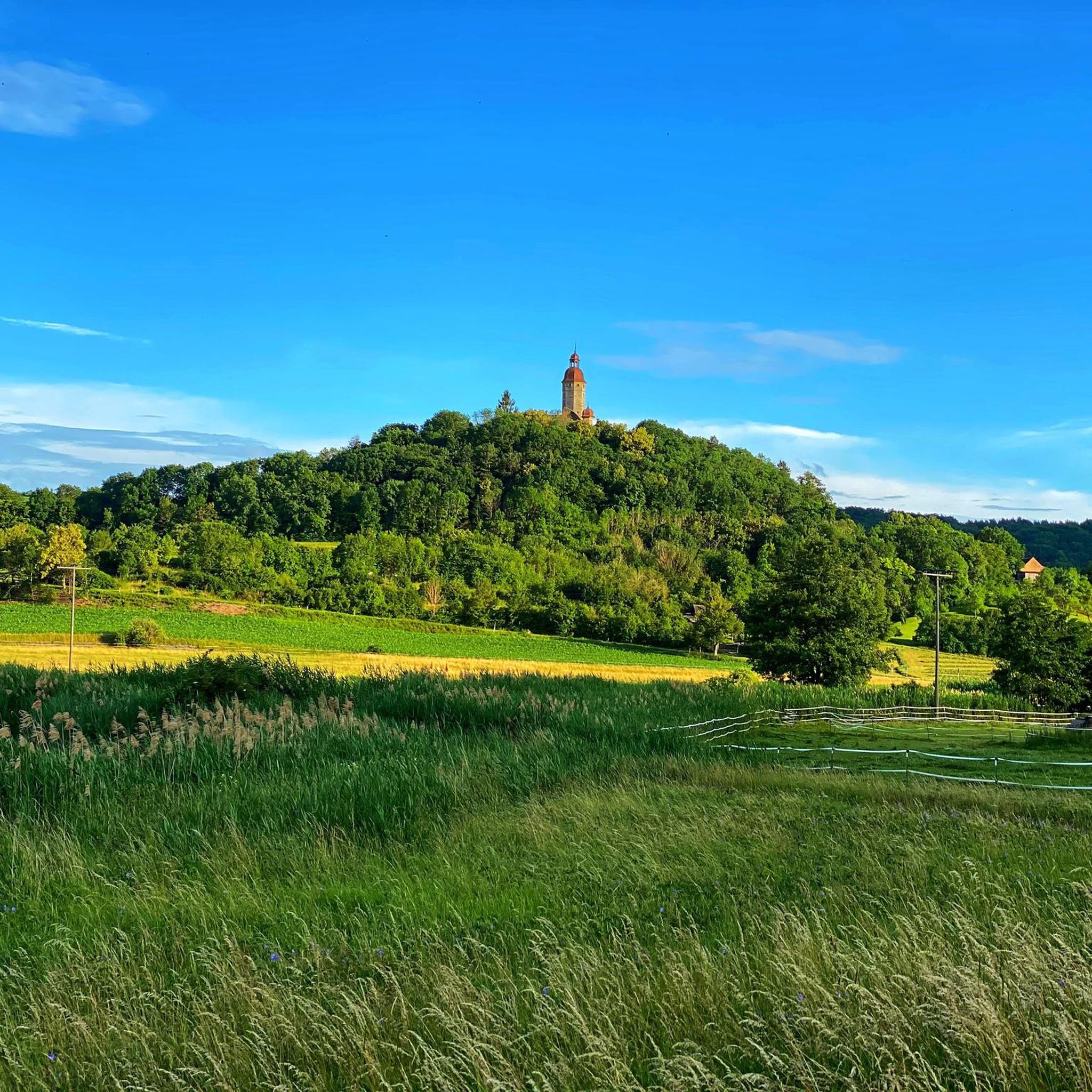
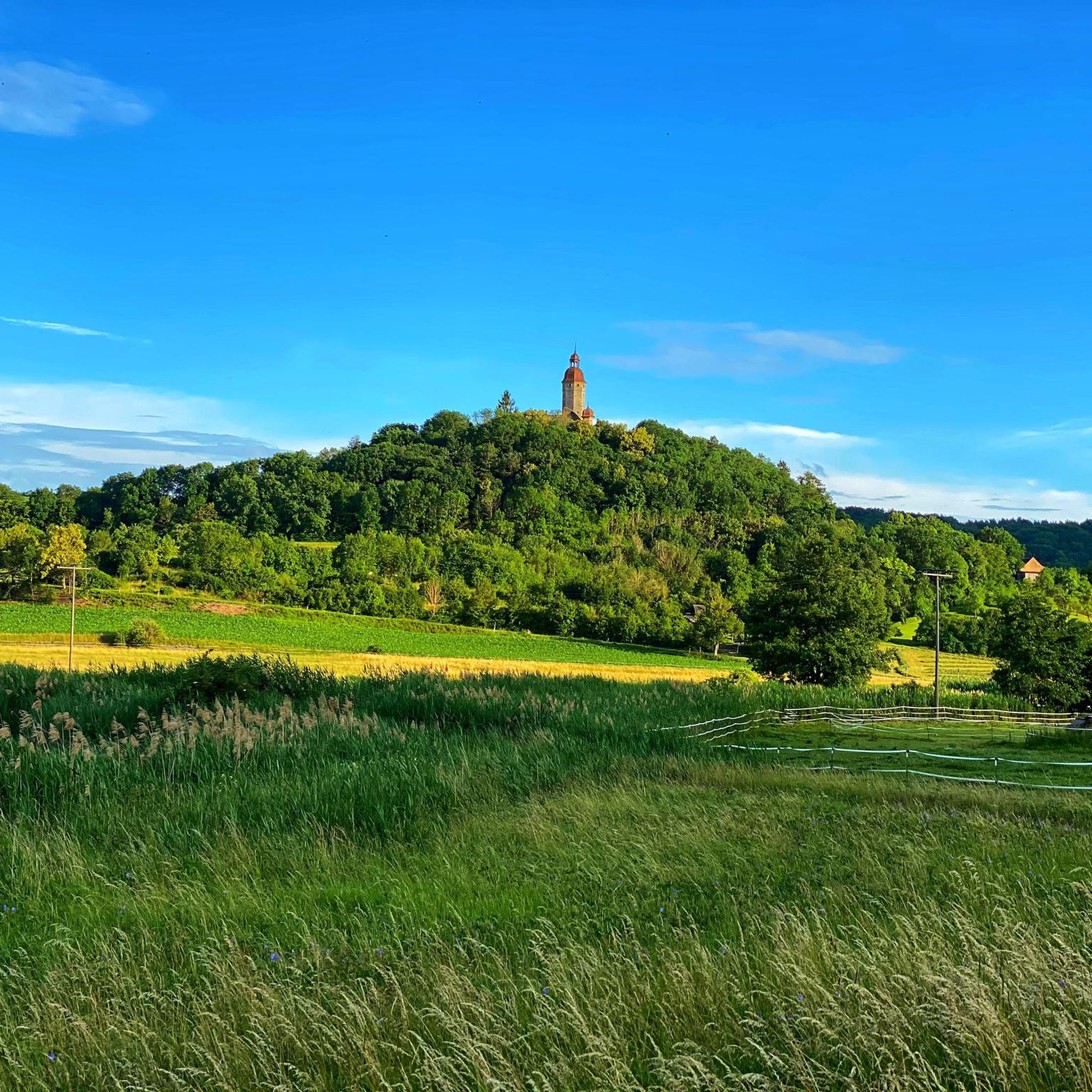
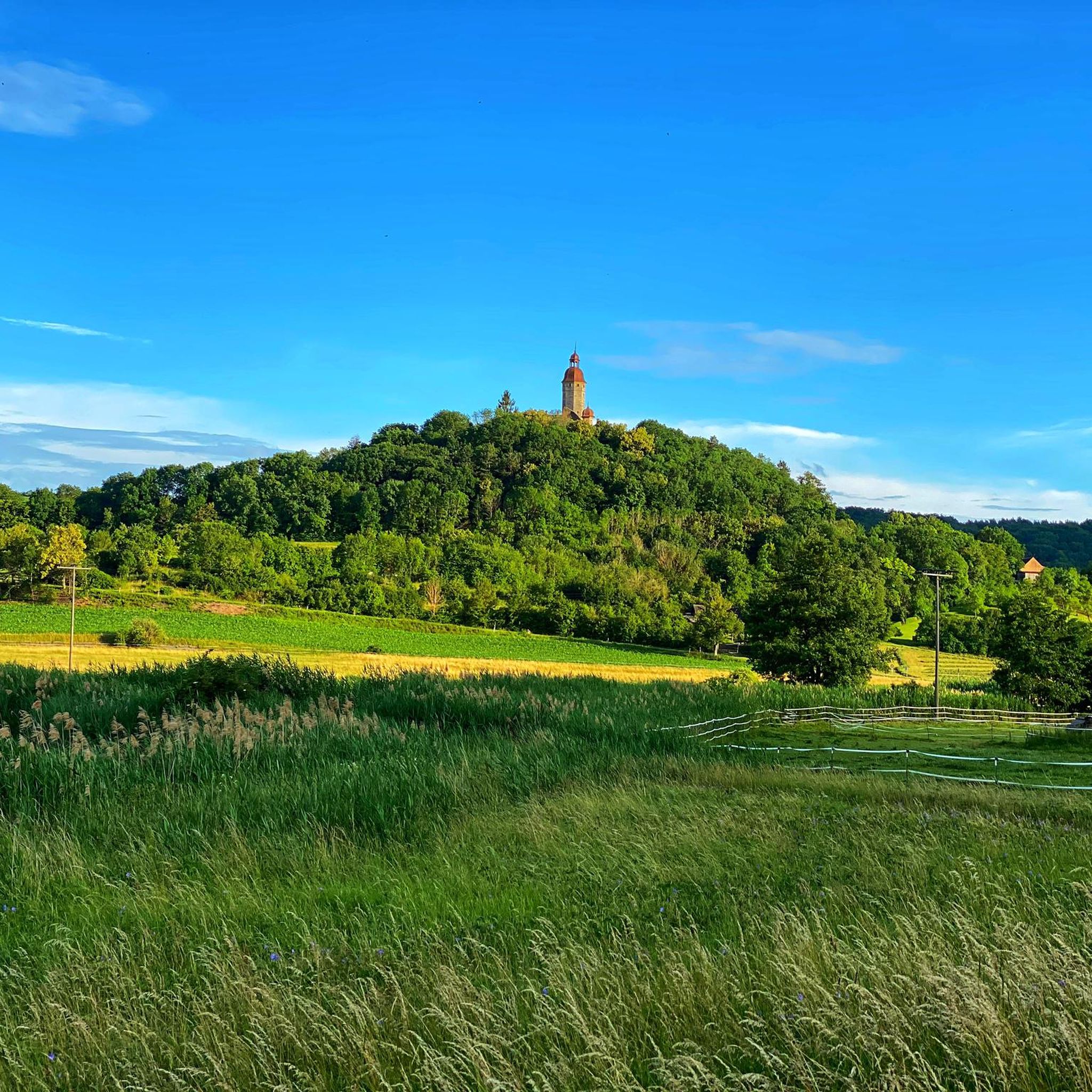
Colmberg Castle sits enthroned on a 511-meter-high mountain spur above the Franconian town of Colmberg in Bavaria. Its history dates back to the 13th century, and it was long owned by the Hohenzollern family. Today, the well-preserved medieval complex houses a castle hotel with a restaurant known for its regional cuisine. The castle offers picturesque views of the surrounding countryside and is a popular starting point for hikes. The 15th-century castle chapel is also a popular venue for weddings.
2
0


The history of the castle can only be deduced from the documents from the 13th century onwards; all claims about the period before that are purely speculative. The castle first appears explicitly in 1269 as being owned by the Counts of Truhendingen, who had the castle administered by bailiffs who exploited the lawless situation at the time by carrying out high-handed attacks. The oldest court records of the imperial city of Rothenburg attest to an almost endless chain of complaints about criminal offences committed by Colmberg officials before the local court after 1274, for example about unpaid debts, breached guarantees, trespassing, robbery, deprivation of liberty, theft and arson. Finally, in 1293, it was not the Truhendingen bailiff at the time who was outlawed, but the entire Colmberg castle. Because the Counts of Truhendingen were getting into increasing financial difficulties, they separated from this fortress with such a bad reputation, a documented robber baron castle. Colmberg was finally sold on July 13, 1318, together with the town of Leutershausen and the surrounding area, to the Burgrave Friedrich IV of Nuremberg for 6,200 pounds (Swabian) Haller Pfennig. Source: Wikipedia
3
0

There is said to have been a settlement here as early as the time of the Celts. At the beginning of the 8th century. The area was taken over by the Frankish kings as a hunting area. Towards the end of the 8th century. A palisade castle was then built, which was taken over by the Hohenstaufens in the 12th century. was expanded into an imperial castle. The castle later came into the possession of the Hohenzollerns, who lived there for several centuries.
8
0

A beautiful area. Always fun and a must!
2
0

Marketplace Bad Windsheim
2
1
Frequently Asked Questions
What historical and cultural sites are there to explore around Flachslanden?
Flachslanden and its surroundings offer a rich history. You can visit the 10th-century St. Laurentius Church in Flachslanden, or the impressive 12th-century Schloss Virnsberg, which combines a hilltop and moated castle (guided tours available upon request). Don't miss the artistic Heiliges Grab (Holy Sepulchre) in St. Dionysius church in Virnsberg, accessible year-round. Other notable sites include the Deutschordenskirche in Sondernohe and the Post and Local History Museum in Flachslanden. For a broader historical experience, consider a trip to the Ansbach Residence, an 18th-century palace, or the historic Market Square Bad Windsheim.
Are there any natural attractions or outdoor educational trails in the area?
Yes, Flachslanden boasts several natural features and educational trails. Explore the Naturlehrpfad (Nature Trail) near the "Landschaftsweiher" and at Schlittenberg, which features a tree trunk gallery, native shrubs, and an insect hotel. You can also visit the Peasant and Herb Garden on Hammerweg, cultivating about 80 different herbs, or the Obstlehrpfad (Fruit Tree Educational Trail) in Ruppersdorf. The region is also characterized by scenic valley landscapes formed by the Rezat, Bibert, Mettlach, and Zenn rivers, perfect for enjoying Franconian scenery.
What kind of outdoor activities can I do near Flachslanden's attractions?
The area around Flachslanden is ideal for various outdoor activities. You'll find numerous marked hiking and cycling routes. For road cycling, explore routes like the "View of Dietenhofen Church – Bibert Valley Cycle Path loop" or "Lower Town Gate, Leutershausen – Upper Gate Leutershausen loop." Runners can enjoy trails such as the "Running loop from Flachslanden" or the "Lake Sonnensee – Sonnensee loop." Gravel biking enthusiasts have options like the "Biberttalgrund – Old High Road loop." You can find more details on these and other routes in the Road Cycling Routes, Running Trails, and Gravel Biking guides for Flachslanden.
Are there family-friendly attractions or activities in Flachslanden?
Absolutely! Families can enjoy the Grenzsteinplatz & Hainbuchen-Labyrinth (Boundary Stone Square & Hornbeam Labyrinth) in Flachslanden, which is freely accessible year-round and has a nearby children's playground. The Naturlehrpfad (Nature Trail) is also an engaging outdoor experience for all ages. Many historical sites like the Ansbach Residence and Market Square Bad Windsheim are considered family-friendly, offering cultural insights in an accessible setting. Hoheneck Castle, while not always open inside, is a youth education center and its surroundings offer picturesque views for a family outing.
What is the best time of year to visit Flachslanden for outdoor activities?
The region around Flachslanden is beautiful in spring and autumn, offering pleasant temperatures for hiking and cycling. Spring brings blooming flora, especially noticeable on the nature and herb trails, while autumn showcases vibrant fall foliage in the scenic valleys. Summer is also suitable for outdoor activities, with opportunities for swimming at places like Sonnensee. Winter offers a different charm, though specific winter activities might be limited to hiking on cleared paths.
Where can I find a unique combination of history and nature in one place?
The Grenzsteinplatz & Hainbuchen-Labyrinth in Flachslanden offers a unique blend. It features an exhibition of approximately 15 historical boundary stones, explaining their significance in Franconia, alongside a hornbeam labyrinth. This site is freely accessible year-round and provides both historical insight and a pleasant natural setting, complete with a nearby children's playground.
Can I visit a castle near Flachslanden?
Yes, you can visit Schloss Virnsberg, a 12th-century castle complex that uniquely combines a hilltop castle with a moated castle. While typically closed to the public, guided tours can be arranged upon request. Another notable castle is Hoheneck Castle. Although its interior is not regularly open, you can enjoy picturesque views around its moat, and it occasionally hosts special events.
What do visitors enjoy most about the attractions around Flachslanden?
Visitors particularly appreciate the blend of historical charm and natural beauty. The Market Square Bad Windsheim is loved for its beautiful historic city center, town hall with an astronomical clock, and the town church St. Kilian. The Ansbach Residence is highly valued for preserving its 18th-century original state, including ceiling paintings, a mirror cabinet, and the beautiful French-Baroque Hofgarten and Orangery. The scenic views around Hoheneck Castle are also a favorite among visitors.
Are there any gardens to visit in Flachslanden?
Yes, Flachslanden features the Peasant and Herb Garden (Bauern- und Kräutergarten) on Hammerweg. Established in 2000, this garden cultivates approximately 80 different herbs and shrubs, each identified with descriptive signs. It's a lovely spot to learn about local flora and enjoy a peaceful stroll. Additionally, the Hofgarten in Ansbach, with its French-Baroque style and orangery, is also worth a visit.
What is the significance of the Heiliges Grab in Virnsberg?
The Heiliges Grab (Holy Sepulchre) in Virnsberg, located within the St. Dionysius church, is a remarkably artistic and historically significant piece from around 1770. It is considered one of the most beautiful and art-historically important Holy Sepulchres of its kind in the region and is accessible for viewing year-round behind a glass barrier.
Can I go camping near Flachslanden?
Yes, for those who wish to stay closer to nature, there is a camping site available at Camping- und Zeltplatz "Sonnensee". This provides an excellent base for exploring the surrounding natural landscapes and engaging in outdoor activities.
What is the Post and Local History Museum in Flachslanden about?
The Post and Local History Museum (Post- und Heimatmuseum) in Flachslanden is a small museum that houses exhibits on the postal history of the area. Its collections date back to the 1960s, offering a glimpse into the local heritage and communication methods of the past.
Most popular routes around Flachslanden
Most popular attractions around Flachslanden

Get inspired with the komoot mobile app


Explore more
Still not found the Highlight you’re looking for? See guides of the top attractions in other regions:
