Attractions and Places To See around Monkhopton - Top 20
Attractions and places to see around Monkhopton include natural features and historical sites within Shropshire. The village is situated near Brown Clee Hill, the highest point in Shropshire, offering panoramic views. The wider region provides access to various landmarks and cultural sites, particularly around Bridgnorth. This area combines rural tranquility with diverse natural beauty and historical significance.
Best attractions and places to see around Monkhopton
- The most popular attractions is Abdon Burf Summit (Highest Point of Brown Clee Hill), a viewpoint that is the highest point in Shropshire. This summit sits at 1,771 feet (540 m) and features air traffic control masts.
- Another must-see spot is Clee Burf, a historical site and summit. It offers views of the Shropshire Hills AONB and contains remains of Iron Age hillforts.
- Visitors also love Bridgnorth Bridge, a historical site in Bridgnorth. The bridge has a long history, with records dating back to 1272, and was rebuilt in 1812.
- Monkhopton is known for its natural features, historical sites, and cultural attractions. The area offers a variety of attractions to see and explore, from hill summits to historical bridges.
- The attractions around Monkhopton are appreciated by the komoot community. There are 96 upvotes and 75 photos shared by users for these highlights.
Last updated: October 20, 2026
Abdon Burf Summit (Highest Point of Brown Clee Hill)
Highlight • Viewpoint
This summit sits at 1,771 feet (540 m) and is also the sight of air traffic control masts which, while a little intrusive, are actually quite impressive by themselves. The hill has been the site of numerous wartime plane crashes, perhaps more than any other hill in the country. Today, planes are guided by the towers.
Tip by

Bridgnorth Castle Ruins
Highlight • Monument
Tip by

Sign up now to discover places like this
Get recommendations on the best single tracks, peaks, & plenty of other exciting outdoor places.
Much Wenlock Guildhall
Highlight • Historical Site
The interior of the building retains historic fittings and it was still used for administrative purposes up until quite recently. Inside, you'll learn a lot about the building and feel as though you've taken a rather large step back in time.
Tip by
Bridgnorth Cliff Railway Top Station
Highlight • Structure
Tip by

Bridgnorth War Memorial, Castle Gardens
Highlight • Monument
Bridgnorth's war memorial is dramatic on at least two counts: its location and its subject. The memorial occupies a prominent site in the Castle Gardens - at the cliff's edge, facing out into the void. The plinth is topped by the figure of a soldier in the battle dress of the Shropshire Light Infantry. He carries a rifle over his shoulder and has his arm stretched out as if he has just thrown a hand grenade.
The sculptor was Adrian Jones, a Shropshire artist born in Ludlow. After serving as a veterinary officer in the Royal Horse Artillery, Jones became a full-time sculptor. He was responsible for several prominent national pieces including the sculpture Peace descending on the Quadriga of War which stands on top of the Wellington Arch in Hyde Park as a memorial to King Edward VII.
The memorial bears the inscription:
Erected in honour of the men of Bridgnorth who served their country in the Great War 1914-1919 and to the ever glorious memory of those who fell. Also to the memory of those who fell in the Second World War 1939-1945.
They whose names are recorded hereon were numbered among those who, at the call of King and Country, left all that was dear to them, endured hardness, faced danger & finally passed out of the sight of men by the path of duty and self-sacrifice, giving up their own lives that others might live in freedom. Let those who come after see to it that they be not forgotten.
The names and ranks of 143 persons who died in the Great War and 48 who died in the Second World War are listed.
Tip by

Sign up for free to discover even more attractions around Monkhopton.
Already have an account?
Start today with a free account
Your next adventure awaits.


Tips from the Community

These picturesque ruins are well worth seeing, and the back story concerning the destruction of the castle during the Civil War is fascinating.
0
0

There is the bracket of the original Trig Point cemented into the path that leads to the Toposcope.
0
0

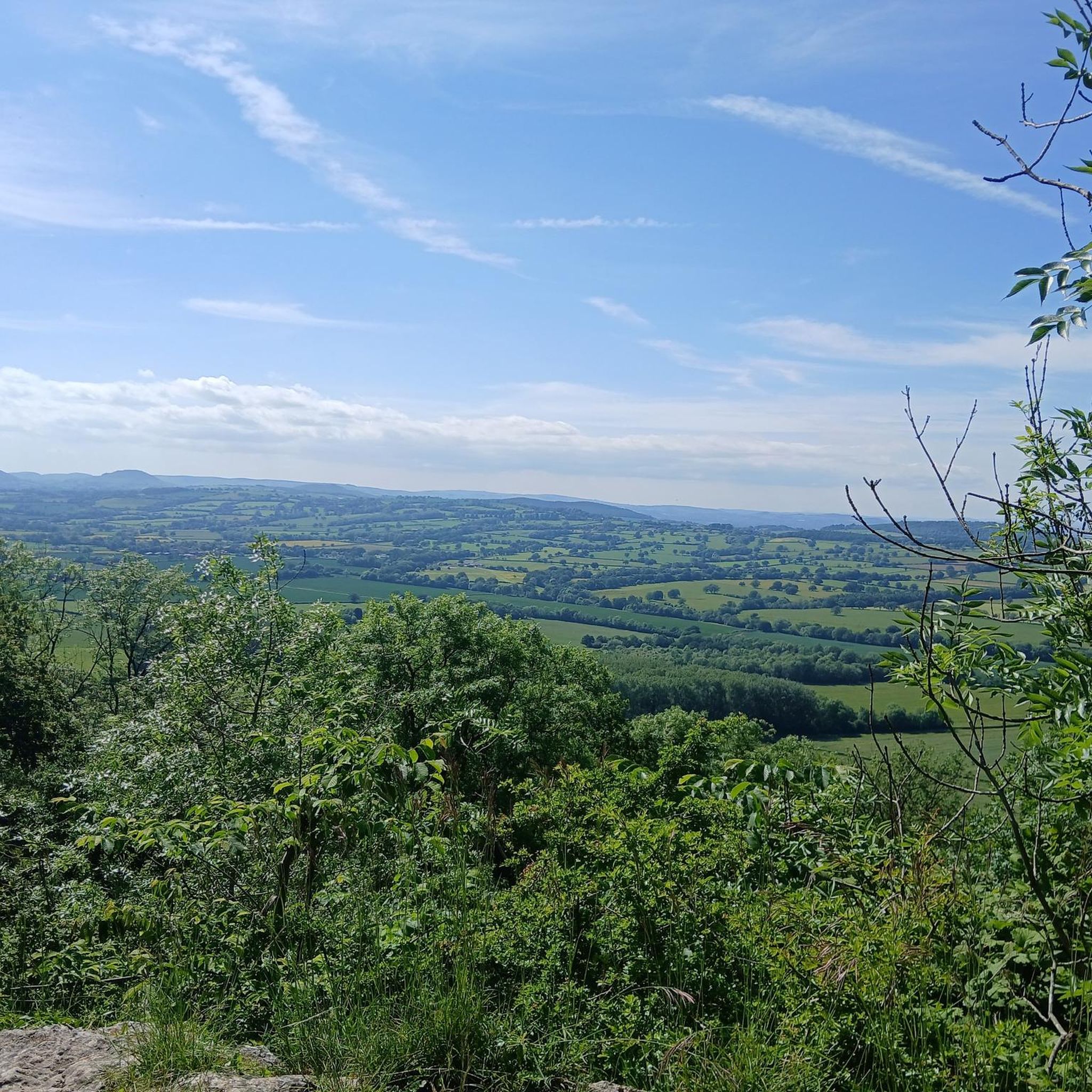
Incredible 360 views all around. A great muddy descent from the top.
0
0

Legend tells us that the Guildhall at the end of the High Street was built in two days. This seems astounding until you notice that it is largely timber framed. If all the timber was already on site and there was a sufficient workforce available erecting the frame of the building could well have taken only a couple of days. This was how such buildings would have been built from mediaeval times. Look out for two pairs of manacles attached to one of the posts in the front of the building.
0
0

Most passenger cliff railways were built at seaside resorts and the first appeared at Scarborough in 1875. The zenith of cliff railway construction was in the 1890s and 1900s. The pre-eminent of the cliff railway engineers during this period was George Croydon Marks. In 1890 a public meeting was called to discuss a new means of communication between the High Town and Low Town of Bridgnorth, avoiding the need to scale the 200 or so steps. The meeting was reported in the local press, and the matter came to the attention of Mr. George Croydon Marks. Marks and Mr. George Newnes, M.P. subsequently laid a proposal before the town council for the erection of a Patent Cliff Railway, or inclined lift. Plans were finally accepted for a route from the bottom of the Stoneway Steps to the end of the Castle Walk and consequently a company entitled The Bridgnorth Castle Hill Railway Company Ltd was registered in 1891. The actual start of the construction work began on 2nd November 1891. Initial work was much hindered by the discovery of caves set into the cliff-face – one cave was so large it was necessary to support the roof to avoid slippage and subsidence. Another problem facing the construction work were the many houses built into the cliff face around the site – in some cases, the effect of excavating the cutting was to remove supporting walls from the poorly constructed dwellings. At either end of the track station buildings were constructed. The original patented design of the railway was for a single track with two cars, with a crossing point mid-way between top and bottom, but this was abandoned in favour of a double track. When finished, the track measured 201 ft long, with a vertical rise of 111ft. This gave the railway an incline of 1:81, or 33.52°, the steepest in inland Britain. The rails were secured to sleepers which were themselves bolted into solid rock. At the upper end of the track, the hauling pulley was built on solid concrete foundations, the supporting buttresses of which carried a considerable distance down the track. Flat bottomed rails were used and the entire line was ballasted with concrete to avoid any slippage. Horizontal rollers were set into the track at regular intervals to support the steel ropes. Each car was mounted on a triangular frame of steel girders which housed a 2,000 gallon water tank. The method of power was simple – the tank on the car at the top was filled with water from a 30,000 gallon tank mounted on the roof of the top station. When the tank was full, the total weight of the car was more than 9 tons, easily enough to counterbalance the bottom car with its 18 passengers. As the top car was being filled, the tank on the bottom car was being emptied, and the water pumped directly up to the top station tank by means of a pair of pumps driven by independent Forward Gas Engines. The cars were linked by a pair of steel ropes, the breaking strain of which was calculated to be 15 times the normal working load of the cars. In addition, the cars were fitted with rapid gripper brakes which automatically engaged should the rate of descent become too great. A second manually operated brake was the responsibility of the brakeman who rode on the bottom platform of each car. The railway opened on 7th July 1892. The ceremony was performed by the Mayor, John Anderson, a boot and shoe dealer born in Paisley, and in celebration the local townspeople enjoyed a public holiday. Between July and September 1892 over 50,000 passengers used the railway. The railway ran continuously for the next 41 years, until April 1933. In May, 1934 it was re-opened by Frank Myatt, a brewer and hotelier who had been Mayor of Wolverhampton. His family continued to own the cliff railway for another sixty-two years. The drivers were eventually dispensed with, in favour of a hand operated brake operated from the top station. The brake on the cars were made to operate only in the event of a rope failure. In 1943, the gas engines were reaching the end of their working life, and this prompted a major rebuild of the railway. The hydraulic system of counterbalanced cars was replaced with an electrically operated mining type motor of 32 hp. The haulage system consists of 2 main ropes – one winds onto the one drum as the other winds off. In addition, a safety rope connects the 2 cars via the original head wheel. The original emergency brake was retained, hence in the event of a rope break the car would grip the rails until they came to a halt. The speed of the cars was regulated by air brakes acting on the haulage drums, and proximity devices which would act to slow the cars as they approached either end of the track. In addition, further safety improvements included interlocked loading doors at top and bottom, and a dead man’s pedal speed controller. The conversions were carried out by Messrs. Francis & J.S. Lane, with electrical gear supplied by Metropolitan-Vickers Electrical Co. Ltd. The effect of the conversion was to double the speed of the railway, up to a maximum speed of 250 feet per minute. The railway reopened in December 1944, and showed an immediate increase in traffic. In 1955, the passenger cars were replaced with a more modern type, with improved lighting. In 1996 the entire share capital of the company was acquired by Jean and Allan Reynolds, who spent the next fifteen years investing vast sums of money in restoring and improving the cliff railway. By a strange twist of fate, the cliff railway has come full circle and is now owned by cousins of George Croydon Marks. George had been born into engineering at the Woolwich Arsenal, where his father had worked. His parents had moved there from Somerset in their early twenties to escape rural poverty. His father had been the son of a poor farm labourer in the Blackdown Hills adjacent to Exmoor. They had family bonds with the north Devon Jones family. Bridgnorth Cliff Railway was purchased by the Tipping family in 2011. Two years later it was discovered that one of their maternal great-grandfathers, who came from Parracombe, north Devon, had been third cousin to George Croydon Marks. Marks was also a distant cousin of the branch of the Jones family which had founded another cliff railway at Lynton four miles from Parracombe. George Croydon Marks, who was knighted in 1911 and ennobled as Baron Marks of Woolwich in 1929, was Bridgnorth Cliff Railway’s first managing director from 1891 until 1901. His brother, Edward, another engineer, became its second managing director from 1901 until 1924. The cliff railway remains a constant in the town of Bridgnorth. Its current owners and staff are very aware of that and its proud heritage.
0
0
Bridgnorth Castle was founded in 1101 by Robert de Belleme, the son of the French Earl, Roger de Montgomery, who succeeded his father to become the Earl of Shrewsbury. Its principal feature, a square great tower, was built during the reign of Henry II. During the Civil War, Bridgnorth was one of the Midlands’ main Royalist strongholds and in 1642 many Royalist troops were garrisoned there. In 1646, Cromwell’s Roundheads arrived with orders to take Bridgnorth for the Parliamentarians from the garrison led by Sir Robert Howard. Following a three week siege, Cromwell was successful and he ordered that the castle be demolished. By 1647 little of the structure remained. The Parliamentarians left it much as it is today, the stone from the castle being taken and used to repair the town’s damaged buildings. Bridgnorth Castle now leans at an angle of 15 degrees, 4 times the lean of the leaning tower of Pisa. The castle grounds were excavated over 3 days by Time Team, clarifying the layout of the castle and the history of its construction.
0
0
Bridgnorth war memorial stands in Castle Gardens on East Castle Street. The bronze figure of a soldier of the Shropshire Light Infantry stands arm outstretched, in the act of throwing a grenade or bomb, atop a plinth with pediment. An inscription and names are found on plaques on the sides of the plinth. Bridgnorth's war memorial is dramatic on at least two counts: its location and its subject. The memorial occupies a prominent site in the Castle Gardens - at the cliff's edge, facing out into the void. The plinth is topped by the figure of a soldier in the battle dress of the Shropshire Light Infantry. He carries a rifle over his shoulder and has his arm stretched out as if he has just thrown a hand grenade. The sculptor was Adrian Jones, a Shropshire artist born in Ludlow. After serving as a veterinary officer in the Royal Horse Artillery, Jones became a full-time sculptor. He was responsible for several prominent national pieces including the sculpture Peace descending on the Quadriga of War which stands on top of the Wellington Arch in Hyde Park as a memorial to King Edward VII. The memorial bears the inscription: Erected in honour of the men of Bridgnorth who served their country in the Great War 1914-1919 and to the ever glorious memory of those who fell. Also to the memory of those who fell in the Second World War 1939-1945. They whose names are recorded hereon were numbered among those who, at the call of King and Country, left all that was dear to them, endured hardness, faced danger & finally passed out of the sight of men by the path of duty and self-sacrifice, giving up their own lives that others might live in freedom. Let those who come after see to it that they be not forgotten. The names and ranks of 143 persons who died in the Great War and 48 who died in the Second World War are listed.
0
0

The castle was founded in 1101 by Robert de Belleme the son of the French Earl, Roger de Montgomery, who succeeded his father to become the Earl of Shrewsbury, possibly on the site of a Saxon burh built in 912.
0
0
Frequently Asked Questions
What natural features can I explore near Monkhopton?
The area around Monkhopton is rich in natural beauty, most notably Abdon Burf Summit (Highest Point of Brown Clee Hill), which is Shropshire's highest point at 1,771 feet (540 m) and offers panoramic views. Its second summit, Clee Burf, also provides excellent views of the Shropshire Hills Area of Outstanding Natural Beauty (AONB).
Are there historical sites to visit near Monkhopton?
Yes, the region boasts several historical sites. You can visit Bridgnorth Bridge, which has a history dating back to 1272. Clee Burf also contains remains of Iron Age hillforts. Further afield, explore the 16th-century Much Wenlock Guildhall, or National Trust properties like Morville Hall, Wilderhope Manor, and Benthall Hall.
What outdoor activities can I do near Monkhopton?
Monkhopton is a great base for outdoor adventures. You can find numerous hiking trails, including an easy loop around Abdon Burf. For cycling enthusiasts, there are MTB trails and gravel biking routes that explore the Shropshire Hills and the Severn Valley.
Are there family-friendly attractions around Monkhopton?
Absolutely! Families can enjoy a ride on the historic Bridgnorth Cliff Railway, or get creative at The Arty Space in Bridgnorth. For animal lovers, Vallets Farm Barn Alpaca Walks, Hoo Zoo and Dinosaur World, and Acton Scott Working Farm offer engaging experiences. The West Midlands Safari Park is also a short drive away.
What is unique about Bridgnorth, which is close to Monkhopton?
Bridgnorth is uniquely situated atop a sandstone cliff, divided into a high town and a low town by the River Severn. It offers spectacular views and is home to the historic Bridgnorth Cliff Railway, which has been transporting people up and down the 111 ft cliffs for over a century. The town also features the picturesque Bridgnorth Bridge.
Can I find any accessible attractions in the area?
Yes, the Bridgnorth Cliff Railway Top Station is noted as wheelchair accessible, providing an opportunity to experience this historic transport and enjoy views of Bridgnorth.
What kind of views can I expect from the hill summits?
From Abdon Burf Summit and Clee Burf, you can expect fantastic panoramic views of the Shropshire countryside, extending to other counties on clear days. These summits are part of Brown Clee Hill, the highest point in Shropshire, offering expansive vistas over the Shropshire Hills AONB.
Are there any adventure activities available nearby?
For those seeking adventure, The Edge Adventure Activities in Much Wenlock offers a variety of activity-based experiences. Additionally, the Ironbridge Gorge Mystery Treasure Trail provides an outdoor treasure hunt for a fun challenge.
What are some lesser-known historical gems in the region?
Beyond the more prominent sites, you might enjoy exploring Monk Hall, located near Monkhopton village, which has historical roots dating back to 1182. While its public accessibility varies, its timber-framed structure offers a glimpse into the area's past. The remains of Iron Age hillforts on Clee Burf also provide a fascinating historical context.
What do visitors particularly enjoy about the attractions around Monkhopton?
Visitors frequently praise the stunning views from the hill summits, especially from Abdon Burf and Clee Burf, often describing them as magnificent snack stops. The charm and history of Bridgnorth, with its unique cliff railway and river walks, are also highly appreciated. The blend of natural beauty and historical intrigue makes the area appealing.
Can I find places for wildlife spotting near Monkhopton?
The open heathland on the western flanks and summit of Brown Clee Hill, including Abdon Burf, provides a natural habitat for various wildlife. Exploring the rural landscapes and AONB areas offers opportunities for birdwatching and observing local fauna in their natural environment.
Most popular attractions around Monkhopton

Get inspired with the komoot mobile app


Explore more
Still not found the Highlight you’re looking for? See guides of the top attractions in other regions:
