Attractions and Places To See around Potters Marston - Top 20
Best attractions and places to see around Potters Marston include historical sites and natural landscapes in Leicestershire. This village offers insights into historical rural life and medieval industry. The surrounding open countryside provides opportunities for walks and exploring local landmarks. The area features a mix of historical points of interest and unique recreational spots.
Best attractions and places to see around Potters Marston
- The most popular attractions is Stoney Cove National Dive Centre, a lake that is a large…
Last updated: May 6, 2026
Stoney Cove National Dive Centre
Highlight • Lake
Tip by

St James' Church (The Battlefield Church)
Highlight • Historical Site
Tip by

Sign up now to discover places like this
Get recommendations on the best single tracks, peaks, & plenty of other exciting outdoor places.
Sign up for free
Church of All Saints, Peatling Magna
Highlight • Historical Site
The village's notable landmark is the Church of …
Tip by
Shenton Station – Battlefield Line Railway
Highlight • Structure
Tip by

Stoney Stanton Quarryman Sculpture
Highlight • Structure
After consulting with residents in the area, it was decided that …
Tip by
Sign up for free to discover even more attractions around Potters Marston.
Sign up for free
Already have an account?
Start today with a free account
Your next adventure awaits.
Login or Signup



Tips from the Community


The church of St James mostly dates from the 14th century and probably replaces an earlier church on the site. The church consists of a low west tower, nave, chancel and south chapel. The circular arcade dates to the 13th century, the low west tower has a brick upper stage which was rebuilt in the early 19th century. The font is probably 14th century. There is a monument to William Roberts who died in 1633 a recumbent alabaster effigy. He lies in armour with his two wives, one kneeling at his feet. The inscription reads; “here lyeth interred the body of Sir William Roberts, who in his life-time, being devoted both to hospitality and charity, among other memorable works erected, out of a pious mind, a hospital for six poor men adjoining the churchyard and endowed it with 30 pounds worth of land yearly for their maintenance for ever”.
0
0

The tree that was felled had been the village Christmas tree with lights etc for years, and this seemed a good way to commemorate both it and the mining in the area. Lots of quiet lanes round about and the old Fosse Way can be found nearby.
0
0


Saint James Church is known as 'The Battlefield Church,' a title attributed to an aged wooden sign located in the garden across from the church. Tradition holds that Richard III conducted Mass here on the eve of the Battle of Bosworth Field in 1485. Within the church, numerous artifacts linked to Richard III are on display, including needlepoint kneelers crafted by members of the Richard III Society. Adjacent to the church stands an impressive row of 17th-century almshouses.
2
0
Peatling Magna, formerly known as "Great Petlyng" and later as "Great Peatling," is a village in the Harborough district of south Leicestershire. The village's notable landmark is the Church of All Saints, primarily built during the 14th and 15th centuries, featuring fine examples of carved woodwork from different periods. In 1265, Peatling Magna gained national attention when, after the Battle of Evesham, the villagers refused to cooperate with the victorious royal forces, citing concerns for the welfare of the realm. This led to a court appearance recorded in the Plea Rolls of 1266, highlighting the village's resistance and reflecting communal ideas at the smallest village level in 13th-century England.
0
0

After the tree was felled at Stoney Stanton, the parish council decided to do something with the remaining trunk. After consulting with residents in the area, it was decided that a sculpture of a quarryman would be made out of the trunk.
1
0
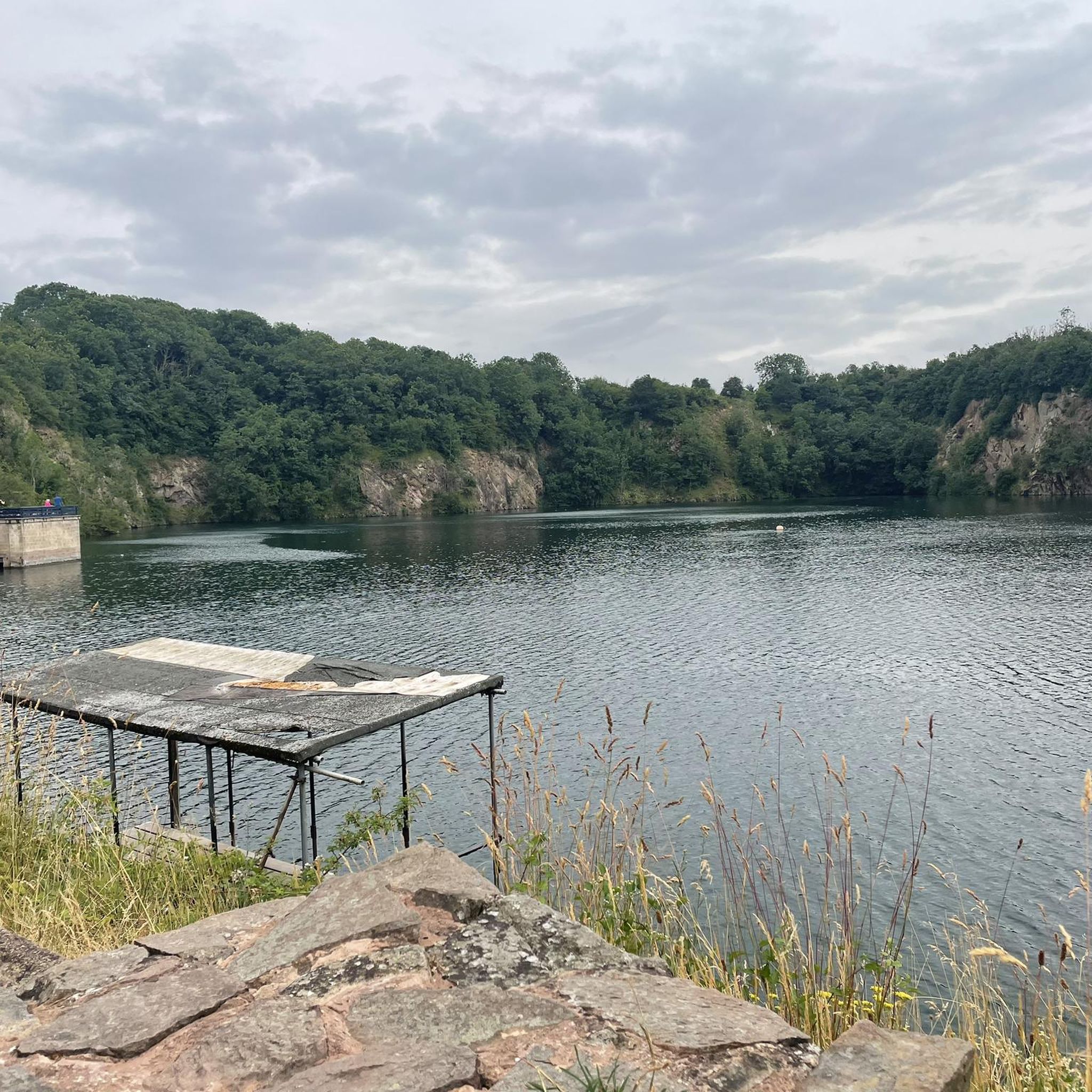
Stoney Cove is a large flooded quarry that hosts the UK National Dive Centre. There is a heated pool for dive training, and the bed of the cove is described as an underwater adventure park! Above the surface, there is a pub/cafe and it's also a great spot to catch a glimpse of peregrine falcons/
2
0
Frequently Asked Questions
What historical sites can I explore in and around Potters Marston?
Potters Marston is rich in history. You can visit the medieval Potters Marston Hall, a moated manor house with parts dating back to the late 15th century, and its nearby Grade II listed Dovecote. The modest Church of St Mary, believed to be one of Leicestershire's smallest, also has a unique history, having served as a barn and schoolhouse. Additionally, the area was a significant center for pottery production, with Medieval Kiln Remains indicating the origin of "Potters Marston Ware".
Are there any unique natural attractions or outdoor spots near Potters Marston?
Yes, the area offers several unique outdoor spots. The Stoney Cove National Dive Centre is a large flooded quarry that hosts the UK National Dive Centre, offering an underwater adventure park. For scenic views, the village is nestled within open countryside, providing routes for walkers with views including those from Croft Hill, one of Leicestershire's highest points, and the remaining side of Croft Quarry.
What kind of outdoor activities, like hiking or cycling, can I do in the area?
The countryside around Potters Marston is ideal for outdoor activities. You can find numerous hiking trails, including easy loops from Croft and moderate routes like the "View from Croft Hill – Croft Hill Trig Point loop." For cycling, there are gravel biking and MTB trails available. Explore options like "Malt Kiln Farm Shop – View of St Edith's Church loop" for gravel biking or "View of the Waterway – Path Beside the Pond loop" for MTB. You can find more details on these routes in the hiking, gravel biking, and MTB guides for the area.
Are there family-friendly attractions suitable for children?
Absolutely! Families can enjoy a visit to Shenton Station – Battlefield Line Railway, where you can see steam trains running and access the Bosworth Battlefield Trail. Another interesting spot is the Stoney Stanton Quarryman Sculpture, a unique carving from a felled tree that commemorates the village's mining history. The surrounding countryside also offers many easy walking routes suitable for families.
Where can I learn about the Battle of Bosworth Field near Potters Marston?
You can connect with the history of the Battle of Bosworth Field by visiting Shenton Station – Battlefield Line Railway, which provides access to the Bosworth Battlefield Trail. Additionally, St James' Church (The Battlefield Church) is known for its historical ties, with tradition holding that Richard III conducted Mass there on the eve of the battle. The church displays numerous artifacts related to Richard III.
What is the significance of Potters Marston's pottery history?
Potters Marston was a significant center for pottery production during the medieval period, operating between approximately 1100 and 1300 AD. The "Potters Marston Ware" produced here constitutes a substantial portion of the medieval pottery found in Leicester from that era. Remains of these Medieval Kilns can still be found, offering a glimpse into this historical industry.
Are there any good places to stop for food or drinks near the attractions?
Yes, there are options for refreshments. The Stoney Cove National Dive Centre has a pub/cafe on site. For a local experience, Gilmorton Post Office, General Store and Delicatessen is a great spot for coffee, cakes, and pasties. You can also find traditional pubs like the Heathcote Arms in Croft or the Elephant & Castle in Thurlaston nearby.
What do visitors enjoy most about the attractions around Potters Marston?
Visitors particularly enjoy the unique experiences offered, such as the underwater adventure park at Stoney Cove National Dive Centre and the opportunity to see steam trains at Shenton Station – Battlefield Line Railway. The historical depth of sites like St James' Church and the scenic beauty of the countryside walks are also highly appreciated.
Are there any easy or short walking trails suitable for a leisurely stroll?
Yes, the area offers several easy walking trails. You can find short, circular walks around the village and nearby. For example, there's an easy hiking loop from Croft, and the "Croft Hill Trig Point – View from Croft Hill loop from Huncote" is also considered easy. These trails are perfect for leisurely strolls through the open countryside.
What is the best time of year to visit Potters Marston for outdoor activities?
The best time to visit Potters Marston for outdoor activities like walking and cycling is generally during the spring, summer, and early autumn months (April to October). During these periods, the weather is typically milder and drier, making for more pleasant conditions to explore the countryside and historical sites. Winter walks can also be charming, but be prepared for colder, potentially wetter weather.
Is there parking available at the main attractions?
Yes, parking is available at some of the main attractions. For instance, Shenton Station – Battlefield Line Railway has a small car park. For other attractions and walking routes, it's advisable to check local signage or specific highlight details for parking availability, as some village areas may have limited options.
Can I bring my dog on walks around Potters Marston?
Many of the countryside walks and trails around Potters Marston are dog-friendly, allowing you to enjoy the natural beauty with your canine companion. However, it's always recommended to keep dogs on a lead, especially when walking through fields with livestock or in areas where wildlife might be present, and to follow the Countryside Code.

Get inspired with the komoot mobile app


Explore more
Still not found the Highlight you’re looking for? See guides of the top attractions in other regions:
