Attractions and Places To See around Earnock - Top 20
Best attractions and places to see around Earnock include a blend of historical sites, natural features, and community spaces within this residential area of Hamilton, South Lanarkshire. The region is characterized by its natural woodlands, such as the Neilsland and Earnock Community Woodlands, which offer walking paths and diverse wildlife. Historical infrastructure and landmarks provide insights into the area's past, complementing the natural landscape.
Best attractions and places to see around Earnock
- The most popular attractions is Strathclyde Loch,…
Last updated: May 6, 2026
Strathclyde Loch
Highlight • Trail
Tip by

Duke's Monument
Highlight • Monument
Tip by

Sign up now to discover places like this
Get recommendations on the best single tracks, peaks, & plenty of other exciting outdoor places.
Sign up for free
Blantyreferme World War II Anti-Aircraft Battery
Highlight • Monument
Tip by

Bothwell Castle
Highlight • Historical Site
Tip by

Calderglen Zoo
Highlight • Structure
Tip by

Sign up for free to discover even more attractions around Earnock.
Sign up for free
Already have an account?
Start today with a free account
Your next adventure awaits.
Login or Signup




Tips from the Community

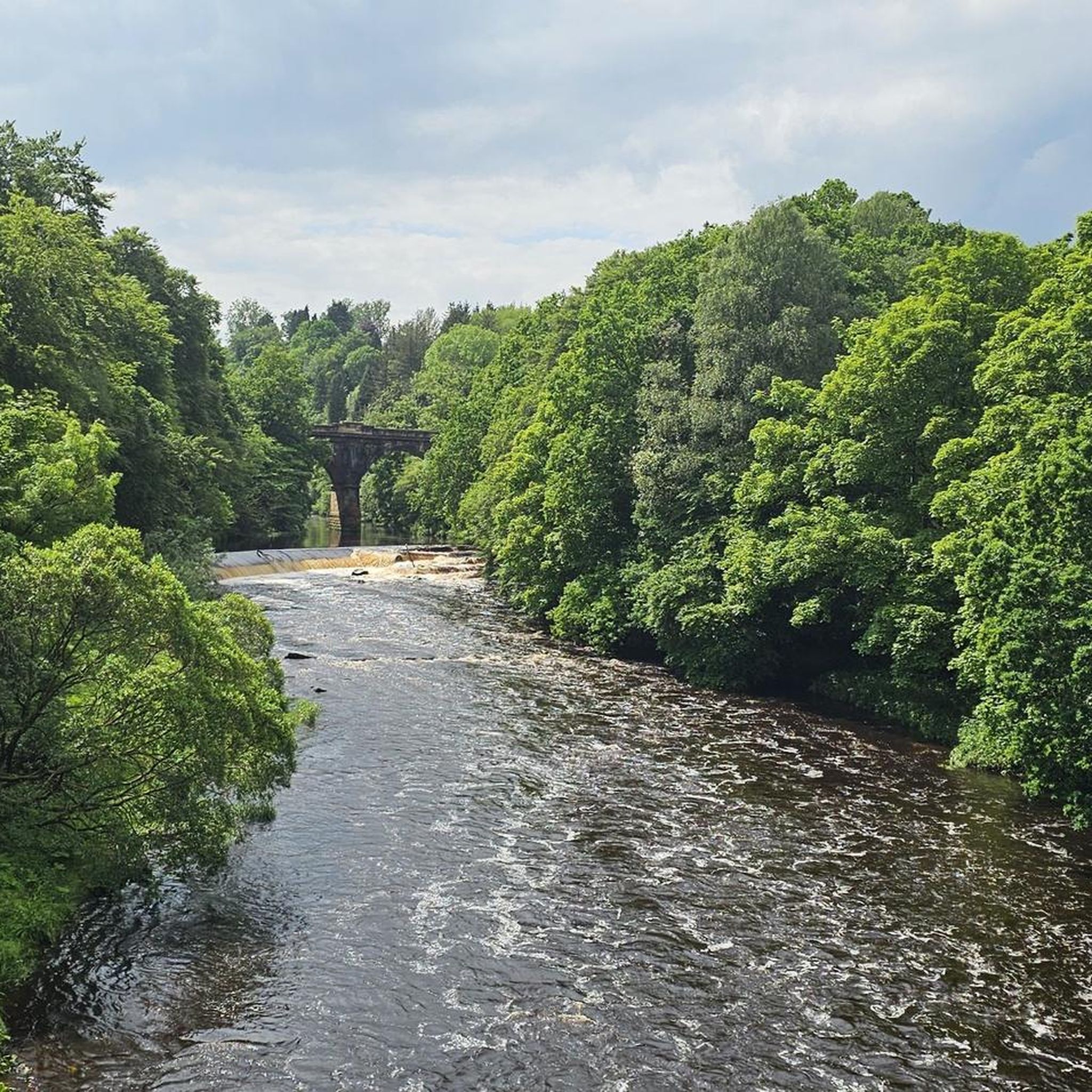
“Strathclyde Loch is more than just water: beneath its surface, Bothwellhaugh, a mining village swept away in the 1970s, vanished. Today, only a cairn remains as a reminder of the houses, schools, and shops. There's also a Roman fort and an ancient road (yes, Watling Street is still here). Final warning: In 2012, a norovirus outbreak left 57 swimmers unconscious. Water caution.
0
0

"Calderglen Zoo opened in 1982 and is still home to over fifty different animal species, some of which are unfortunately critically endangered. The zoo is just around an acre in size, but here you will still be able to see meerkats, wallabies, coatis, otters and many more charismatic creatures." Source: https://www.slleisureandculture.co.uk/info/113/calderglen_country_park/576/calderglen_zoo. For further info like opening hours and entry prices: https://www.slleisureandculture.co.uk/info/113/calderglen_country_park
0
0
"This family-friendly menagerie occupies a small corner of Calderglen Country Park on the edge of East Kilbride, and has around 50, mostly fun-sized species housed around an attractive garden area, with a few more inside a warm conservatory." Source: https://sobt.co.uk/calderglen-zoo.
1
0

The Duke's Monument was erected in 1863 as a tribute to the Duke of Hamilton. Originally there was a bronze bust of the duke but that has been moved to the visitor centre nearby.
1
0

A World War II anti-aircraft battery was sited at Blantyreferme, near Blantyre to the southeast of Glasgow, west side of Blantyre Farm Road. Site number GSG1 (early), S1 (later). Part of the Clyde AA Defences, the site was also known as Blantyre Ferme, Blantyre, or Uddingston. The battery is described as having four emplacements armed with 4.5-inch guns (1942-43 then re-equipped with 3.7-inch guns (1945), command post, magazine, gun store, and other support buildings, with an accommodation camp located to the east. Records indicate the later addition of two further emplacements. A GL Radar mat lay to the northwest of the site, reported to operate Mk II radar in 1942-43. No significant remains survive of the accommodation camp, and while much of the battery and its buildings can be found, the emplacements have been vandalised, some heavily, while others appear to have been lost in the undergrowth. Numerous small details remain scattered about the site, such as small shelters made of corrugated iron sheeting, and ground features which may be related to sewage handling, such as manhole covers. Although a third magazine was known to have been reported on the site, possibly under a spoil heap, this was not confirmed until 2009, when it was found buried beneath the spoil during the winter, when the vegetation had died back, and photographs could be taken of the roof, entrance, and storage bays within. source: https://www.secretscotland.org.uk/index.php/Secrets/AABatteryBlantyreferme
0
0

Nice, moderate hike. Not a demanding one but wear warm clothes during winter obviously. The terrain means that often the path would not be covered by sunlight so it can get cooler than expected or forecasted. Some dog walkers not in control of their pups in my opinion.
0
0
Erected by the people of Hamilton in memory of William 11th Duke of Hamilton in 1863, the year he died. The bronze bust of the Duke which used to sit on the centre plinth in the monument is now on display at the visitor’s centre at Chatelherault. There are nine steps leading up to the entrance of the monument and it is mainly constructed from red sandstone. On the left of the steps at the bottom is a carved coat of arms for the Hamilton Clan. And, on the right is the Chatelherault Crest. There are also nine pillars made from polished granite that support the roof. The inside underneath part of the roof is constructed from oak which has been stained. It is a paneled design with a centre rose. Behind the monument is a very sharp drop leading down to the Avon Water. During the same year of 1863 before the Duke died, he commissioned the construction of the “Dukes Bridge” located behind Chatelherault Hunting Lodge (now Visitor’s Centre). The bridge crosses the River Avon and allows access to the Cadzow Castle Ruins, Cadzow Oaks and the Dukes Monument, which is located on the edge of the Barncluith Estate, On the road leading to the entrance to the High Parks Farm. There are some fantastic woodland walks around these areas and you truly experience a real feel of the history around you. The Cadzow Oaks and Earthworks area is enchanting! Written by Hamilton Historian Terence (Terry) Murphy Ref. SLC Website https://www.google.com/amp/s/hamiltonhistorian.wordpress.com/2016/05/12/dukes-monument/amp/
0
0

Frequently Asked Questions
What natural attractions can I explore around Earnock?
Earnock is rich in natural beauty, particularly the Strathclyde Loch, which is part of a 400-hectare country park featuring a lake, forest, and walking paths. You can also visit the Neilsland and Earnock Community Woodlands, a Local Nature Reserve with diverse plant and animal species, including otters and various birds, along walking paths like the 'miners' path'. The Earnock Burn and Cadzow Burn flow through these woodlands, adding to the natural habitat. Iona Ridge Park and 'The Natchy' Nature Trail also offer green spaces and walking opportunities.
Are there historical sites to visit in Earnock?
Yes, Earnock has several historical sites. You can explore the ruins of Bothwell Castle, a medieval fortress overlooking the River Clyde. The Duke's Monument, erected in 1863, is a significant landmark with nearby woodland walks leading to Cadzow Castle Ruins and Cadzow Oaks. The Earnock Covenanter Memorial marks the graves of Covenanters, and the site of the former Earnock House offers a glimpse into the area's ancient estate history. The Old Meikle Earnock Burial Ground also holds local historical significance.
What are some family-friendly activities around Earnock?
For families, Strathclyde Loch offers easy trails suitable for all ages, with plenty of space for outdoor activities. The David Livingstone Birthplace museum is also a family-friendly attraction, set in parkland and offering insights into the explorer's life. The Neilsland and Earnock Community Woodlands provide accessible walking paths for family strolls, and Iona Ridge Park is a large grassy area perfect for games.
Where can I find walking and hiking trails near Earnock?
Earnock is surrounded by excellent walking and hiking opportunities. The Neilsland and Earnock Community Woodlands feature walking paths, including the 'miners' path', and 'The Natchy' Nature Trail is a disused railway line transformed into a walking path. For more structured routes, you can explore the 'easy hikes around Earnock' guide, which includes trails like 'A loop of Strathclyde Loch & Country Park' and 'Chatelherault Hunting Lodge – Chatelherault Country Park loop from Chatelherault'. You can find more details on these routes in the Easy hikes around Earnock guide.
Are there cycling routes available near Earnock attractions?
Yes, there are several cycling routes. The area around Strathclyde Loch offers easy riding trails. For more extensive cycling, you can refer to the 'Cycling around Earnock' guide, which features routes like 'Hamilton Mausoleum – Strathclyde Loch loop from Hamilton West' and 'Clyde Walkway Cycle Path – Glasgow Green loop from Hamilton West'. Road cycling enthusiasts can also find options in the 'Road Cycling Routes around Earnock' guide. Explore these routes in the Cycling around Earnock guide and the Road Cycling Routes around Earnock guide.
What are the best times to visit Earnock's natural areas?
The natural areas around Earnock, such as the Neilsland and Earnock Community Woodlands, are beautiful year-round. For Strathclyde Loch, visitors suggest sunrise for an optimal experience. Spring and autumn offer pleasant weather for walking and observing wildlife, while summer is ideal for longer outdoor activities. Winter walks can also be very scenic, especially in the woodlands.
Is Earnock dog-friendly?
Many of Earnock's natural spaces are dog-friendly. The Neilsland and Earnock Community Woodlands and Iona Ridge Park are great for walks with dogs, provided they are kept under control. Always ensure to follow local guidelines regarding leashing and cleaning up after your pet to maintain the natural environment for everyone.
Where can I find amenities like cafes or shops in Earnock?
While Earnock is primarily residential, the Wellhall Road area serves as a central point for local amenities, including shops, a supermarket, and a pharmacy. The Hillhouse & Earnock Community Centre also operates a café run by local volunteers. For attractions like the David Livingstone Birthplace, a cafe is available on-site.
What is the significance of the old water works and reservoirs in Earnock?
The old water works and reservoirs, high up on the hills above Meikle Earnock, represent a significant part of Hamilton's historical infrastructure. The site of Hamilton's first reservoir at Wellbrae (1854) and the former reservoir at Earnockmuir (1870) provided fresh water to the town. While now dried up or repurposed, these areas can be explored as part of local walks, offering a unique historical perspective on the region's development.
Are there any unique architectural sites in Earnock?
Yes, Earnock Cottage at 58 Woodfoot Road is a notable architectural site. This Category B listed building, attributed to William Leiper and dating back to 1892, is an L-plan Baronial style villa. It features distinctive crowstepped gables and canted windows, showcasing a unique historical design that may have originally served as a holiday home.
What are the historical origins of Earnock's street names?
Many street names within the Earnock Estate have fascinating historical origins. Some reference rulers of the ancient Kingdom of Strathclyde, such as Rederech Crescent, Langoreth Avenue, and Royellen Avenue. Other streets are named after famous Scottish geographical features, including Lomond View, Fruin Rise, and Iona Ridge, connecting the local area to broader Scottish heritage.
What is the Blantyreferme World War II Anti-Aircraft Battery?
The Blantyreferme World War II Anti-Aircraft Battery was a significant part of the Clyde AA Defences, located near Blantyre. It was equipped with guns and support buildings to protect the area during the war. While much of the battery and its buildings can still be found, the emplacements have been affected by time and vegetation. It offers a glimpse into the region's wartime history.

Get inspired with the komoot mobile app


Explore more
Still not found the Highlight you’re looking for? See guides of the top attractions in other regions:
