Top 13 Castles around Delitzsch
Best castles around Delitzsch are found in a large district town in northwest Saxony, known for its historical landmarks. The town features a well-preserved old town, characterized by various architectural eras, including a notable Baroque palace and town fortifications. Originally a medieval moated castle, the primary castle of interest was later transformed into a Baroque palace. The area offers a blend of historical significance and cultural institutions.
Best castles around Delitzsch
- The most popular castles is Delitzsch Baroque Palace,…
Last updated: August 30, 2026
Delitzsch Baroque Palace
Highlight • Castle
Source: architektur-blicklicht.de/schloesser-herrenhaeuser/schloss-delitzsch-leipzig
Translated by Google •
Tip by

Delitzsch Historic Town Center
Highlight • Historical Site
Translated by Google •
Tip by

Sign up now to discover places like this
Get recommendations on the best single tracks, peaks, & plenty of other exciting outdoor places.
Sign up for free
Schnaditz Castle
Highlight • Castle
Construction period
13th century, mid-14th century, late 15th century,
early 17th century, 19th century,
around 1227 (keep), 1655, 1833 to 1835, around 1880
Architectural style
Gothic, Renaissance, Historicism …
Showing Translation
Tip by
Wölkau Castle
Highlight • Castle
Gde. Schönwölkau, district of North Saxony
construction time
17th century, 18th century, 19th century (farm buildings)
1695 to 1703, 1711
Architectural style
Baroque, historicism
Client
Christian Vitzthum …
Translated by Google •
Tip by
Reinsdorf Castle
Highlight • Castle
Translated by Google •
Tip by
Sign up for free to discover even more castles around Delitzsch.
Sign up for free
Already have an account?
Start today with a free account
Your next adventure awaits.
Login or Signup
Popular around Delitzsch



Tips from the Community

Unfortunately, the castle and its outbuildings are in a dilapidated state and cordoned off with construction fences. The castle park is also largely left to its own devices. A shame! But the area can still be explored well by bike, and even better with an MTB.
0
0

More information about the history can be found at https://de.wikipedia.org/wiki/Schloss_Schnaditz
4
0
First mentions (1115–1237) Wiprecht von Groitzsch (1115) There is no evidence of a legendary mention from the year 1115, in which Count Wiprecht von Groitzsch is said to have attempted to conquer the moated castle Castrum Sneuditz.[1] Source https://de.wikipedia.org/wiki/Schloss_Schnaditz
5
0
Schloss Schnaditz is located in the Schnaditz district of the town of Bad Düben. The castle has a 29-meter-high defensive tower. Source https://de.wikipedia.org/wiki/Schloss_Schnaditz
6
0
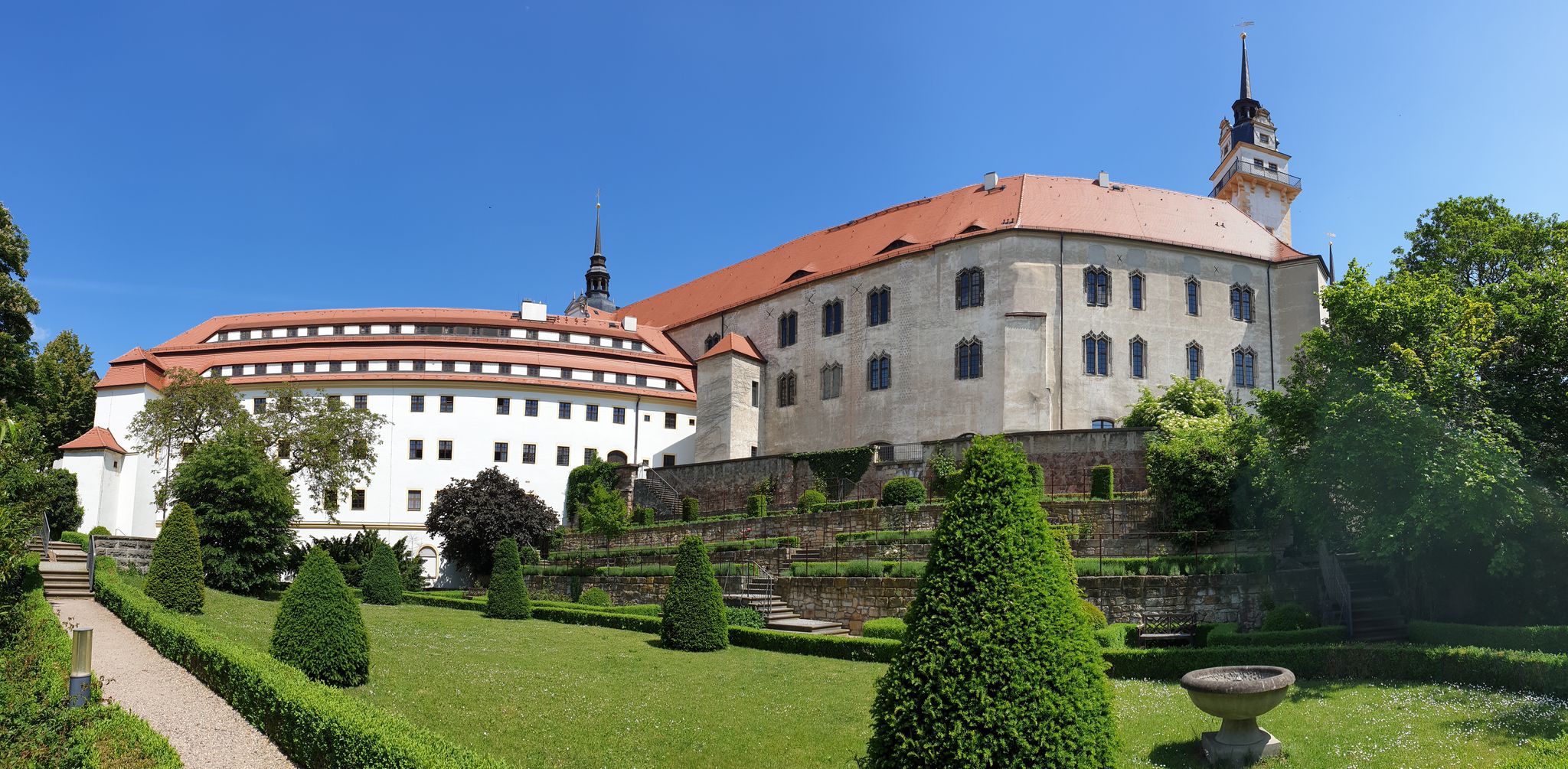
The Baroque Delitzsch Palace is located in the northern Saxon town of Delitzsch and is one of the oldest palaces in northwestern Saxony. The building and adjacent garden area are integrated into the planned historic district, through which a main road runs south of the palace grounds. Consisting of a manor house, a small northwestern wing, and a larger northeastern wing, it was constructed and architecturally modified in several phases. Only the foundations of the original building, dating from the early 12th century, remain. Among the oldest surviving parts are two deep cellars and the tower, which the Margrave of Meissen, William I, had built starting in 1389. Built on the foundations of a Gothic moated castle, the complex served the Wettin dynasty as an administrative and travel residence from 1387 to 1540. Subsequently, the Dukes and Electors of Saxony had the castle converted into a Renaissance palace from 1540 to 1558 and lived there during their travels. The complex was last externally altered at the end of the 17th century, giving it its Baroque appearance. From then on, the Principality of Saxe-Merseburg used it as a widow's residence and a travel residence. After a phased restoration beginning in 1993, the Baroque Delitzsch Palace is now used as a museum, tourist information center, registry office, branch of the "Heinrich Schütz" District Music School of North Saxony, a concert hall, and a national event venue. This cultural monument is owned by the district town of Delitzsch. Source: https://de.wikipedia.org/wiki/Schloss_Delitzsch
5
0

The three-winged castle complex was built between the 14th and 19th centuries. It was formerly the seat of the von Zaschnitz family, who were immortalized in literature by Heinrich von Kleist in the novella "Michael Kohlhaas". Quelle:https://www.bad-dueben.de/tourismus-freizeit/stadt-entdecken/besondere-orte/das-wasserschloss-schnaditz/
2
0
The manor used to be located on the site of the current castle in Kleinwölkau. This was purchased in 1659 by Christoph Vitzthum von Eckstädt, who had a manor house built there. The castle has a square floor plan with a three-storey central building and smaller side wings, and there is also an orangery. During the GDR era, the site was used for various purposes, including part of the VEG Wölkau, where seed was produced, and VEG workers lived in the servants' quarters in the east and west wings. The central wing, on the other hand, was used as a cultural center. The castle is now privately owned and is falling into disrepair.[11] Source https://de.wikipedia.org/wiki/W%C3%B6lkau_(Sch%C3%B6nw%C3%B6lkau)#Sehensw%C3%BCrdigkeiten
5
0

Very nice old town and a very nice castle
0
0
Frequently Asked Questions
What are the most popular castles to visit around Delitzsch?
The most popular castle is the Delitzsch Baroque Palace, known for its rich history, museum, and beautiful Baroque garden. Visitors also appreciate the historical significance of the Delitzsch Historic Town Center, which includes the palace and town fortifications.
Are there family-friendly castles or historical sites in the Delitzsch area?
Yes, the Delitzsch Baroque Palace is considered very family-friendly. It offers guided tours, ample garden space for outdoor activities, and family-oriented events and workshops. The Delitzsch Historic Town Center also provides an engaging and educational experience for all ages.
What historical period do the castles around Delitzsch represent?
The castles around Delitzsch showcase a blend of architectural eras. The primary castle, Delitzsch Baroque Palace, evolved from a medieval moated castle in the 14th century, underwent Renaissance renovations, and was significantly transformed into its current Baroque splendor starting in 1689. Other sites like Schnaditz Castle also have medieval origins.
What can I see at the Delitzsch Baroque Palace museum?
The museum within the Delitzsch Baroque Palace showcases the region's history and cultural heritage. Exhibits include artifacts, artwork, and interactive displays, with a particular focus on the magnificently furnished living quarters of the dowager duchesses of Saxe-Merseburg and the daily life of servants from the Baroque era.
Is there an observation tower at any of the castles?
Yes, the Delitzsch Baroque Palace features a 50-meter-high observation tower. From the top, you can enjoy excellent panoramic views of the historic city center and the surrounding area, with Leipzig and the Petersberg near Halle visible on clear days.
What kind of gardens can I expect to see at the castles?
The Delitzsch Baroque Palace is renowned for its picturesque Baroque garden. Designed in the French style in 1692/93, it features a 'parterre de broderie' with intricate ornamental patterns, offering a beautiful setting for a stroll.
What outdoor activities can I do near the castles around Delitzsch?
The region around Delitzsch offers various outdoor activities, especially hiking. You can find numerous trails, from easy to difficult, near the castles. For example, there are routes around Neuhäuser See and Werbeliner Lake. Explore more options in the Hiking around Delitzsch guide or the Easy hikes around Delitzsch guide.
Are there any castles that are currently vacant or in ruins?
Yes, some castles in the area are currently vacant or in a damaged condition. For instance, Wölkau Castle, a large Baroque-style complex, is currently vacant. Similarly, Schnaditz Castle is in a damaged condition, though its grounds are accessible. Reinsdorf Castle, originally a moated castle, is also currently empty.
What is the best time of year to visit the castles in Delitzsch?
The late spring to early autumn months are generally recommended for visiting the castles around Delitzsch. During this period, the weather is comfortable, making it ideal for exploring the castle grounds and gardens. Weekdays are often less crowded than weekends.
Can I get married at one of the castles?
Yes, the Delitzsch Baroque Palace serves as a unique and romantic venue for civil wedding ceremonies. It has a dedicated wedding room, and its Baroque garden and ducal audience hall provide excellent backdrops for photos.
How accessible are the castles by public transport?
The Delitzsch Baroque Palace is centrally located in Delitzsch, making it easily accessible by both car and public transport. Information on specific routes and schedules can usually be found via local transport providers.
Most popular routes around Delitzsch
Most popular attractions around Delitzsch

Get inspired with the komoot mobile app


Explore more
Looking for the best castles somewhere else? Discover other guides around Delitzsch:
