Top 20 Castles around Wiedemar
Best castles around Wiedemar are found within the Nordsachsen district, offering a range of historical sites. The region features both fortified medieval castles (Burg) and later manor houses or palaces (Schloss) that evolved from earlier defensive structures. These sites provide insight into centuries of architectural development and local history. The area around Wiedemar is characterized by its historical significance and preserved cultural heritage.
Best castles around Wiedemar
- The most popular castles is Delitzsch Baroque Palace, a castle with a…
Last updated: August 30, 2026
Lützschena Palace Park
Highlight • Natural Monument
Translated by Google •
Tip by

Dieskau Palace Park
Highlight • Historical Site
Translated by Google •
Tip by

Sign up now to discover places like this
Get recommendations on the best single tracks, peaks, & plenty of other exciting outdoor places.
Sign up for free
Castle Park
Highlight • Structure
Translated by Google •
Tip by

Delitzsch Baroque Palace
Highlight • Castle
Source: architektur-blicklicht.de/schloesser-herrenhaeuser/schloss-delitzsch-leipzig
Translated by Google •
Tip by

Dölkau Castle
Highlight • Castle
19th century,
1804 to 1806
architectural style
classicism
builder
Karl Ludwig August von Hohenthal
Builder/Architect
probably Johann Carl Friedrich Dauthe
Condition
Dölkau Castle has been renovated. The farm …
Translated by Google •
Tip by
Sign up for free to discover even more castles around Wiedemar.
Sign up for free
Already have an account?
Start today with a free account
Your next adventure awaits.
Login or Signup
Popular around Wiedemar

Tips from the Community

The Baroque Delitzsch Palace is located in the northern Saxon town of Delitzsch and is one of the oldest palaces in northwestern Saxony. The building and adjacent garden area are integrated into the planned historic district, through which a main road runs south of the palace grounds. Consisting of a manor house, a small northwestern wing, and a larger northeastern wing, it was constructed and architecturally modified in several phases. Only the foundations of the original building, dating from the early 12th century, remain. Among the oldest surviving parts are two deep cellars and the tower, which the Margrave of Meissen, William I, had built starting in 1389. Built on the foundations of a Gothic moated castle, the complex served the Wettin dynasty as an administrative and travel residence from 1387 to 1540. Subsequently, the Dukes and Electors of Saxony had the castle converted into a Renaissance palace from 1540 to 1558 and lived there during their travels. The complex was last externally altered at the end of the 17th century, giving it its Baroque appearance. From then on, the Principality of Saxe-Merseburg used it as a widow's residence and a travel residence. After a phased restoration beginning in 1993, the Baroque Delitzsch Palace is now used as a museum, tourist information center, registry office, branch of the "Heinrich Schütz" District Music School of North Saxony, a concert hall, and a national event venue. This cultural monument is owned by the district town of Delitzsch. Source: https://de.wikipedia.org/wiki/Schloss_Delitzsch
5
0

☆ Definitely beautiful living... peace... peace... peace 🙂
7
0

The castle is the real highlight in Delitzsch. It is well restored from the outside and houses a museum inside.
4
0
Planted with beautiful hedges, you can switch off and enjoy the peace and quiet here.
4
0

in the castle park of Dieskau https://de.wikipedia.org/wiki/Schlosspark_Dieskau
7
0
Dieskau Castle construction time late 16th century, early 17th century, 19th century, 1622, 1878 architectural style Renaissance, historicism builder Hieronymus von Dieskau the Younger Builder/Architect – Condition Dieskau Castle is defective. The park is in good condition Todays use Restaurant, vacancy Access The castle restaurant can be visited. The park is accessible. description Layout Dieskau Castle dates back to a medieval moated castle. The four-wing system is irregular. structure three-storey, north wing designed only as half wing, facade Simple plaster facades with profiled window frames, Neo-Renaissance gables, polygonal stair tower on the east wing and dummy stair tower in the courtyard, roof shape hip roof Further information park English landscape park based on the model of Wörlitz, in the park the ruins of the orangery, persons Carl Christoph von Hoffmann, Johann George Gottlieb Schoch Source: https://www.architektur-blicklicht.de/schloesser-herrenhaeuser/schloss-dieskau-halle-saale/
8
1

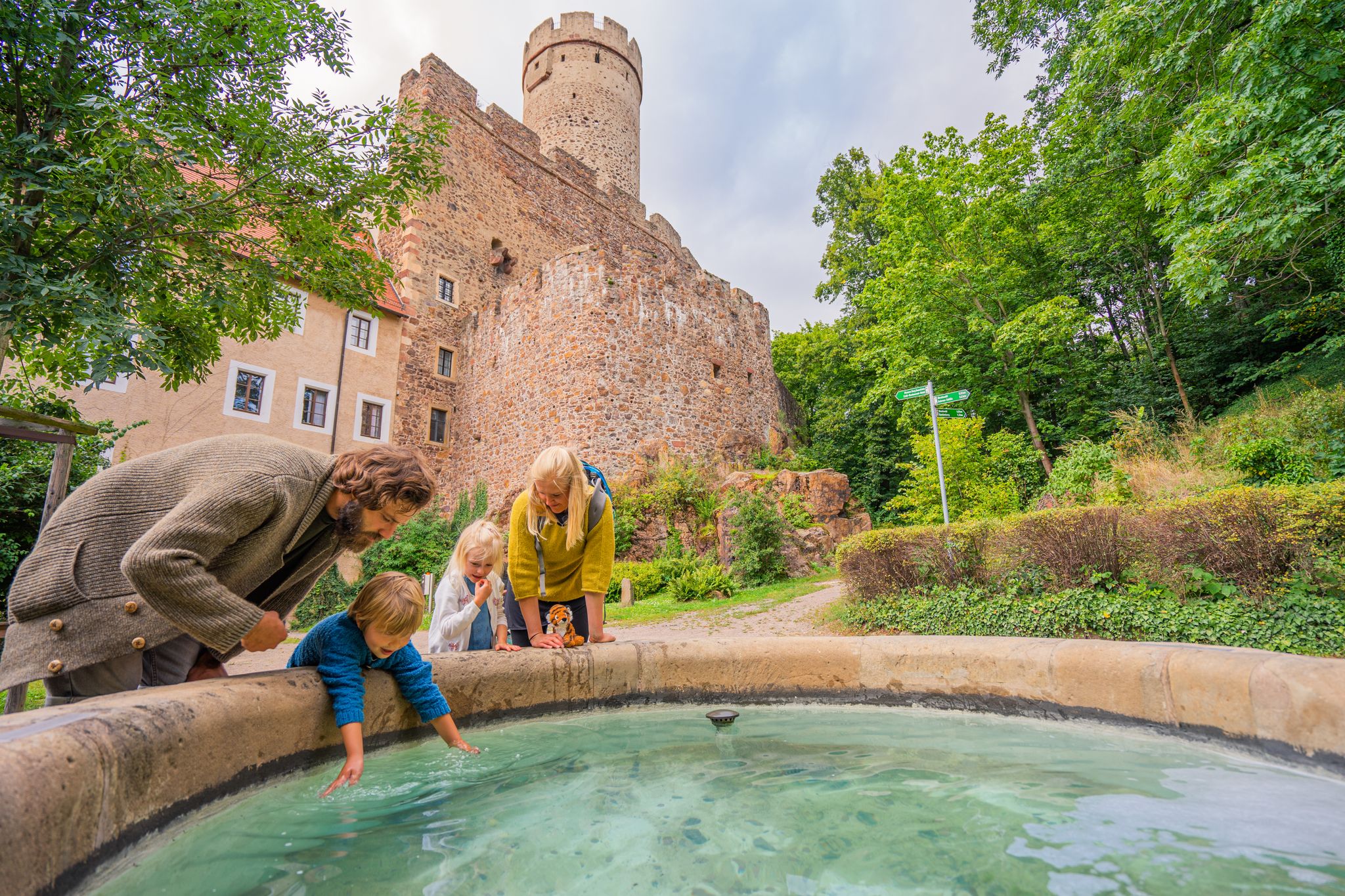
Renaissance chateau and park in the style of English landscape gardens in Kabelsketal. A highlight on the Gose hiking trail from Halle to Leipzig.
3
0
Frequently Asked Questions
What types of historical sites can I explore around Wiedemar?
The region around Wiedemar offers a diverse range of historical sites, including fortified medieval castles (Burg), Baroque palaces (Schloss), and Renaissance castles. You can explore sites like Delitzsch Baroque Palace, a significant example of Baroque architecture, or the remnants of the Slavic ring wall at Burg Zwochau, which provides insight into early medieval settlements.
Are there any family-friendly castles or parks to visit near Wiedemar?
Yes, several locations are suitable for families. Castle Park (Dieskau Castle Park) is a historical site with an English landscape park that is publicly accessible and features a cafe. Lützschena Palace Park is another excellent choice, offering a beautiful English landscape park framed by alluvial forest, perfect for a family stroll.
Which castles have accessible parks or grounds?
Schloss Hohenprießnitz features a scenic park spanning approximately 30 hectares, designed in the English style, which is publicly accessible. Similarly, the park at Schloss Zschepplin is accessible to the public, offering a glimpse of its Renaissance architecture from the outside. Castle Park (Dieskau Castle Park) also has an accessible park.
Can I find cafes or refreshments near the castles?
Yes, at Castle Park (Dieskau Castle Park), there is a castle restaurant where you can enjoy delicious homemade cakes in a cozy cafe or outdoor seating. Delitzsch Baroque Palace also has a restaurant in its former castle guardhouse.
What outdoor activities can I do near these castles?
The area around Wiedemar offers various outdoor activities. You can find numerous cycling routes, such as the 'View of Schladitzer See – Schladitzer Lake loop from Kyhna' or the 'Hayna Cycle Path – Lake Schladitz loop from Wiesenena'. For running, consider trails like the 'View of Zwochauer Lake – Werbeliner See loop from Zwochau'. You can explore more options on the Cycling around Wiedemar or Running Trails around Wiedemar guide pages.
Are there any castles with significant historical gardens?
Absolutely. Delitzsch Baroque Palace boasts a beautiful Baroque-style castle garden dating back to 1692, which seamlessly merges into a park. Schloss Hohenprießnitz is also notable for its extensive English-style park, designed around 1790, featuring diverse flora.
What are some lesser-known historical sites or 'hidden gems' in the Wiedemar area?
While not a traditional castle, Burg Zwochau offers a unique historical experience as an archaeological site with remnants of a Slavic ring wall. It provides insight into early medieval defensive structures. Another site is Rittergut Groß-Lissa, a historical manor house with mentions dating back to the 12th century, showcasing the evolution of noble estates.
What architectural styles can I expect to see among the castles and palaces?
The castles and palaces around Wiedemar showcase a rich variety of architectural styles. You can see Baroque architecture at Schloss Hohenprießnitz and Delitzsch Baroque Palace, Renaissance elements at Schloss Zschepplin, and Classicism at Dölkau Castle. These sites reflect centuries of architectural development in the region.
Are there opportunities for walking or hiking around the castle parks?
Yes, many castle parks are ideal for walking. Dieskau Palace Park offers numerous paths for leisurely strolls. Castle Park (Dieskau Castle Park) is known for its 3.5 km round walk through the park and around its ponds. Lützschena Palace Park, with its English landscape design and alluvial forest, also provides a magical setting for walks.
What do visitors particularly enjoy about the castles and historical sites near Wiedemar?
Visitors appreciate the blend of historical significance and natural beauty. The well-preserved Baroque gardens, accessible English landscape parks, and the opportunity to explore centuries of architectural evolution are frequently highlighted. The peaceful atmosphere of places like Lützschena Palace Park and the charm of castle cafes also receive positive feedback.
Is public transport available to reach castles near Wiedemar?
While specific public transport routes to every castle may vary, the region is generally accessible. For detailed information on reaching individual sites like Schloss Zschepplin, it's advisable to check local public transport schedules as the castle itself was converted into a children's home and later privatized, though its park remains accessible.
Most popular routes around Wiedemar
Most popular attractions around Wiedemar

Get inspired with the komoot mobile app


Explore more
Looking for the best castles somewhere else? Discover other guides around Wiedemar:
