The best cycling routes in Forêt De Sorba-Rospa
4.7
(54)
734
riders
31
rides
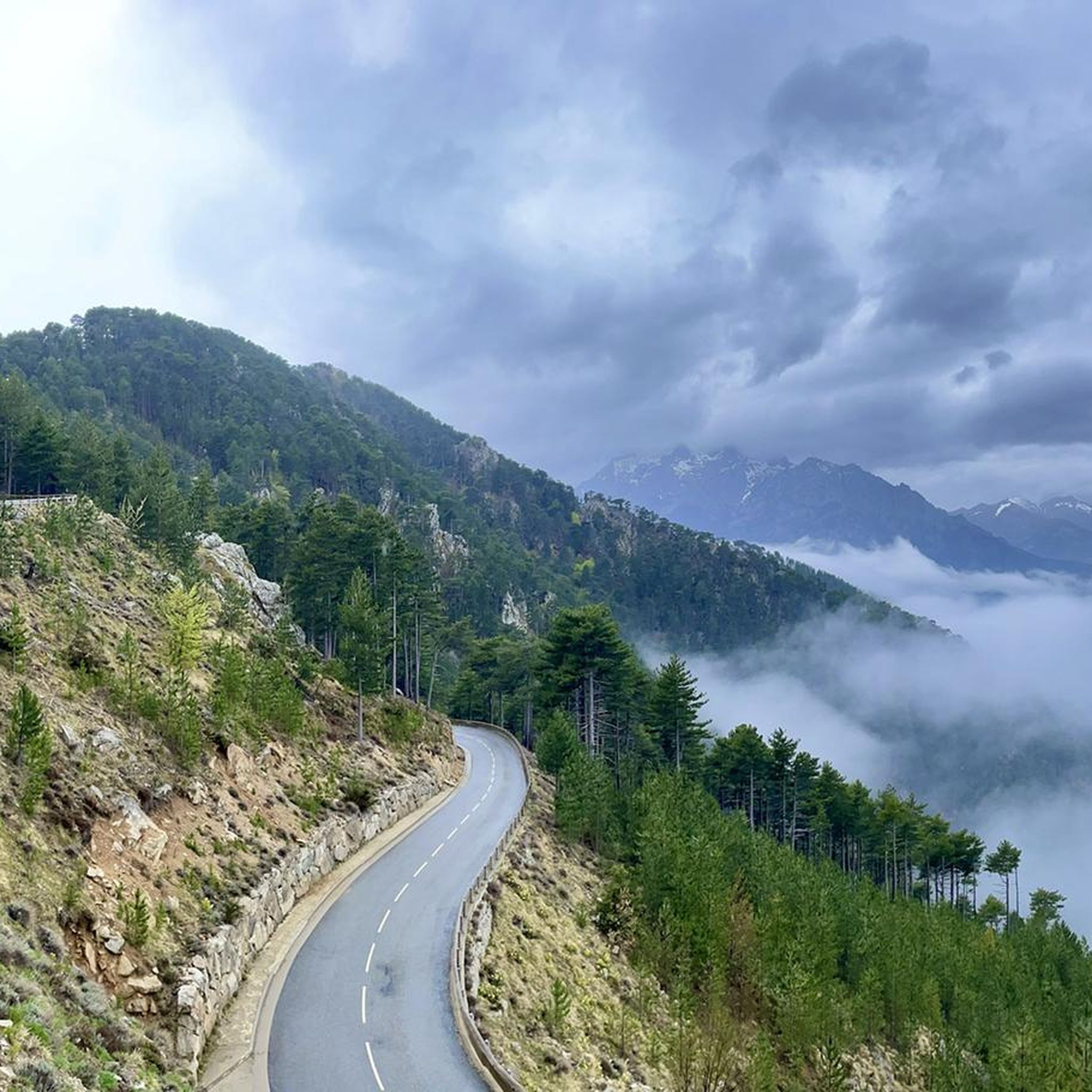
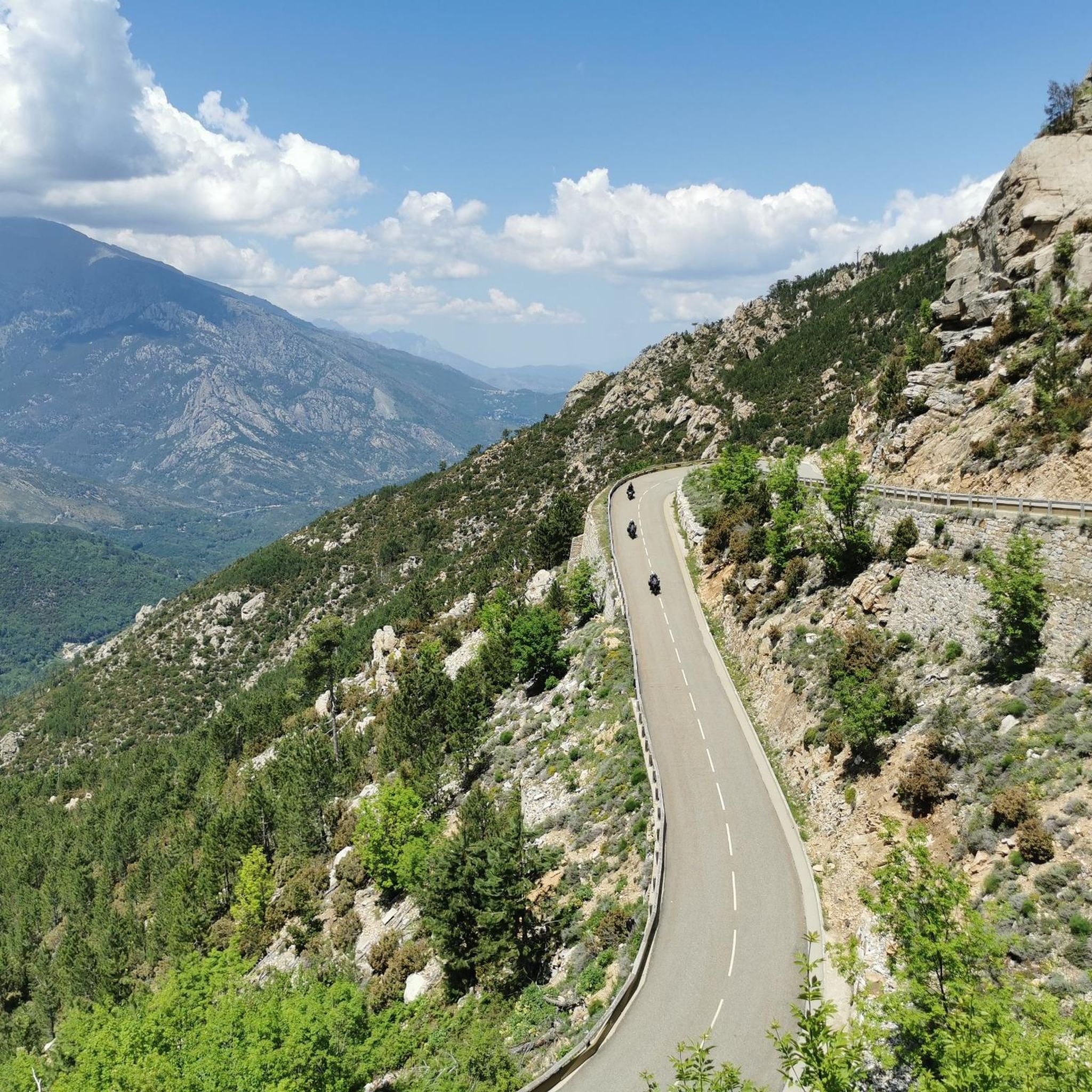
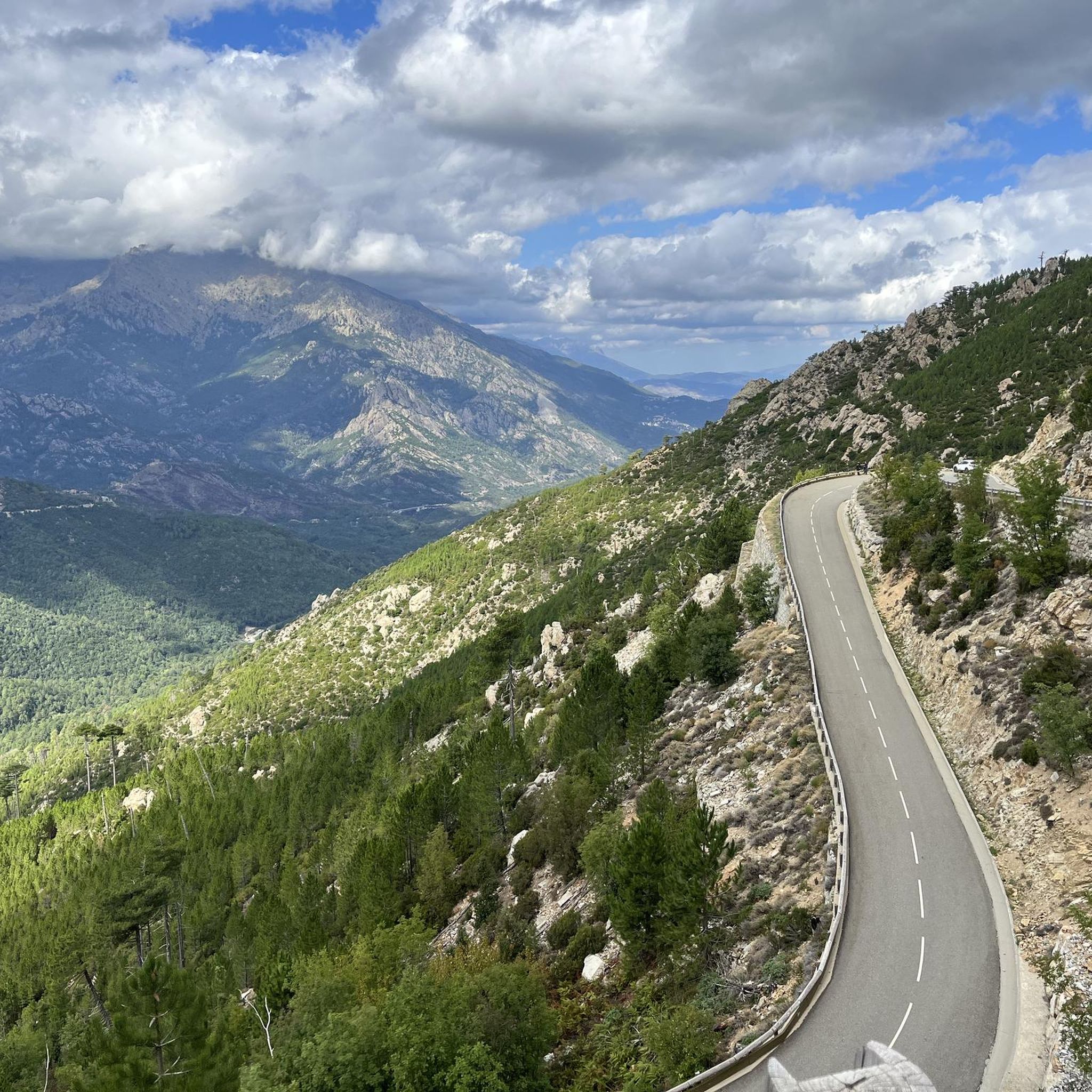
Touring cycling routes in Forêt De Sorba-Rospa traverse a landscape characterized by magnificent Corsican Laricio pines and mountainous terrain. The forest, located in central Corsica, features altitudes ranging from 930 meters to 1565 meters. A significant feature for cyclists is the Col de Sorba, reaching an elevation of 1311 meters, which is crossed by the D 69 road. This road provides the primary route through the forest massif, offering varied terrain and scenic views.
Best touring cycling routes in Forêt…
Last updated: June 28, 2026
5.0
(4)
71
riders
79.5km
05:47
1,780m
1,780m
Hard bike ride. Very good fitness required. Mostly paved surfaces. Suitable for all skill levels.
5.0
(3)
71
riders
71.5km
05:35
1,920m
1,920m
Hard bike ride. Very good fitness required. Mostly paved surfaces. Suitable for all skill levels.

Sign up for free
4.8
(10)
154
riders
108km
07:44
2,300m
2,300m
Hard bike ride. Very good fitness required. Mostly paved surfaces. Suitable for all skill levels.
5.0
(1)
16
riders
35.7km
02:47
990m
990m
Hard bike ride. Very good fitness required. Mostly paved surfaces. Suitable for all skill levels.
5.0
(1)
10
riders
78.9km
06:16
2,290m
2,290m
Hard bike ride. Very good fitness required. Mostly paved surfaces. Suitable for all skill levels.
Get access to more routes and recommendations from other explorers.
Sign up for free
Already have an account?
Our route recommendations are based on thousands of hikes, rides, and runs completed by other people on komoot.
Start today with a free account
Your next adventure awaits.
Login or Signup
Tips from the Community


Instead of pasta, paninis, and cakes, they serve entrecôte and salad. Not for cyclists or hikers.
0
0

The campsite is private property. Access is reserved for campsite guests.
0
0

The place, in the middle of the mountains, is ideal as a base for cycling and hiking tours. The food is very good and the entire complex is simple but well maintained.
2
0
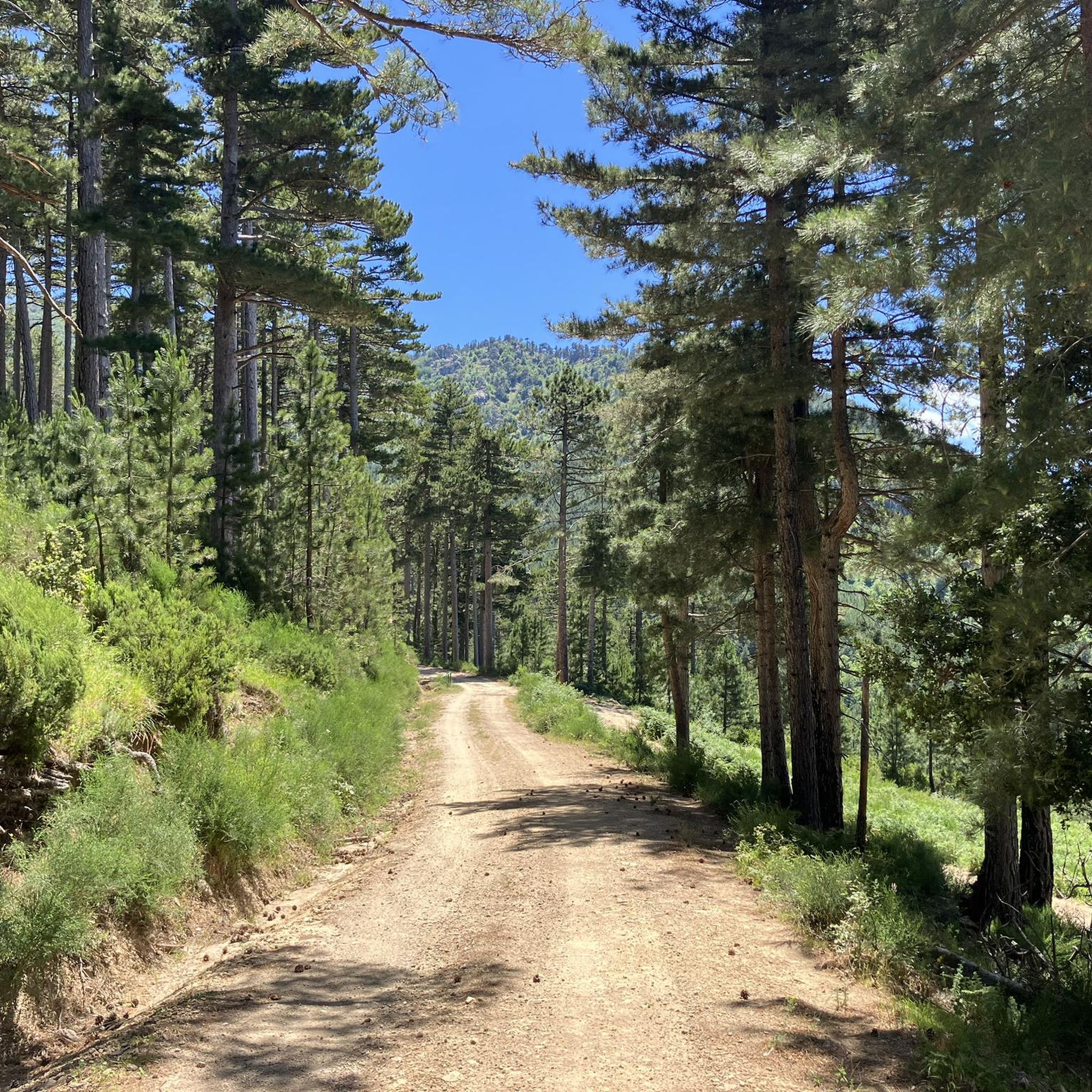
The Route Forestière 6 was a road in Corsica established in 1854 by the Décret Imperial 1782. It was built to develop one of Corsica's forests for the timber industry. Operated by the state, it had the status of a national road. The F6 branched off from the National Road 198 south of Aléria and led to Vivario. It was 45 kilometers long. It was downgraded in 1973.
1
0
The Vecchio rises on the Monte d'Oro and is initially called Agnone. This river is best known for its Cascades des Anglais, which attract hundreds of tourists every day in high season. From the hamlet of Vizzavona onwards, the river is called Vecchio and you only meet very few people. Shortly after entering Canaglia, it joins the Manganello. Here the Vecchio valley becomes very lonely. On the right-hand side, far above the riverbed, the railway line winds its way along the hills, barely visible. You don't notice the busy T20, which lies behind the hills. You only see it when you get off at the Ponte Vecchio. High above us, it crosses the Vecchio valley on the new bridge. Later, the Vecchio flows into the Tavignano, which reaches the sea near Aléria.
1
0

A pass is always an outcome, therefore a moment of contentment and joy: 1311 meters. great
1
0

a smal restaurant and a small shop with local products
0
0
Frequently Asked Questions
How many touring cycling routes are available in Forêt De Sorba-Rospa?
Forêt De Sorba-Rospa offers a diverse range of touring cycling experiences, with over 30 routes documented on komoot. These routes cater primarily to experienced cyclists, featuring significant elevation changes and challenging terrain.
What is the typical difficulty level for touring cycling in Forêt De Sorba-Rospa?
Touring cycling in Forêt De Sorba-Rospa is generally considered challenging. Out of the 30 available routes, 26 are rated as difficult, with 4 moderate options. Cyclists should be prepared for substantial elevation gains and descents, as the region's altitudes range from 930 meters to 1565 meters.
What natural features and landmarks can I expect to see while cycling in Forêt De Sorba-Rospa?
While cycling through Forêt De Sorba-Rospa, you'll primarily encounter magnificent Corsican Laricio pines, which dominate the forest landscape. A key feature is the Col de Sorba, reaching 1311 meters, which offers panoramic views and is traversed by the D 69 road. The area is also a biodiversity hotspot, so keep an eye out for diverse flora and fauna.
Is public transport available to reach the cycling routes in Forêt De Sorba-Rospa?
The D 69 road, which is the primary cycling route through Forêt De Sorba-Rospa, connects towns like Vivario and Ghisoni. While specific public transport options directly to trailheads within the forest might be limited, you may find bus services connecting to these larger towns. It's advisable to check local transport schedules for connections to Vivario or Ghisoni.
Where can I park my car when starting a touring cycling route in Forêt De Sorba-Rospa?
For touring cycling routes that often start or pass through towns, parking can typically be found in the nearby villages such as Vivario, Ghisoni, or Vezzani. These towns serve as common starting points for routes like the Défilé de l'Inzecca – Strette Gorge loop from Vezzani. Always check local signage for parking regulations.
What do other touring cyclists enjoy the most about touring cycling in Forêt De Sorba-Rospa?
The touring cycling routes in Forêt De Sorba-Rospa are highly rated by the komoot community, with an average score of 4.7 stars from over 40 reviews. Cyclists frequently praise the immersive journey through the heart of the forest, the challenging ascents to passes like Col de Sorba, and the rewarding scenic views of the mountainous Corsican landscape.
Are there any circular touring cycling routes in Forêt De Sorba-Rospa?
Yes, many of the touring cycling routes in Forêt De Sorba-Rospa are designed as loops, allowing you to start and finish in the same location. Examples include the Défilé de l'Inzecca loop from Casevecchie and the Défilé de l'Inzecca – Strette Gorge loop from Vivario, which offer extensive rides through the region's varied terrain.
What is the best time of year for touring cycling in Forêt De Sorba-Rospa?
Given the mountainous terrain and altitudes ranging up to 1565 meters, the best time for touring cycling in Forêt De Sorba-Rospa is typically from late spring through early autumn (May to October). During these months, the weather is generally more stable, and the higher passes are clear of snow. Always check local weather forecasts before heading out, especially for mountain conditions.
Are there any family-friendly or beginner touring cycling routes in Forêt De Sorba-Rospa?
Forêt De Sorba-Rospa's touring cycling routes are predominantly difficult, with significant elevation changes. While there are 4 moderate routes, the region is generally more suited for experienced touring cyclists. Families or beginners might find the terrain challenging, so careful route selection and preparation are essential. Consider routes with less elevation gain if cycling with children or less experienced riders.
Can I bring my dog on the touring cycling routes in Forêt De Sorba-Rospa?
Forêt De Sorba-Rospa is part of the Regional Natural Park of Corsica and is a recognized ZNIEFF and Natura 2000 area, indicating its ecological importance. While dogs are generally permitted on public roads like the D 69, it's crucial to keep them on a leash to protect local wildlife and ensure their safety, especially given the presence of rare and protected species. Always adhere to local regulations regarding pets in natural areas.
Are there cafes or accommodation options near the cycling routes in Forêt De Sorba-Rospa?
Yes, towns bordering or within the vicinity of Forêt De Sorba-Rospa, such as Vivario and Ghisoni, offer amenities like cafes and accommodation. These villages serve as convenient stops for refreshments or overnight stays, especially after tackling challenging routes like the Ghisoni at 700 m above sea level. – Verde Pass loop from Vivario.
What kind of wildlife might I encounter while cycling in Forêt De Sorba-Rospa?
Forêt De Sorba-Rospa is a rich biodiversity hotspot. While cycling, you might encounter various species, including the endemic Corsican nuthatch, golden eagles soaring overhead, and different bats and amphibians. The forest's status as a ZNIEFF and Natura 2000 area highlights its importance for conservation, so observing wildlife from a respectful distance is encouraged.
Most popular routes in Forêt De Sorba-Rospa

Get inspired with the komoot mobile app


Explore more
Browse the best Cycling routes in other regions.
