Attractions and Places To See around Güglingen - Top 20
Best attractions and places to see around Güglingen are found in the charming Zabergäu valley in Baden-Württemberg, Germany. This region offers a blend of historical landmarks, cultural sites, and natural beauty, including picturesque vineyards and parts of the Stromberg-Heuchelberg Nature Park. Visitors can explore a variety of points of interest, from Roman history to scenic outdoor areas.
Best attractions and places to see around Güglingen
- The most popular attractions is Ehmetsklinge Reservoir, a lake that offers a spacious lawn,…
Last updated: August 16, 2026
Old Neckar Bridge
Highlight • Viewpoint
Translated by Google •
Tip by

Neckartal Cycle Path Between Mundelsheim and Lauffen
Highlight (Segment) • Cycleway
Translated by Google •
Tip by

Sign up now to discover places like this
Get recommendations on the best single tracks, peaks, & plenty of other exciting outdoor places.
Sign up for free
Neckar Loop between Kirchheim and Lauffen
Highlight • Cycleway
Translated by Google •
Tip by

Ehmetsklinge Reservoir
Highlight • Lake
Translated by Google •
Tip by

Vineyard Steep Slopes by the Neckar near Talheim
Highlight (Segment) • Cycleway
Translated by Google •
Tip by
Sign up for free to discover even more attractions around Güglingen.
Sign up for free
Already have an account?
Start today with a free account
Your next adventure awaits.
Login or Signup
Other adventures around Güglingen

Tips from the Community

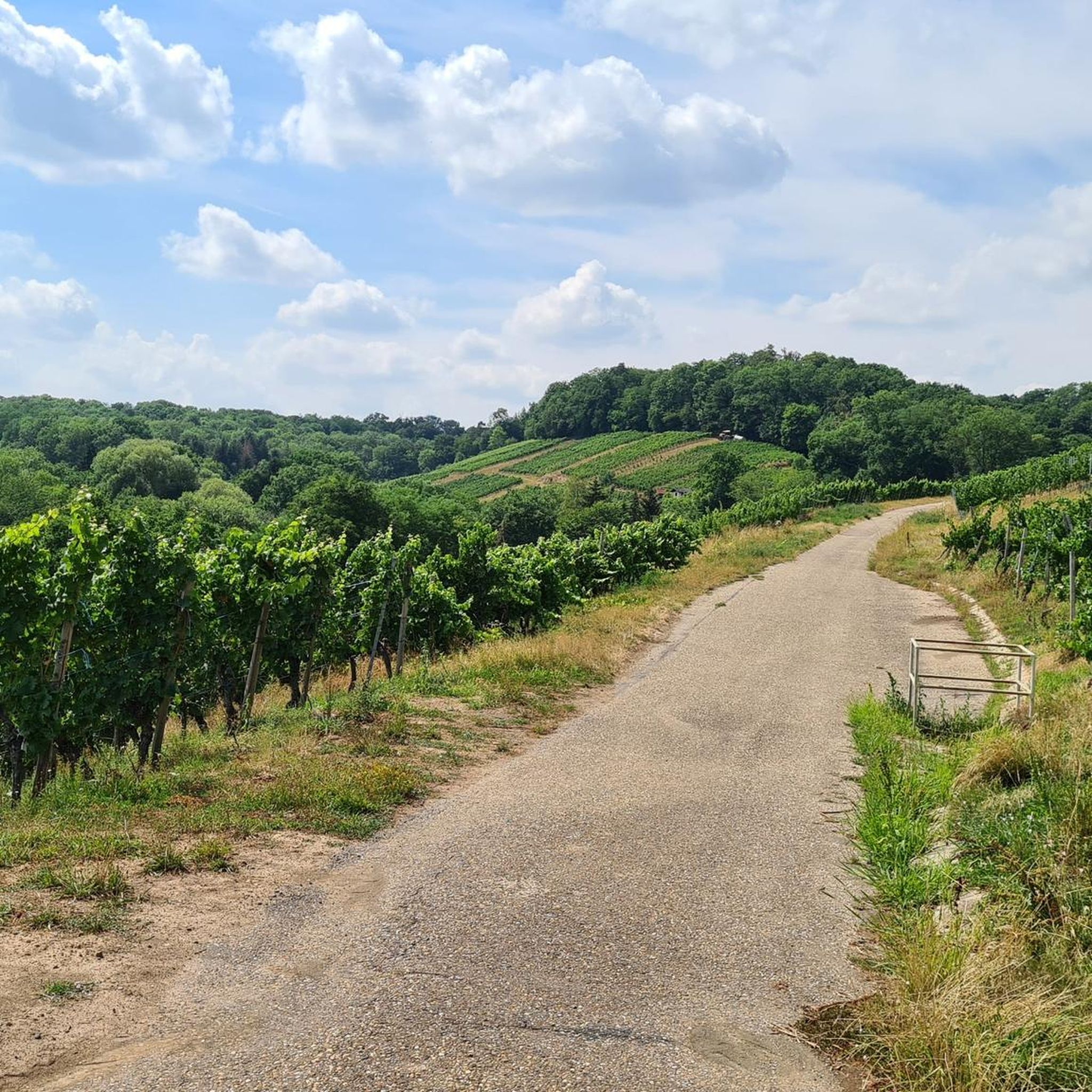
Great developed bike path between the banks of the Neckar and vineyards
3
0

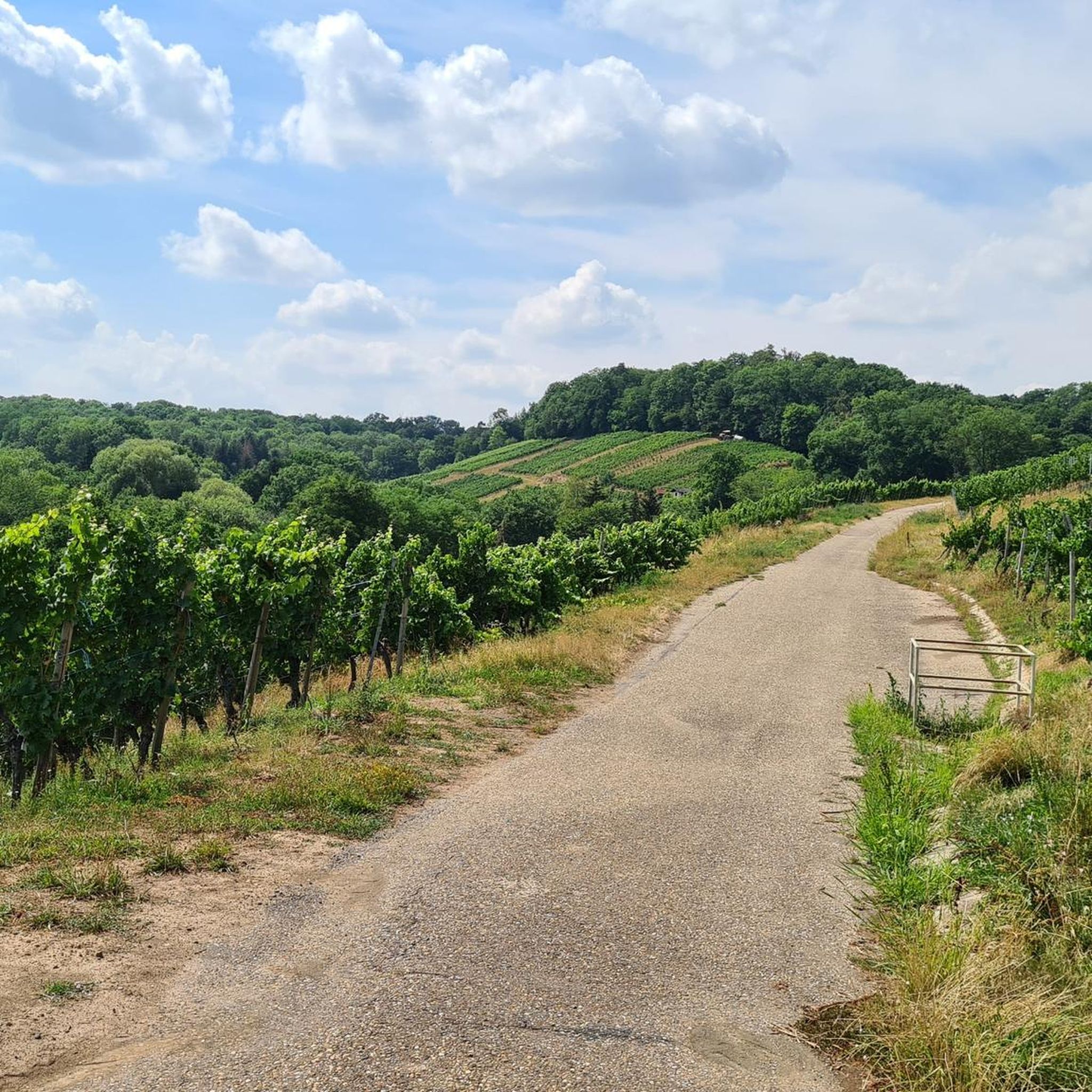
Wonderful to drive and great view of the steep slopes
3
0

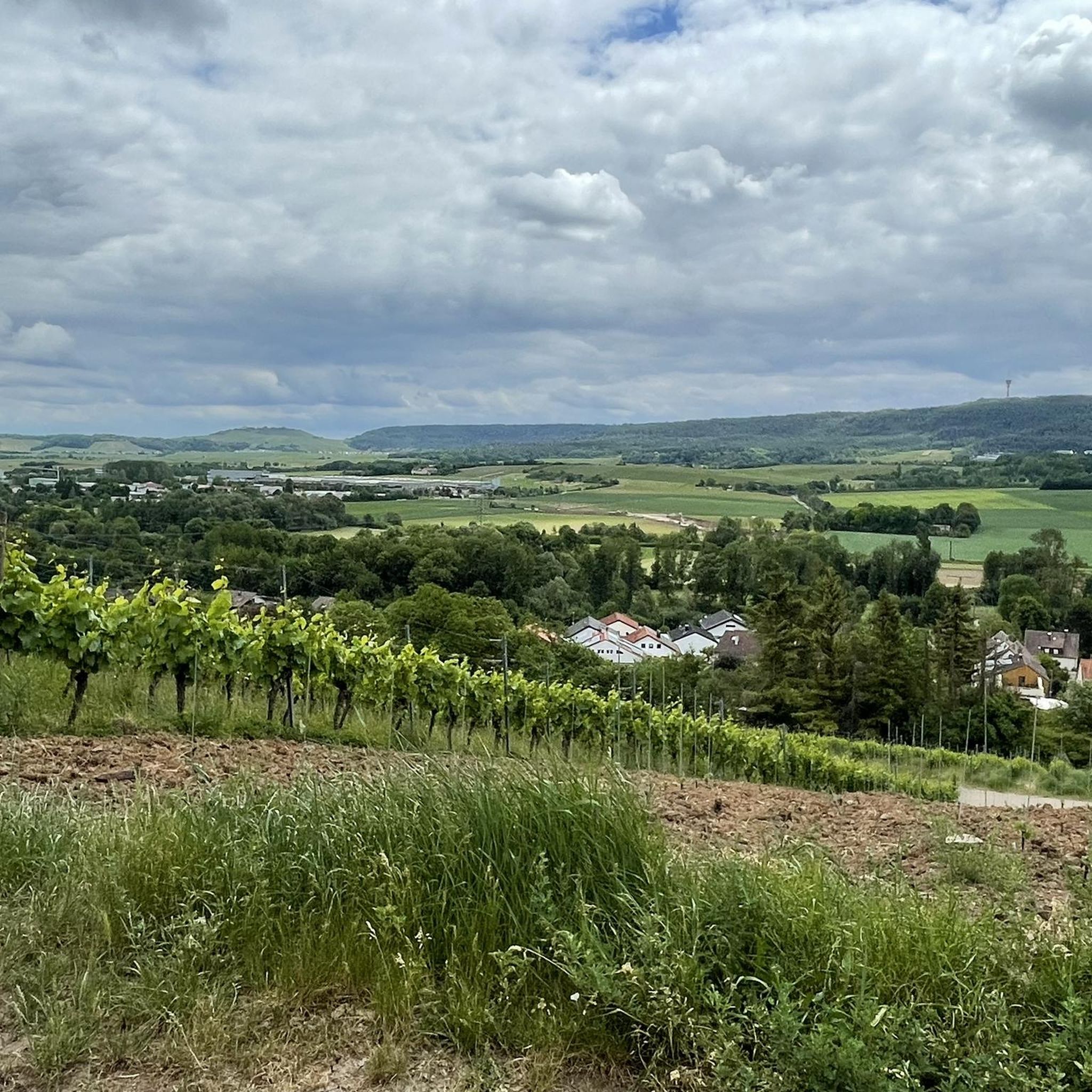
Great bike path with fantastic views of the steep vineyards.
3
0

The lake is primarily used for flood protection on the Zaber. In summer, swimmers and other people looking for relaxation visit the lake with its bathing beach; Anglers can catch pike, zander and perch there, as well as rainbow trout, carp, tench, bream, catfish and eel. Sailing and motor boating, on the other hand, are prohibited on the lake. Walking and hiking trails of different lengths touch the Ehmetsklinge, including a 6.5 km long circular lake trail, which also connects it with the Katzenbachsee, which is almost 2 km to the east. A forest and tree as well as a wine educational trail also run near the lake. There are some inns by the lake. In May 2009, the new nature park center of the Stromberg-Heuchelberg nature park opened its doors on the lake shore. The lake was created between 1968 and 1970, inaugurated in June 1970 with a lake festival, and expanded in 2000 and 2001. EnBW, the operating company of the Neckarwestheim nuclear power plant, initiated the enlargement of the lake; Low water in the Neckar during the summer and legal requirements had previously led to a lack of cooling water in the reactor at this time of year, which now hardly ever occurs. In the north-eastern area near the dam it has a fairly constant width of around 250m, further up it branches into two peaks that reach into the valleys of Zaber in the south-west and Ehmehtsklingenbach in the west and reaches its greatest length of around 600m at the tributary of the latter. With normal traffic jams, the surface of the lake is 232m above sea level. NN. The expansion increased the crest height of the dam structure on the air side from 12.50m to 15.05m, the crest length of the dam from 320.50m to 335.50m, the water depth from 4.80m to up to 8m with permanent waterlogging, the water area from 7, 3ha to 13.8ha, the storage volume from 190,000m³ to 590,000m³. Annually from August 15th to December 31st, the Neckar can now be supplied with an additional volume of water of up to 400,000 cubic meters via the Zaber to compensate for the evaporation caused by the operation of some thermal power plants on its banks, but the flood protection in Zabergäu and the Increasing the water level in case of low water in the Zaber. During the expansion, around 10 hectares of arable land were converted into meadows, trees and shrubs were planted and the front dam was designated as a biotope. The costs for this and for a number of other measures were borne by the operators of a number of thermal power plants on the Neckar under the management of the Neckarwestheim nuclear power plant.
10
0

Beautifully developed bike path in summer, always in the shade and right at "eye level" with the Neckar.
4
0

Very well developed bike path that leads directly between the Neckar and vineyards.
4
0

The lake was created between 1968 and 1970. EnBW, the operating company of the Neckarwestheim nuclear power plant, initiated a later enlargement of the lake in 2000-2001. Low water in the Neckar during the summer and legal requirements had previously led to a shortage of cooling water at the reactor at this time of the year. Due to the larger damming, more water could be supplied to the Zaber and thus the Neckar in order to replace the evaporated cooling water. In May 2009 the new nature park center of the Stromberg-Heuchelberg nature park opened its doors on the lakeshore.
14
0

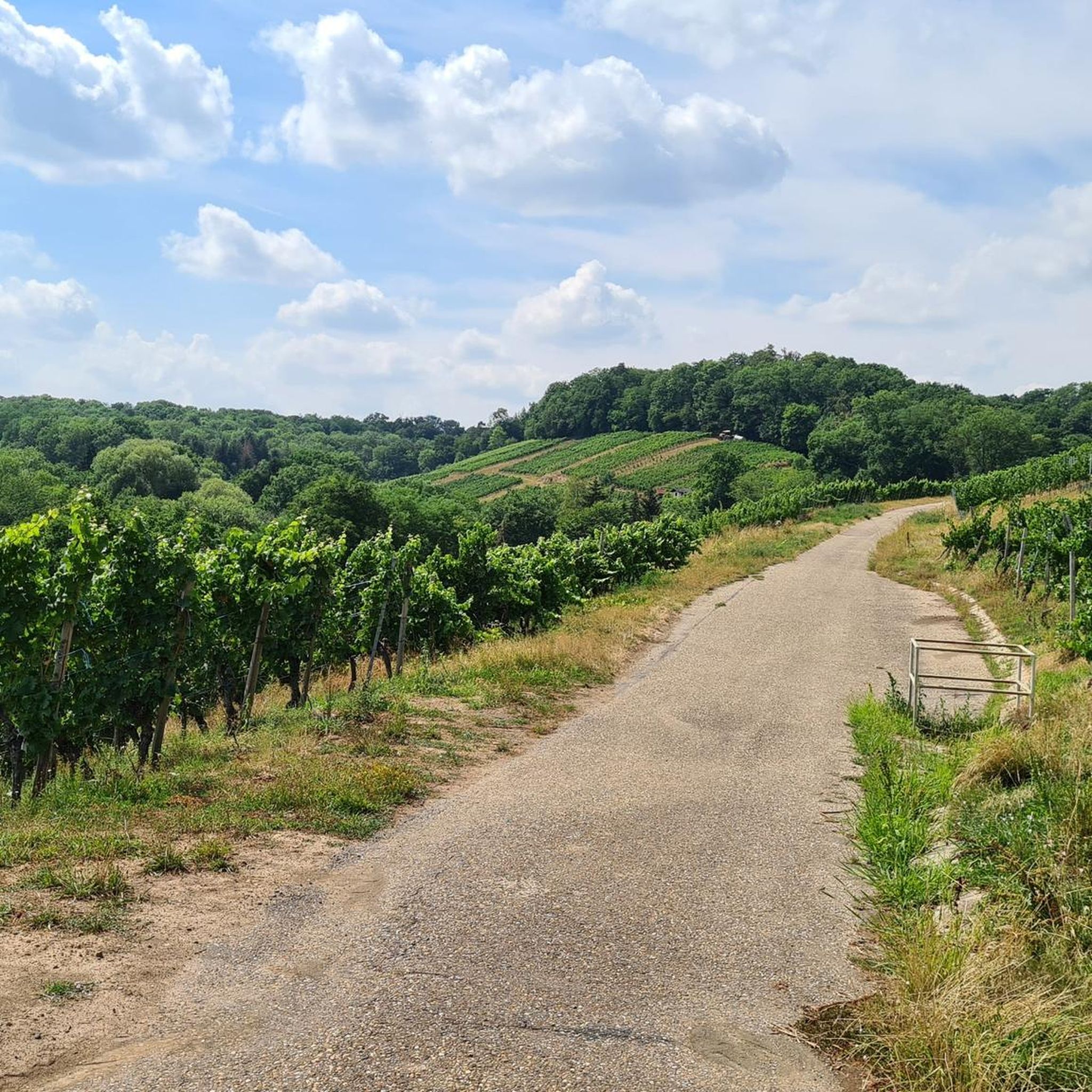
great bike path. Great asphalt and beautiful between fields, meadows, the vineyards with rocks and dry stone walls and the Neckar.
3
0
Frequently Asked Questions
What historical sites can I explore in and around Güglingen?
Güglingen is rich in history. You can visit the Römermuseum and its Archaeological Open-Air Museum, which showcases the region's Roman past with interactive exhibits and reconstructed Mithras sanctuaries. Other notable historical buildings include the Mauritiuskirche, first mentioned in 1241, the distinctive half-timbered Town Hall, the 16th-century Herzogskelter, and the Steinhaus and Chapel of St. Leonard, both dating back to 1349. Don't miss the Old Neckar Bridge, a historical landmark connecting Lauffen since 1532.
Are there any Roman-era attractions in Güglingen?
Yes, Güglingen has a significant Roman heritage. The Römermuseum houses approximately 2,000 exhibits detailing Roman life in the Zabergäu region, complete with 1:1 reconstructions and 3D animations. Additionally, the Archaeological Open-Air Museum features the outlines of two excavated Mithras cult sanctuaries, unique in Baden-Württemberg, at their original excavation site.
Where can I enjoy nature and scenic views near Güglingen?
The region offers abundant natural beauty. The Ehmetsklinge Reservoir is a popular spot for relaxation and serves as a starting point for hikes. You can also explore the picturesque vineyards of the Zabergäu valley, which offer scenic views and are part of the Stromberg-Heuchelberg Nature Park. The ruins of Burg Blankenhorn above Eibensbach provide a popular hiking destination with an 18-meter-high shield wall and a tree educational trail.
What are some family-friendly activities or attractions in the Güglingen area?
For families, the Ehmetsklinge Reservoir is ideal, offering a large lawn, clear water for swimming, pedal boat rentals, and a barbecue hut. The Römermuseum provides interactive elements that can engage children. Cycling paths like the Neckar Loop between Kirchheim and Lauffen and the Neckartal Cycle Path Between Mundelsheim and Lauffen are mostly flat and suitable for family outings.
Can I go cycling around Güglingen?
Absolutely! The region around Güglingen is excellent for cycling, with numerous well-marked trails. You can enjoy idyllic routes like the Neckar Loop between Kirchheim and Lauffen, known for its scenic views and interesting tuff rocks. The Neckartal Cycle Path Between Mundelsheim and Lauffen offers a flat, asphalt path directly along the Neckar River. For more options, explore the various cycling routes available in the Cycling around Güglingen guide.
Are there good hiking opportunities near Güglingen?
Yes, Güglingen is situated within the Stromberg-Heuchelberg Nature Park, offering many well-marked hiking trails. A popular destination is the ruins of Burg Blankenhorn above Eibensbach, which is freely accessible year-round and features a tree educational trail. You can also find circular routes like the 'Of Romans and Vines' trail, combining history with the scenic vineyards and forests.
What unique natural features characterize the Güglingen region?
The Güglingen region is defined by its picturesque Zabergäu valley, famous for its extensive vineyards. The Stromberg-Heuchelberg Nature Park provides diverse landscapes, including forests and rolling hills. The Ehmetsklinge Reservoir is a notable man-made lake integrated into the natural surroundings. Additionally, the Vineyard Steep Slopes by the Neckar near Talheim showcase impressive terraced vineyards under rock walls.
What kind of cultural experiences does Güglingen offer beyond historical buildings?
Beyond its historical architecture, Güglingen hosts several annual festivals, including a Wine Festival in September, a Bakery Festival at the end of August, and a Maytime Festival during Pentecost. The town also features approximately 50 pieces of sculpture and art, including works like 'The Four Seasons' and 'Sphinx', which can be discovered throughout the town, creating a unique cultural treasure hunt.
What do visitors particularly enjoy about the attractions near Güglingen?
Visitors frequently praise the scenic beauty and tranquility of the area. For instance, the Ehmetsklinge Reservoir is loved for its spacious lawn, clear water, and family-friendly amenities. Cyclists enjoy the flat, well-paved paths along the Neckar, such as the Neckartal Cycle Path, for their beautiful views and ease of riding. The historical sites are appreciated for offering deep insights into the region's past.
Is there a good place for swimming or water activities?
Yes, the Ehmetsklinge Reservoir is an excellent spot for swimming and water activities. It features clear water, a large lawn for sunbathing, and offers pedal boat rentals. It's a perfect location for a refreshing dip or a relaxing day by the water.
What is the best time of year to visit Güglingen for outdoor activities?
The best time to visit Güglingen for outdoor activities like hiking and cycling is generally from spring through early autumn (April to October). During these months, the weather is pleasant, the vineyards are lush, and the festivals are in full swing. The Wine Festival in September is a particular highlight for those interested in local culture and produce.
Are there any castle ruins to visit near Güglingen?
Yes, the impressive ruins of Burg Blankenhorn are located above Eibensbach. These 13th-century castle ruins are a popular hiking destination and are freely accessible year-round. They are particularly known for their substantial 18-meter-high and 3-meter-thick shield wall made of sandstone ashlar, offering a glimpse into medieval history.
Can I find routes for gravel biking in the area?
Yes, the Güglingen area offers opportunities for gravel biking. You can find various routes that combine paved and unpaved sections, taking you through vineyards and forests. For specific routes and their difficulty levels, consult the Gravel biking around Güglingen guide.
What are some notable churches or religious sites in Güglingen?
Güglingen is home to several historic churches. The Mauritiuskirche, first mentioned in 1241, was rebuilt in 1850 and stands as a significant landmark. In Eibensbach, you can find the Marienkirche, dating back to the 14th century, while the Martinskirche in Frauenzimmern was built around 1200. These churches offer insights into the region's long religious history.
Are there any art installations or sculptures to discover in Güglingen?
Yes, Güglingen is known for its numerous public art pieces. The town features approximately 50 sculptures and art installations scattered throughout, creating an engaging experience for visitors. You can discover works such as 'The Four Seasons,' 'Sphinx,' 'Guardian,' and 'Aquatic Animals,' alongside historical fountains like the Marktbrunnen from 1568.
Most popular routes around Güglingen
Most popular attractions around Güglingen

Get inspired with the komoot mobile app


Explore more
Still not found the Highlight you’re looking for? See guides of the top attractions in other regions:
