The best road cycling routes around Hrašćina
5.0
(3)
78
riders
14
rides
Road cycling routes around Hrašćina traverse the Krapina-Zagorje County in Croatia, characterized by rolling green hills and mountains. The region's varied terrain provides both challenging ascents and descents, along with scenic backdrops for road cyclists. This area is part of the broader Zagorje region, which includes the Zagorje Mountains Nature Park, highlighting its natural heritage. The cycling infrastructure features asphalt roads with generally low traffic, suitable for road cycling.
Best road cycling routes around Hrašćina
- The most popular road cycling…
Last updated: May 24, 2026
5.0
(2)
21
riders
52.8km
02:14
310m
310m
Moderate road ride. Good fitness required. Mostly well-paved surfaces and easy to ride.
12
riders
57.3km
02:36
640m
640m
Moderate road ride. Good fitness required. Mostly well-paved surfaces and easy to ride.

Sign up for free
12
riders
47.5km
02:13
550m
550m
Moderate road ride. Good fitness required. Mostly well-paved surfaces and easy to ride.
5
riders
48.3km
02:10
460m
470m
Moderate road ride. Good fitness required. Mostly well-paved surfaces and easy to ride.
3
riders
49.7km
02:11
480m
480m
Moderate road ride. Good fitness required. Mostly well-paved surfaces and easy to ride.
4
riders
36.8km
01:46
490m
490m
Moderate road ride. Good fitness required. Mostly well-paved surfaces and easy to ride.
5.0
(1)
2
riders
37.2km
01:49
450m
450m
Moderate road ride. Good fitness required. Mostly well-paved surfaces and easy to ride.
Get access to more routes and recommendations from other explorers.
Sign up for free
Already have an account?
Our route recommendations are based on thousands of hikes, rides, and runs completed by other people on komoot.
Start today with a free account
Your next adventure awaits.
Login or Signup
Tips from the Community

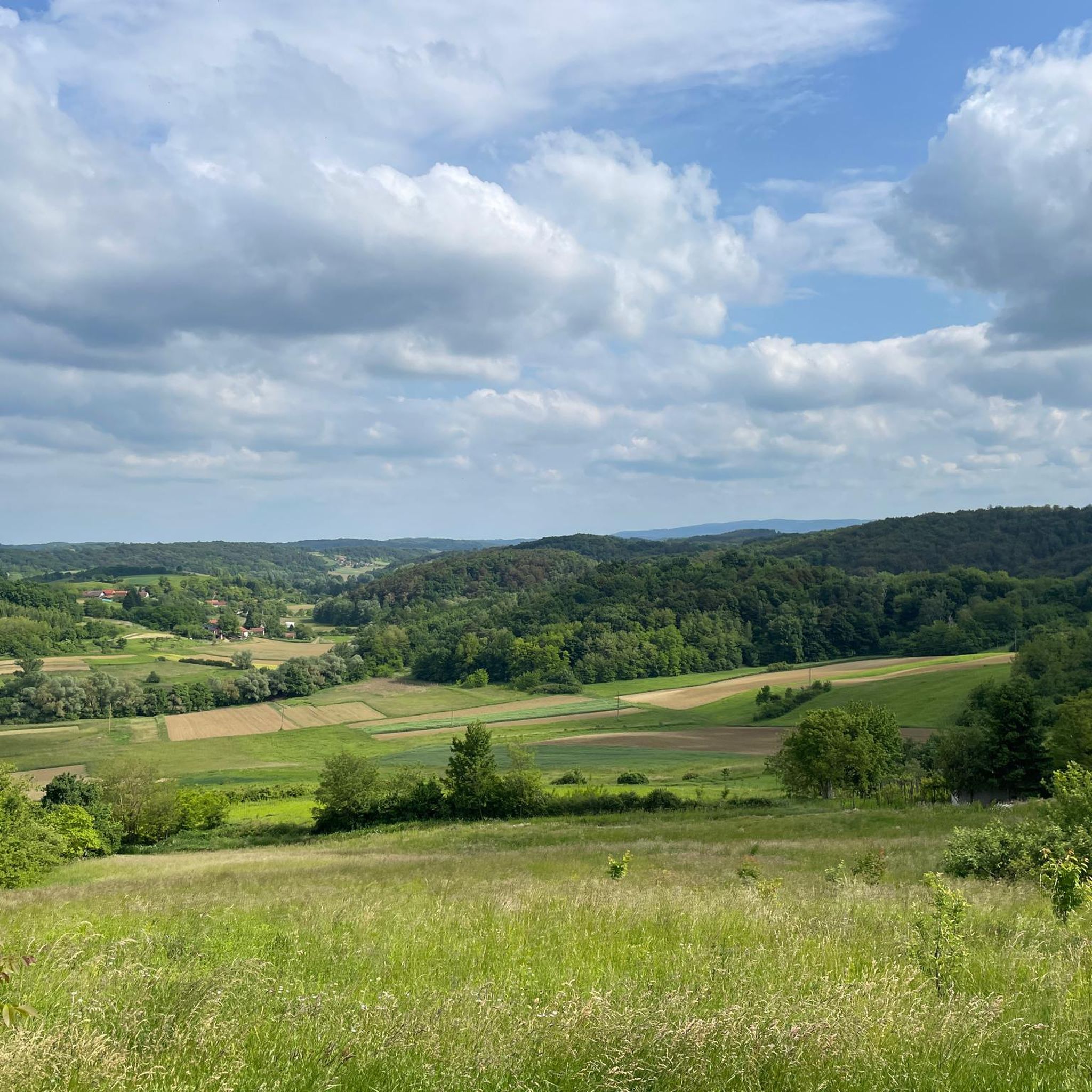
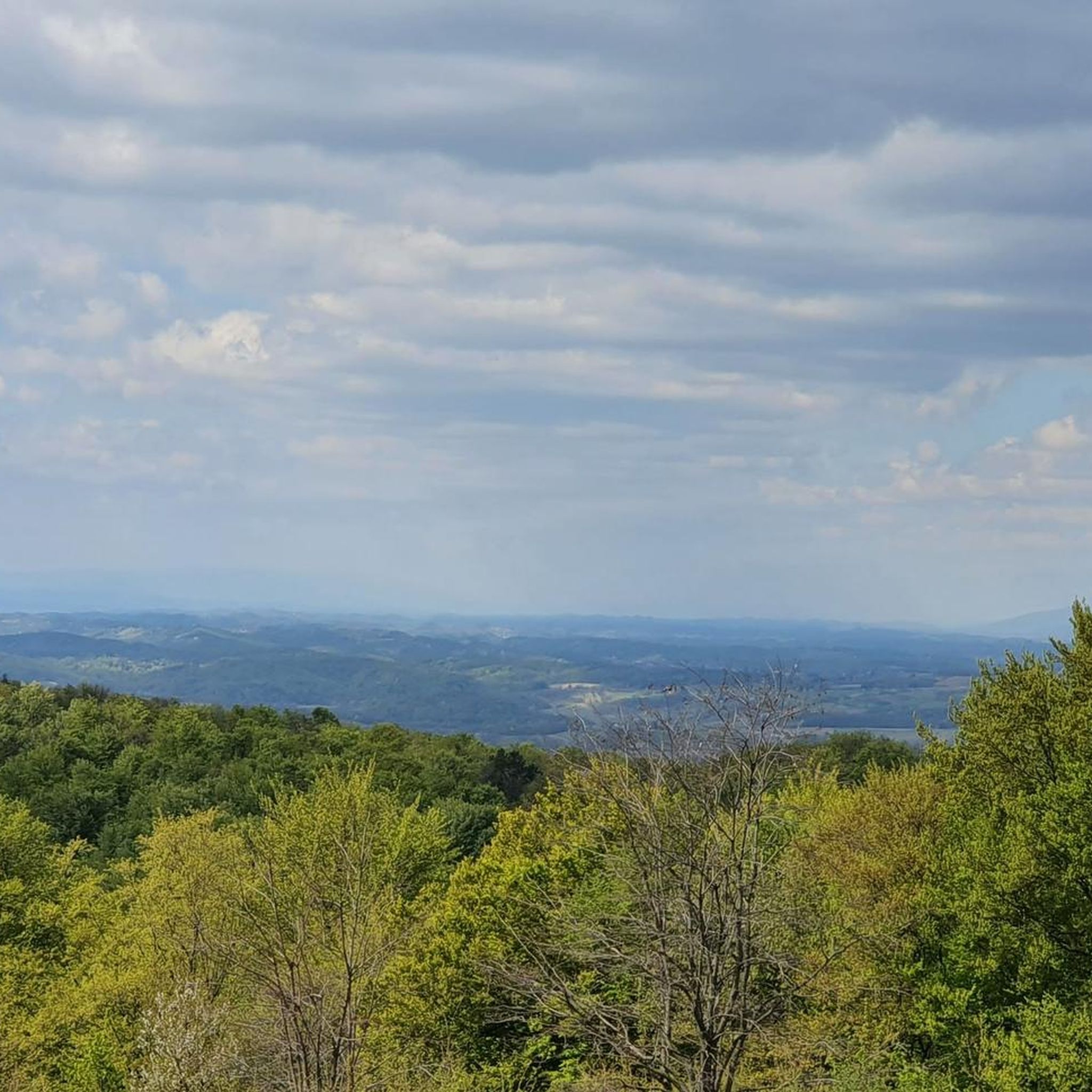
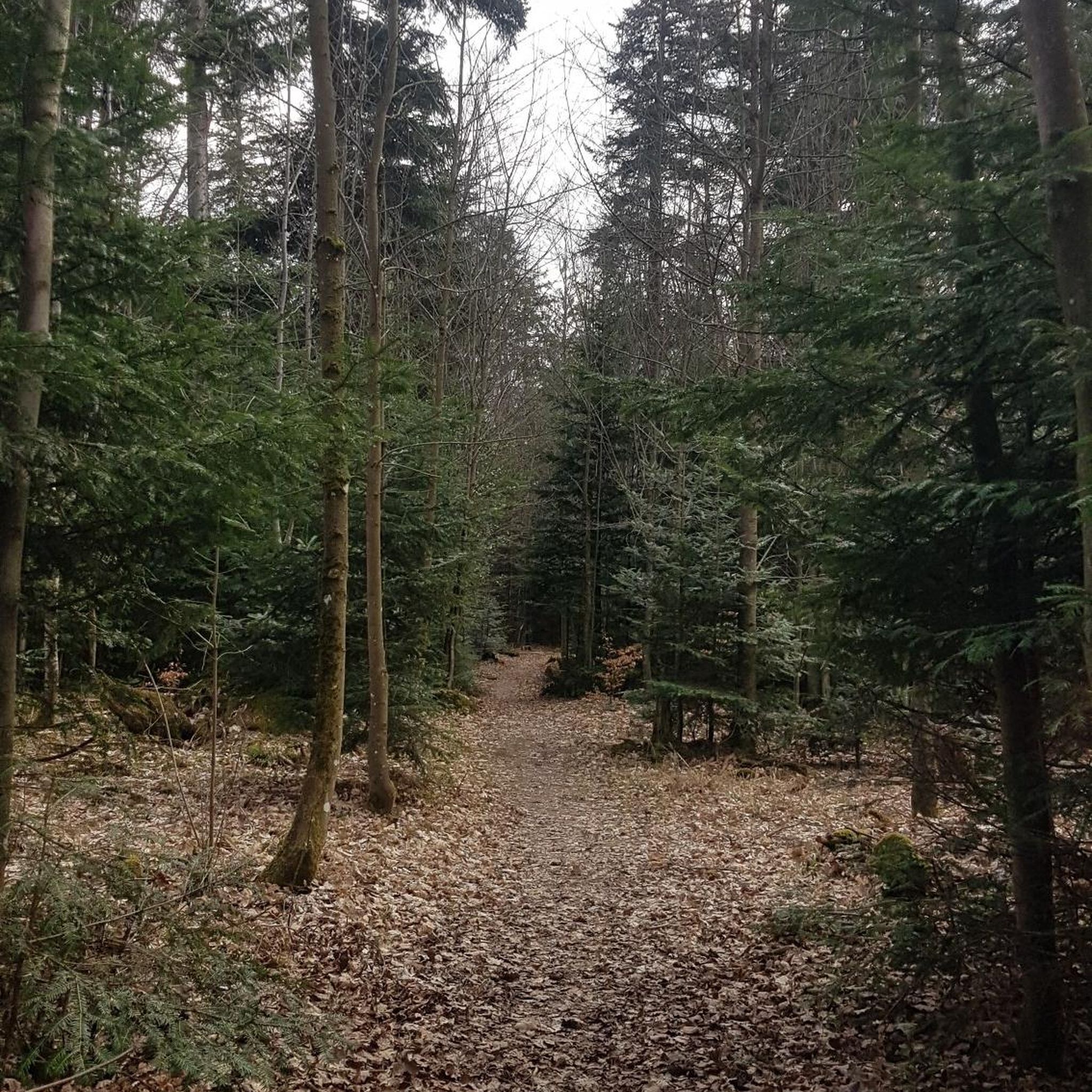
Nasty climb for us enthusiasts but after reaching top you are awarded with absolutely nothing. The worst view of them all. Actually no view at all. Forget it and decent into even more depresive environment.
0
0

The parish church is a single-nave building with a narrower and lower sanctuary closed by a narrow apse and a single-storey sacristy leaning against the north wall of the sanctuary. The main façade, closed by a backstage gable, is richly dissected, with a prominent Classicist portal. The interior of the church is painted with decorative stencils, characteristic of the transition from the 19th to the 20th century. The parish church of St. Jelena Križarica is one of the best examples of baroque classicism in Zagorje, and the main portal is a rare and extremely high quality example of classicist portals in Croatia. Located on a slightly elevated terrain in the center of the village, the church is present in all access views of the city.
2
0
Beautiful church in the city center. You can't miss it.
0
0

In the hamlet of Vragovići in Mađarevo near Novi Marof, there is the Gradišće Ethnopark run by the Greben Ethno Association. The ethnopark has four traditional residential buildings. They are named after their last owners, so we have Kata's house, Bara's house, Ivka's house and Magda's house. Along with them, the park also consists of a two-room outbuilding, ie "barn and barn" and "cornfield and cottage". Read more at: https://www.vecernji.hr/vijesti/starinske-hize-cuvaju-duh-proslih-vremena-301336 - www.vecernji.hr
0
0

The parish of the Holy Trinity is mentioned in the list of parishes of the Zagreb diocese from 1334, while the church itself is mentioned in 1346, during the division of the estate, in a document by which Nikola Toth Susedgradski takes possession of Stubica and Slani Potok. The architecture of the sanctuary has Gothic characteristics of the 15th century - a polygonal sanctuary with radial co-arches and a cross-ribbed vault over two aisles in front of the apse. A wall painting from the 15th century with depictions of Sts. John the Evangelist and Imago pietatis in the space of the ship. A stone saddle decorated with late Gothic motifs from the turn of the 15th to the 16th century has also been preserved. During the interventions in the 16th century, Renaissance features were introduced, visible on the former stone portal of the church with a semicircular arch and a complex profile. The north nave was added in the 16th century, and with the Baroque in the 18th century the church became three-nave. In the 18th century, a new sacristy was built, the front entrances to the side naves were opened and a choir was built, which with its arcades contributes to the integrity of the entrance to the church. In the medallions on the choir there are figures of saints painted at the end of the 18th century. The church was destroyed in a fire in 1834 and underwent alterations during the restoration. Due to the catastrophic earthquake of 1880, the church was rebuilt at the end of the 19th century, when certain Baroque elements were removed and Gothic and Renaissance forms were emphasized again. The bell tower, which received a Neo-Renaissance cap, was renovated, walled-up Gothic bifores were opened, arched window openings were drilled instead of the former square ones, and the interior was given distinctly neo-style features. Retrieved from: https://www.donjastubica.hr/crkva-presvetog-trojstva.html
0
0
A church. With a nice parking for bike if you need it and benches.
0
0
It looks nasty but actually it is not. 2.7km of pure fun.
0
0
Frequently Asked Questions
How many road cycling routes are available around Hrašćina?
There are currently 14 road cycling routes around Hrašćina listed on komoot, all categorized as moderate difficulty, offering a consistent challenge for cyclists.
What kind of terrain can I expect on road cycling routes in Hrašćina?
Road cycling in Hrašćina, nestled within the Krapina-Zagorje County, features a landscape of rolling green hills and mountains. You can expect varied terrain with both challenging ascents and descents, offering rewarding panoramic views across the picturesque countryside. The routes primarily use asphalt roads with generally low traffic.
Are there any longer road cycling routes for experienced riders?
Yes, for those seeking longer rides, the Bukovčanova šuma loop from Mađarevo is one of the longest, covering approximately 63.6 kilometers. Another option is the St. Ivan Zelina Town Center loop from Prepolno, which spans about 57.4 kilometers.
What are the typical elevation gains on road cycling routes in this region?
The road cycling routes around Hrašćina feature significant elevation changes due to the hilly terrain. For example, the St. Ivan Zelina Town Center loop from Prepolno includes an ascent of approximately 640 meters, while the Aquae Iasae loop from Mađarevo has around 550 meters of climbing.
Are there any circular road cycling routes in Hrašćina?
All the road cycling routes listed for Hrašćina are circular loops, designed to bring you back to your starting point. This includes popular options like the Cycling Bridge Zabok loop from Zlatar Bistrica and the Roadbike loop from Zlatar.
What natural features or landmarks can I see along the road cycling routes?
The routes traverse the picturesque Zagorje region, which includes the Zagorje Mountains Nature Park. You'll encounter rolling green hills, dense forests, and open countryside offering panoramic views. While specific attractions directly on the routes are not detailed, the natural beauty of the landscape itself is a major highlight.
What do other road cyclists enjoy most about cycling in Hrašćina?
The komoot community highly rates the road cycling experience in Hrašćina, with an average score of 5.0 stars. Cyclists often praise the varied terrain, which provides both a physical challenge and scenic backdrops, as well as the well-maintained asphalt roads with generally low traffic.
Is Hrašćina suitable for family-friendly road cycling?
While all listed routes are categorized as 'moderate' due to the hilly terrain and distances (typically 35-60 km), they might be challenging for very young children or beginners. However, families with older, experienced cycling members may find the low-traffic roads and scenic environment enjoyable. Always check individual route details for suitability.
When is the best time of year for road cycling in Hrašćina?
The Krapina-Zagorje County generally offers pleasant conditions for cycling from spring through autumn. The mild weather during these seasons makes it ideal for tackling the region's ascents and descents while enjoying the green landscapes. Summers can be warm, while late spring and early autumn often provide comfortable temperatures.
Are there any resources for more detailed cycling maps of the Krapina-Zagorje County?
Yes, for a broader overview of cycling infrastructure and routes within the Krapina-Zagorje County, you can consult regional resources. For example, Visit Zagorje provides a bike map that might offer additional context: Bike Map Zagorje.
What is the shortest moderate road cycling route available?
The Veternica Climb Segment loop from Zlatar is one of the shorter moderate routes, covering approximately 37.2 kilometers with an elevation gain of around 450 meters.
Are there options for road cyclists looking for a route with less overall climbing?
While all routes feature ascents due to the hilly nature of the region, the Cycling Bridge Zabok loop from Zlatar Bistrica has one of the lower total elevation gains among the moderate routes, with approximately 308 meters of climbing over 52.8 kilometers.

Get inspired with the komoot mobile app


Explore more
Browse the best Road cycling routes in other regions.
