Attractions and Places To See around Gaworzyce - Top 20
Best attractions and places to see around Gaworzyce include a mix of historical landmarks, cultural sites, and natural areas. Located in Poland's Lower Silesian Voivodeship, the village and its surrounding Gmina Gaworzyce offer diverse exploration opportunities. The region features picturesque post-glacial Dalkowskie Hills, providing terrain for outdoor activities. Visitors can find historical palaces, churches, and significant natural reserves.
Best attractions and places to see around Gaworzyce
- The most popular attractions is Castle of the Dukes of Głogów, a castle…
Last updated: July 1, 2026
Corpus Christi Church in Głogów
Highlight • Religious Site
Tip by

Monument to the Children of Głogów
Highlight • Monument
Tip by
Sign up now to discover places like this
Get recommendations on the best single tracks, peaks, & plenty of other exciting outdoor places.
Sign up for free
Głogów Church Ruins Memorial
Highlight • Historical Site
Translated by Google •
Tip by

Castle of the Dukes of Głogów
Highlight • Castle
Translated by Google •
Tip by

Ruins of Jakubów Palace
Highlight • Historical Site
Translated by Google •
Tip by

Sign up for free to discover even more attractions around Gaworzyce.
Sign up for free
Already have an account?
Start today with a free account
Your next adventure awaits.
Login or Signup

Tips from the Community

From time to time, open-air concerts are held in the middle. Otherwise, the entrance is closed.
0
0

Entrance to the Ruins of Wolnu Palace. The palace, founded by the von Unwurde family, was built in the first half of the 16th century. It later became the property of the von Kreckwitz family. In 1850, the palace was rebuilt in the neo-Gothic style by von Richter. The estate changed owners several times: the Bomsdorf family, Count Kayserlink, and Henckel von Donnermarck. The last owner was Aurel von Riitberg and his wife Ilse. In February 1945, as the front was passing, the palace was plundered and burned. Since then, it has fallen into ruin. Source: https://www.polskiezabytki.pl/m/obiekt/113/Jakubow_-_Palac/
0
0

Today, the Children of Głogów Monument is not only a significant element of the cityscape, but above all a place of remembrance and tribute to the victims who contributed to preserving Polish independence. It is a unique commemoration that is moving and prompts reflection on the ultimate price one can pay for freedom.
1
0

The famous Romantic writer, musician, and painter E.T.A. Hoffmann painted some of the church's frescoes during restoration work in 1795-1797 while serving his legal practice in Głogów, and later immortalized the church in his fantastic tale "Die Jesuitenkirche in G." (around 1817).
3
0
The Corpus Christi Church in Głogów is a late Baroque church located in the old town near the town hall, originally built as a modest chapel first mentioned in 1403 and later expanded into a Jesuit church designed by Italian architect Giulio Simonetti between 1696-1702. The church was heavily damaged during World War II bombing in 1945, losing its roof and both tower spires, which were only restored in 2019 after over 70 years. The restored church now stands 50 meters tall with its distinctive copper-clad spires topped by symbolic elements including a chalice and cross.
3
0
The monument was unveiled on the 40th anniversary of the outbreak of World War II and the 870th anniversary of Głogów's defense during the Polish-German war.
2
0
The Monument to the Children of Głogów, located near the Głogów Dukes' Castle, commemorates the tragic events of 1109 when German King Henry V tied local children to siege machines during his assault on the fortress. The monument was designed by Bulgarian sculptor Dimitri Petrov Vacev and unveiled on September 1, 1979, built from public donations initiated by the Głogów Cultural Society. The granite sculpture depicts children bound to siege machinery, symbolizing their suffering and desire for freedom, with an inscription from Gallus Anonymus's chronicle stating that it is better to die by the sword for the homeland than to serve foreign nations.
2
0
The church changed hands between Catholics and Protestants multiple times - it was seized by Protestants in 1581, returned to Catholics in 1628, given back to Protestants under Swedish occupation in 1633-1634, and finally returned to Catholic control after 1650. French troops used the church as a military warehouse in 1812, and the building survived being struck by lightning in 1473 which destroyed the interior of its tower.
2
0
Frequently Asked Questions
What historical landmarks can I explore in Gaworzyce and its immediate surroundings?
In Gaworzyce itself, you can visit the historic Gaworzyce Palace, originally a Mannerist manor that now houses the Municipal Office and a cultural center. Don't miss St. Barbara's Church, dating back to the 14th century, and the unique Mausoleum of the von Tschammer Family located next to it. Nearby, in Dalków, you'll find the 16th-century Dalków Palace, surrounded by a 5-hectare park with monumental trees. For more details on Dalków Palace, you can visit its Wikipedia page.
Are there any castles or significant historical sites slightly further afield from Gaworzyce?
Yes, a short distance away, you can explore Czerna Castle in Czerna, a Renaissance castle from 1558 that has largely retained its original structure and now functions as a hotel. In Głogów, you can visit the Castle of the Dukes of Głogów, which houses the Archaeological and Historical Museum. Also in Głogów are the Głogów Church Ruins Memorial, a poignant reminder of wartime destruction, and the Corpus Christi Church in Głogów, a beautifully restored late Baroque religious building.
What natural attractions are there for nature lovers near Gaworzyce?
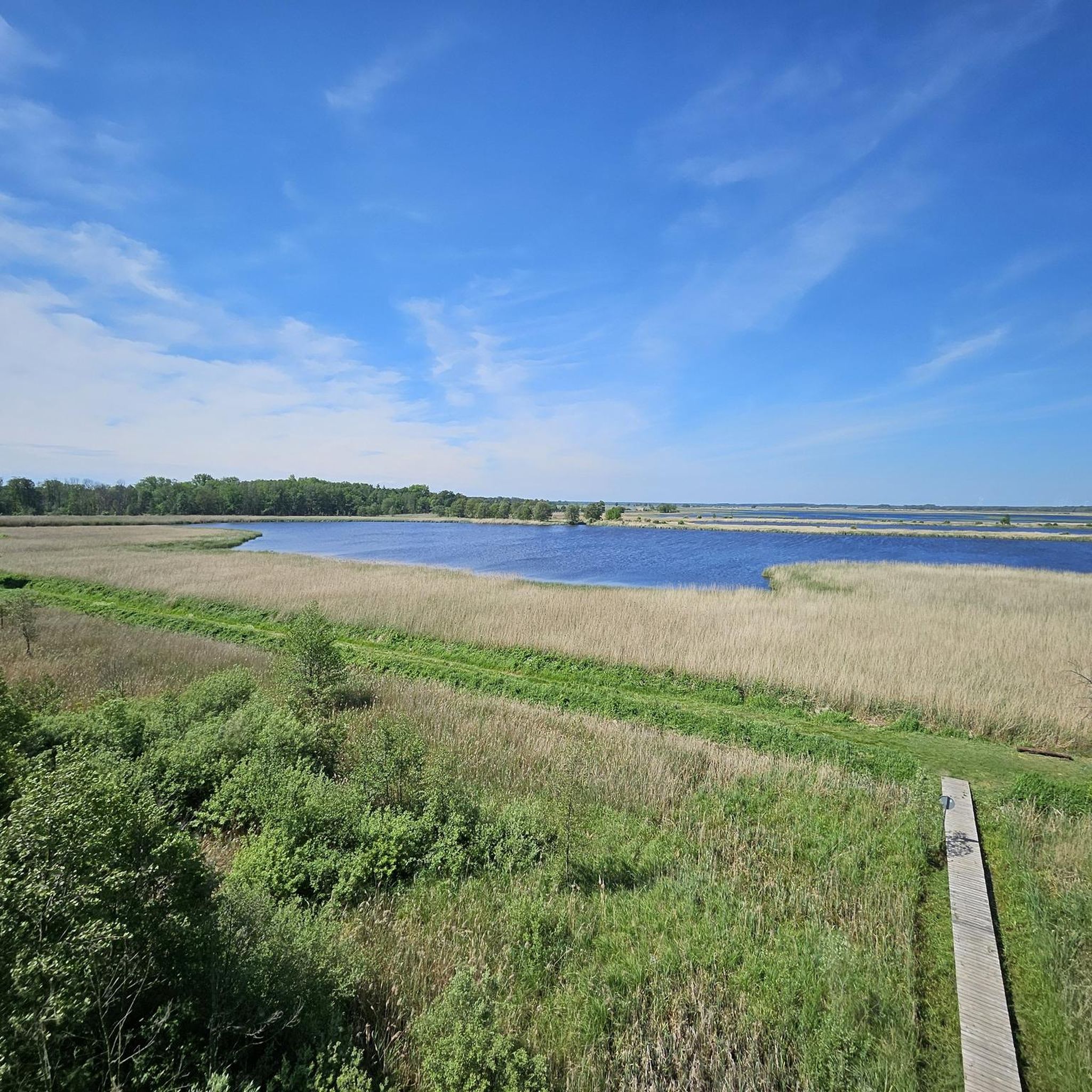
The Dalkowskie Hills, where Gaworzyce is situated, offer picturesque post-glacial landscapes ideal for outdoor activities. A significant natural highlight is the Przemkowskie Ponds, part of the Przemkowski Landscape Park. This area is an important ornithological reserve with over 200 species of water birds. You can explore it via wooden footbridges leading to an observation tower, offering panoramic views of the ponds and surrounding forests.
What outdoor activities can I do around Gaworzyce?
The Dalkowskie Hills provide excellent opportunities for hiking and cycling. For specific routes, you can check out the guide for Easy hikes around Gaworzyce, which includes routes like the 'Ostaszów Boardwalk loop'. Cyclists can find options in the Cycling around Gaworzyce guide, with routes such as the 'Premium Gravel Path – Ruins of Jakubów Palace loop'. There are also Running Trails around Gaworzyce for joggers.
Are there any unique or quirky attractions suitable for families near Gaworzyce?
Absolutely! In the nearby village of Radwanice, you can find the unique attraction of The Green Elephants of Radwanice. These large elephant sculptures, covered in artificial grass, have a history dating back to 1974 and make for a popular photo opportunity. While a bit further afield in Nowa Sól, Park Krasnala (Dwarf Park) is a family-friendly destination known for its collection of dwarf figures, including the world's tallest garden dwarf, along with a mini-zoo and playgrounds.
What is the best time of year to visit Gaworzyce for outdoor activities?
The Dalkowskie Hills and surrounding natural areas are best enjoyed during the warmer months, typically from spring through early autumn (April to October), when the weather is pleasant for hiking, cycling, and exploring the Przemkowskie Ponds. This allows for comfortable outdoor activities and optimal wildlife spotting.
Are there any dog-friendly trails or attractions in the Gaworzyce area?
The natural areas, particularly the Dalkowskie Hills and parts of the Przemkowski Landscape Park, generally offer dog-friendly environments for walks and hikes. It's always advisable to keep dogs on a leash and clean up after them, especially in protected areas like the ornithological reserve at Przemkowskie Ponds.
What cultural events or local traditions can I experience in Gaworzyce?
Gaworzyce hosts an annual event called the Gaworzycki Jarmark Kupiecki (Gaworzyce Merchant Fair) in the village park. This fair revives the village's medieval merchant traditions, offering local products, crafts, and culinary delights, providing a great opportunity to experience local culture.
Are there any accessible attractions for visitors with mobility considerations?
While many historical sites may have limited accessibility due to their age, the Monument to the Children of Głogów is noted as wheelchair accessible. For natural areas, the wooden footbridges at Przemkowskie Ponds leading to the observation tower might offer some accessibility, but it's best to verify specific conditions beforehand. Modern recreational areas like the Bulwar Nadodrzański (Oder Boulevard) in Głogów are designed with walking and cycling paths, making them generally more accessible.
Can I find any ruins or less-preserved historical sites in the region?
Yes, for those interested in historical ruins, the Ruins of Jakubów Palace are a notable site. This palace, originally built in the 16th century and later rebuilt in the neo-Gothic style, was destroyed during World War II and remains a poignant ruin today. Additionally, the Głogów Church Ruins Memorial serves as a powerful monument to the destruction of Głogów during World War II.
What is the significance of the Monument to the Children of Głogów?
The Monument to the Children of Głogów commemorates a tragic event from 1109 when German King Henry V reportedly used local children as human shields during his assault on the Głogów fortress. The granite sculpture depicts children bound to siege machinery, symbolizing their suffering and desire for freedom, and serves as a powerful reminder of Polish independence.

Get inspired with the komoot mobile app


Explore more
Still not found the Highlight you’re looking for? See guides of the top attractions in other regions:
