Attractions and Places To See around gmina Łęki Szlacheckie - Top 20
Best attractions and places to see around gmina Łęki Szlacheckie include natural landscapes and historical sites. The gmina is characterized by significant forest cover, with nearly 37% of its area covered by forests, and features the Luciąża River. Part of the region is situated within the Sulejowski Landscape Park, offering opportunities for outdoor activities. Historical landmarks such as a 19th-century manor house and various religious buildings are also present.
Best attractions and places to see around gmina Łęki Szlacheckie
- The…
Last updated: May 20, 2026
Cieszanowice Reservoir
Highlight • Lake
Translated by Google •
Tip by

Church of the Assumption of the Blessed Virgin Mary in Milejów
Highlight • Religious Site
Translated by Google •
Tip by
Sign up now to discover places like this
Get recommendations on the best single tracks, peaks, & plenty of other exciting outdoor places.
Sign up for free
St. Alexius Roman Catholic Church in Przedbórz
Highlight • Religious Site
Translated by Google •
Tip by

Małpi Most (Monkey Bridge) over the Pilica River
Highlight • Bridge
Translated by Google •
Tip by

Church of the Visitation of the Blessed Virgin Mary in Rozprza
Highlight • Religious Site
Translated by Google •
Tip by
Sign up for free to discover even more attractions around gmina Łęki Szlacheckie.
Sign up for free
Already have an account?
Start today with a free account
Your next adventure awaits.
Login or Signup


Tips from the Community

It is better to arrive from Stobnica, because from the east you have to cross a long section of forest sand.
0
0

You can test your skills and cross the rope bridge to the other side of the Pilica River... with your bike.
0
0

Crossing this structure by bike can make your legs shake. There is a ford nearby - water up to your knees
0
0

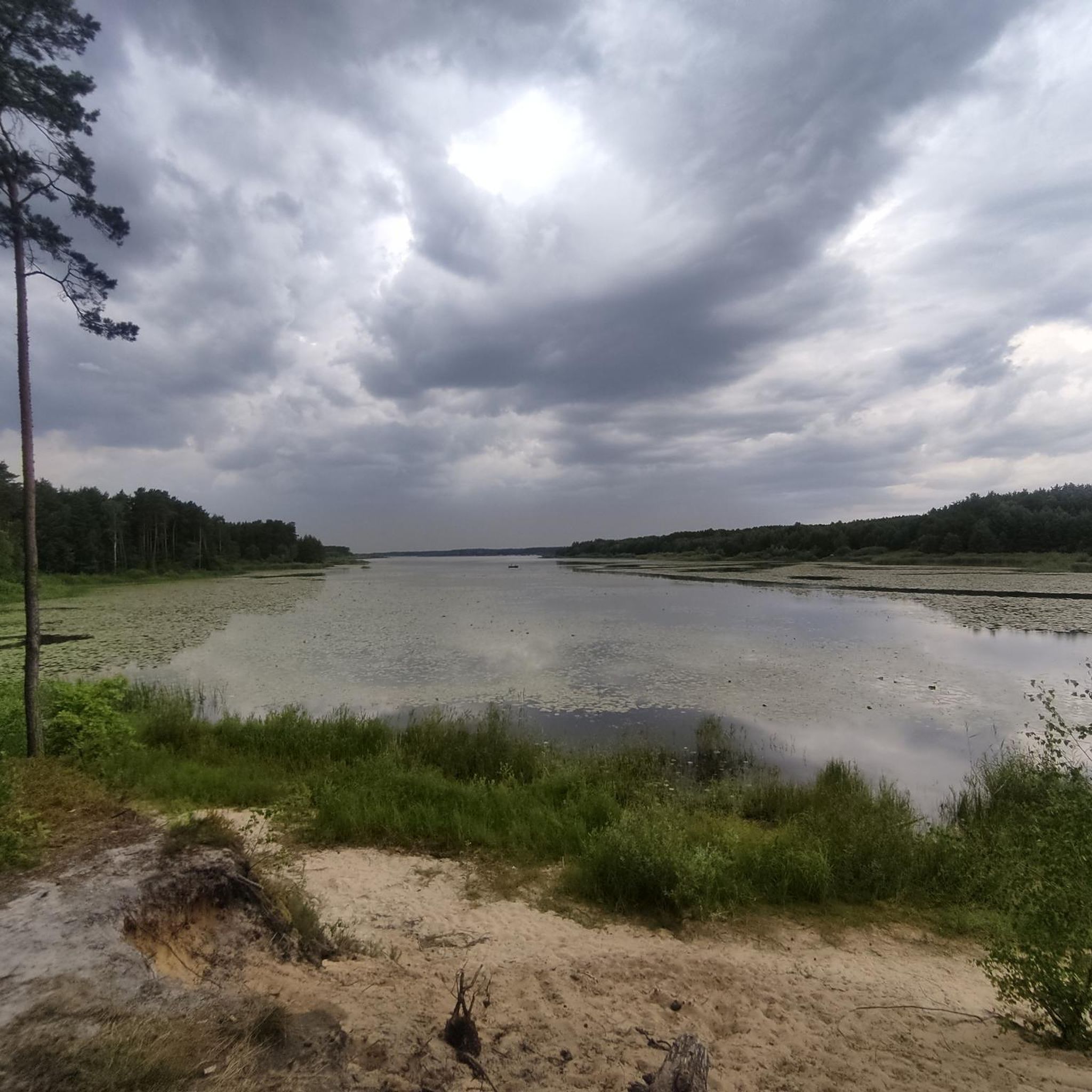
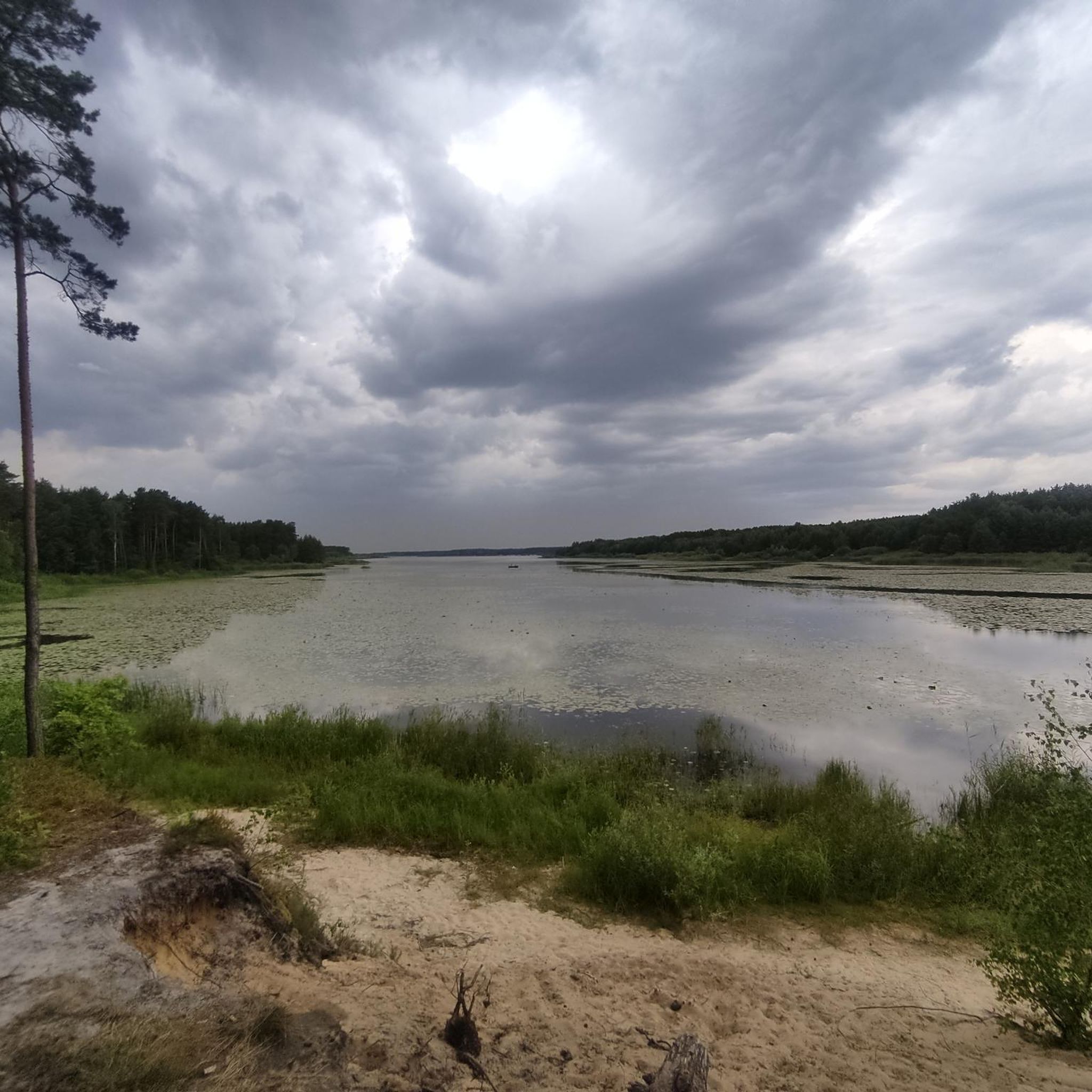
A dam reservoir on the Luciąża River, the second largest reservoir in Piotrków County with a water surface area of 217 ha and a capacity of 7.34 million m³. Located in Piotrków County in the communes of Łęki Szlacheckie (70% of the coastline), Rozprza and Gorzkowice. In the 1960s, a comprehensive plan for irrigation and meadow management in the Luciąża River valley was developed. Its construction began in 1986 and it was put into service in 1998. During construction, the inhabitants of the villages of Kuźnica Żerechowska, Łęgoń, Wygoda, Trzciniec and Borowiec were relocated, after which a chapel protruding from the water surface remained. The purpose of the reservoir was from the beginning to irrigate meadows for milk production and to serve as a water retention facility. Currently, it is a popular place of recreation and relaxation in Piotrków County. It is also appreciated by anglers who catch pike, crucian carp, roach, carp, bream and many other species of fish. The maximum depth of water near the dam is 12 meters. In the reservoir, during the season, water equipment rentals are available: boats, kayaks, water bikes. There are numerous camping sites and camping houses around the reservoir.
0
0
The distance of Milejów from Sulejów influenced the monks to decide to build a wooden church in Milejów, which was dedicated to Saint Joseph. Probably as a result of invasions and wars, this temple burned down. In 1468, another wooden church was built, dedicated to Saint Mary Magdalene, which by the decision of Pope Sixtus IV was transferred in 1482 to the pastoral care of the Norbertine Order from Witów. In 1743, the Witów abbey built a third church in Milejów, which it dedicated to the Holy Guardian Angels. This state of affairs lasted until 1819, when Tsar Alexander I abolished the Norbertine Order, taking over the landed estates for the state and entrusting the parish to the care of diocesan priests. Among the many epitaphs decorating the walls of the Milejów church, we find the one dedicated to Fr. Piotr Jankowski, who served as parish priest in the years 1890-1926. It was this priest who contributed to the establishment of the People's House, the Volunteer Fire Department and the current brick church in Milejów, which was consecrated in 1902 by Bishop Stanisław Zdzitowiecki - the ordinary of the Włocławek diocese. In 1920, with the establishment of the diocese and the subsequent expansion of its borders, Milejów was incorporated into the community of the Łódź Church. It should be noted that Bishop Jan Wawrzyniec Kulik came from Milejów - the third auxiliary bishop of the Łódź diocese since its establishment. A painful chapter in the history of the Milejów parish is the period of World War II. After all, after the "Battle for Piotrków Road", which was an expression of commitment to the fight against the occupier, the Germans murdered many residents of Milejów and villages belonging to the parish. Two priests: Fr. Jan Mikołajczyk and Father Stefan Trzaska were taken to the Dachau concentration camp, where they died.
0
0
The Rozprza parish is one of the very old ones. It may date back to the 11th century. The original church was founded by Polish kings. A new wooden one was built in its place. In the years 1763-67 Szymon Zaremba, the castellan of Sieradz, built a brick church here, consecrated on 19 October 1777 by Ignacy Kozierowski, the suffragan of Gniezno. It survived until World War I, when, thanks to the efforts of Father Stanisław Szablewski, the current church was built according to the design of Feliks Nowicki. The construction was completed in 1922 by Father Bolesław Korwin Szymanowski. Thanks to the efforts of Father Marian Minor, the presbytery was remodelled and a new marble altar was built in it, and the church was covered with galvanised sheet metal.
0
0
Monkey Bridge... With a bike in my hand and SPD shoes - my ass wrinkles a bit, but after crossing and recording this fact, what a SATISFACTION!!!
0
0

The place is quite nice, but the crowd drives cars right up to the water. A place with potential, terribly neglected.
0
0
Frequently Asked Questions
What natural attractions can I explore in Gmina Łęki Szlacheckie?
Gmina Łęki Szlacheckie is rich in natural beauty. A prominent feature is the Cieszanowice Reservoir, where approximately 70% of its shoreline lies within the gmina, offering opportunities for recreation and fishing. The Luciąża River also flows through the area, and its valley includes marshy areas under the Natura 2000 program, such as Łąka in Bęczkowice, known for the rare Loesel's liparis orchid. A significant portion of the gmina is also part of the Sulejowski Landscape Park, which features seven nature reserves and extensive forests.
Are there any historical sites or cultural landmarks to visit?
Yes, the gmina offers several historical and cultural landmarks. You can visit the 19th-century Manor House and Park in Łęki Szlacheckie, which is listed in the Register of Monuments. Religious buildings like the St. Alexius Roman Catholic Church in Przedbórz, with origins dating back to 1278, and the Church of the Assumption of the Blessed Virgin Mary in Milejów, first built in 1468, are also notable. Additionally, Pocieszna Górka is a historical pilgrimage site for local residents.
What kind of outdoor activities can I do near these attractions?
The region is ideal for various outdoor activities, especially cycling. You can find numerous routes for different cycling styles. For example, there are easy and moderate touring bicycle routes like the 'Cieszanowice Reservoir – Roadside Shrine loop from Szczepanowice' or the 'Wapienniki Lake – Przedbórz Market Square loop from Będzyn'. Road cyclists can explore routes such as the 'War Cemetery in Milejów – Church in Milejów loop from Rozprza'. Mountain biking enthusiasts have options like the 'Limestone Lakes near Sulejów – Stacja Polan Bar loop from Poniatów'. You can find more details on these and other routes in the Cycling around gmina Łęki Szlacheckie, Road Cycling Routes around gmina Łęki Szlacheckie, and MTB Trails around gmina Łęki Szlacheckie guides.
Are there any unique or challenging spots for adventurers?
For those seeking a unique and challenging experience, the Małpi Most (Monkey Bridge) over the Pilica River offers an adventure. This bridge is often damaged, requiring visitors to wade through knee-deep water to cross the Pilica River. It's known for its challenging passage but rewards with a sense of accomplishment.
What is the Sulejowski Landscape Park and what does it offer?
The Sulejowski Landscape Park, established in 1994, encompasses a part of Gmina Łęki Szlacheckie. It is part of the larger Nadpiliczne Landscape Parks complex and features seven nature reserves. The park offers opportunities for nature exploration, with a blue hiking trail (Pilica River Recreational Trail) and a green cycling trail available for visitors to enjoy its diverse landscapes and rich forest cover.
Are there family-friendly attractions in the area?
Yes, the Cieszanowice Reservoir is considered family-friendly, offering a popular spot for recreation and relaxation. Its shores provide space for various activities. Additionally, the Church of the Visitation of the Blessed Virgin Mary in Rozprza is also noted as a family-friendly historical site.
Where can I find peaceful retreats or agritourism options?
For those seeking tranquility, Agroturystyka Antonielów offers a peaceful forest setting, complete with deer breeding, just a few kilometers from the Cieszanowice Reservoir. Another quiet retreat amidst fields and forests is Olszyny, providing a serene environment for relaxation.
What is the historical significance of Łęki Szlacheckie village?
The village of Łęki Szlacheckie has a rich history, with records dating back to the 12th century. It was known for supplying combat horses in 1312. The village's name itself may be linked to the historical prevalence of saddlery in the area. Notably, Józef Wasiłowski, the father of the renowned Polish poet Maria Konopnicka, lived and passed away in the local manor house.
Are there any ruins or ancient structures nearby?
Yes, in the vicinity of Gmina Łęki Szlacheckie, you can find the Ruins of the Castle in Majkowice, which represent a significant historical landmark for those interested in ancient structures and local history.
What do visitors particularly enjoy about the Cieszanowice Reservoir?
Visitors appreciate the Cieszanowice Reservoir as a popular place for recreation and relaxation. It's also highly regarded by anglers for its diverse fish species, including pike, crucian carp, roach, carp, and bream. During the season, water equipment rentals like boats, kayaks, and water bikes are available, and there are numerous camping sites around its shores.
What is the best time to visit Gmina Łęki Szlacheckie for outdoor activities?
Given the prevalence of water-based recreation at the Cieszanowice Reservoir and the extensive cycling and hiking trails within the Sulejowski Landscape Park, the warmer months from late spring to early autumn (May to September) are generally the best time to visit. This period offers pleasant weather for outdoor activities and allows for full enjoyment of the natural attractions.
Can I find any religious buildings with significant history in the area?
Absolutely. Besides the St. Alexius Roman Catholic Church in Przedbórz and the Church of the Assumption of the Blessed Virgin Mary in Milejów, the Church of the Visitation of the Blessed Virgin Mary in Rozprza is another historically significant religious site. Its parish is one of the oldest, possibly dating back to the 11th century, with the current brick church built in the early 20th century.
Most popular routes around gmina Łęki Szlacheckie

Get inspired with the komoot mobile app


Explore more
Still not found the Highlight you’re looking for? See guides of the top attractions in other regions:
