Attractions and Places To See around gmina Sitno - Top 20
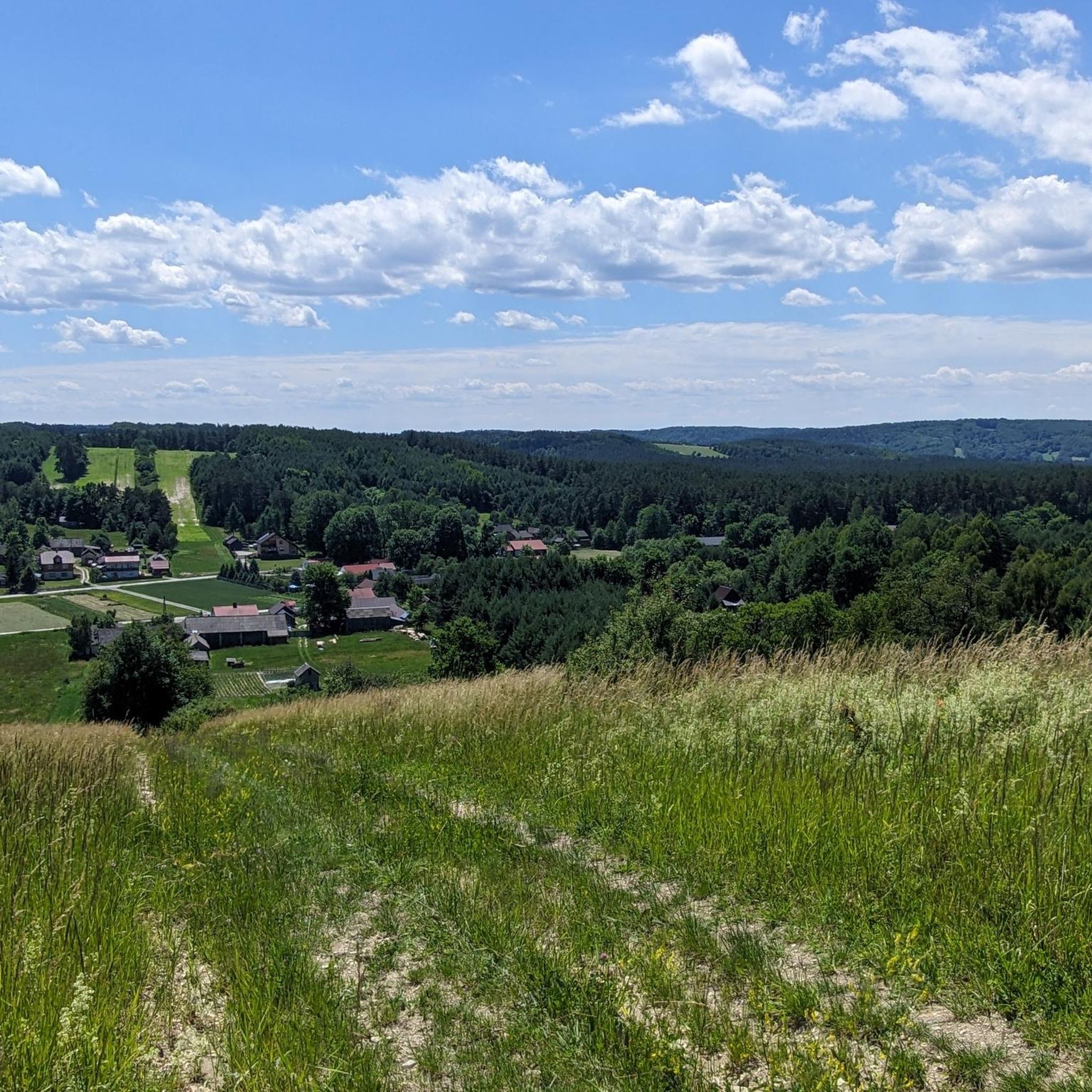
Attractions and places to see around gmina Sitno are located in Zamość County within the Lublin Voivodeship of eastern Poland. This primarily agricultural region encompasses part of the Skierbieszów Landscape Park, offering a blend of natural scenery and cultural sites. Visitors can explore historical landmarks, traditional rural architecture, and restored memorial sites. The area provides opportunities for experiencing the landscape of the Działy Grabowieckie hills.
Best attractions and places to see around gmina Sitno
- The most popular attractions is Town…
Last updated: July 1, 2026
Cathedral of the Resurrection and St. Thomas the Apostle
Highlight • Religious Site
Tip by

Szczebrzeska Gate
Highlight • Historical Site
Translated by Google •
Tip by

Sign up now to discover places like this
Get recommendations on the best single tracks, peaks, & plenty of other exciting outdoor places.
Sign up for free
Jan Zamoyski Monument
Highlight • Monument
Translated by Google •
Tip by

Zamość Fortress Fortifications
Highlight • Historical Site
Translated by Google •
Tip by

Town Hall on the Market Square
Highlight • Monument
Translated by Google •
Tip by
Sign up for free to discover even more attractions around gmina Sitno.
Sign up for free
Already have an account?
Start today with a free account
Your next adventure awaits.
Login or Signup

Tips from the Community

The former Szczebrzeska Gate (known as Floriańska Gate) was built at the beginning of the 17th century, when Zamość was being expanded, as one of the three gates at that time, located at the southern line of the city walls, on the road to the west (currently at Szczebrzeska Street).
0
0
The Town Hall is considered a symbol of Zamość. It graces the Market Square. The Town Hall houses the Zamość City Hall, the Municipal Police, and the Zamość Tourist and Historical Information Center with the "Ratusz" Photography Gallery.
0
0

Zamość Fortifications The historic fortifications surrounding the Old Town—a great place for a walk and photos with a view of the walls 🧱.
0
0

You can easily get around by bike.
0
0

The Szczebrzeszyn Gate was built according to the design of Bernardo Morando in the years 1603-1605. The gate was placed in the curtain between bastions II and III, it opened towards the Szczebrzeszyn route, through a causeway running above the defensive water reservoir. The gate was rebuilt in the years 1821-1824, giving it the features of classicist architecture. In 1866, after the liquidation of the fortress, the passage was bricked up. At that time, it housed a prison and a guardhouse. After World War II, initially it housed a repatriation office and a radio station, and then in the 1950s and 1960s, the "Staromiejski" hotel. Until the 1990s, it housed a police station.
2
0
The Renaissance church in Zamość's Old Town was built in the late 16th century. It is located on the Lublin Renaissance Trail. The church was founded by the city's founder, Jan Zamoyski, and designed by the Italian architect Bernardo Morando, which is why it draws inspiration from Italian churches of the 15th and 16th centuries. Initially a collegiate church, Zamość fell under the Chełm bishopric. Only in 1992, when the Zamość-Lubaczów diocese was established, was it elevated to a cathedral. After the death of its architect, in the early 17th century, the interior decoration of this church was completed. The church was consecrated in 1637. Significant reconstruction was carried out only during the partition period, in 1824–1826, under the command of General J. Mallet-Malletski, who then directed the expansion and modernization of the Zamość fortress. During this period, the cathedral was lowered, and the façade, among other things, was altered, giving it a more classicist appearance. The inscriptions and coats of arms of the Zamoyski family disappeared, and some interior elements were removed. Further alterations and renovations, some of which resulted in extensive damage, were carried out in the second half of the 19th century and the first half of the 20th century.
0
0
The Renaissance church in Zamość's Old Town was built in the late 16th century. It is located on the Lublin Renaissance Trail. The church was founded by the city's founder, Jan Zamoyski, and designed by the Italian architect Bernardo Morando, which is why it draws on Italian churches of the 15th and 16th centuries. Initially a collegiate church, Zamość fell under the Chełm bishopric. Only in 1992, when the Zamość-Lubaczów diocese was established, was it elevated to a cathedral. After the death of its architect, in the early 17th century, the interior decoration of this church was completed. The church was consecrated in 1637. Significant reconstruction was carried out only during the partition period, in 1824–1826, under the command of General J. Mallet-Malletski, who then directed the expansion and modernization of the Zamość fortress. During this period, the cathedral was lowered, and the façade, among other things, was altered, giving it a more classicist appearance. The inscriptions and coats of arms of the Zamoyski family disappeared, and some interior elements were removed. Further alterations and renovations, some of which resulted in extensive damage, were carried out in the second half of the 19th century and the first half of the 20th century.
1
0
The Jan Zamoyski Monument is located in the Old Town of Zamość, opposite the Zamoyski Palace on Akademicka Street. The monument was designed by a Krakow sculptor, professor at the Academy of Fine Arts in Krakow, Marian Koniecznyο, creator of the Monument to the Heroes of Warsaw, among others. The monument was unveiled on September 17, 2005, on the 400th anniversary of Jan Zamoyski's death. The monument is 10 meters high in total and cost 600 thousand złoty.
0
0
Frequently Asked Questions
What historical landmarks can I explore in and around Gmina Sitno?
The region offers several significant historical sites. You can visit the Palace in Sitno, a late 19th-century brick palace set within an expansive park. Additionally, the broader Zamość area features the Cathedral of the Resurrection and St. Thomas the Apostle, a 16th-century religious building known for its 'Lublin Renaissance' style, and the Szczebrzeska Gate, part of the historic Zamość Fortress.
Are there any natural attractions or parks in Gmina Sitno?
Yes, Gmina Sitno encompasses a portion of the Skierbieszów Landscape Park. This protected area offers natural scenery and opportunities to enjoy the landscape of the Działy Grabowieckie hills, which are characterized by favorable agro-climatic conditions.
What cultural sites are there to see in the region?
Beyond the historical landmarks, Gmina Sitno has undertaken efforts to restore local memorial and religious sites, including various figures of saints, wooden and stone crosses, and chapels. In Horyszów Polski, you can also find a monument commemorating the stay of Cardinal Stefan Wyszyński.
Can I find traditional architecture in Gmina Sitno?
Yes, the gmina is known for preserving a good amount of its historical wooden architecture. Traditional rural buildings blend into the natural landscape, offering a glimpse into the region's past.
What are some family-friendly attractions near Gmina Sitno?
Many of the historical sites in the broader Zamość area are considered family-friendly. The Town Hall on the Market Square in Zamość, with its beautiful architecture and charming surroundings, is a great spot for families. The Zamość Fortress Fortifications also offer an engaging historical experience for all ages.
What outdoor activities can I do near these attractions?
The region around Gmina Sitno is suitable for various outdoor activities. You can find numerous routes for hiking and cycling. For example, there are easy hiking trails like the 'Zamość Town Hall – Szczebrzeska Gate loop' or cycling routes such as the 'Zamość City Reservoir – Szczebrzeska Gate loop'. You can explore more options on the hiking guide or cycling guide for the area.
Are there hiking trails suitable for beginners or short walks?
Yes, there are several easy hiking trails available. For instance, the 'Zamość Town Hall – Szczebrzeska Gate loop' is an easy 6.3 km route, and the 'New Lublin Gate – Anchor on Solny Square loop' is an easy 4.4 km walk. More easy options can be found in the easy hikes guide.
What do visitors enjoy most about the attractions around Gmina Sitno?
Visitors frequently appreciate the beautiful architecture and historical significance of sites like the Town Hall on the Market Square in Zamość, noting its charming surroundings. The extensive Zamość Fortress Fortifications are also popular for walks and photos, offering great views of the old walls.
Is there a monument dedicated to Jan Zamoyski in the area?
Yes, in the Old Town of Zamość, you can find the Jan Zamoyski Monument. This 10-meter high monument, unveiled in 2005, is located opposite the Zamoyski Palace on Akademicka Street.
What is the Zamość Fortress and its historical importance?
The Zamość Fortress Fortifications are extensive defenses built between 1579 and 1618, making it one of the largest fortresses of the Polish-Lithuanian Commonwealth. It famously withstood five sieges throughout its history, including during the Khmelnytsky Uprising and the November Uprising.
Are there any specific religious sites worth visiting?
Beyond the restored local memorial and religious sites within Gmina Sitno, the Cathedral of the Resurrection and St. Thomas the Apostle in Zamość is a prominent religious building. It was designed by Bernardo Morando in the late 16th century and is a key example of the 'Lublin Renaissance' architectural style.

Get inspired with the komoot mobile app


Explore more
Still not found the Highlight you’re looking for? See guides of the top attractions in other regions:
