Attractions and Places To See around Jasień - Top 20
Best attractions and places to see around Jasień include historical sites and natural features within the gmina in Żary County, Lubusz Voivodeship. This region in western Poland is characterized by rolling hills and offers a mix of historical architecture and industrial heritage. Visitors can explore various man-made monuments and historical sites. The area provides opportunities to discover local history and unique structures.
Best attractions and places to see around Jasień
- The most popular attractions is Alfred Nobel Power Plant,…
Last updated: July 15, 2026
Miłowice Palace
Highlight • Castle
Translated by Google •
Tip by

Abandoned Nitrocellulose Station of Alfred Nobel AG
Highlight • Historical Site
Based on the construction and the shape of the holes in the floor, I can't imagine that.
Translated by Google •
Tip by

Sign up now to discover places like this
Get recommendations on the best single tracks, peaks, & plenty of other exciting outdoor places.
Sign up for free
Silos of the Alfred Nobel Plant (Krzystkowice)
Highlight • Monument
Translated by Google •
Tip by
Fountain in Tuplice Park
Highlight • Monument
Translated by Google •
Tip by
Ruins of the 14th-century church in Wanderfeld
Highlight • Historical Site
Translated by Google •
Tip by

Sign up for free to discover even more attractions around Jasień.
Sign up for free
Already have an account?
Start today with a free account
Your next adventure awaits.
Login or Signup

Tips from the Community

a great monument, well-preserved walls, and that tree in the middle - a priceless view
0
0

The temple was built in the 13th century by Prince Henry the Bearded and his wife Jadwiga. The church itself was built of field stones and bog iron ore. The brick and wooden turret with a bell dates back to the 20th century. It is a replica of the medieval one that collapsed in 1688. In the inner wall there was a pulpit and a painting depicting the agreement concluded in 1214 by the Piast princes, brothers Henry II the Pious and Konrad, who were fighting each other. Their mother, Jadwiga, tried to reconcile them. Apparently, she did not quite succeed, because the conflict turned into a fratricidal war. Konrad could not forgive his father, Henry the Bearded, for omitting his older brother in appointing him as his successor. The dispute was resolved by a battle. Henry was supported by the Germans, Konrad by the Poles. In the Battle of Studnica, Konrad's troops were defeated by the Germans. In the niches of the stone walls, a chapel with figures of the Virgin Mary and a cross with the inscription "wiederfeh'n" (we will meet again) have survived. A tree rooted in the walls adds magic to this place. Granite tombstones have been collected in the square by the tower. This is a remnant of the pre-war cemetery. During the Reformation, the church was administered by the Evangelicals and then by the Catholic parish in Słocina. Like many monuments in the region, it was not spared by the Thirty Years' War (1618-48). In the form of a secured ruin and a restored tower, it has survived to this day.
0
0

It’s called „hotel” by locals due to it’s shape with characteristic balcony however it was nitrocelulose station where celulose was nitrated. Process was extremaly toxic. Balconies were needed to allow workers to take quick brake from acidic gases. Holes in the floor are leftovers from vertical mixing instalation. On the top floor you can find concrete celulose reservoirs. On the ground floor cylindrical bases for tanks and machinery. Ground floor was covered with special tiles that could stand contact with acid. Building have concrete support and walls made of bricks. Because nitrocelulose is explosive the whole idea is: in case of explosion the support remains while the walls are blown up. This solution allowed to quickly fix damage and continue production.
1
0

I didn't notice this villa here, but I did notice the nice square with a fountain.
3
0

All the signs said it was a hotel on the former complex of Alfred Nobel's explosives factory. Based on the construction and the shape of the holes in the floor, I can't imagine that.
4
1
The buildings were wholly or partially surrounded by earthen walls intended to protect against the impact of a blast wave from the outside or to suppress the blast wave inside. The distinctive feature was a massive reinforced concrete skeleton and light "blow-out windows" In the event of an explosion, the brick bulkhead was intended to shatter and be thrown out of the object. The most dangerous semi-finished products were stored in huge stable concrete cylinders several floors high, the walls were 1-2 m thick and reinforced with additional internal ribs and external pillars, while the light roofs were made of planks. Three such cylinders, apparently intended for use with nitroglycerine and nitrocellulose, were also sprayed with earth. The use of silos is still a mystery. Different sources reflect different uses. Text of the information boards
4
1

At the beginning of the 17th century the village belonged to Cristoph von Berge, and in the 50s of the 17th century it belonged to Albrecht von Ronow. In 1642 the property was owned by Lieutenant Rudolf von Bünau, owner of the villages Nowa Roli, Świbinek, Matuszowice and Czerna. In 1668 the prince's village received town charter from Prince Christian I in 1678. The property later belonged to the family of Counts von Promnitz and Counts von Brühl. After the Congress of Vienna in 1815, they became the property of the Prussian state. In 1879 the property was owned by the Counts of Brühl and belonged to them until 1945. Source German Google translation from https://zamkilubuskie.pl/tupliceteuplitz/
3
0
Until 1684 Mildenau was owned by the von der Dahme and von Knobelsdorff families, from 1685 until the end of the 18th century owned by the von Dyhrn family, who rebuilt and enlarged the old castle. The last owner of this family on Mildenau was Marianne von Dyhrn, through whom the manor passed into the possession of her direct descendants from the Keck von Schwarzbach family around 1793. In 1827 the manor came into the hands of the von Mutzdorf family. The value of the entire manor with the castle and 40 individual ponds was estimated at around 30,000 Reichsthaler. Leberecht Theüner acquired it around 1841, and his son Moritz Theüner inherited it nine years later. The von Wackerbarth family bought the estate in 1913, but sold it three years later to an entrepreneurial family from Sorau who were active in the textile industry. Around 1928 Mildenau became the home of the von Dyhrn family again, today a welfare home. Source: Wikipaedia You can enter the area without any problems.
0
0
Frequently Asked Questions
What historical sites can I explore around Jasień?
The Jasień area in Żary County is rich in historical sites. You can visit the impressive Miłowice Palace, which has a long history of ownership by various noble families. Another significant historical landmark is the Ruins of the 14th-century church in Wanderfeld, a fascinating site with well-preserved walls and a unique tree growing at the altar's location.
Are there any unique industrial heritage sites in the Jasień area?
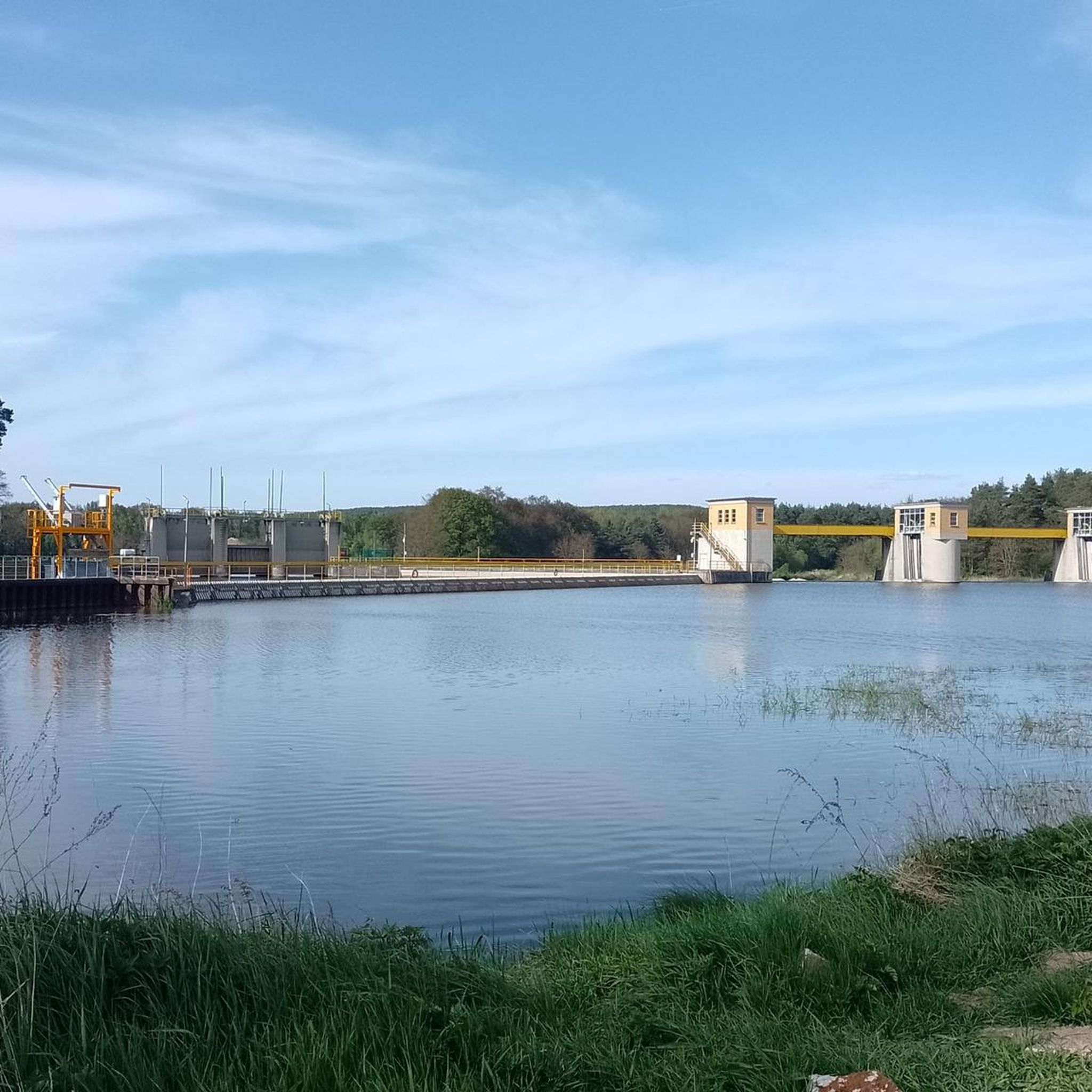
Yes, Jasień is known for its industrial heritage. You can explore the Alfred Nobel Power Plant, a historical site that once provided steam and hot water for technological and housing needs. Nearby, the Silos of the Alfred Nobel Plant (Krzystkowice) are also worth seeing, featuring massive reinforced concrete structures designed to withstand blast waves.
What kind of outdoor activities can I do around Jasień?
The Jasień region offers various outdoor activities, particularly cycling. You can find numerous routes for touring bicycles, gravel biking, and road cycling. These routes vary in difficulty from easy to moderate, allowing you to explore the rolling hills and historical sites of the area.
Are there family-friendly attractions near Jasień?
For families, the Fountain in Tuplice Park is a pleasant spot to visit. While the guide focuses on the Jasień in Żary County, the broader region offers green spaces and opportunities for leisurely walks suitable for all ages.
What is the history of Miłowice Palace?
The Miłowice Palace has a rich history dating back to the 17th century. It was owned by several noble families, including the von der Dahme, von Knobelsdorff, and von Dyhrn families, who rebuilt and enlarged the old castle. The estate later passed through the hands of the Keck von Schwarzbach, von Mutzdorf, and von Wackerbarth families, before returning to the von Dyhrn family around 1928.
What are the natural characteristics of the Jasień region in Żary County?
The Jasień region in Żary County, Lubusz Voivodeship, is characterized by its rolling hills. This landscape provides a scenic backdrop for outdoor activities and offers a mix of natural beauty alongside its historical and industrial sites.
Can I find easy cycling routes around Jasień?
Yes, there are easy cycling routes available. For example, the 'Church of Jasień – Smaczny Zakątek Bar loop from Jasień' is an easy route for touring bicycles, covering about 14.5 km. You can find more options in the Cycling around Jasień guide.
What makes the Silos of the Alfred Nobel Plant unique?
The Silos of the Alfred Nobel Plant (Krzystkowice) are unique due to their massive reinforced concrete skeletons and light 'blow-out windows.' These structures were designed to protect against blast waves, with thick-walled concrete cylinders storing dangerous semi-finished products. In the event of an explosion, brick bulkheads were intended to shatter and be expelled from the object.
What is the story behind the Ruins of the 14th-century church in Wanderfeld?
The Ruins of the 14th-century church in Wanderfeld date back to the 13th century, built by Prince Henry the Bearded and his wife Jadwiga. Constructed from field stones and bog iron ore, the church was ruined long ago, with a large oak tree now growing at the altar site. It survived the Thirty Years' War and stands today as a secured ruin with a restored tower, featuring granite tombstones from a pre-war cemetery.
Are there any specific cycling routes that explore the industrial heritage of Jasień?
While specific routes dedicated solely to industrial heritage aren't explicitly listed, many cycling routes in the area will likely pass by or near sites like the Alfred Nobel Power Plant and its silos. Exploring the Cycling around Jasień or Gravel biking around Jasień guides will help you discover routes that incorporate these unique landmarks.
What do visitors appreciate most about the attractions around Jasień?
Visitors to the Jasień area often appreciate the blend of historical architecture and industrial heritage. The community has shared 14 upvotes and 4 photos, highlighting the unique character of sites like the Miłowice Palace and the Alfred Nobel Power Plant. The well-preserved ruins and the stories behind them are frequently mentioned as captivating aspects.

Get inspired with the komoot mobile app


Explore more
Still not found the Highlight you’re looking for? See guides of the top attractions in other regions:
