Attractions and Places To See around Drechow - Top 20
Best attractions and places to see around Drechow include historical landmarks and natural landscapes. Located in Mecklenburg-Vorpommern, Germany, Drechow features unspoilt beaches, forests, and lakes. The region is characterized by traditional North German architecture and offers a blend of historical and natural experiences. It provides opportunities for exploring cultural sites and outdoor recreation.
Best attractions and places to see around Drechow
- The most popular attractions is Town Church Bad Sülze, a religious building that was constructed in the mid-13th century in Gothic style. It features a longitudinal nave with two square bays and late Gothic star vaults.
- Another must-see spot is Schlemmin Village Church, a religious building with construction beginning around 1280 using regional brick. The church was re-consecrated in its current form in 1878 after a major renovation.
- Visitors also love Franzburg Parish Church and Monastery Garden, a religious building that is the remainder of the Neuencamp Cistercian monastery. The well-kept monastery garden is located right next to the church.
- Drechow is known for its historical sites, religious buildings, and natural features. Visitors can explore a variety of attractions, from ancient churches to scenic landscapes.
- The attractions around Drechow are appreciated by the komoot community, with more than 140 upvotes and over 90 photos shared.
Last updated: May 9, 2026
Town Church Bad Sülze
Highlight • Religious Site
Translated by Google •
Tip by

Schlemmin Village Church
Highlight • Religious Site
Translated by Google •
Tip by

Sign up now to discover places like this
Get recommendations on the best single tracks, peaks, & plenty of other exciting outdoor places.
Sign up for free
Mill Gate, Tribsees
Highlight • Historical Site
The city side is simpler designed. It has a centered, on both upper floors reaching walled depression with a small window in the middle. In the gable are two round-arched hatches and a final unplastered round arch.
Translated by Google •
Tip by

Franzburg Parish Church and Monastery Garden
Highlight • Religious Site
The parish church of Franzburg looks a bit strange because it does not have a bell tower. This is probably due to the fact that it consists of the former cross wing of the monastery church of the cistercian monastery Neuenkamp. Right next to the church is the well-kept monastery garden in the courtyard of the district office.
Translated by Google •
Tip by

Franzburg Protestant Church (former monastery church of Neuenkamp)
Highlight • Religious Site
The building is the remains of the Cistercian monastery of Neuencamp (mother monastery of Hiddensee). The monastery was dissolved during the Reformation. The Pomeranian dukes had a castle built here from 1587. The castle chapel was built from the remains of the monastery church.
During the Thirty Years' War, Franzburg was plundered and destroyed by Wallenstein's troops. Between 1660 and 1678, the remains of the castle were demolished. Only the former castle church has survived. Worth seeing are a sandstone epitaph with life-size figures (1615), a crucifix from the 16th century and a Madonna on the crescent moon (15th century).
auf-nach-mv.de/reiseziele/a-kirche-franzburg
Translated by Google •
Tip by

Sign up for free to discover even more attractions around Drechow.
Sign up for free
Already have an account?
Start today with a free account
Your next adventure awaits.
Login or Signup
Tips from the Community

After a major town fire in 1702, the gate was rebuilt with some structural modifications. From 1976 to 1991, it housed the Tribsees Local History Museum (a small local history museum), which later moved to the Stone Gate and finally to another building in 2007.
0
0

Fieldstone church, choir from the 13th century, nave probably 15th century. Square west tower from 1726 with lantern.
0
0

Construction of the church began around 1280 using the typical regional brick. The western part of the nave was not further built until the 15th century using fieldstones and a church tower was built. The nave was doubled in length. The gable of the east wall has a Lorraine cross. It is unclear when and why it was installed here. The current tower roof dates from the 18th century. The church was re-consecrated in its current form in 1878 after a major renovation. The windows were also redesigned during this Gothic renovation. The sacristy built on the north side, like the southern extension, probably dates from 1878. Access to the tower's viewing platform is no longer possible after the last repair in 1998. The organ was built in 1841 by Carl August Buchholz. It was donated by Wilhelm Ulrich von Thun. From: Wikipedia
1
0

The mill gate was built in the 13th century and rebuilt with modifications in 1702 after a fire.
0
0

The church bells are still original - you can hear it :)
0
0
Single-nave brick church from the 13th century. Recessed choir. Transverse rectangular west tower from the 15th century with octagonal roof. Inside there is a remarkable baptismal angel from 1771 and a baptismal font made of limestone from the 13th century. Key available at Cafe Wunderbar
0
0

The Protestant church in Franzburg is the surviving southern transept arm of the former monastery church of the Cistercian monastery of Neuencamp from the 14th century. The building is the remains of the Cistercian monastery of Neuencamp (mother monastery of Hiddensee). The monastery was dissolved during the Reformation. The Pomeranian dukes had a castle built here from 1587. The castle chapel was built from the remains of the monastery church. During the Thirty Years' War, Franzburg was plundered and destroyed by Wallenstein's troops. Between 1660 and 1678, the remains of the castle were demolished. Only the former castle church has survived. Worth seeing are a sandstone epitaph with life-size figures (1615), a crucifix from the 16th century and a Madonna on the crescent moon (15th century). https://www.auf-nach-mv.de/reiseziele/a-kirche-franzburg
2
0
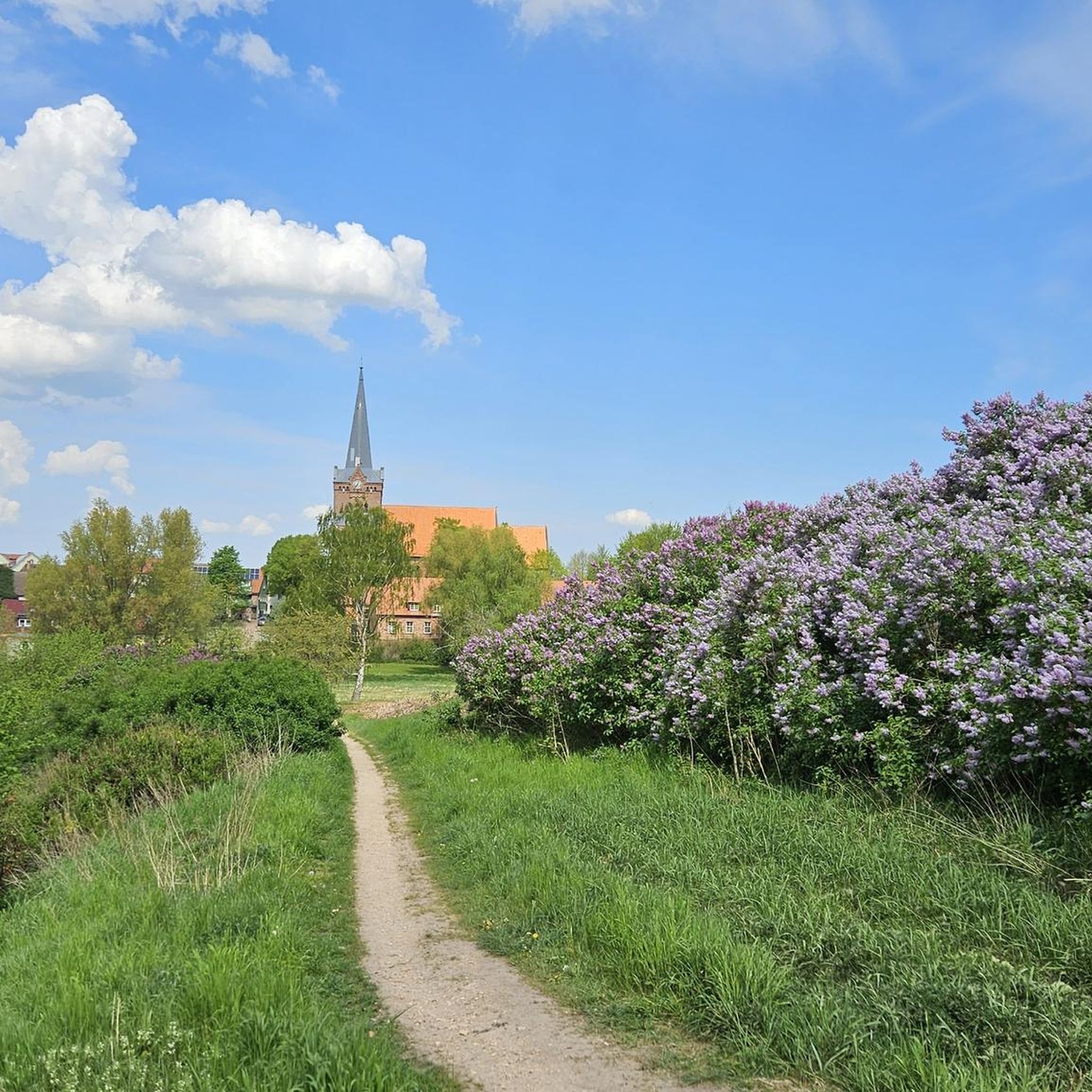
Bad Sülze received its town charter between 1255 and 1262. The first news of the church in Sülze comes from 1276. Accordingly, this church was built in the middle of the 13th century as a brick church in the Gothic style in competition with the town church in Marlow, which was built around the same time been built. The spire was destroyed by fire in 1770. The burning tip penetrated the roof of the nave but remained on the vault. It was not until 1892 that the tower received a new, straight, neo-Gothic top. The town church has a longitudinal nave with two square bays with late Gothic star vaults. The east side with its rising arched frieze is closed off by a beautiful gable. On the north side there is a beautiful recessed portal crowned with three Gothic eyelashes. The altar, which replaced the one destroyed by fire in 1770, is noteworthy. The key is available in the parish office or in the “Cafe Wunderbar” for tours. https://www.auf-nach-mv.de/reiseziel/a-kirche-in-bad-suelze
4
0
Frequently Asked Questions
What historical landmarks can I explore around Drechow?
The region is rich in history. You can visit the 13th-century Town Church Bad Sülze, known for its Gothic style and star vaults. Another significant site is the Schlemmin Village Church, with construction dating back to 1280 using regional brick. Don't miss the Mill Gate in Tribsees, a Gothic three-story brick gate from the 13th century that was part of the city's weir plant.
Are there any family-friendly attractions near Drechow?
Yes, several attractions are suitable for families. The Schlemmin Village Church has an adjoining estate park, perfect for a stroll. The Mill Gate in Tribsees offers an interesting historical sight for all ages. Additionally, the Franzburg Parish Church and Monastery Garden features a well-kept garden that families can enjoy.
What natural features and outdoor activities are available around Drechow?
Drechow is surrounded by natural beauty, including unspoilt beaches, dense forests, and serene lakes. In summer, the bathing lakes are popular for swimming. You can enjoy cycling through colorful forests in autumn or canoeing on local rivers. Numerous hiking trails also allow you to explore the scenic landscape.
Where can I find historical churches in the Drechow area?
Beyond Drechow Castle and St. Marien Church, the region offers several other historic churches. These include the Town Church in Bad Sülze, Schlemmin Village Church, and the Franzburg Parish Church and Monastery Garden, which is the remainder of the Neuencamp Cistercian monastery.
What kind of cycling routes are available near Drechow?
There are various cycling routes for different skill levels. For example, you can find routes like the 'Recknitz Near Bad Sülze – Town Church Bad Sülze loop' or the 'Steintor Tribsees – Stork's nest loop'. You can explore more options and detailed routes on the Cycling around Drechow guide or the Road Cycling Routes around Drechow guide.
Are there running trails around Drechow?
Yes, the area offers several running trails. You can find moderate running loops starting from Kavelsdorf, Richtenberg, or Franzburg. For more details and to discover additional routes, check out the Running Trails around Drechow guide.
What cultural experiences can I find in Drechow?
Drechow hosts the annual 'Drechower Klangwelten' Music Festival. You can also visit the Museum für Kunsthandwerk to see local handicrafts. For those interested in local produce, the weekly markets are an insider tip.
What is the best time of year to visit Drechow for outdoor activities?
The summer months are ideal for enjoying the bathing lakes and water activities. Autumn offers beautiful scenery for cycling through colorful forests. The region's natural beauty makes it suitable for outdoor activities like hiking and cycling throughout the warmer seasons.
Is there a specific place to see a former monastery church?
Yes, the Franzburg Protestant Church is the surviving southern transept arm of the former Cistercian monastery church of Neuencamp, dating from the 14th century. It was later converted into a castle chapel.
What is unique about the Town Church Bad Sülze?
The Town Church Bad Sülze is a Gothic brick church built in the mid-13th century. It features a longitudinal nave with two square bays and late Gothic star vaults. A unique aspect is that you can often get the key for a deposit at the nearby Café Wunderbar to view the interior.
What can I expect to see at the Schlemmin Village Church?
The Schlemmin Village Church, built with regional brick starting around 1280, features a distinctive gable with a Lorraine cross. It underwent a major renovation in 1878 and is notable for its adjoining estate park, offering a peaceful setting.
Most popular attractions around Drechow

Get inspired with the komoot mobile app


Explore more
Still not found the Highlight you’re looking for? See guides of the top attractions in other regions:
