The best road cycling routes around gmina Biała
4.5
(13)
476
riders
71
rides
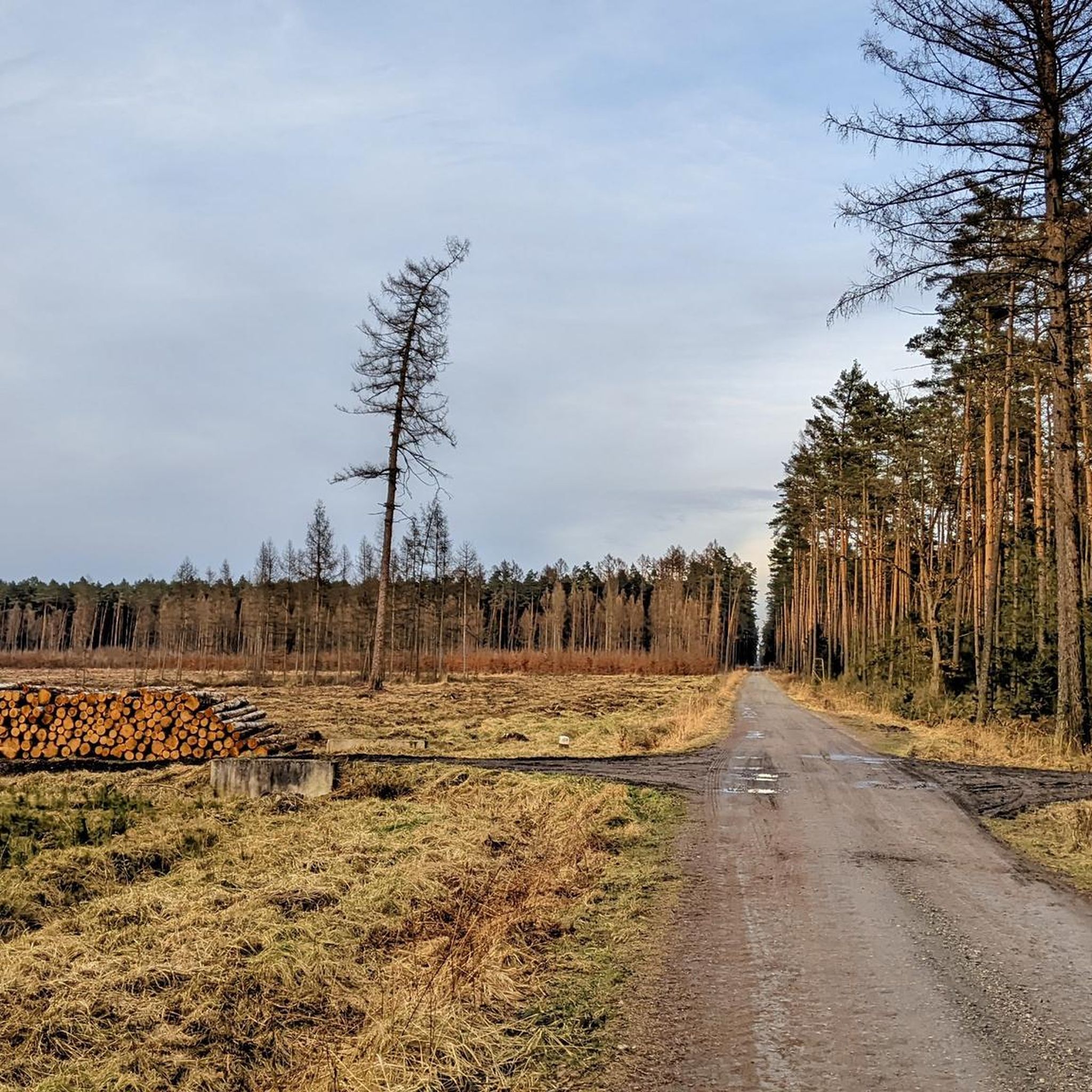
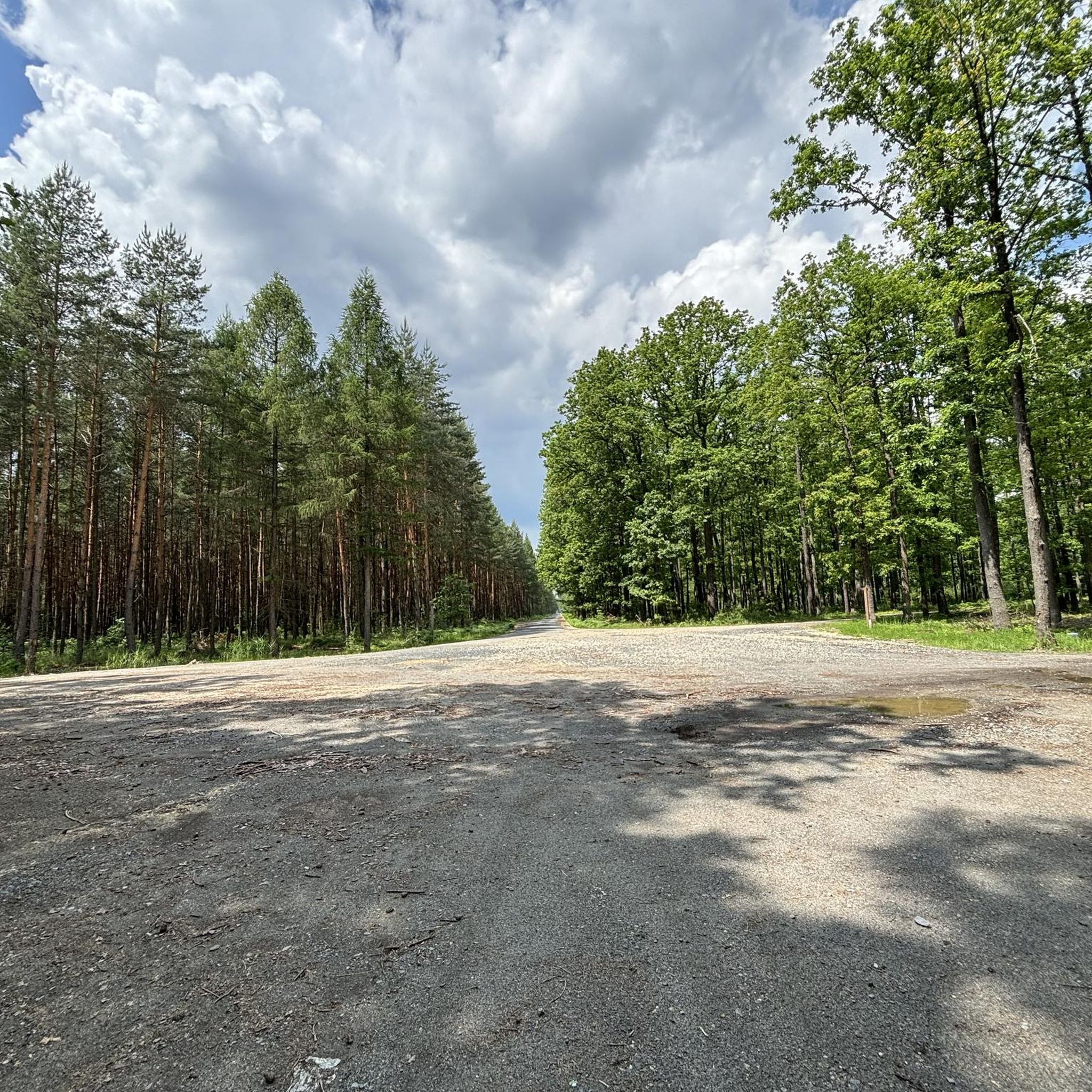
Road cycling routes around gmina Biała traverse a diverse landscape characterized by moraine hills, extensive forests, and picturesque lakes. The region offers varied terrain, from mostly paved surfaces suitable for easier rides to more challenging routes with notable elevation gains. Features like the Chełmy Landscape Park provide hilly sections and lush woodlands, while natural monuments and reservoirs add scenic interest.
Best road cycling routes around gmina Biała
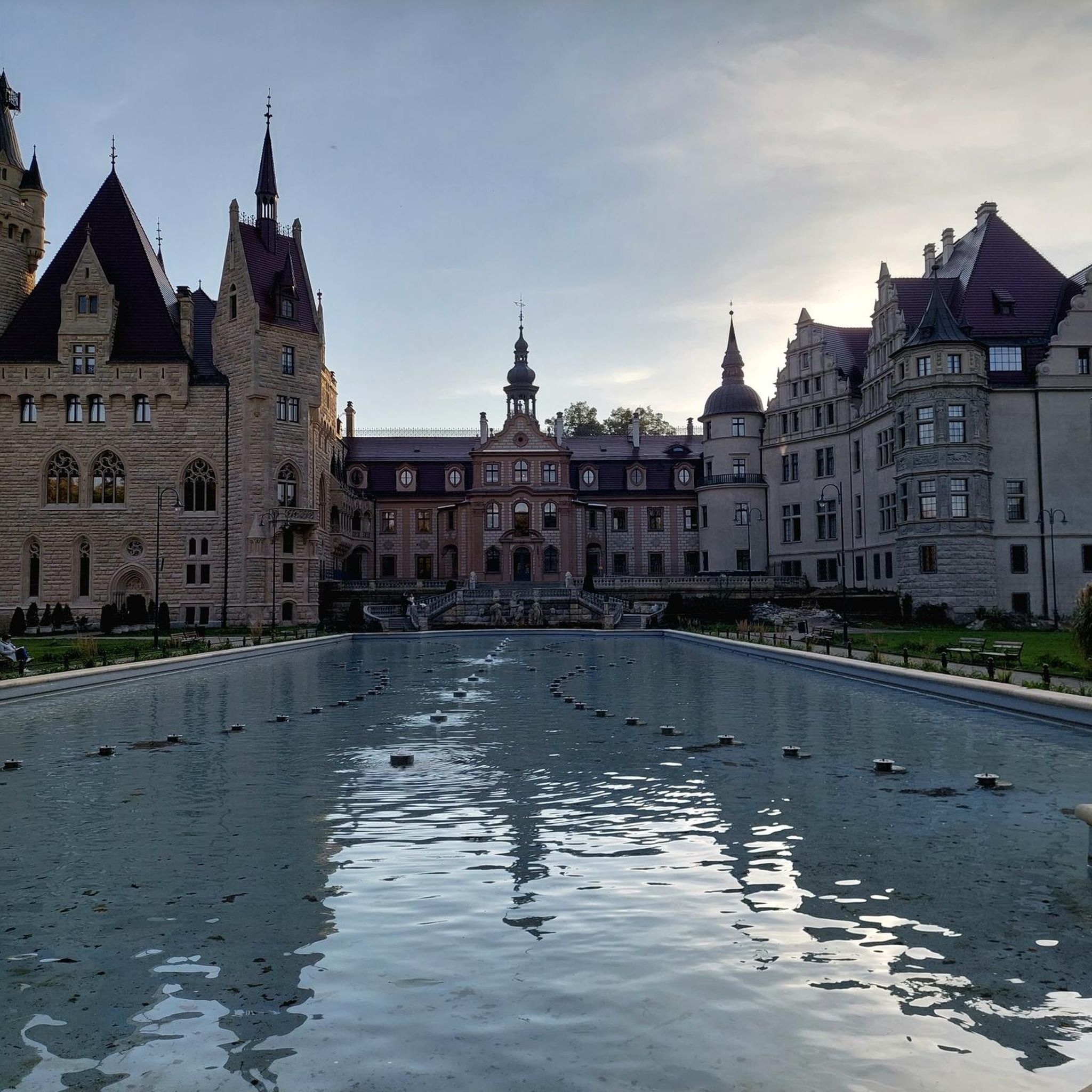
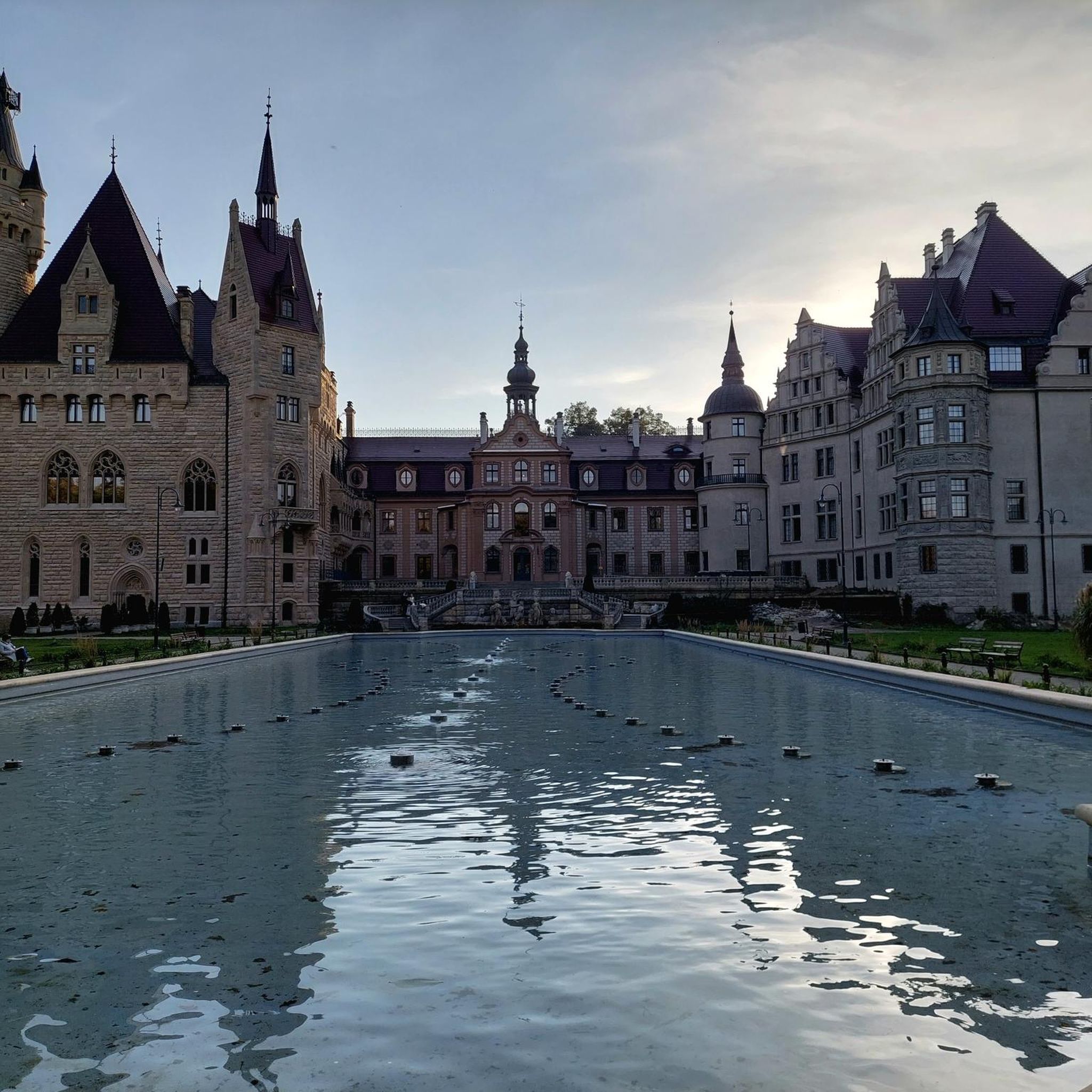
- The most popular road cycling route is Moszna Castle loop from Łącznik, a 32.8 miles (52.7 km) trail that takes 2 hours 15 minutes to complete. This route includes a visit to the impressive Moszna Castle.
- Another top favourite among local road cyclists is Castle in Trzebinia – View of Kopa Biskupia loop from Dytmarów, a moderate 28.1 miles (45.2 km) path. It features varied terrain with significant elevation gain and scenic views towards Kopa Biskupia.
- Local road cyclists also love the Kobylica – Rosenau Amusement Park loop from Józefów, a 28.5 miles (45.9 km) trail leading through hilly landscapes, often completed in about 2 hours 27 minutes.
- Road cycling around gmina Biała is defined by varied terrain, moraine hills, and extensive forests. The network offers options for different ability levels, including easy, moderate, and difficult routes.
- The routes in gmina Biała are highly rated by the komoot community with an average score of 4.5 stars from over 10 reviews. More than 400 road cyclists have used komoot to explore gmina Biała's varied terrain.
Last updated: July 1, 2026
12
riders
57.0km
02:26
240m
240m
Moderate road ride. Good fitness required. Some segments of this route may be unpaved and difficult to ride.
13
riders
46.2km
02:10
410m
410m
Moderate road ride. Good fitness required. Some segments of this route may be unpaved and difficult to ride.

Sign up for free
8
riders
46.7km
02:30
350m
350m
Moderate road ride. Good fitness required. Some segments of this route may be unpaved and difficult to ride.
5
riders
31.8km
01:15
130m
130m
Easy road ride. Great for any fitness level. Mostly well-paved surfaces and easy to ride.
2
riders
61.0km
02:27
210m
210m
Moderate road ride. Good fitness required. Some segments of this route may be unpaved and difficult to ride.
Get access to more routes and recommendations from other explorers.
Sign up for free
Already have an account?
Our route recommendations are based on thousands of hikes, rides, and runs completed by other people on komoot.
Start today with a free account
Your next adventure awaits.
Login or Signup

Tips from the Community

One of the most beautiful castles in Poland
1
0

Żabie Oczko Pond is a former quarry, flooded by rainwater, likely dating back to 1869. Above the quarry stands a monument to Joseph von Eichendorff, a great poet of the Romantic era, considered by many to be the German equivalent of Adam Mickiewicz. He frequently visited this area, and a monument to him was erected here in 1911.
1
0

A place so popular that there is nothing more to praise it. Warning: on sunny weekends it is better not to go there.
1
0
The facility is not open to visitors, it is a pity that the State is not able to take care of it and it is slowly falling into ruin.
0
0

Kobylica is a hill 395 m above sea level, located in the Polish part of the Opawskie Mountains, south of Prudnik, near the village of Dębowiec. The hill is part of the Prudnik Forest and is located in the Opawskie Mountains Landscape Park. A monument dedicated to the German poet of Romanticism, Joseph von Eichendorff, who was born in the Prudnik region, was erected on the top of Kobylica in 1911. This monument is located by a picturesque pond called "Żabie Oczko", which was created on the site of a former quarry.
1
0

In Biała, two crosses stand to this day, the third comes from Frącki (a hamlet of Pogórze), but is currently located on private property in Brzeźnica. Penitential crosses are "relics of medieval law". Each of these objects has its own interesting history documented in court records or passed down in folk legends. At the turn of the 13th and 14th centuries, judicial law was introduced, among other places, in Silesia. Earlier, the principle was simple: for the victim's death, the killer paid with their life. The new law led to a detailed examination of the causes of murder, e.g., acting in a fit of passion was taken into account. This allowed some perpetrators to avoid the death penalty and reach an agreement with the victim's family, the so-called "penitential treaty". The perpetrator had to fulfill many obligations set by the court and the family. Basic ones included, among others: covering the costs of the victim's funeral, supporting the deceased's children until they came of age, transferring a specified sum of money to the family, ordering and paying for a specified number of memorial masses, undertaking a pedestrian pilgrimage to the then places of religious worship, e.g., Jerusalem, Rome, Aachen, or later Częstochowa and St. Anne's Mount. One of the perpetrator's most important obligations was to personally or commission the creation of a penitential cross from stone and its erection at the scene of the crime. The crosses were made of stone characteristic of the given area (sandstone, conglomerate, limestone, or granite). The height ranged from 30 to 250 cm, the width from 30 to 120 cm, the thickness from 9 to 60 cm. The Biała crosses are among the oldest preserved in the Opolszczyzna region. One: by the south wall of the castle has a shape similar to a clover leaf; with dimensions of 97 cm (height), 20 cm (thickness), 33 cm (arm span). It is carved in granite, belongs to the group of the oldest, which is why time has blurred the image of the murder weapon. An interesting story is associated with its origin and discovery. It was the only "missing" cross in the inventory of these objects in the Prudnik region. It was only known that it should be somewhere on the Biała-Wasiłowice-Śmicz route. In 1976, after six days of searching, Komarnicki with a group of Biała high school students found the stone cross. It lay in a roadside ditch about 400m from the town limits. It was covered with earth and barely visible. Komarnicki decided to move the cross to a safer place so that it would not disappear again. The chosen location was next to the Prószków Castle, where a primary and secondary school was located at the time. However, the Provincial Conservator of Monuments in Opole ordered that the cross be returned to its place or handed over to the museum in Prudnik. Komarnicki did not want to agree to this. Eventually, the commotion subsided, and the cross did not change its location until the castle was taken over by a new owner – the company "Moda Polska". The object began to be renovated, and the construction crew wanted to use the cross as building material. It was managed to be saved again, though not without losses: the cross was broken into two parts. Fearing destruction, it was then moved to the intersection of today's streets: Opolskiej and Moniuszki. It stood there until one of the broken parts disappeared. The missing part was found at the municipal landfill. Then, the local stonemason master Jan Gacki took up the renovation of the cross, joining the two broken parts. In this way, this stone cross was saved for the third time and moved again under the castle wall, where it stands to this day. Next to the cross, on a granite slab, there is a barely visible inscription "PENITENTIAL CROSS, 16TH C., CARE BTKO". The second cross is located at the intersection of Szynowice and Opolskiej streets, under a votive cross, surrounded by white pebbles and enclosed by a low metal fence. According to folk legends, a crime occurred at this spot where a merchant died while going to the market in Biała. The cross has a broken arm – it was probably a sign for travelers about the plague that raged in Biała in 1633. Its dimensions are: 80 cm (height), 45 cm (arm span), 18 cm (thickness).
0
0
From the 13th century, Biała was the seat of a castellany. The current brick castle was built in the Renaissance style, probably on the initiative of the Opole line of the Piasts before 1532. Originally, it had two single-tract wings - the current eastern and southern ones - which enclosed a small courtyard and had semicircular arcades on that side. From 1564, it belonged to the Prószkowscy family, first as a pledge, and from 1606 as their property. Around 1640, the Prószkowscy family expanded the complex in the Baroque style, adding a new double-tract wing from the west, with a tower built on its corner. In this form, only renovated, it has survived to this day. In 1747, Antoni Prószkowski's widow sold the castle and estates to Bartłomiej Oderfeld, and after nine years, it came into the hands of Rudolf Matuschek from Bohemia. The next owner from 1841 was Ferdinand Rudolf von Gersdorff. In 1872, the castle became the property of the town and from 1878, for the next half-century, it was used for educational purposes, housing a teacher training college. In the 19th century, during a renovation, the arcades were bricked up, creating an additional communication corridor along the 16th-century wings. After World War II, the buildings were used as warehouses for the Moda Polska company, and since the end of the 20th century, they have not been in use. Unfortunately, it is falling into ruin.
0
0

Prepare money for entry to the castle
1
0
Frequently Asked Questions
How many road cycling routes are available in gmina Biała?
There are over 60 road cycling routes in gmina Biała, offering a wide variety of options for different skill levels and preferences. You can explore routes ranging from easy to challenging, all within the region's diverse landscape.
What kind of terrain can I expect when road cycling in gmina Biała?
Road cycling in gmina Biała features a diverse landscape with moraine hills, extensive forests, and picturesque lakes. You'll find a mix of mostly paved surfaces for easier rides, as well as more challenging routes with significant elevation gains, particularly in areas like the Chełmy Landscape Park.
Are there routes suitable for beginners or less experienced cyclists?
Yes, gmina Biała offers several routes suitable for beginners. There are 16 easy routes with less elevation gain, perfect for a relaxed ride. An example of an easier route is the Roadbike loop from Józefów, which covers about 31 km with moderate elevation.
Are there challenging routes for experienced road cyclists?
Absolutely. For experienced road cyclists seeking a challenge, gmina Biała has 7 difficult routes with significant elevation gains. The region's hilly topography, especially around areas like Kobylica Hill, provides excellent opportunities for more strenuous rides.
What historical landmarks or points of interest can I see along road cycling routes?
Many road cycling routes in gmina Biała pass by fascinating historical landmarks. You can visit the impressive Moszna Castle, explore Tułowice Palace, or discover Rogów Opolski Castle. The Moszna Castle loop from Łącznik is a popular route that includes a visit to Moszna Castle.
Are there any natural attractions or scenic viewpoints to enjoy while cycling?
Gmina Biała is rich in natural beauty. Cyclists can enjoy scenic views in the Chełmy Landscape Park with its vast, hilly landscapes and lush forests. The Stara Morawa Reservoir offers picturesque trails, and you might encounter natural monuments. The Castle in Trzebinia – View of Kopa Biskupia loop from Dytmarów provides scenic views towards Kopa Biskupia.
What do other road cyclists enjoy about the routes in gmina Biała?
The road cycling routes in gmina Biała are highly rated by the komoot community, with an average score of 4.5 stars from over 10 reviews. Cyclists often praise the varied terrain, the quiet woodlands, and the opportunity to combine their ride with visits to historical sites like Moszna Castle.
Are there any circular road cycling routes in gmina Biała?
Yes, many of the road cycling routes in gmina Biała are designed as loops, allowing you to start and end your ride in the same location. Examples include the popular Moszna Castle loop from Łącznik and the Kobylica – Rosenau Amusement Park loop from Józefów.
What is the best time of year for road cycling in gmina Biała?
The best time for road cycling in gmina Biała is typically during the warmer months, from spring to early autumn. This period offers pleasant weather conditions for exploring the region's diverse landscapes, forests, and moraine hills.
Is parking available near the road cycling routes in gmina Biała?
While specific parking areas are not detailed for every route, many routes start from towns or villages like Łącznik, Dytmarów, or Józefów, where public parking is generally available. It's advisable to check local parking options in your chosen starting point before your ride.
How long are the typical road cycling routes in gmina Biała?
The road cycling routes in gmina Biała vary in length. Many popular routes range from approximately 30 km to over 60 km. For instance, the Moszna Castle loop from Łącznik is about 53 km, while the Dobra - Castle loop from gmina Biała is around 61 km.
Are there places to eat or stay near the cycling routes in gmina Biała?
Yes, as gmina Biała is a popular outdoor destination, you can find various cafes, pubs, and accommodation options in the towns and villages along or near the cycling routes. These establishments cater to visitors and provide convenient stops for refreshments or overnight stays.
Most popular attractions around gmina Biała

Get inspired with the komoot mobile app


Explore more
Browse the best Road cycling routes in other regions.
