Attractions and Places To See around gmina Kolno - Top 19
Best attractions and places to see around gmina Kolno include a variety of historical sites and natural features. This rural administrative district in Poland, specifically in the Podlaskie Voivodeship, is characterized by picturesque landscapes of forests and lakes. The region offers insights into its past through medieval strongholds, World War I cemeteries, and World War II bunkers. With 19 hidden gems, gmina Kolno provides diverse opportunities for exploration.
Best attractions and places to see around gmina Kolno
- The most popular…
Last updated: May 20, 2026
Kurpie Open-Air Museum in Nowogród
Highlight • Historical Site
Tip by

Nowogród Bridge Bunker
Highlight • Historical Site
leader middleweile complete verschlossen.
Translated by Google •
Tip by
Sign up now to discover places like this
Get recommendations on the best single tracks, peaks, & plenty of other exciting outdoor places.
Sign up for free
T-34 Tank Memorial in Nowogród
Highlight • Monument
Translated by Google •
Tip by
World War II Bunker Near Rozogi
Highlight • Historical Site
There is a bar above, next to the parking lot. Affordable prices, tasty food, nice service. Coffee from an espresso machine will work.
Translated by Google •
Tip by

Nowogród Defensive Point – Bunker 4A
Highlight • Monument
Translated by Google •
Tip by

Sign up for free to discover even more attractions around gmina Kolno.
Sign up for free
Already have an account?
Start today with a free account
Your next adventure awaits.
Login or Signup



Tips from the Community

The monument in Nowogród commemorates the battle of Polish soldiers with Germans fought on September 7–10, 1939, when 800 Polish soldiers supported by civilians from the city and surrounding areas fought a German division of several thousand. The tank in Nowogród obviously did not take part in this battle. https://proszewycieczki.wordpress.com/2023/09/10/nowogrod-czolg-pomnik/
3
0
The history of this tank is very interesting and due to the fact that its condition is good, as indicated by the small number of layers of paint, which in turn allows you to read the factory number (412815) and trace its history. T-34-85 manufactured in December 1944 in plant no. 112. It turns out that this is a tank delivered in the second tranche (January/February 1945) to the 4th Armored Brigade of the 1st Armored Corps. This means that it is a veteran of the battles of Bautzen (April 21–30, 1945) - one of the few tanks of the 4th Brigade that survived these battles. https://zlomzy.pl/pl/15_fotorelacje/379_inne/949_czolg-w-nowogrodzie-co-o-nim-wiemy-foto-.html
3
0
There are very few monuments like this anymore. A Soviet tank from World War II, a T-34, stands in Nowogród (Podlaskie Province) and looks quite, quite. The tank was erected on the occasion of the 30th anniversary of the Polish People's Republic and unveiled on September 14, 1974. The commemorative plaque next to it reads "Glory to the heroes who died in the fight against German fascism for the freedom of the Łomża Region." It is worth emphasizing that we are currently celebrating and commemorating the day when the Polish People's Republic ended. However, this controversial monument still stands and attracts tourists.
3
0

Remains from the past just before Nowogrod.
3
1

Bunker shelter from World War II
0
1

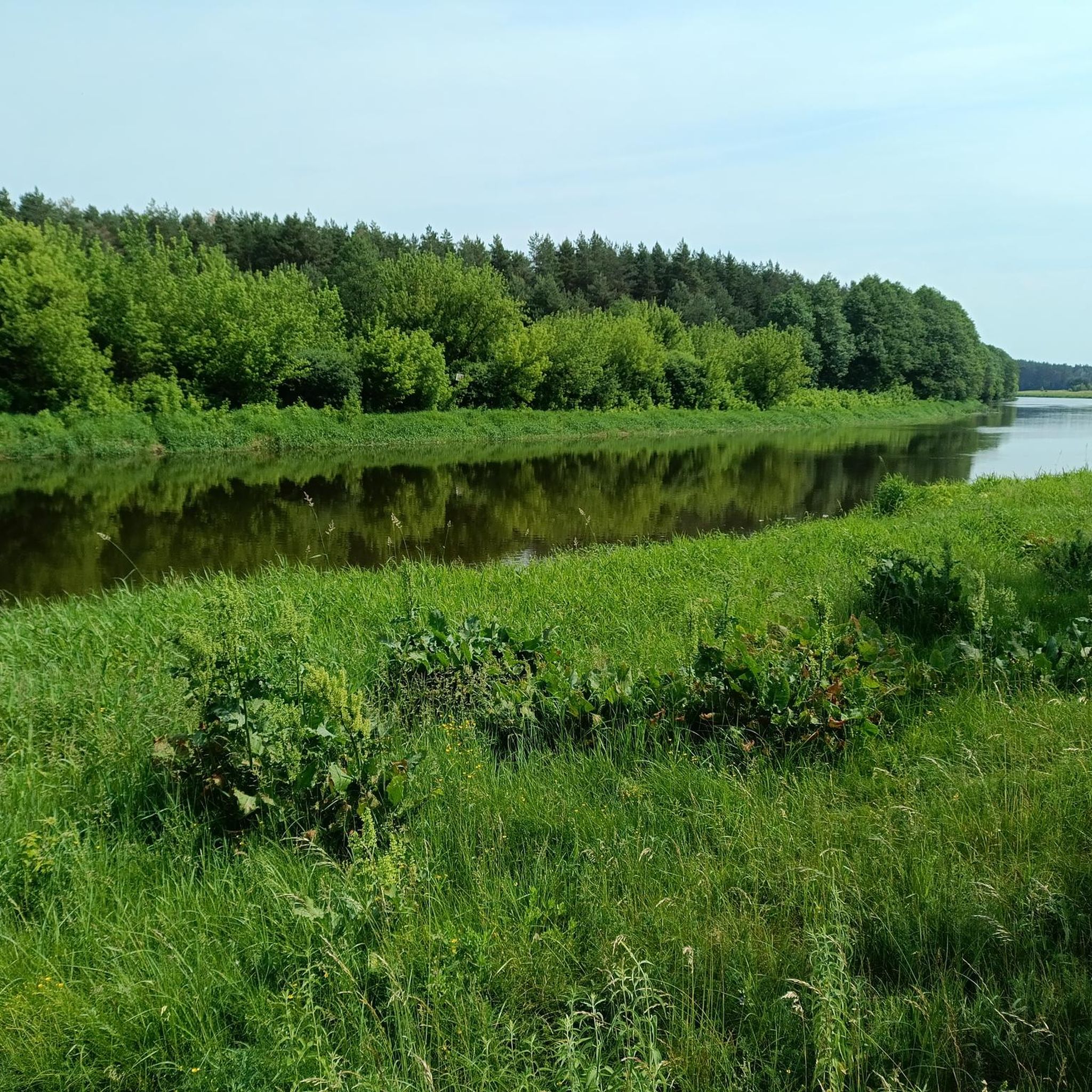
There is a wide approach to the tank, from the top there is a panorama of the Narew River valley and the bridge and shelter from 1939
2
0
On the hill above the Narew River there is a monument-tank T-34. On the plaque there is an inscription: "Glory to the heroes who died in the fight against German fascism". The monument was erected on the occasion of the 30th anniversary of the People's Republic of Poland and unveiled on September 14, 1974. The whole place is very picturesque, the tank is visible after crossing the bridge over the Narew, above the bunker of the defenders of Nowogród from 1939.
2
0
The Nowogród section was part of the defense line stretching along the Narew and Biebrza rivers, the responsibility of maintaining which was entrusted to the Independent Operational Group "Narew" (hereinafter SGO Narew) under the command of Brig. Gen. Czesław Młot-Fijałkowski. The defense belt of SGO Narew was divided into the sections: "Ostrołęka", "Nowogród", "Łomża", "Wizna", "Osowiec" and "Augustów". Nowogród was located on one of the expected main directions of the enemy's attack, led from East Prussia. The task of the "Nowogród" section was to defend the crossing in Nowogród and to defend along the line of the Narew river from the town of Szablak - Mątwica (on the eastern flank) to the line between the settlements of Parzychy and Sulimy (on the western flank). In specific terrain conditions, a tactical and defensive plan had to be prepared, which required: http://hauba.pl/odcinek-nowogrod/
2
0
Frequently Asked Questions
What historical sites can I explore in Gmina Kolno?
Gmina Kolno offers a rich array of historical sites. You can visit the Kurpie Open-Air Museum in Nowogród, one of Poland's oldest folk architecture museums. The area also features several World War II bunkers, including the well-preserved World War II Bunker Near Rozogi and the Nowogród Defensive Point – Bunker 4A with views of the Narew River. Additionally, the town of Kolno retains its medieval urban layout around Plac Wolności, and you can find early medieval strongholds in Czerwone and near Lachowo.
Are there any significant religious sites in the Gmina Kolno area?
Yes, Gmina Kolno and its broader region are home to several notable religious sites. In Kolno itself, you can find St. Anne's Church and the Church of Christ the King of the Universe. Other historical churches include the Holy Trinity Parish Church in Borkowo and the Assumption of the Blessed Virgin Mary Parish Church in Lachowo. Further afield, the Basilica of the Visitation of the Blessed Virgin Mary in Święta Lipka is a famous Marian pilgrimage site known for its Baroque architecture and organ concerts.
Where can I learn about the military history of Gmina Kolno?
Gmina Kolno has a significant military history. You can explore World War I cemeteries in Kossaki and Lachowo, which commemorate soldiers from 1915. The region is also notable for its World War II bunkers, including those from the Molotov Line and the Kozioł Resistance Point, found along roads like Gromadzyn to Tyszki and Kolno to Łabno. The Nowogród Bridge Bunker and the T-34 Tank Memorial in Nowogród also serve as poignant reminders of past conflicts.
What natural landscapes and features can I discover in Gmina Kolno?
The Gmina Kolno region is characterized by picturesque landscapes of forests and lakes. The Narew River offers beautiful areas with small rock formations, and the gmina is home to the largest documented habitats of pasque flowers in Poland. The Dajna River, flowing through several lakes, is also a significant natural feature in the broader area.
Are there opportunities for hiking or cycling around Gmina Kolno?
Absolutely! The area around Gmina Kolno offers various routes for outdoor activities. For gravel biking, you can explore routes like the 'Dasz Bór Hunting Monument – Koźle Gravel Road loop' or the 'Wooden Chapel in Dobry Las – Shelter by the Pisa River loop'. Cycling enthusiasts can enjoy paths such as the 'Wincenty Witos Memorial Plaque – Jan z Kolna Mural loop'. There are also several running trails, including easy and moderate loops starting from Kolno. You can find more details on these routes in the Gravel biking around gmina Kolno, Cycling around gmina Kolno, and Running Trails around gmina Kolno guides.
Are there family-friendly attractions in Gmina Kolno?
Yes, Gmina Kolno offers attractions suitable for families. The Kurpie Open-Air Museum in Nowogród is a great option, allowing families to explore traditional folk architecture in a natural setting. The T-34 Tank Memorial in Nowogród can also be an interesting stop for children interested in history and military vehicles.
What is the best time of year to visit Gmina Kolno?
The best time to visit Gmina Kolno largely depends on your interests. Spring (late April to June) is ideal for enjoying the natural beauty, especially if you wish to see the pasque flowers in bloom. Summer (July to August) offers pleasant weather for outdoor activities like cycling and exploring historical sites. Autumn (September to October) brings beautiful fall foliage, while winter (December to February) can be picturesque for those interested in snowy landscapes, though some outdoor activities might be limited.
Are there any unique cultural experiences or traditions in the region?
The Kurpie Open-Air Museum in Nowogród provides a deep dive into the folk architecture and traditions of the Kurpie region, offering a unique cultural experience. The historical urban layout of Kolno itself, with Plac Wolności, also reflects the region's heritage. Additionally, the pilgrimage route from Reszel to Święta Lipka, adorned with Baroque wayside chapels, offers a glimpse into local religious and historical practices.
What kind of historical architecture can I see in Gmina Kolno?
Gmina Kolno showcases diverse historical architecture. The town of Kolno preserves its medieval urban layout. You can find classical-style churches like St. Anne's, and brick churches from the early 20th century such as the Holy Trinity Parish Church in Borkowo and the Assumption of the Blessed Virgin Mary Parish Church in Lachowo. There are also 19th-century synagogues undergoing renovation, and historical manor and park complexes in Glinki, Grabowo, and Lachowo. The former customs office, a brick building from the 1920s-1930s, is another example of the region's architectural past.
Are there any hidden gems or less-known attractions worth visiting?
Beyond the main highlights, Gmina Kolno holds several hidden gems. The early medieval strongholds in Czerwone ('Góra') and near Lachowo offer insights into ancient settlements. The historic narrow-gauge railway, with a locomotive, wagon, and semaphore available for viewing since 2010, provides a unique historical perspective. Additionally, the monument to NSZZ Solidarność, erected in 2005, and the Grab of the Unknown Soldier, commemorating the Battle of Leman, are significant, though perhaps less-trafficked, sites.
What do visitors enjoy most about the attractions in Gmina Kolno?
Visitors particularly appreciate the historical depth and natural beauty of Gmina Kolno. The well-preserved historical sites, such as the World War II bunkers, offer a tangible connection to the past. The Kurpie Open-Air Museum is highly valued for its authentic representation of folk architecture. Many also enjoy the scenic views, especially from locations like the Nowogród Defensive Point – Bunker 4A overlooking the Narew River, and the overall picturesque landscapes of forests and lakes.

Get inspired with the komoot mobile app


Explore more
Still not found the Highlight you’re looking for? See guides of the top attractions in other regions:
