Attractions and Places To See around Rakoniewice - Top 20
Attractions and places to see around Rakoniewice include a blend of historical sites, cultural landmarks, and natural features within Poland's Greater Poland Voivodeship. The region offers insights into local history through its architecture and museums. Visitors can explore various man-made monuments and historical buildings. The area also provides access to parks and recreational lakes.
Best attractions and places to see around Rakoniewice
- The most popular attractions is Wolsztyn Palace, a castle with a large park and lake access. Built…
Last updated: May 20, 2026
Wolsztyn Palace
Highlight • Castle
Showing Translation
Tip by

Wolsztyn Steam Locomotive Depot
Highlight • Monument
Translated by Google •
Tip by

Sign up now to discover places like this
Get recommendations on the best single tracks, peaks, & plenty of other exciting outdoor places.
Sign up for free
Kurnatowski Palace Gościeszyn
Highlight • Castle
More information: pl.wikipedia.org/wiki/Go%C5%9Bcieszyn_(wojew%C3%B3dztwo_wielkopolskie)#Pa%C5%82ac_i_park and wolsztyn.naszemiasto.pl/neogotycki-palac-w- goscieszynie-architektoniczna-perelka / ar / c1-7882253
Translated by Google •
Tip by
The Largest Wicker Basket in the World in Nowy Tomyśl
Highlight • Monument
Tip by

Wolsztyn Roundhouse and Railway Museum
Highlight • Monument
In 1886, the first railway line from Zbąszynek reached Wolsztyn. In …
Translated by Google •
Tip by

Sign up for free to discover even more attractions around Rakoniewice.
Sign up for free
Already have an account?
Start today with a free account
Your next adventure awaits.
Login or Signup
Tips from the Community

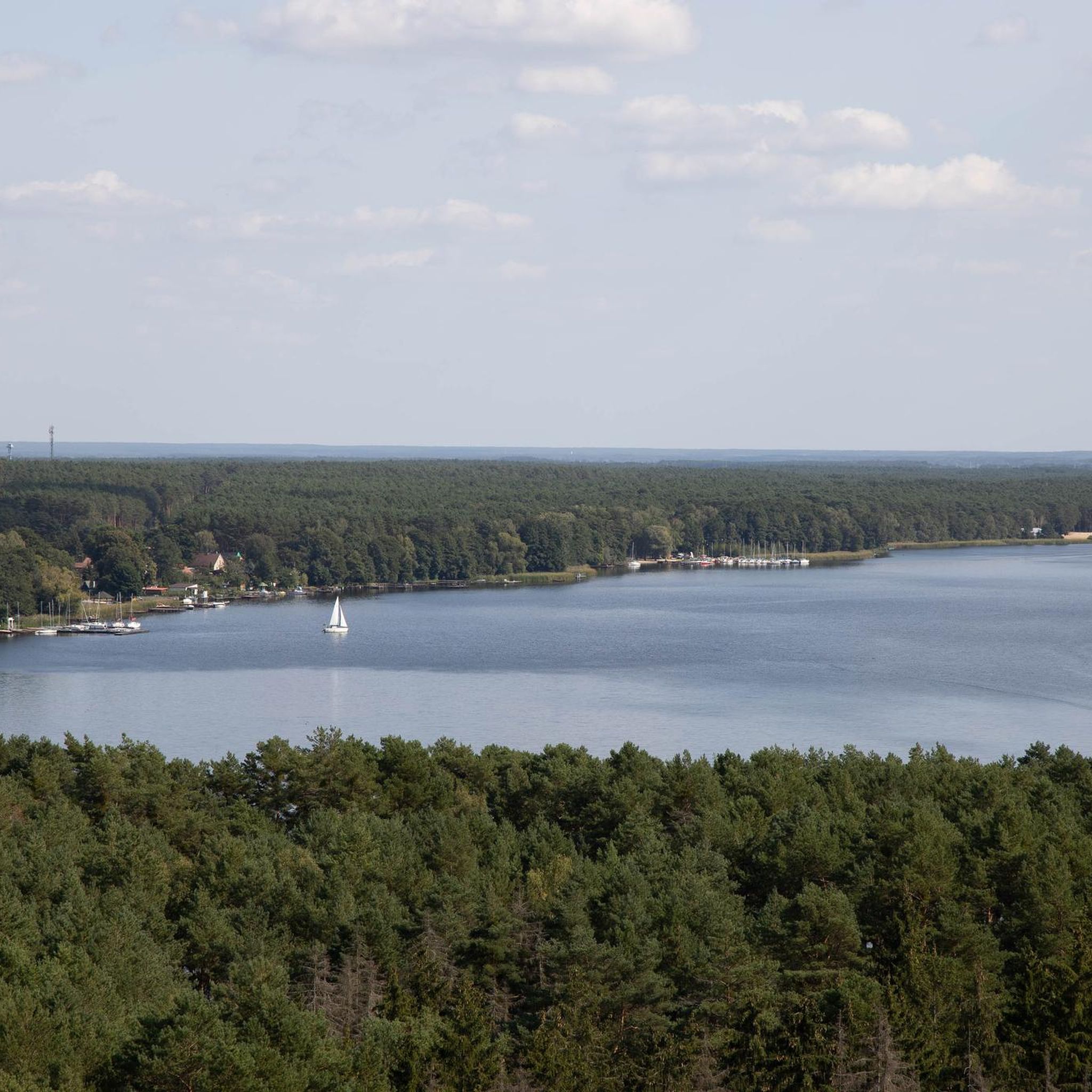
currently under renovation, construction site around so the view is average
1
0

The TKt48 series locomotive (where T stands for "Tenderlocomotive," K for railway, t for freight, and 48 for the year of introduction) is a Polish post-war steam tank locomotive (without a separate tender for water and coal) with an axle configuration of 1'D1' (one trailing axle, four driven axles, one trailing axle). It was initially designed for suburban traffic and freight trains on light-gauge lines, as well as for use as a support locomotive in the mountains. Between 199 units were produced between 1950 and 1957 at the HCP (Poznań) and Fablok (Chrzanów) plants. They were favored by crews for their smooth running (up to 80 km/h) and good boiler efficiency. They lasted the longest in service on foothill and mountain routes (DOKP Kraków and Wrocław).
1
0
The Ty43 series locomotive is directly derived from the German wartime series (Kriegslokomotive) Baureihe 42 (BR 42). In Poland, after World War II, the decision was made to continue the assembly and production of these machines, using documentation and parts left mainly by the Germans. Origin: A simplified design with low axle loads, allowing for operation on less-than-smooth tracks. It was a more powerful version of the popular Ty2 series. Production: Ty43 series locomotives were built between 1947 and 1949 at the H. Cegielski plant in Poznań (HCP), where a total of 126 units were produced.
1
0
The Ty5 series (BR 50) was originally designed in Germany as a universal freight steam locomotive with an axle configuration of 1'E h2 (one front axle and five driven axles), characterized by a relatively low axle load (15 t). This feature allowed it to operate on lines with poorer track, making it ideal for servicing a wide rail network. Production: A total of over 3,100 units of this series were built between 1938 and 1942. In Poland: After World War II, over 50 locomotives of this type remained in Poland, designated PKP Ty5.
1
0
The Ty51-223 steam locomotive belongs to the Ty51 series, built between 1953 and 1958 at the H. Cegielski works in Poznań (then known as the J. Stalin Metal Industry Plant, ZISPO). These were locomotives with a 1'E axle configuration (one front axle and five drive axles), designed to pull the heaviest freight trains weighing up to 2,500 tons. The design was based on the American Ty246 series (so-called Liberation), supplied after the war as UNRRA aid.
1
0
The Wolsztyn Locomotive Depot is the last in Europe to maintain and use steam locomotives for scheduled passenger service. In 1886, the first railway line from Zbąszynek reached Wolsztyn. In the following years, Wolsztyn became a five-way railway hub (connections with Leszno, Grodzisk, Sulechów, and Nowa Sól). In 1907, the Wolsztyn Locomotive Depot was built as a technical base for the growing hub. Initially, it had four berths in the hall. In 1909, due to growing traffic needs, the locomotive depot was expanded to eight berths, giving it the appearance that has largely survived to this day.
1
0

Worth a visit if you're in the area
0
0

A must-see in Wolsztyn
0
0
Frequently Asked Questions
What historical and cultural sites can I explore in Rakoniewice?
Rakoniewice and its surroundings offer a rich array of historical and cultural sites. You can visit the Greater Poland Museum of Firefighting, housed in a historic timber-frame church, showcasing over 4,000 exhibits. Explore the distinctive 18th-century Arcaded Houses, which reflect the town's commercial past. Other notable sites include the Church of St. Martin and St. Stanislaus, the Neo-Renaissance Palace built around 1840, and the wooden St. Ursula's Church in Ruchocice. Don't miss the Wolsztyn Steam Locomotive Depot, Europe's only operational steam locomotive depot, and the historic Wolsztyn Palace with its large park.
Where can I enjoy nature and outdoor activities around Rakoniewice?
For nature lovers, Rakoniewice features a Scenic Park established around 1840, offering 12.5 hectares of green space with a pond and rare trees. Lake Kuźnickie (also known as Lake Białe) is a popular spot for recreation, fishing, and features beaches and camping sites, surrounded by pine forests ideal for hiking and cycling. The Winnica recreational area provides opportunities for fishing, pedal boating, and has a playground. You can find various outdoor routes, including hiking trails, running paths, and road cycling routes, to explore the natural beauty of the region.
Are there family-friendly attractions in the Rakoniewice area?
Yes, several attractions are suitable for families. The Wolsztyn Steam Locomotive Depot is a fascinating visit for all ages, where you can see active steam locomotives and a small museum. The Wolsztyn Palace, set within a beautiful park, offers space for children to explore. Additionally, Lake Kuźnickie and the Winnica recreational area provide opportunities for swimming, pedal boating, and playgrounds, making them great choices for family outings.
What unique or unusual attractions can I find near Rakoniewice?
Rakoniewice boasts some truly unique attractions. The Wolsztyn Steam Locomotive Depot is unique as the only operational steam locomotive depot in Europe, where locomotives still serve regular railway lines. Another distinctive sight is The Largest Wicker Basket in the World in Nowy Tomyśl, a local landmark. You can also see a Replica of Drzymała's Wagon, commemorating Michał Drzymała's famous resistance against Germanization efforts.
Can I find hiking trails near Rakoniewice's attractions?
Absolutely. The area around Rakoniewice offers a variety of hiking trails. For example, you can find routes like the 'Jezioro Kuźnickie loop from Boruja' which is an easy 6 km hike, or the 'Wolsztyn Beach – Wolsztyn Pier loop from Rezerwat Bagno Chorzemińskie' which is a moderate 11.6 km trail. Many of these trails pass by natural features and offer scenic views. You can explore more options on the Hiking around Rakoniewice guide.
Are there opportunities for cycling around Rakoniewice?
Yes, the region is well-suited for cycling. The pine forests surrounding Lake Kuźnickie are ideal for cycling, and there are dedicated routes for road cycling. You can find routes such as the 'City Park Pond with Island – Rakoniewice - Palace loop from Rakoniewice' which is a moderate 55 km ride, or the 'Jabłonna - Palace – Rakoniewice - Palace loop from Rakoniewice' for an easier 46 km journey. Discover more routes on the Road Cycling Routes around Rakoniewice guide.
What is the Neo-Renaissance Palace in Rakoniewice?
The Neo-Renaissance Palace in Rakoniewice was built around 1840 by Count Marceli Czarnecki and his wife. It stands as a striking example of Neo-Renaissance architecture and is situated within the town's Scenic Park. While the palace itself is a historical landmark, the surrounding park offers a beautiful green space to explore.
What is the significance of the Arcaded Houses in Rakoniewice?
The Arcaded Houses in Rakoniewice are distinctive 18th-century buildings with protruding upper stories supported by beautifully decorated arcades. Their unique architecture reflects the town's commercial and craft history. These houses were promoted by Maciej Radomicki, a former owner of Rakoniewice, and their historic urban layout is recognized as a Cultural Heritage Monument, offering a glimpse into the town's past.
Where can I see historical railway artifacts and active steam locomotives?
You can experience this at the Wolsztyn Steam Locomotive Depot. It is the only operational steam locomotive depot in Europe, with locomotives still serving regular railway lines. The depot, which has been in operation for over 100 years, also includes a small museum with a model of a locomotive shed and relics of old railways, offering a unique insight into railway history.
Are there any lakes for recreation near Rakoniewice?
Yes, Lake Kuźnickie, also known as Lake Białe, is located in the western part of the Rakoniewice commune. It's a popular recreational spot offering opportunities for swimming, fishing, and features beaches and camping sites. The lake is surrounded by picturesque pine forests, making it ideal for a relaxing day out or active pursuits like hiking and cycling.
What is the Kurnatowski Palace Gościeszyn?
The Kurnatowski Palace Gościeszyn is a neo-Gothic palace built between 1904 and 1911, which involved rebuilding an earlier manor house from the mid-18th century. It features neoclassical buildings like stables and a riding school, and is surrounded by a landscape park with monumental trees. The palace offers a glimpse into the architectural styles and aristocratic history of the region.
What kind of running trails are available in the area?
The Rakoniewice area provides various running trails suitable for different fitness levels. You can find moderate routes like the 'Running loop from Kuźnica Zbąska' (5.1 km) or the 'Park Rakoniewicki loop from Rakoniewice' (6.9 km). For a more challenging experience, there's the 'Jezioro Wioska – Rezerwat Bagno Chorzemińskie loop from Rostarzewo' which spans over 44 km. More details can be found on the Running Trails around Rakoniewice guide.

Get inspired with the komoot mobile app


Explore more
Still not found the Highlight you’re looking for? See guides of the top attractions in other regions:
