Attractions and Places To See around Pedrógão - Top 18
Best attractions and places to see around Pedrógão include historical landmarks, cultural sites, and natural features. This region, encompassing areas like Pedrógão Grande and Pedrógão Pequeno, is characterized by its rich history, river landscapes, and extensive pine forests. Visitors can explore ancient ruins, medieval structures, and serene natural settings. The diverse terrain offers a variety of experiences for those interested in the landmarks Pedrógão area and natural features Pedrógão region.
Best attractions and places to see around Pedrógão
- The most popular attractions is Castle of Moura, a castle that dates back to the 13th century and was built on an earlier Moorish citadel. It features round and square towers and offers panoramic views of the surrounding countryside.
- Another must-see spot is Vera Cruz Church and the Holy Fountain., a religious building with foundations dating back to a Visigothic or Mozarabic temple. It is historically significant for housing a relic believed to be a part of the cross on which Jesus Christ was crucified.
- Visitors also love Vidigueira Clock Tower, a man-made monument featuring a bell commissioned by Vasco da Gama in 1520. This quadrangular building is a notable historical site in the area.
- Pedrógão is known for its castles, religious buildings, and natural trails. The region offers a variety of attractions to see and explore, from ancient historical sites to areas for outdoor activities.
- The attractions around Pedrógão are appreciated by the komoot community, with 12 upvotes and 46 photos shared by visitors.
Last updated: July 1, 2026
Castle of Moura
Highlight • Castle
During the medieval period, the town suffered several invasions, which ended up destroying the castle with its Muslim walls. It was during the Order of Aviz that a third of the income from the churches of Moura and Serpa was donated to rebuild the castle. A line of watchtowers was built covering the border, of which the Atalia da Cabeça Magra remains. During the reign of King Fernando, in the 14th century, the second walled enclosure began to enclose more of the surrounding area. Between 1805 and 1826, the old rammed earth walls of the castle were used as raw material for the production of saltpeter. The western section of the citadel wall was demolished to make way for the Vista Alegre wine press, an order given by José Pimenta Calça.
The castle stands 184 metres above sea level and is built in the form of a citadel measuring 200 x 100 metres. The rectangular floor plan is in the Manueline style and features the tomb of Pedro and Álvaro Rodrigues, the conquerors of Moura from the Muslims in 1166 and protagonists of the Legend of the Town of Moura.
In the late 1950s, the government began to intervene, which lasted for around 20 years. Archaeological surveys began in 1981 and restoration work began between 1982 and 1986. In 2002, the castle underwent further interventions, which included landscaping improvements.
The Keep is in the Gothic style and is solid in the lower part. It has an octagonal room covered by a ribbed vault with pointed arches, supported by eight columns with slender shafts. During the 19th century, one of the towers was converted into a Clock Tower.
Castle Opening Hours: Every day | 09:00 to 17:30
Clock Tower Opening Hours: Every day | 09:00 to 12:30 and 14:00 to 17:30
Translated by Google •
Tip by

Vidigueira Clock Tower
Highlight • Monument
During the restoration work, the hands that had never been on the clock were placed on the clock, so that Vidigueirão residents can not only hear the familiar sound of its bells, but also know the time whenever they look at it.
The tower is a quadrangular building, with a guard at the top, to which you can go up by a spiral staircase, with brick railings and ornaments in each corner, and in the middle, as a finishing touch, a guardhouse or spire, which houses the bell already mentioned and opens on each side by a look with an arch all the way around.
in freguesiavidigueira.pt/index.php/patrimonio/torre-do-relogio accessed on 6/8/2023.
Translated by Google •
Tip by

Sign up now to discover places like this
Get recommendations on the best single tracks, peaks, & plenty of other exciting outdoor places.
Sign up for free
Vera Cruz Church and the Holy Fountain.
Highlight • Religious Site
The fragments of the cross were temporarily kept in Vera Cruz because the cathedral of Evora was under construction at the time.
When bringing the fragments back to Evora, the horses refused to advance on the site of the current holy fountain.
Currently, the fragments of the cross are in Vera Cruz and Evora.
Translated by Google •
Tip by

Hike Among Blooming Rockroses
Highlight • Trail
Esteva grows on acidic, non-calcareous soils, made of shale, granite and quartz. It is a very fast-growing pioneer plant that is a good biological indicator of soil degradation due to, for example, overgrazing or constant fires, as it is one of the first plants to appear in the space where oaks once grew.
In the past, charcoal was extracted from the root of the Esteva, which is extremely hard and woody. This wood was also traditionally used to fire bread ovens. It is still great good wood to start a hot fire with. In moist soil it is not so difficult to pry the plants root and all out of the soil. Because this plant is full of resin and oil, it's best to make sure it doesn't grow within at least 50 meters of your home and other buildings.
Tip by
Vera Cruz de Marmelar
Highlight • Religious Site
The parish of Vera Cruz, previously called Marmelar or at least known as the place of S. Pedro de Marmelar in documents from the 13th century, is a very old and historic town, and this Monument has accompanied its steps over the centuries.
According to various studies, a previous Visigothic or Mozarabic temple existed before this construction, of which there are still remains. In 1240, the knights of the Order of the Hospitallers founded the village and promoted the conversion of the Christian building into a monastery.
The structure of the temple that has survived to this day generally dates from the Gothic period, although it underwent later works, particularly in the 17th century.
The Church of Vera Cruz de Marmelar also went down in history for holding an important relic: a part of the cross on which Jesus Christ was allegedly crucified, the famous relic of the Holy Wood, probably collected in the Battle of Salado, thus making Marmelar one of the four temples in the kingdom where the memory of this glorious battle was evoked (Évora Cathedral, Lisbon Cathedral and Santiago do Cacém Parish Church).
Translated by Google •
Tip by
Sign up for free to discover even more attractions around Pedrógão.
Sign up for free
Already have an account?
Start today with a free account
Your next adventure awaits.
Login or Signup
Popular around Pedrógão
Tips from the Community

A historic parish, very old, in 1257, when D. João Peres de Aboim arrived here, the Monastery of Vera Cruz probably already existed. It is the oldest monument in the municipality and owes its fame to the Relic of the Holy Wood, brought by a knight after the Seventh Crusade. Like the vast majority of inland Alentejo villages, it has been losing inhabitants. In 1960, it had over a thousand inhabitants; today, it has less than four hundred.
2
0

The "Esteva" (Cistus ladanifer, gum rock rose or cistus rose) covers the mountains and valleys in spring with millions of beautiful, sweet-smelling white flowers. The flower itself is delicate and beautiful, but the evergreen it grows on is tough and shaggy with sticky branches and leaves. It is a plant from the rock rose family (Cistaceae) that grows in dry, rocky places where nothing else wants to grow and can grow up to 2 meters high. The sticky resin is labdanum, a highly aromatic resin. This resin protects the plant from the harsh and dry climate and it also inhibits the growth of competing plants in its environment. Because of this last characteristic you often find entire hills overgrown with Esteva. Esteva grows on acidic, non-calcareous soils, made of shale, granite and quartz. It is a very fast-growing pioneer plant that is a good biological indicator of soil degradation due to, for example, overgrazing or constant fires, as it is one of the first plants to appear in the space where oaks once grew. In the past, charcoal was extracted from the root of the Esteva, which is extremely hard and woody. This wood was also traditionally used to fire bread ovens. It is still great good wood to start a hot fire with. In moist soil it is not so difficult to pry the plants root and all out of the soil. Because this plant is full of resin and oil, it's best to make sure it doesn't grow within at least 50 meters of your home and other buildings.
2
0

Moura Castle is a very old fortress, composed of round and square towers, and is the first fortress known to Moura. The Convent of Our Lady of the Assumption was built here, which incorporated the Church of Santiago, the former Moorish mosque, and became the mother church.
3
0
Rising above Moura's old town on a limestone plateaux are the ruins of a once grand castle. The medieval Castelo de Moura was built by King Dom Dinis in the 13th century on the site of an earlier Moorish citadel. There is evidence that the site is even older than this suggesting there was originally an Iron Age hill fort here. The medieval castle was a mixture of old and new including the remains of the Moorish castle and a new watchtower, the remains of which can be seen today. One of the original Moorish towers remained; the Salúquia tower, named after princess Salúquia, the daughter of the Muslim governor Abu Hassan. It is said that when the christians reconquered the town she threw herself from the top of this tower. Over subsequent years the castle was further expanded and fortified. During the 16th century the convent of Nossa Senhora da Assunção was incorporated into the castle grounds, being built on the site of the earlier Moorish mosque. It is said that the convent was home to the tombs of Pedro and Álvaro Rodrigues who were responsible for the reconquest of Moura from the Moors. The castle was almost destroyed during the Spanish War of Succession under the command of the Duke of Osuna in 1707. Further damage was caused by the 1755 earthquake leaving the Moura Castle in ruins. Today the castle is home to landscaped gardens, a military museum and an archaeological museum. It is also a great viewpoint for the town and surrounding countryside including the nearby Alqueva dam.
10
0
Moura Castle dates back to the 13th century, during the Christian rule achieved in 1232 during the reign of King Dinis. During the medieval period, the town suffered several invasions, which ended up destroying the castle with its Muslim walls. It was during the Order of Aviz that a third of the income from the churches of Moura and Serpa was donated to rebuild the castle. A line of watchtowers was built covering the border, of which the Atalia da Cabeça Magra remains. During the reign of King Fernando, in the 14th century, the second walled enclosure began to enclose more of the surrounding area. Between 1805 and 1826, the old rammed earth walls of the castle were used as raw material for the production of saltpeter. The western section of the citadel wall was demolished to make way for the Vista Alegre wine press, an order given by José Pimenta Calça. The castle stands 184 metres above sea level and is built in the form of a citadel measuring 200 x 100 metres. The rectangular floor plan is in the Manueline style and features the tomb of Pedro and Álvaro Rodrigues, the conquerors of Moura from the Muslims in 1166 and protagonists of the Legend of the Town of Moura. In the late 1950s, the government began to intervene, which lasted for around 20 years. Archaeological surveys began in 1981 and restoration work began between 1982 and 1986. In 2002, the castle underwent further interventions, which included landscaping improvements. The Keep is in the Gothic style and is solid in the lower part. It has an octagonal room covered by a ribbed vault with pointed arches, supported by eight columns with slender shafts. During the 19th century, one of the towers was converted into a Clock Tower. Castle Opening Hours: Every day | 09:00 to 17:30 Clock Tower Opening Hours: Every day | 09:00 to 12:30 and 14:00 to 17:30
10
0
The origins of the founding of the Church-Monastery of Vera Cruz de Marmelar are quite remote, since the current temple was built on previous foundations. The parish of Vera Cruz, previously called Marmelar or at least known as the place of S. Pedro de Marmelar in documents from the 13th century, is a very old and historic town, and this Monument has accompanied its steps over the centuries. According to various studies, a previous Visigothic or Mozarabic temple existed before this construction, of which there are still remains. In 1240, the knights of the Order of the Hospitallers founded the village and promoted the conversion of the Christian building into a monastery. The structure of the temple that has survived to this day generally dates from the Gothic period, although it underwent later works, particularly in the 17th century. The Church of Vera Cruz de Marmelar also went down in history for holding an important relic: a part of the cross on which Jesus Christ was allegedly crucified, the famous relic of the Holy Wood, probably collected in the Battle of Salado, thus making Marmelar one of the four temples in the kingdom where the memory of this glorious battle was evoked (Évora Cathedral, Lisbon Cathedral and Santiago do Cacém Parish Church).
4
0

Worth seeing with a great view of the surroundings.
2
3
Castelo de Moura - in addition to the historical importance (the construction of the Moorish walls began in the mid-11th century and lasted until the 12th century), the castle ruins offer breathtaking views of the Alentejo plain.
5
5
Frequently Asked Questions
What historical sites can I explore in the Pedrógão region?
The Pedrógão region is rich in history. You can visit the ancient Castle of Moura, a 13th-century fortress built on a Moorish citadel, offering panoramic views. Another significant site is the Vera Cruz Church and the Holy Fountain., known for housing a relic believed to be a part of the cross on which Jesus Christ was crucified. Additionally, the Vidigueira Clock Tower, with its bell commissioned by Vasco da Gama in 1520, is a notable historical monument.
Are there any unique religious sites in the area?
Yes, the Vera Cruz Church and the Holy Fountain. is a very old and historic parish. It is famous for holding a relic believed to be a part of the cross on which Jesus Christ was crucified. The Church-Monastery of Vera Cruz de Marmelar also has foundations dating back to a Visigothic or Mozarabic temple and holds similar historical significance regarding the Holy Wood relic.
What natural attractions can I find around Pedrógão?
The Pedrógão region offers diverse natural beauty. You can explore the extensive Northern Pine Forest, one of Europe's largest forest areas. The area is also characterized by the basins of the Zêzere and Unhais rivers, as well as the Pêra and Mega streams. For a unique natural experience, consider a Hike Among Blooming Rockroses, especially in spring when the landscape is covered in sweet-smelling white flowers.
Where can I enjoy river beaches or water activities?
The inland Pedrógão area is known for its beautiful river beaches, including Mosteiro's River Beach, Praia Fluvial do Poço Corga, Praia Fluvial de Aldeia Ana de Aviz, and Praia Fluvial do Cabril. The Cabril Dam and Bouçã Dam create large reservoirs perfect for water sports, swimming, and fishing for species like largemouth bass and barbel.
Are there opportunities for hiking or outdoor activities near Pedrógão's attractions?
Absolutely. The region provides ample opportunities for hiking and enjoying nature. You can experience a Hike Among Blooming Rockroses, which offers a unique floral landscape. For those interested in cycling, there are various road cycling routes available, such as the 'Castle of Beja – Portas de Aljustrel loop from Cuba' or the 'Vila de Frades – View of Alqueva Reservoir loop from Cuba'. You can find more details on these and other routes in the Road Cycling Routes around Pedrógão guide.
What is there to do for families in Pedrógão?
Pedrógão offers several family-friendly attractions. Historical sites like the Castle of Moura and the Vidigueira Clock Tower can be engaging for all ages. The river beaches and dam reservoirs provide opportunities for swimming and water activities. Additionally, the peaceful Lagoa da Ereira, near Praia do Pedrógão, is excellent for birdwatching and gentle walks, suitable for families.
When is the best time to visit Pedrógão for sightseeing and outdoor activities?
The region generally experiences a mild climate. Spring is particularly beautiful for nature lovers, especially for a Hike Among Blooming Rockroses. Summer transforms Praia do Pedrógão into a lively destination with beachfront activities. For comfortable outdoor activities like hiking and cycling, spring and autumn typically offer pleasant temperatures.
Can I find coastal attractions near Pedrógão?
Yes, if you venture towards the coast, Praia do Pedrógão in the Leiria district is the only beach in the municipality of Leiria. It features an extensive stretch of fine sand, dunes, and pine forests, known for its Atlantic waves suitable for surfing and bodyboarding. About 5 km inland from Praia do Pedrógão, you'll find Lagoa da Ereira, a peaceful freshwater lagoon ideal for birdwatching and quiet reflection.
What are the main cultural highlights in Pedrógão Pequeno?
In Pedrógão Pequeno, significant heritage sites include the main church and the historic Philippine Bridge, which spans the Zêzere River. The area also offers scenic views from Monte da Senhora da Confiança.
What kind of natural landscapes characterize the Pedrógão region?
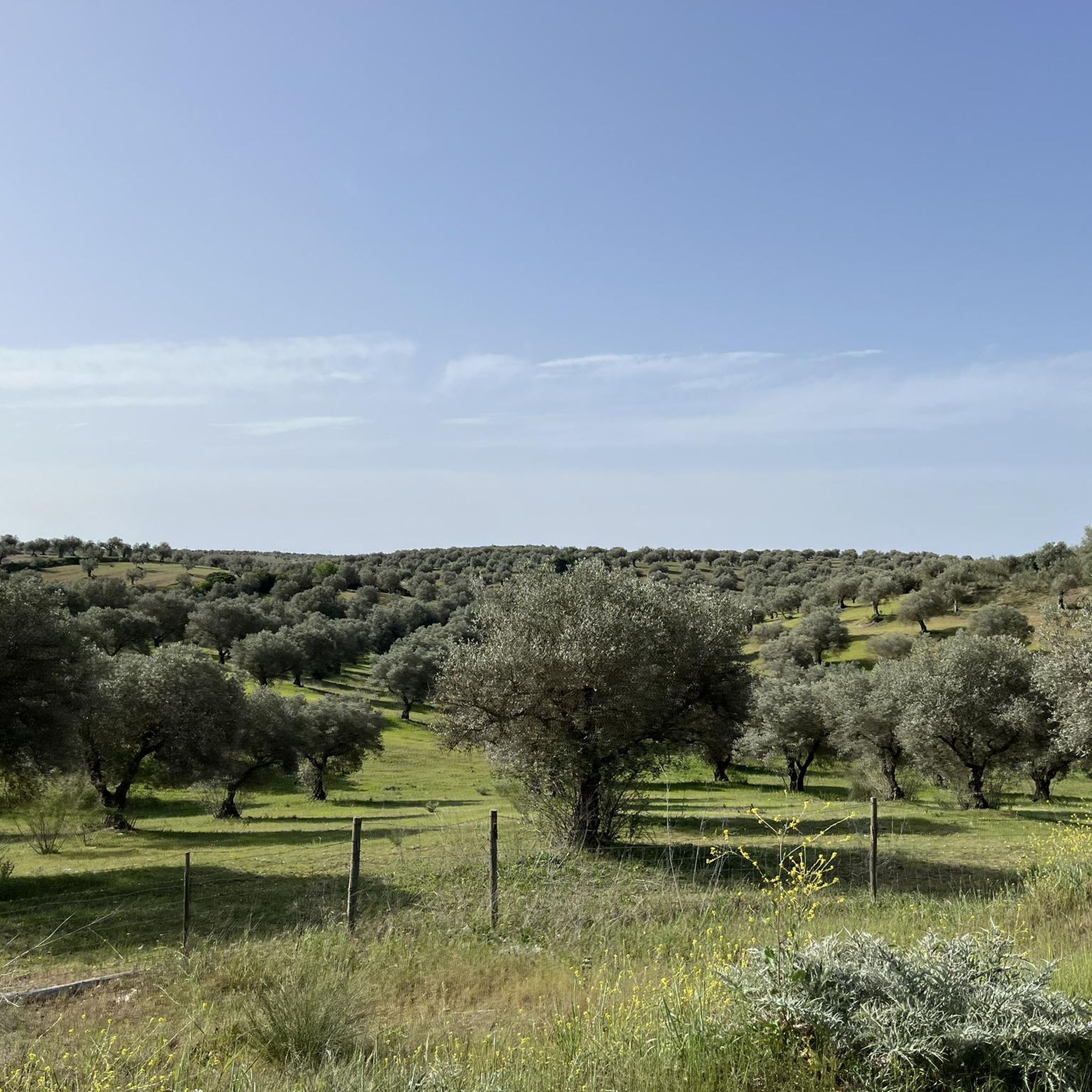
The Pedrógão region is characterized by a vast landscape of granite and schist, embedded within the river basins of the Zêzere and Unhais, as well as the Pêra and Mega streams. It is also part of the Northern Pine Forest, featuring extensive areas of pine, eucalyptus, acacia, and olive trees, creating a diverse and scenic environment.
Are there any viewpoints offering panoramic scenery?
Yes, the ruins of the Castle of Moura offer panoramic views of the Alentejo plain and the surrounding countryside. Additionally, Monte da Senhora da Confiança in Pedrógão Pequeno provides a scenic viewpoint over the area.
Are there any archaeological remains to visit?
The region has archaeological remains dating back to the second millennium BC, including the 'Old Castle' where early human communities settled. Traces of Roman presence can also be found at the Calvário/Devesa Archaeological Station and the Cabril Roman Bridge, which is now submerged by the Bouçã Dam.
Most popular routes around Pedrógão

Get inspired with the komoot mobile app


Explore more
Still not found the Highlight you’re looking for? See guides of the top attractions in other regions:
