Attractions and Places To See around Vidigueira - Top 17
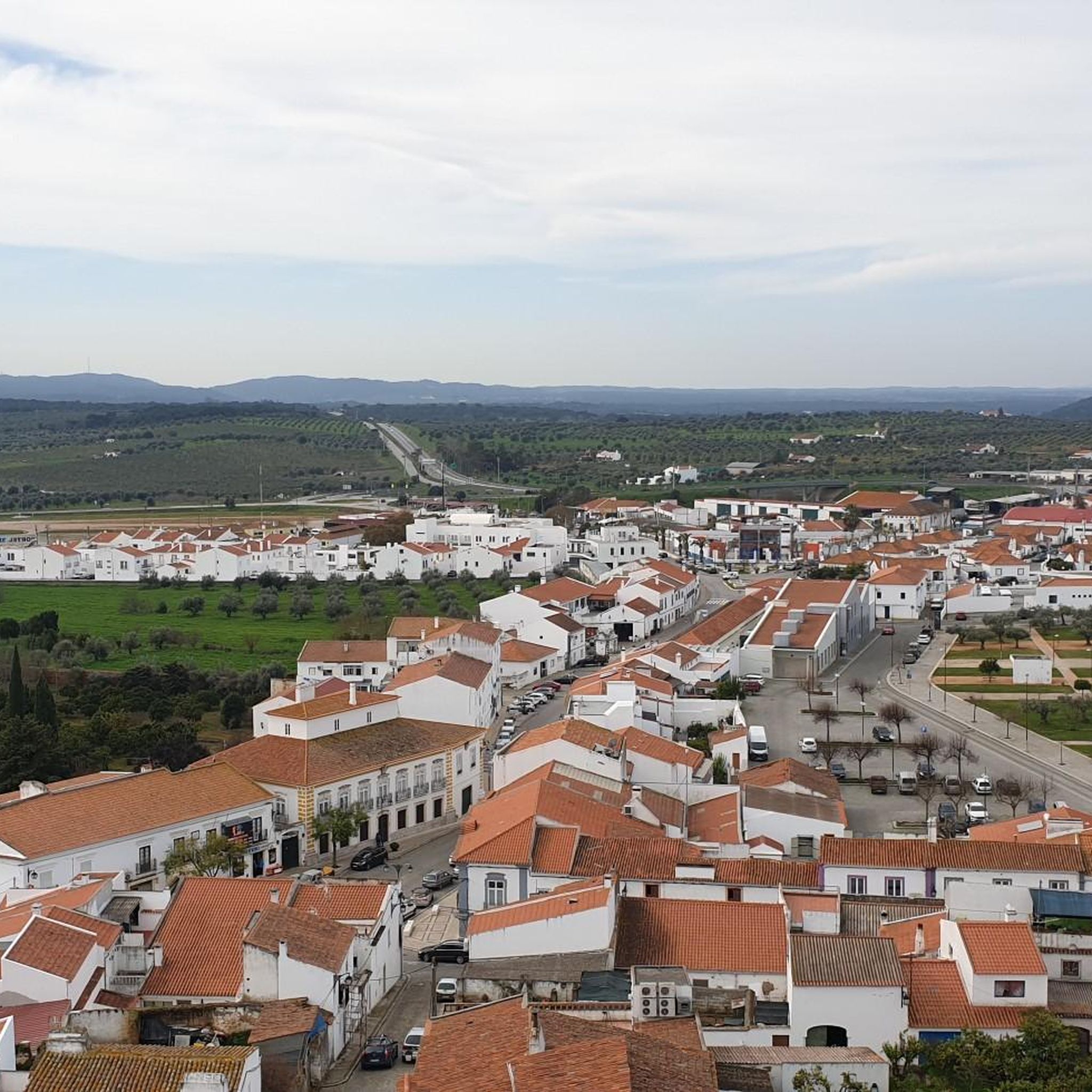
Attractions and places to see around Vidigueira, a town in Portugal's Alentejo region, offer a blend of history, culture, and natural landscapes. The area is characterized by expansive plains, cork oak forests, and fertile lands, influenced by the nearby Mendro Mountain Range. Vidigueira is particularly known for its rich wine heritage and historical connections to Vasco da Gama. Visitors can explore a variety of sites reflecting the region's past and traditions.
Best attractions and places to see around Vidigueira
- The…
Last updated: August 26, 2026
Cuba Town Center
Highlight • Settlement
Tip by

Vidigueira Clock Tower
Highlight • Monument
Translated by Google •
Tip by

Sign up now to discover places like this
Get recommendations on the best single tracks, peaks, & plenty of other exciting outdoor places.
Sign up for free
Vera Cruz Church and the Holy Fountain.
Highlight • Religious Site
Translated by Google •
Tip by

Hike Among Blooming Rockroses
Highlight • Trail
Tip by
Monument to Cante Alentejano
Highlight • Monument
Translated by Google •
Tip by
Sign up for free to discover even more attractions around Vidigueira.
Sign up for free
Already have an account?
Start today with a free account
Your next adventure awaits.
Login or Signup
Popular around Vidigueira
Tips from the Community

A historic parish, very old, in 1257, when D. João Peres de Aboim arrived here, the Monastery of Vera Cruz probably already existed. It is the oldest monument in the municipality and owes its fame to the Relic of the Holy Wood, brought by a knight after the Seventh Crusade. Like the vast majority of inland Alentejo villages, it has been losing inhabitants. In 1960, it had over a thousand inhabitants; today, it has less than four hundred.
2
0
Cuba is a Portuguese town in the Beja District, Alentejo region, and Baixo Alentejo subregion. It is the seat of the municipality of Cuba, which has an area of 172.09 km² and a population of 4,471, subdivided into four parishes. Source: Wikipedia
3
0

Andreas is a fake, a fake fifty
2
0

The "Esteva" (Cistus ladanifer, gum rock rose or cistus rose) covers the mountains and valleys in spring with millions of beautiful, sweet-smelling white flowers. The flower itself is delicate and beautiful, but the evergreen it grows on is tough and shaggy with sticky branches and leaves. It is a plant from the rock rose family (Cistaceae) that grows in dry, rocky places where nothing else wants to grow and can grow up to 2 meters high. The sticky resin is labdanum, a highly aromatic resin. This resin protects the plant from the harsh and dry climate and it also inhibits the growth of competing plants in its environment. Because of this last characteristic you often find entire hills overgrown with Esteva. Esteva grows on acidic, non-calcareous soils, made of shale, granite and quartz. It is a very fast-growing pioneer plant that is a good biological indicator of soil degradation due to, for example, overgrazing or constant fires, as it is one of the first plants to appear in the space where oaks once grew. In the past, charcoal was extracted from the root of the Esteva, which is extremely hard and woody. This wood was also traditionally used to fire bread ovens. It is still great good wood to start a hot fire with. In moist soil it is not so difficult to pry the plants root and all out of the soil. Because this plant is full of resin and oil, it's best to make sure it doesn't grow within at least 50 meters of your home and other buildings.
2
0
Cuba is a small town of less than 5,000 people in the Alentejo region. This is a rural, agricultural area where grapes and grains are harvested. Cork is also a big industry.
6
0

The Alentejo cante is a traditional musical genre from the Alentejo, Portugal. The cante is more typical of the Lower Alentejo than of the Upper Alentejo. Its repetitive characteristics, as well as its slow tempo and abundance of pauses, contribute to its monotonous nature. UNESCO has considered the Alentejo cante to be Intangible Cultural Heritage of Humanity. It is a choral song, in which a solo point and a choir alternate, with an alto filling the pauses and finishing the stanzas. The song invariably begins with a point giving the cue, giving way to the alto and then the choir, in which the point and the alto also participate, intervene. Once the stanzas are finished, the point can start again with a new cue, followed by the same set of stanzas. This cycle is repeated as many times as the participants wish. This repetitive characteristic, as well as the slow tempo and abundance of pauses, contribute to the monotonous nature of the chant. (Wikipedia) https://youtu.be/Uz7q8XUxeZ0?si=LXYJXJG10NV6VOVo
20
0

Cuba is one of the places that call Christopher Columbus a son of their city. On January 10, 2008, the film by veteran explorer Manoel de Oliveira, Christopher Columbus: The Enigma in Cuba, had its commercial premiere. Using numerous historical clues, the film explores the theory that Columbus, an illegitimate offspring of the Portuguese royal family, was born and raised in Cuba. This is also why he named the largest island he discovered after his hometown (Source: Wikipedia).
6
4
There is always a huge celebration in September
4
5
Frequently Asked Questions
What historical sites can I explore in Vidigueira?
Vidigueira is rich in history. You can visit the Vidigueira Clock Tower, which houses a bell commissioned by Vasco da Gama in 1520. Other significant historical sites include the Vidigueira Castle Ruins, the Igreja da Misericórdia with its 18th-century tiles, and the Ermida de São Rafael. Just outside Vidigueira, in Vila de Frades, you'll find the impressive Roman Ruins of São Cucufate.
Where can I learn about Vidigueira's unique winemaking traditions?
Vidigueira is famous for its 'talha' wine, an ancient method of fermenting wine in clay amphorae. You can delve into this tradition at the Adega Museu do Vinho da Talha (Amphora Wine Cellar Museum) or the Centro Interpretativo do Vinho de Talha, which further explores this unique winemaking process.
Are there any ancient Roman ruins to visit near Vidigueira?
Yes, the Roman Ruins of São Cucufate, located in Vila de Frades just outside Vidigueira, are one of the most important Roman sites in the southern Alentejo. The site includes a former convent built upon the Roman villa, showcasing a history dating back to the 1st century.
What natural landscapes can I experience around Vidigueira?
The region around Vidigueira is characterized by expansive plains, cork oak forests, and fertile lands. The Mendro Mountain Range influences the local microclimate, and the Guadiana River is also a notable natural feature. For a pleasant outdoor experience within the town, you can visit the Parque Verde Urbano.
Can I go wine tasting or visit vineyards in Vidigueira?
Absolutely. Vidigueira is a renowned wine region, particularly for its robust red wines and white wines made from the indigenous Antão Vaz grape. Many wineries offer tours and tastings, such as Adega Cooperativa de Vidigueira, Paulo Laureano Winery, and Herdade do Rocim. The autumn harvest season is a particularly vibrant time to visit. You can find more information about wine tourism in the region at winetourism.com.
Are there family-friendly attractions in Vidigueira?
Yes, several attractions are suitable for families. The Vidigueira Clock Tower and the Vera Cruz Church and the Holy Fountain are considered family-friendly historical sites. Exploring the Cuba Town Center offers a glimpse into a traditional Alentejo village, and the Parque Verde Urbano provides green space for leisure.
What outdoor activities can I do near Vidigueira?
The area around Vidigueira is great for outdoor activities, especially cycling. You can find various road cycling routes, including a moderate 35 km loop directly from Vidigueira. Other options include longer, more challenging routes like the 100 km+ loops from Cuba that pass by the Castle of Beja or offer views of the Alqueva Reservoir. For more details on these routes, visit the Road Cycling Routes around Vidigueira guide.
What is Cante Alentejano and where can I learn more about it?
Cante Alentejano is a traditional musical genre from the Alentejo, recognized by UNESCO as Intangible Cultural Heritage of Humanity. It's a choral song with a distinctive repetitive, slow tempo. You can learn more about this cultural heritage by visiting the Monument to Cante Alentejano.
What is the best time to visit Vidigueira?
Vidigueira offers different experiences throughout the year. The autumn harvest season is ideal for wine tourism. Spring brings blooming rockroses and pleasant temperatures for nature walks. Summers can be hot, but the region's unique microclimate and proximity to the Mendro Mountain Range can offer some relief. For general information on the region's nature, you can visit visitalentejo.pt.
Are there any specific trails for nature walks around Vidigueira?
Yes, you can enjoy walks like the Hike Among Blooming Rockroses, especially beautiful in spring when the 'Esteva' (Cistus ladanifer) covers the landscape with fragrant white flowers. The surrounding plains and cork oak forests also offer numerous opportunities for exploring the countryside.
What is the <a href="https://www.komoot.com/highlight/5580315" target="_blank" rel="noopener">Vera Cruz Church and the Holy Fountain</a> known for?
The Vera Cruz Church and the Holy Fountain is a religious building and historical site considered the oldest monument in the municipality. It is famously known for holding fragments of the cross of Christ, brought by a knight after the Seventh Crusade, making it a significant pilgrimage site.
What kind of local cuisine can I expect in Vidigueira?
The Alentejo region, including Vidigueira, is celebrated for its rich culinary heritage. You can savor traditional dishes like açorda (bread soup), porco preto (black pork), and cured meats such as Alentejo ham. The local gastronomy also features excellent olive oil, fresh bread, and honey.
Most popular routes around Vidigueira

Get inspired with the komoot mobile app


Explore more
Still not found the Highlight you’re looking for? See guides of the top attractions in other regions:
