Attractions and Places To See around Abade De Vermoim - Top 7
Attractions and places to see around Abade De Vermoim offer a blend of historical sites, cultural experiences, and natural features. Located within the municipality of Vila Nova de Famalicão, the area is characterized by rural landscapes, agricultural fields, and forest areas. Visitors can explore local landmarks and enjoy outdoor activities such as hiking and cycling. The region provides a calm environment for discovering its heritage and natural beauty.
Best attractions and places to see around Abade De Vermoim
- The most popular attractions is Monastery of Saint Benedict, Santo Tirso, a religious building that was founded in 978 and is classified as a National Monument. Its church, built between 1659 and 1679, features Baroque and Neoclassical elements, and the monastery includes serene cloisters with a granite fountain.
- Another must-see spot is Famalicão–Póvoa de Varzim Cycle Path, a cycle way built along a former railway line. This route is approximately 28 to 30 kilometers long, offering a flat and accessible path suitable for walking, running, and cycling.
- Visitors also love Castro da Ermida, an archaeological site consisting of a protohistoric settlement with evidence of Roman and Medieval occupation. Excavations reveal continuous occupation from the 5th to the 1st centuries BC, showcasing walls and domestic structures.
- Abade De Vermoim is known for its historical sites, religious buildings, and cycling paths. The area offers a variety of attractions to see and explore, from ancient settlements to scenic routes.
- The attractions around Abade De Vermoim are appreciated by the komoot community, with 48 upvotes and 4 photos shared across various highlights.
Last updated: May 20, 2026
Famalicão–Póvoa de Varzim Cycle Path
Highlight (Segment) • Cycleway
Translated by Google •
Tip by

Monastery of Saint Benedict, Santo Tirso
Highlight • Religious Site
Translated by Google •
Tip by

Sign up now to discover places like this
Get recommendations on the best single tracks, peaks, & plenty of other exciting outdoor places.
Sign up for free
Póvoa de Varzim–Vila Nova de Famalicão Cycle Path
Highlight (Segment) • Cycleway
It is one of the most enjoyable and picturesque roads I have ever ridden on.
Tip by

Castro da Ermida
Highlight • Historical Site
Northeast-Southwest, with a central enclosure delimited by a wall and, in connection with the spur, a defensive reinforcement consisting of two ditches and a slope. Towards the Northwest and Southeast, there are some platforms.
Archaeological excavations carried out between 1983 and 1987 reveal a continuous occupation between the 19th and 19th centuries.
5 . IV BC. and the sec. I of our Era.
The walls and the various excavated domestic structures, as well as the abundant ceramic and metal loot attributable to the end of the 17th century. I BC / beginning of the century. I AD are revealing of the great dynamism that Castro das Ermidas achieved in the final phase of Castro culture.
(Other names: Palhares, Ermidas, Monte de
Palhares, Hermitages)
Translated by Google •
Tip by

Arnoso Monastery
Highlight • Religious Site
Amoso dates from 1077, confirming the existence of the parish of Santa Eulália.
Implanted in a low and marshy place, the Church of the former monastery of Arnoso has a location that is not common in the Portuguese Romanesque and that could have been one of the causes of the reduction of the
its constructive program.
Although it is not possible to confirm its place of origin, the date of 1156 is inscribed on the tympanum of the south portal. Another epigraph, now detached, was removed during the restoration work carried out by the DGEMN from the outer face of the north wall. of the nave, next to the first buttress. Its original position seems to confirm the date of one of the phases of the Romanesque construction: | 124.
The walls of the most eastern portion of the nave are lined with blind arcades, as they were initially intended for the transept, indicating a program designed for the construction of a temple on a larger scale.
At the head, the figurative sculpture stands out, whose meaning seems to be that of struggle, tension and threat, pointing to the presence of evil forces and to the permanent struggle between man and evil entities.
Translated by Google •
Tip by
Sign up for free to discover even more attractions around Abade De Vermoim.
Sign up for free
Already have an account?
Start today with a free account
Your next adventure awaits.
Login or Signup


Tips from the Community

Nearby Tourist Attractions Ave Riverbank Promenade: A riverside walkway, ideal for relaxing strolls. Monte Padrão Hillfort: Ancient ruins for those interested in history and archaeology.
1
0
Highlights and Architecture Main Church: Built between 1659 and 1679, the monastery church is an imposing example of local religious architecture. Cloisters: The monastery has serene cloisters, one of which still displays a Gothic sculpture of the Virgin and Child in one of the corners. Cloister Fountain: In the center of the cloister stands a slender granite fountain with a polylobed basin, dating from 1649. Style: Over the centuries, the monastery has been rebuilt, combining Baroque and Neoclassical elements.
1
0
Opening Hours and Visits The monastery is open for visits, but guided tours of the cloisters and other areas (besides the church) generally require prior booking by telephone with the Santo Tirso City Hall office. General Hours (Church): Daily (Monday to Sunday): 08:00–12:00 and 15:00–19:00. Accessibility: The entrance and parking are wheelchair accessible.
1
0
The Monastery of São Bento, also known as the Monastery of Santo Tirso, is located on the left bank of the Ave River, in the city of Santo Tirso, Portugal. Founded in 978, it belonged to the Benedictine Order and was one of the most powerful monasteries in Portugal. Currently, it is classified as a National Monument.
1
0
Highlights and Route Landscape: The route crosses rural areas, small population centers, agricultural fields, and forest areas, offering a calm and pleasant environment. Localities: The ecotrail passes through several localities, including Amorim, Terroso, Laundos, Rates, Balazar, Gondifelos, Louro, and Brufe. Intermodality: A great advantage is the direct connection to the Vila Nova de Famalicão train station and the Porto Metro station in Póvoa de Varzim, facilitating access to the beginning and end of the route. Interconnection: The cycle path connects to the Formiga Ecotrail, allowing the ride to be extended.
1
0
Route Characteristics Length: The route is approximately 28 to 30 kilometers in total, connecting the rural interior (Famalicão) to the Atlantic coast (Póvoa de Varzim). Difficulty: It is a flat route, without major slopes or sharp curves, making it an easy and accessible route for everyone, including families with children. Surface: The surface is a mixture of macadam and, in some sections, asphalt, suitable for walking, running and cycling. Accessibility: The ecotrail is wheelchair accessible and has approximately 12 rest areas along the route.
1
0
The Famalicão–Póvoa de Varzim cycle path is, in fact, the Famalicão branch line cycle path. This route was built using the canal of the old railway branch line that connected Vila Nova de Famalicão and Póvoa de Varzim, and which ceased train service in 1995.
1
0

Santo Tirso is situated in the heart of the famous Vinho Verde wine region. Every summer, an international guitar festival takes place here.
0
0
Frequently Asked Questions
What historical sites can I explore in and around Abade de Vermoim?
The region offers several historical sites. You can visit the ancient Castro da Ermida, a protohistoric settlement with Roman and Medieval occupation. Also, explore the Igreja de Santiago de Antas, a parish church with Romanesque origins, and the historic Solar de Pouve manor house in Abade de Vermoim itself.
Are there any notable religious buildings to visit in the area?
Yes, the area is rich in religious heritage. The most prominent is the Monastery of Saint Benedict, Santo Tirso, a National Monument founded in 978. You can also visit the Arnoso Monastery, with parts dating back to the 12th century, and the local Igreja de Santa Maria de Abade de Vermoim, which has historical roots from at least 1747.
Where can I find natural beauty and outdoor spaces near Abade de Vermoim?
The region is characterized by rural landscapes, agricultural fields, and forest areas. You can enjoy leisurely strolls along the Ave Riverbank Promenade, offering scenic views of the Ave River. For a larger green space, Devesa Park in Vila Nova de Famalicão features an open-air amphitheater, an artificial lake, and diverse flora.
Are there cycling paths suitable for a leisurely ride?
Absolutely! The Famalicão–Póvoa de Varzim Cycle Path (also known as Póvoa de Varzim–Vila Nova de Famalicão Cycle Path) is built along a former railway line. It's approximately 28 to 30 kilometers long, flat, and has a smooth tarmac surface, making it ideal for cycling, running, and walking for all ages.
What kind of hiking opportunities are available around Abade de Vermoim?
The rural and forested areas around Abade de Vermoim are excellent for hiking. You can find various trails, including moderate routes like the 'Lago da Assunção – Monte da Senhora da Assunção loop' or the 'Arnoso Monastery – Castro da Ermida loop'. For more options, explore the hiking guide for Abade de Vermoim.
Are there family-friendly attractions or activities?
Yes, the Famalicão–Póvoa de Varzim Cycle Path is highlighted as an easy and accessible route suitable for families with children. Devesa Park in Vila Nova de Famalicão also offers a large natural space with an artificial lake, perfect for family outings.
What museums can I visit in the wider Vila Nova de Famalicão municipality?
Within the municipality, you can visit the Camilo Castelo Branco House-Museum, the former residence of the renowned Portuguese writer. Other options include the Textile Industry Museum, the Lousado Railway Museum, and the Bernardino Machado Museum, housed in the historic Barão da Trovisqueira Palace.
Are there any attractions accessible for wheelchair users?
Yes, both the Famalicão–Póvoa de Varzim Cycle Path and the Monastery of Saint Benedict, Santo Tirso, offer wheelchair accessibility for their entrances and parking areas. The cycle path also features approximately 12 rest areas along its route.
What do visitors particularly enjoy about the attractions near Abade de Vermoim?
Visitors appreciate the smooth tarmac and scenic views of the cycling paths, allowing for enjoyable rides. The historical sites, like the Monastery of Saint Benedict, are valued for their impressive architecture and serene cloisters. The overall calm and pleasant environment for outdoor activities like hiking and cycling is also a highlight.
What is the best time of year to visit Abade de Vermoim for outdoor activities?
The region's pleasant environment, characterized by rural areas and natural beauty, makes it suitable for outdoor activities for much of the year. Spring and early autumn generally offer the most comfortable temperatures for hiking and cycling, avoiding the peak heat of summer or the cooler, wetter days of winter.
Are there options for mountain biking near Abade de Vermoim?
Yes, there are several mountain biking routes available. You can find trails like the 'Church of São Pedro de Rates – Famalicão Cycle Path loop' or the 'Penedo das Letras – Famalicão Cycle Path loop'. For a comprehensive list, check the MTB trails guide for Abade de Vermoim.
What is the significance of the Ave River in the region?
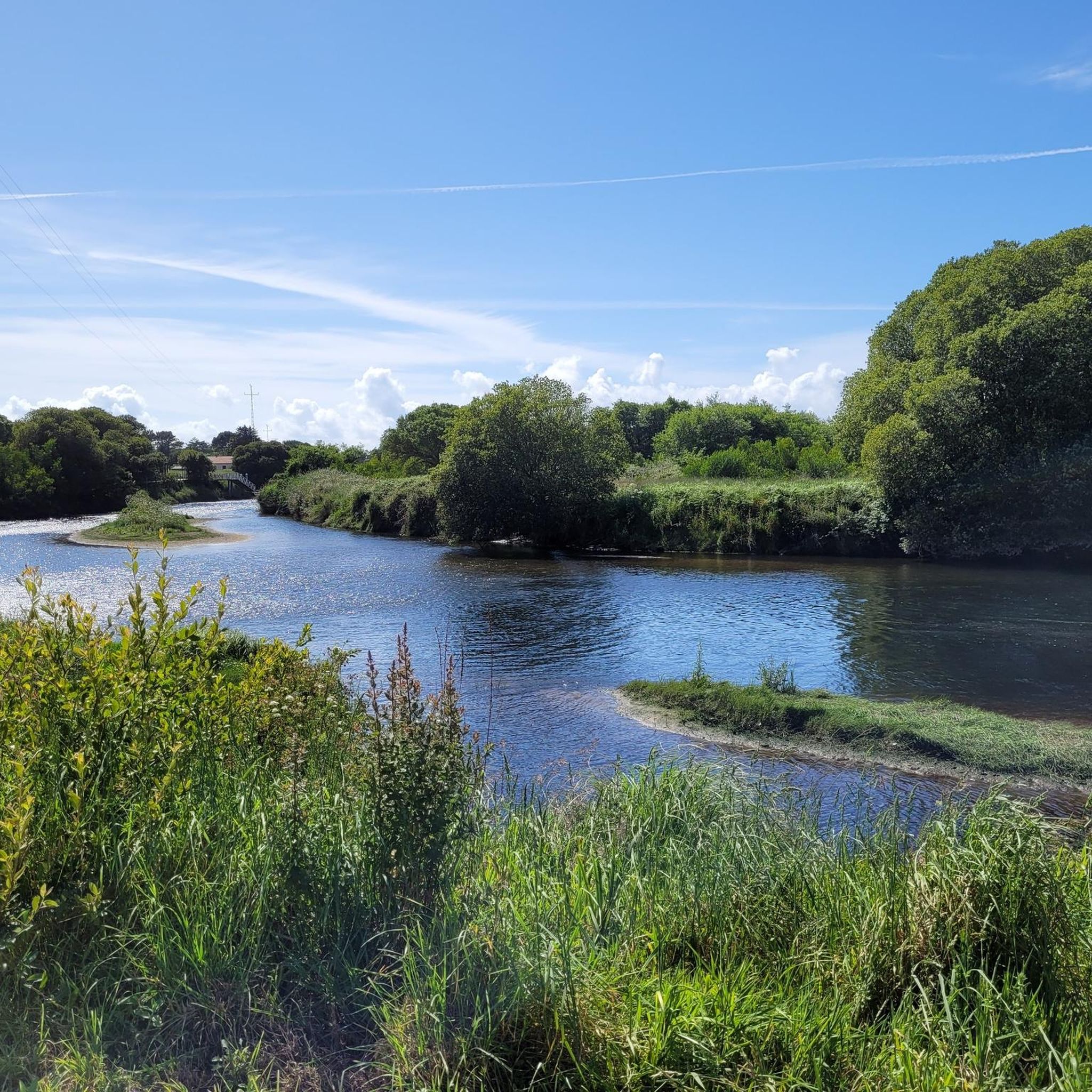
The Ave River is a significant natural feature, with its banks offering scenic promenades ideal for walking and cycling. Historically, the river has played a role in the region's development, and the Monastery of Saint Benedict, Santo Tirso, is notably located on its left bank.
Are there any ancient fortified settlements to visit?
Yes, you can explore the Castro da Ermida, an archaeological site that was a protohistoric settlement with evidence of continuous occupation from the 5th to the 1st centuries BC. Another significant site is the Monte Padrão Hillfort in nearby Santo Tirso, classified as a National Monument, offering insights into ancient history.

Get inspired with the komoot mobile app


Explore more
Still not found the Highlight you’re looking for? See guides of the top attractions in other regions:
