Attractions and Places To See around Rio Frio e Milhão e Milhão e Milhão - Top 20
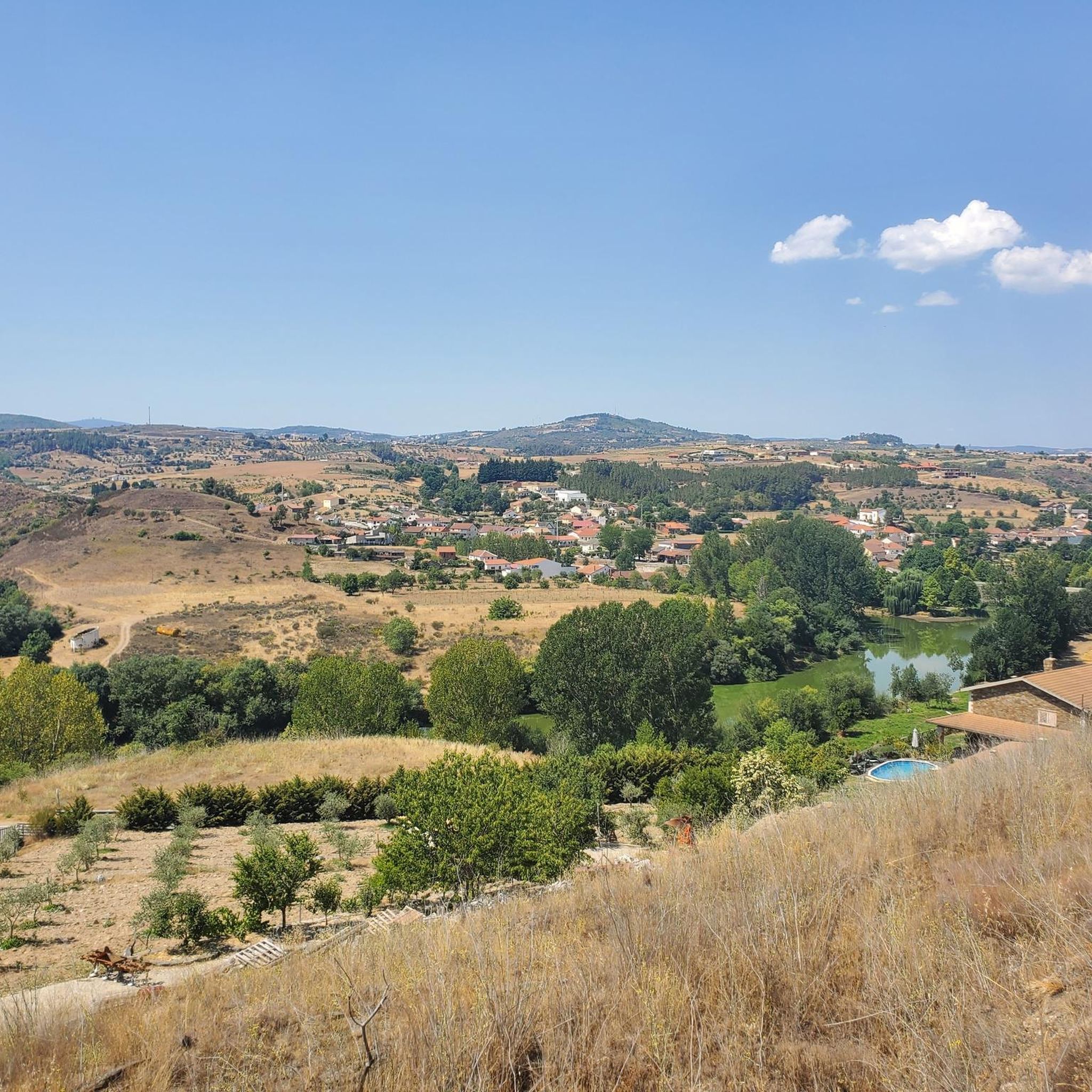
Attractions and places to see around Rio Frio e Milhão e Milhão e Milhão are primarily found within this civil parish in the municipality of Bragança, Portugal, and in the nearby city of Bragança. The region features a landscape characterized by a plateau with an average altitude of around 400 meters, bordered by the Rio Sabor. Visitors can explore a mix of historical sites, cultural institutions, and natural features that reflect the area's heritage and geography. The parish itself offers insights into traditional regional life, while the proximity to Bragança expands the range of available points of interest.
Best attractions and places to see around Rio Frio e Milhão e Milhão e Milhão
- The most popular attractions is Bragança Castle, a castle that occupies 3.2 hectares and features 23 towers. Inside, the Military Museum offers a collection of weaponry, and visitors can enjoy panoramic views from the castle's terrace.
- Another must-see spot is Domus Municipalis de Bragança, a historical site recognized as a National Monument. This building is a unique example of Romanesque civic architecture, featuring a cistern on its lower floor and an upper floor that served as the town hall.
- Visitors also love Iberian Museum of Masks and Costumes, a man-made monument dedicated to the cultural heritage of masks and costumes. It provides insight into regional traditions and is open from Tuesday to Sunday.
- Rio Frio e Milhão e Milhão e Milhão is known for its historical churches, traditional museums, and natural river landscapes. The area offers a variety of attractions to see and explore, from ancient settlements to cultural exhibits.
- The attractions around Rio Frio e Milhão e Milhão e Milhão are appreciated by the komoot community, with 94 photos and 43 upvotes contributing to the guide's appeal.
Last updated: July 1, 2026
Bragança Castle
Highlight • Castle
Currently, access to the Keep is via the north-facing side, through an external staircase made of schist masonry, attached to the tower's outer structure.
This is flanked by seven magnificent vaulted brick turrets (three to the east, three to the west, and one to the south), which join the wall section on the northern slope of the fortification.
Inside, the Military Museum, officially founded in 1983, occupies the four floors, sixteen rooms, terrace, and crypt of the Keep, as well as the entire exterior space bordered by the turrets, including the Princess Tower. This museum possesses a collection of great historical value, allowing visitors to follow the evolution of light weaponry from the 16th century to the mid-20th century. It seeks to promote the appreciation, enrichment, and exhibition of the historical-military heritage attributed to it and to disseminate the cultural values linked to military history. Visitors can also climb to the crenellated terrace to contemplate the marvelous landscapes, overlooking the Nogueira, Montesinho, and Coroa mountain ranges, the peaks of Sanábria, and the Leonese lands.
Translated by Google •
Tip by

Domus Municipalis de Bragança
Highlight • Historical Site
Translated by Google •
Tip by

Sign up now to discover places like this
Get recommendations on the best single tracks, peaks, & plenty of other exciting outdoor places.
Sign up for free
Iberian Museum of Masks and Costumes
Highlight • Monument
Masks and Costumes
Rua D. Fernão "O Bravo", 24/26
5300-025 Bragança
tel. (351) 273 381 008
museu.iberico@cm-braganca.pt
Open from Tuesday to Sunday
09:00 - 13:00 | 14:00 - 17:00
Closed on Mondays
(except Carnival Monday)
Closed annually on:
1 January, 1 May, Easter Sunday, 22 August and 25 December
Translated by Google •
Tip by
Fervença River Green Corridor Boardwalk
Highlight (Segment) • Trail
Translated by Google •
Tip by
Roman Bridge of Mirandela
Highlight • Bridge
Translated by Google •
Tip by

Sign up for free to discover even more attractions around Rio Frio e Milhão e Milhão e Milhão.
Sign up for free
Already have an account?
Start today with a free account
Your next adventure awaits.
Login or Signup


Tips from the Community

The Domus Municipalis of Bragança is one of those unparalleled treasures. It's worth visiting not only because it's a national monument, but because it's a true relic: the only example of Romanesque civil architecture in the entire Iberian Peninsula. If you enjoy history or architecture, you'll quickly understand why this building is so special: 1. An Architectural Rarity (Unique Form) While most Romanesque buildings that have survived to this day are churches or monasteries, this is a civil (non-religious) building. Even more curious is its shape: an irregular pentagon. This is not something you see every day in medieval architecture. 2. The Mysterious Dual Function Upon entering, you'll realize that the building is "two in one". This clever engineering tells a story of the city's survival: The Lower Floor (The Cistern): The building's base is a huge vaulted cistern that collected rainwater and spring water. Since Bragança (and its Citadel) is located on a hill, water was a scarce and vital resource for resisting military sieges. The Upper Floor (The "Town Hall"): Above the cistern, there is a large room with windows all around (letting in plenty of light and air). It is believed that this was where the "good men" of the council met to discuss city affairs. Imagine a medieval town hall, outdoors but covered. 3. Details Not to Be Missed The Light and the Views: As it is an open space with a gallery of arched windows all around, the light enters in a very special way, creating a photogenic environment and allowing you to see the Citadel from various angles. The Modillions (Corners): If you look closely at the cornice (the top of the walls, both inside and out), you'll see small stone sculptures called modillions or corbels. They have curious shapes, ranging from human faces to animals and geometric figures, typical of medieval imagery. It's a quick visit (you can see it in 15-20 minutes), it's free (usually), and it's literally next to the Church of Santa Maria and the Castle. In other words, there's no reason not to go in!
0
0
Bragança Castle, located in northeastern Portugal, is one of the most impressive and well-preserved medieval castles in the country. Keep: At 33 meters high, it is one of the most imposing in Portugal. Inside, it houses the Bragança Military Museum, where you can see a vast collection of light weaponry, from the 12th century to the First World War. From the top of the tower, there is a breathtaking view over the old city, the new part of Bragança, and the surrounding mountains (Montesinho, Sanábria). The Princess Tower is an old residential outbuilding (Alcáçova Tower) famous for a tragic love legend. In the citadel, you can stroll through the streets within the walls, where the medieval atmosphere remains almost intact.
3
0

Iberian Museum of Masks and Costumes Rua D. Fernão "O Bravo", 24/26 5300-025 Bragança tel. (351) 273 381 008 museu.iberico@cm-braganca.pt Open from Tuesday to Sunday 09:00 - 13:00 | 14:00 - 17:00 Closed on Mondays (except Carnival Monday) Closed annually on: 1 January, 1 May, Easter Sunday, 22 August and 25 December
4
0
Walkway of the Green Corridor of the Fervença River.
0
0
Classified as a National Monument in 1910, the castle that stands before our eyes today occupies an area of 3.2 hectares and has an approximate perimeter of 670 meters. Its walled section, with an irregular oval layout, is punctuated by pyramidal battlements and highlighted by 23 towers, of which 10 are turrets, 2 have a hexagonal plan, and 11 are quadrangular. Currently, access to the Keep is via the north-facing side, through an external staircase made of schist masonry, attached to the tower's outer structure. This is flanked by seven magnificent vaulted brick turrets (three to the east, three to the west, and one to the south), which join the wall section on the northern slope of the fortification. Inside, the Military Museum, officially founded in 1983, occupies the four floors, sixteen rooms, terrace, and crypt of the Keep, as well as the entire exterior space bordered by the turrets, including the Princess Tower. This museum possesses a collection of great historical value, allowing visitors to follow the evolution of light weaponry from the 16th century to the mid-20th century. It seeks to promote the appreciation, enrichment, and exhibition of the historical-military heritage attributed to it and to disseminate the cultural values linked to military history. Visitors can also climb to the crenellated terrace to contemplate the marvelous landscapes, overlooking the Nogueira, Montesinho, and Coroa mountain ranges, the peaks of Sanábria, and the Leonese lands.
7
0
Bragança Castle, one of the most characteristic examples of medieval architecture, was built in 1409 on the orders of king João I on foundations dating back to the times of the first king of Portugal, Afonso Henriques. Formed by an imposing keep and a double wall, it has stood up well to the tests of time. The central parade ground, known as the citadel or old town and where the church of Santa Maria and the Domus Municipalis are to be found, retain its medieval lines with narrow streets and small whitewashed houses. Inside the 17-metre wide and 33-metre tall Keep, there are some notable gothic features including the battlements, the railed windows and the stone carved arms of the Casa Real de Avis (Royal House of Avis), founded by king João I. Also inside, there is the Military Museum. Heading up to the top floor is well worth it if only for the wonderful views out over the city and surrounding countryside. Fifteen towers and three gateways complete the walls. The Torre da Princesa (Tower of the Princess), a former belonging of the Casa dos Alcaides stores the legend of a princess taken prisoner. There is also the Porta da Vila (Town Gateway) that welcomes in visitors to the castle.
6
0

A castle complex surrounded by a closed castle wall, including a small old town with miniature gardens. Well worth seeing.
4
0
It was built in the 12th century. Although much has been written about its purpose, there is no consensus among scholars. It served as a water cistern, but there are doubts as to whether this was its original function. The name by which it is known today (in Latin "Domus Municipalis", in Portuguese "Casa Municipal") is due to the fact that it was used as the Town Hall by the Municipal Administration of Bragança. It was classified as a National Monument in 1910
5
1
Frequently Asked Questions
What historical and cultural sites can I explore within Rio Frio e Milhão?
Within the parish of Rio Frio e Milhão, you can visit the Museu Escola e Etnográfico em Paçó, which showcases traditional regional activities and daily life. The area also features several historical churches and chapels, including the 18th-century Rio Frio Church, the Chapel of N. Sra. ao Pé da Cruz, and the Paçó Church with its distinctive round arch portal. Additionally, you'll find traditional cruzeiros (Calvary Crosses) like Santa Cruz, Espírito Santo, and Santo António in the village centers.
Are there any natural features or viewpoints worth visiting in Rio Frio e Milhão?
Yes, the area is characterized by a plateau landscape with an average altitude of around 400 meters, bordered by the Rio Sabor to the west. For panoramic views, the Chapel of N. Sra. das Necessidades is situated on a prominent hill and offers scenic vistas. You can also explore Cabeço do Castro, a hill believed to have been an Iron Age settlement, flanked by the Jordana and Grial streams.
What are the main attractions in the nearby city of Bragança?
The nearby city of Bragança, approximately 15 km from Rio Frio e Milhão, offers several significant attractions. These include the expansive Bragança Castle, a National Monument with 23 towers and a Military Museum. Another must-see is the Domus Municipalis de Bragança, a unique example of Romanesque civic architecture. You can also visit the Iberian Museum of Masks and Costumes, which provides insight into regional traditions.
Are there family-friendly activities or attractions available?
Many of the historical sites in Bragança, such as the Domus Municipalis de Bragança, are considered family-friendly. The Fervença River Green Corridor Boardwalk in Bragança is also a great option for families, offering a pleasant path along the river with small parks. Exploring the traditional features and ethnographic museum in Rio Frio e Milhão can also be an educational experience for families.
What outdoor activities, like hiking or cycling, can I do near these attractions?
The region around Rio Frio e Milhão and Bragança offers various outdoor activities. For hiking, you can explore routes like the 'Route of the Wolves' or the 'Peña Beneita Route'. There are also easy hiking loops around Bragança, such as the 'Bragança Castle – Domus Municipalis de Bragança loop'. Cyclists can find numerous road cycling and MTB trails. For more details on routes, you can check the hiking guide, road cycling guide, and MTB trails guide for the area.
What do visitors enjoy most about the Bragança Castle?
Visitors particularly enjoy the historical significance and the panoramic views from Bragança Castle. It's classified as a National Monument and features 23 towers. Inside, the Military Museum offers a collection of weaponry from the 16th to mid-20th centuries. Climbing to the crenellated terrace provides marvelous landscapes overlooking the Nogueira, Montesinho, and Coroa mountain ranges.
Is there a good place for a leisurely walk or bike ride in Bragança?
Yes, the Fervença River Green Corridor Boardwalk in Bragança is highly recommended for leisurely walks and bike rides. It's a very pleasant trail right along the river, featuring many small parks. It also leads into the old town and past the castle complex, making it a scenic and enjoyable route.
What is the significance of the Domus Municipalis de Bragança?
The Domus Municipalis de Bragança is a unique and well-preserved example of Romanesque civic architecture, recognized as a National Monument. It's notable for its mysterious dual function: the lower floor served as a large vaulted cistern for water collection, crucial for resisting sieges, while the upper floor is believed to have been used as the town hall by the municipal administration.
Are there any other historical bridges in the vicinity?
Yes, the Ponte de Gimonde is a historic bridge located about 9.3 km from Rio Frio e Milhão. Another notable historical bridge is the Roman Bridge of Mirandela, which is further afield but can be incorporated into longer cycling routes.
What kind of exhibits can I expect at the Iberian Museum of Masks and Costumes?
The Iberian Museum of Masks and Costumes is dedicated to the cultural heritage of masks and costumes, providing insight into regional traditions. It showcases various artifacts related to these cultural expressions and is open from Tuesday to Sunday, offering a glimpse into the vibrant folklore of the Iberian Peninsula.
What is the best time to visit Rio Frio e Milhão and Bragança for outdoor activities?
For outdoor activities like hiking and cycling, spring (April-May) and autumn (September-October) generally offer pleasant weather with milder temperatures, making them ideal for exploring the region's trails and historical sites. Summer can be warm, but early mornings or late afternoons are still suitable for activities.
Are there any traditional water features or public spaces in Rio Frio e Milhão?
Yes, the area preserves several traditional features. You can find various traditional fountains, with 'Fonte do Olmo' being particularly well-known. There are also public wash houses that reflect the historical daily life of the community. The cruzeiros (Calvary Crosses) in the village centers also serve as community gathering points.
Most popular routes around Rio Frio e Milhão e Milhão e Milhão

Get inspired with the komoot mobile app


Explore more
Still not found the Highlight you’re looking for? See guides of the top attractions in other regions:
