The best road cycling routes around Salvador
46
riders
8
rides
Road cycling around Salvador features a diverse landscape characterized by rolling hills and valleys, with routes often passing through historic villages and offering scenic viewpoints. The region's terrain includes significant elevation changes, making it suitable for cyclists seeking challenging climbs and descents. Road cycling routes Salvador provide access to both natural and cultural landmarks.
Best road cycling routes around Salvador
- The most popular road cycling route is San Martín de Trevejo – Penha Garcia Dam loop from Castelo de Monsanto…
Last updated: July 8, 2026
6
riders
111km
05:36
1,730m
1,730m
Hard road ride. Very good fitness required. Mostly well-paved surfaces and easy to ride.
5
riders
95.9km
04:20
940m
940m
Hard road ride. Very good fitness required. Some segments of this route may be unpaved and difficult to ride.

Sign up for free
6
riders
Moderate road ride. Good fitness required. Some segments of this route may be unpaved and difficult to ride.
3
riders
45.9km
02:15
590m
590m
Moderate road ride. Good fitness required. Mostly well-paved surfaces and easy to ride.
5
riders
Moderate road ride. Good fitness required. Mostly well-paved surfaces and easy to ride.
Get access to more routes and recommendations from other explorers.
Sign up for free
Already have an account?
Our route recommendations are based on thousands of hikes, rides, and runs completed by other people on komoot.
Start today with a free account
Your next adventure awaits.
Login or Signup
Popular around Salvador
Tips from the Community

Nice bakery full of local breads, on typical village of Beira Baixa. There's also a small grocery shop.
0
0

Penamacor, once one of the most imposing border fortresses, still bears traces of its military importance. The medieval castle, classified as a National Monument, stands as a testament to the ancient defensive line of Beira. Amidst narrow streets and walls, memories of the Jewish quarter, a refuge for Jews expelled from Spain in 1492, also emerge. In this context, Penamacor is above all the birthplace of António Ribeiro Sanches, a physician, philosopher, and medical reformer who served Catherine of Russia.
2
0
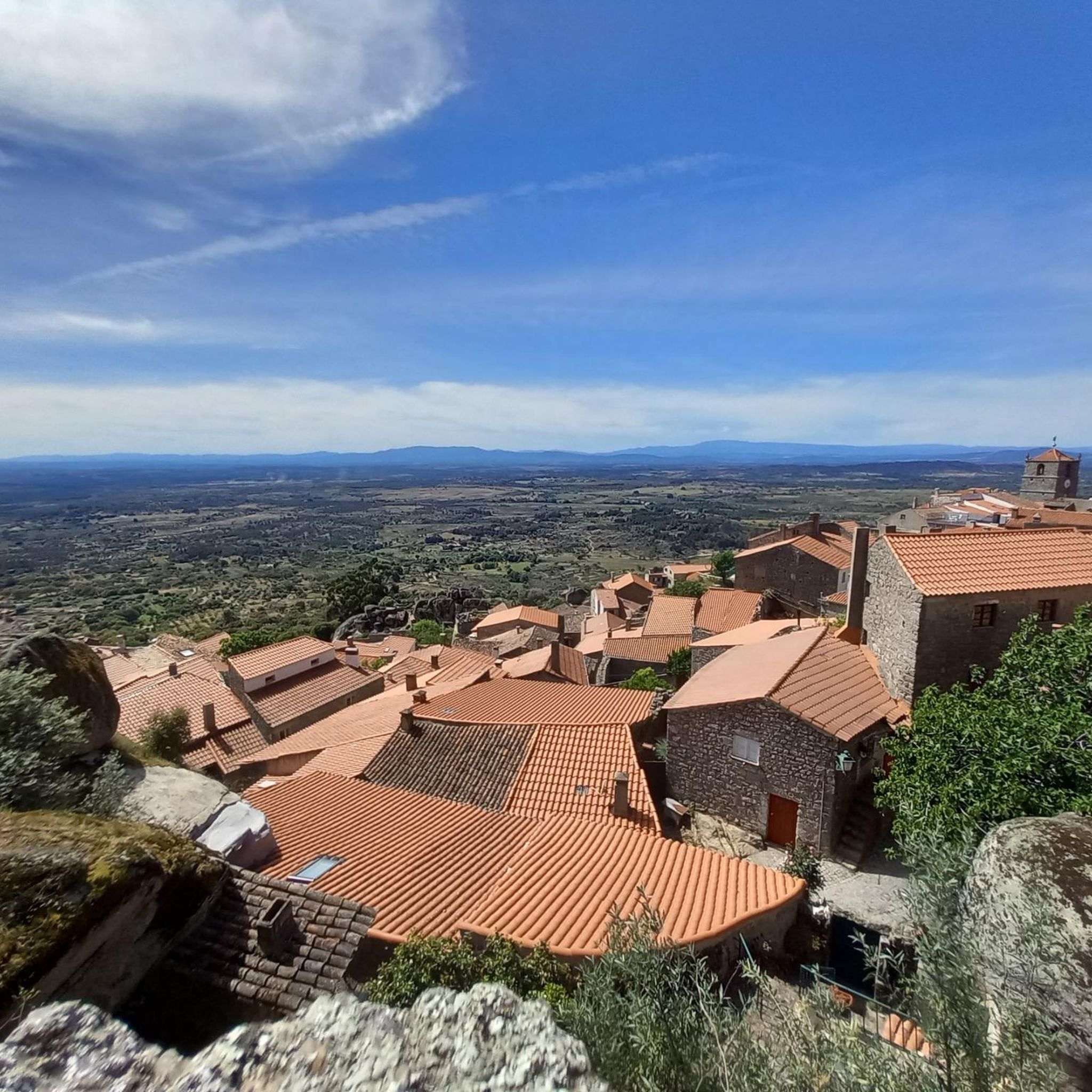
From Miradouro da Peça, the gaze is lost between horizons: the houses nestled into the granite hillside, the Beira plain that stretches to Spain and, crowning the view, the Serra da Estrela, Gardunha and Malcata mountains.
3
0
Monsanto, the "Most Portuguese Village in Portugal," rises on the steep Cabeço de Monsanto, where houses are hidden among giant boulders, creating a unique setting. Between Templar walls, castle ruins, and endless vistas, history breathes in every stone—from the Lusitanians to the Romans, from the Moors to the kings who granted it charters. Today, visitors discover a vibrant village, marked by traditions like the marafonas (a traditional festival) and the flavors of the mountains: goat stew, lamb with mint, and carolo sweets. A tourist icon and the setting of legends, Monsanto is more than a place; it's an unforgettable experience.
4
0
Proença-a-Velha was born with the nation itself, linked to the repopulation promoted by King Afonso Henriques and, later, to the Templar charter of 1218. A fertile land with vast olive groves, its greatest treasure is olive oil, celebrated at the Olive Oil Museum and the Olive Oil and Smoked Meat Festival. But the tradition doesn't stop there: Proença-a-Velha is also the capital of soups, where every year over a hundred recipes warm bodies and souls at the Traditional Soup Festival.
2
0

Monsanto is a medieval village that is located in the municipality of Idanha-a-Nova, District of Castelo Branco, Portugal. It is located in eastern Portugal, not far from the border with Spain, giving it a strategic location in medieval times. A Knights Templar fortress was constructed on the highest point of the town, but this was destroyed in an explosion in the 19th century. In 1938, Monsanto was given the distinction of being “the most Portuguese village of Portugal,” during a government sponsored competition. Monsanto is famous for its boulders. The first settlers built small houses on the hilltop, wedging them between and under the boulders that were far too heavy to be moved. These small stone houses remain, creating one of Portugal’s most unique and charming towns to visit. Monsanto is also a filming location for Season 1 of the HBO House of the Dragon series.
3
0

San Martín de Trevejo is a Spanish municipality in the province of Cáceres, in the autonomous community of Extremadura. It is located in the extreme northwest, in the Sierra de Gata region, very close to the Portuguese border and the province of Salamanca. It is located in a valley at the foot of Mount Jálama. Its inhabitants are mañegas and mañegus, and their peculiar speech or “A Fala” is called “Mañegu”. It has been listed as One of the Most Beautiful Towns in Spain since 2019.
2
0

Paradise with lots of unevenness, keep an eye on the heat in the valleys at midday
0
1
Frequently Asked Questions
How many road cycling routes are available around Salvador?
There are nine distinct road cycling routes around Salvador, offering a variety of experiences. Six of these are classified as moderate, while three are considered difficult, catering to different skill levels.
Are there any beginner-friendly road cycling routes in Salvador?
While there are no routes specifically classified as 'easy' in this selection, several moderate routes are suitable for cyclists looking for a less strenuous ride. The Castelo de Penha Garcia loop from Bemposta is a good option, covering 40.2 km with manageable elevation changes.
What are some challenging road cycling routes for experienced riders in Salvador?
For experienced road cyclists seeking a challenge, the region offers routes with significant elevation gain. The San Martín de Trevejo – Penha Garcia Dam loop from Castelo de Monsanto is a difficult 110.5 km route with substantial climbing. Another demanding option is the Gas Station – Proença-a-Velha loop from Penha Garcia, which spans 95.9 km with considerable ascents and descents.
Are there road cycling routes that offer scenic viewpoints or historic landmarks?
Yes, many routes in Salvador pass through historic villages and offer scenic vistas. The Peça Viewpoint – Historic Village of Monsanto loop from Castelo de Monsanto is a moderate route that leads through historic villages and provides excellent viewpoints. You can also explore attractions like the Historic Village of Monsanto and Monsanto Castle along the way.
Are all road cycling routes around Salvador loop trails?
Yes, all the road cycling routes featured in this guide are designed as loop trails, meaning you will finish your ride at your starting point. This makes planning your cycling trip more convenient.
What is the best time of year to go road cycling in Salvador?
The region experiences a Mediterranean climate. Spring (April-May) and Autumn (September-October) generally offer the most pleasant temperatures for road cycling, avoiding the intense heat of summer and the potential for heavier rains in winter. Always check local weather forecasts before heading out.
Are there any natural attractions or waterfalls accessible by road bike in Salvador?
Yes, some routes bring you close to natural wonders. The Penha Garcia Natural Swimming Pool and Waterfall is a notable natural attraction in the area, which can be a refreshing stop or point of interest during your ride.
Where can I find parking for road cycling routes near Salvador?
Many of the routes start from or pass through villages like Castelo de Monsanto, Penha Garcia, or Aldeia de João Pires. These villages typically offer public parking facilities, often near the main squares or local amenities, suitable for starting your road cycling adventure.
Are there road cycling routes that pass through villages with cafes or places to rest?
Yes, the routes are designed to connect various villages, providing opportunities for breaks. For instance, the Penamacor loop from Aldeia de João Pires passes through several small towns where you can often find local cafes or restaurants to refuel and rest.
What kind of terrain can I expect on road cycling routes in Salvador?
Road cycling around Salvador is characterized by diverse terrain, including rolling hills and valleys. You can expect significant elevation changes, offering both challenging climbs and exhilarating descents, often through scenic landscapes and historic areas.
Can I spot wildlife while road cycling in Salvador?
The rural and natural landscapes surrounding Salvador offer opportunities for wildlife spotting, particularly birds and smaller mammals. Cycling through quieter sections, especially during early morning or late afternoon, increases your chances of encountering local fauna.
Most popular routes around Salvador
Most popular attractions around Salvador

Get inspired with the komoot mobile app


Explore more
Browse the best Road cycling routes in other regions.
