The best road cycling routes around Gastern
4.3
(38)
1,287
riders
140
rides
Road cycling around Gastern features a landscape characterized by rolling hills and river valleys, providing varied terrain for cyclists. The region includes historical sites and cultural landmarks, often connected by routes that traverse agricultural areas and woodlands. Elevation gains on routes indicate a non-flat topography, offering moderate to challenging climbs. The area's road cycling routes often follow established paths, including sections of former railway lines.
Best road cycling routes around Gastern
- The most popular road cycling route is Drinking Water…
Last updated: November 15, 2026
4.7
(7)
329
riders
87.8km
04:01
1,030m
1,030m
Hard road ride. Very good fitness required. Mostly well-paved surfaces and easy to ride.
19
riders
Moderate road ride. Good fitness required. Mostly well-paved surfaces and easy to ride.

13
riders
46.2km
02:01
390m
390m
Moderate road ride. Good fitness required. Mostly well-paved surfaces and easy to ride.
6
riders
59.3km
02:38
590m
590m
Moderate road ride. Good fitness required. Mostly well-paved surfaces and easy to ride.
10
riders
38.4km
01:43
350m
350m
Moderate road ride. Good fitness required. Mostly well-paved surfaces and easy to ride.
Get access to more routes and recommendations from other explorers.
Already have an account?
Our route recommendations are based on thousands of hikes, rides, and runs completed by other people on komoot.
Start today with a free account
Your next adventure awaits.

Tips from the Community

The historic old town of Zwettl in the Waldviertel captivates with medieval city walls, colorful baroque facades, and the colorful Hundertwasser fountain on the main square. Highlights include the Old Town Hall with its city museum, the striking Antonturm, and the nearby Zwettl Abbey (Cistercian monastery).
0
0

You can also stay overnight here, even with breakfast if I remember correctly. Surely a nice experience for the whole family.
0
0
Lots of waterfowl but unfortunately nothing to sit on.
0
0
Originally, after the town's founding, Trinity Square was part of Zwettl's main square, which at that time stretched as an extensive triangular plaza from the townhouses behind the Hundertwasser Fountain to the level of the Hausleitner house above the "Zur Goldenen Rose" inn. The construction of houses along the lower Landstraße, the so-called "Grätzl," significantly narrowed the main square, and the addition of the cross street eventually divided it into two squares.
0
0
During the Baroque period, people everywhere were eager to express their gratitude for overcoming the plague years and the Turkish Wars by erecting plague or Trinity columns. In 1727, the pillory in the upper square was replaced by the richly sculpted sandstone column created by Kaspar Högl of Eggenburg. During the last renovation in 1998, extensive environmental damage to the figures was repaired, and the entire column was painted a light yellow. The four life-size statues are, in the center at the front, the Immaculate Conception; to her left, St. Sebastian (pierced by five arrows); to her right, St. Roch (pointing to the plague boil on his thigh); and St. Florian (holding a flag in one hand and a bucket of water in the other). The iron fountain in the immediate vicinity of the Trinity Column is a gift from the then-mayor, Eugen Beck, of the twin town of Plochingen near Stuttgart.
0
0

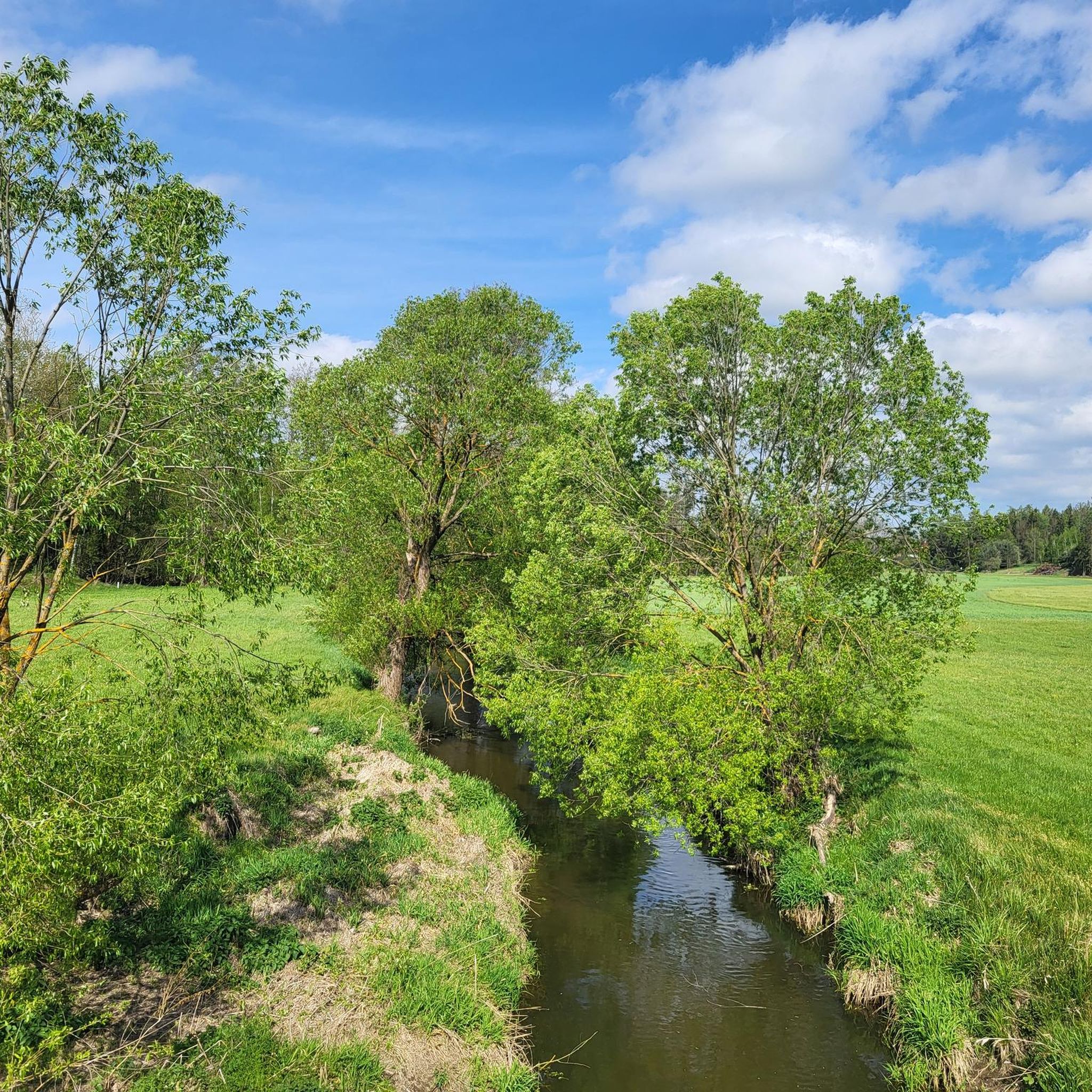
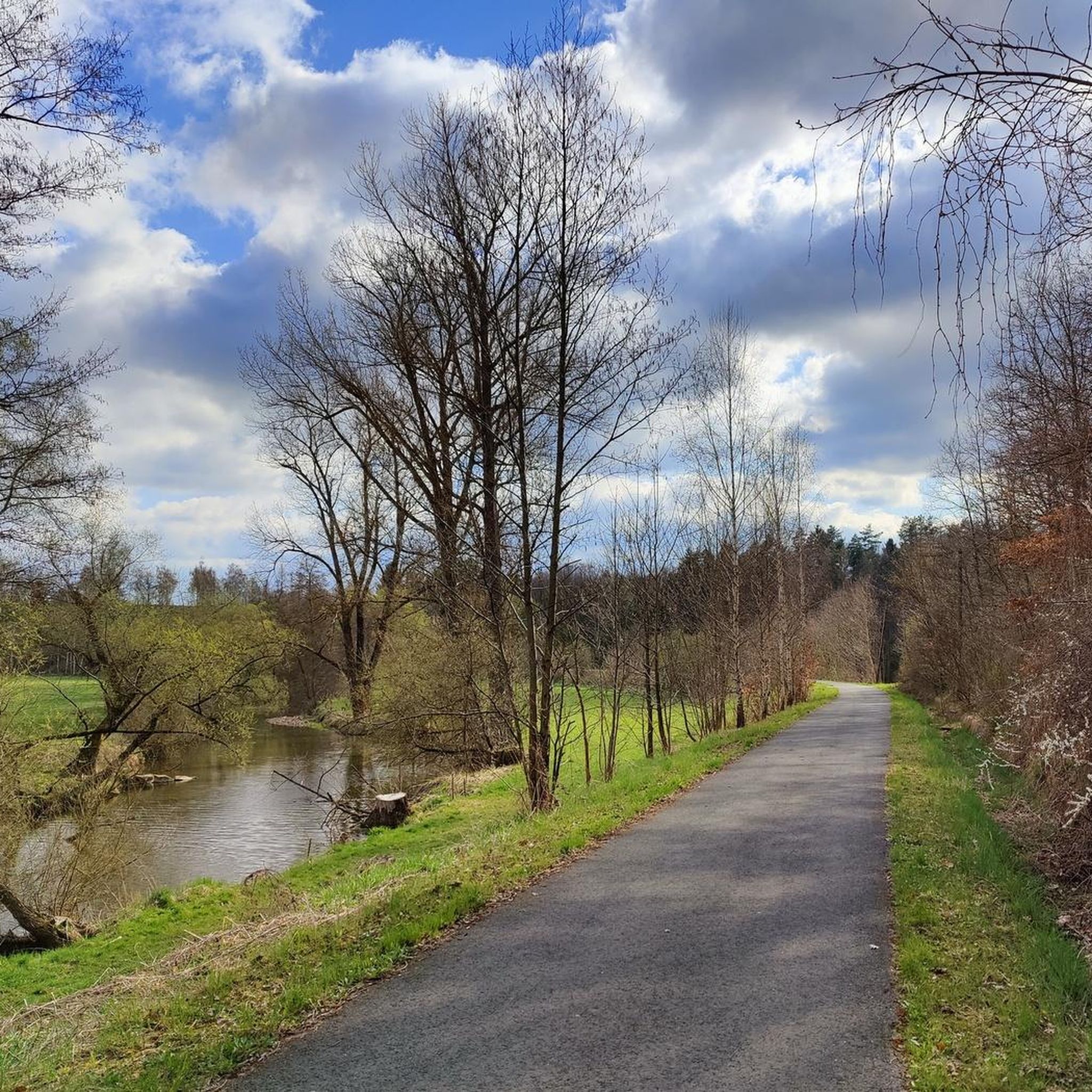
This bridge brings you closer to the nostalgia of the former Thayatal railway.
0
0

Karlstein was first mentioned in 1112 as "Chadelstain." As a fiefdom, Karlstein belonged to the respective territorial princes, who granted this rule to knightly families, although no continuous dynasty established itself here. Since the castle was never owned by a single family for an extended period, it was continually rebuilt and expanded. Practically nothing remains of the original castle. In the following centuries, the border region was repeatedly raided by enemy armies (Ottokar, Hussites, Matthias Corvinus). After the suppression of the Peasants' Revolt in 1597, the leader, Andreas Schrembser, was presumably imprisoned in Karlstein Castle. In 1645, the Swedes besieged Karlstein Castle in vain. In 1663, it served as a refuge during the Turkish threat. In 1914, an internment camp was established in the castle, despite it being uninhabitable. The Montenegrin General Staff was also imprisoned there. After the war, the Hungarian communist leader Béla Kun was interned here. Later, the castle was used as a youth hostel, and in the 1960s, it also served as a guesthouse. The castle is now privately owned and no longer open to the public.
0
0
Frequently Asked Questions
How many road cycling routes are available in Gastern?
Gastern offers a wide selection of road cycling routes, with over 150 different tours to explore. These routes cater to various skill levels, from easy rides to more challenging excursions.
What are the difficulty levels of road cycling routes in Gastern?
The road cycling routes in Gastern range from easy to difficult. You'll find approximately 30 easy routes, over 110 moderate routes, and about 8 difficult routes, ensuring options for all experience levels. The region's landscape of rolling hills and river valleys contributes to this varied terrain.
Are there any circular road cycling routes in Gastern?
Yes, many of Gastern's road cycling routes are designed as loops. For example, the challenging Drinking Water Fountain – Karlstein Castle loop from Thaya and the moderate Meierhofkapelle Schwarzenau – Zwettl loop from Thaya are popular circular options that allow you to start and finish in the same location.
What kind of scenery can I expect on road cycling routes in Gastern?
Road cycling in Gastern takes you through a diverse landscape characterized by rolling hills, picturesque river valleys, agricultural areas, and woodlands. Many routes also connect historical sites and cultural landmarks, offering both natural beauty and points of interest along the way.
What historical sites or landmarks can I see along the road cycling routes?
Gastern's routes often pass by historical sites and cultural landmarks. You might encounter places like the Waldkirchen an der Thaya Former Railway Station or the Waidhofen an der Thaya Town Hall. The Drinking Water Fountain – Karlstein Castle loop from Thaya specifically connects historical sites.
Are there any routes that follow former railway lines?
Yes, Gastern features routes that utilize sections of former railway lines, providing unique and often flatter cycling experiences. A notable example is the On the former railway line – Living Textile Museum loop from Thaya, which offers a varied countryside ride.
What do other road cyclists enjoy most about road cycling in Gastern?
The komoot community highly rates road cycling in Gastern, with an average score of 4.7 stars from over 30 reviews. Cyclists often praise the varied terrain, which includes rolling hills and river valleys, as well as the opportunity to explore historical sites and cultural landmarks along well-maintained paths.
When is the best time of year for road cycling in Gastern?
While specific seasonal data isn't provided, the varied landscape of rolling hills and river valleys suggests that spring and autumn would offer pleasant temperatures and beautiful scenery for road cycling. Summer can also be enjoyable, though it might be warmer.
Are there any family-friendly road cycling options in Gastern?
While many routes feature elevation gain, Gastern does offer easy and moderate routes that could be suitable for families, especially those with some cycling experience. Routes that follow former railway lines, like the On the former railway line – Living Textile Museum loop from Thaya, often provide a gentler gradient.
What are some longer road cycling routes for experienced riders?
Experienced riders looking for longer distances and significant elevation gain will enjoy routes like the challenging Drinking Water Fountain – Karlstein Castle loop from Thaya, which covers 54.7 miles (88.0 km) with over 1000 meters of ascent. Another option is the moderate Meierhofkapelle Schwarzenau – Zwettl loop from Thaya, spanning 48.3 miles (77.7 km).
Are there any lakes or natural monuments near the road cycling routes?
Yes, the Gastern region offers natural attractions. You might find lakes such as Geissbach Pond or Winkelauer Teich, and natural monuments like the Gemeindeau Moor Boardwalk. These can be pleasant stops or detours during your ride.
What are some moderate-difficulty road cycling routes in Gastern?
For those seeking a moderate challenge, the Litschau Castle – Fortified Church Kleinzwettl loop from Kautzen is a great choice, covering 36.3 miles (58.4 km) through rolling terrain. Another popular moderate route is the Thayatal Cycle Path – Drinking Water Fountain loop from Kautzen, which is 24.9 miles (40.1 km) long.
Most popular attractions around Gastern

Get inspired with the komoot mobile app


Explore more
Browse the best Road cycling routes in other regions.
